
Reviewed · POMPEII TOURS
Pompeii Ruins: Virtual Tour 360° with Authorized Storyteller
Pompeii is famous, but this 360 VR format makes it feel less like viewing ruins and more like meeting the city that once lived here. I especially like that it stays a guided experience, not just a tech demo.
Two things I like a lot: the VR is built around nine named places in Pompeii, and the live narration from the storyteller, including guides like Maria Novella, helps the visuals click into place fast. You are not left guessing what you are looking at.
One possible drawback to consider: the VR headset experience comes with limits, like it is not suitable for children under 8 and it is not recommended for people with epilepsy. Also, the Pompeii entrance ticket is not included, even though you can skip the ticket line.
Quick hits before you go
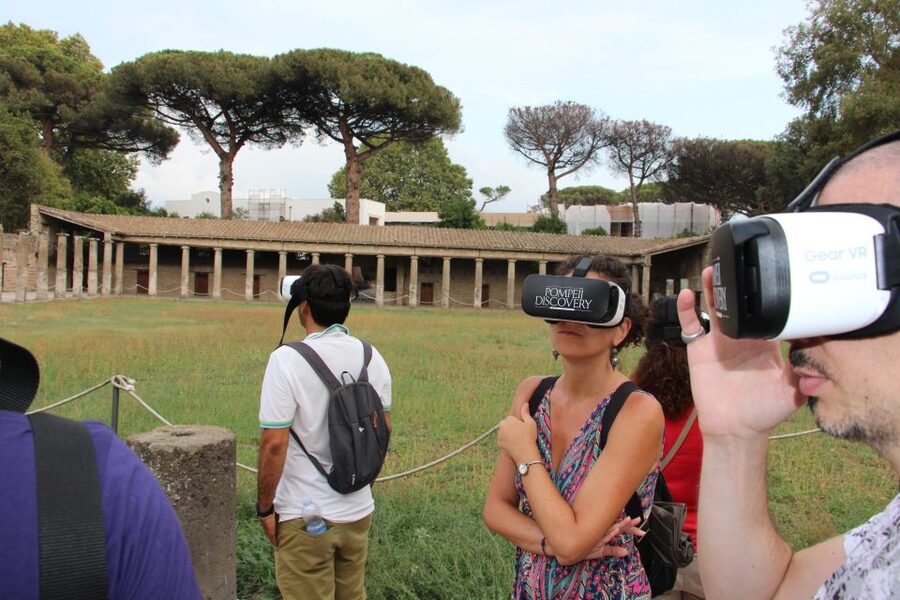
- Nine landmark stops in one route: Forum, Basilica, Baths, House of the Faun or House of Menander, Bakery, Large Theatre, Quadriporticus, and Lupanar.
- VR that works with a live guide: you get context in real time, while the 3D scenes point out what matters.
- Skip-the-line access is included, ticket is not: you still need to buy the ruins entrance ticket separately.
- Private group setting: priced per group up to 2, with VR headsets for each participant.
- Education-focused credibility: the concept has been recognized for its informative value by the European Parliament, and it has also been used as a case study at the University of Amsterdam.
- Action scenes you can actually follow: shop activity, a theatrical performance, gladiator training moments, and nightlife scenes around or inside the Lupanar.
Pompeii, but make it 3D: how the VR story works
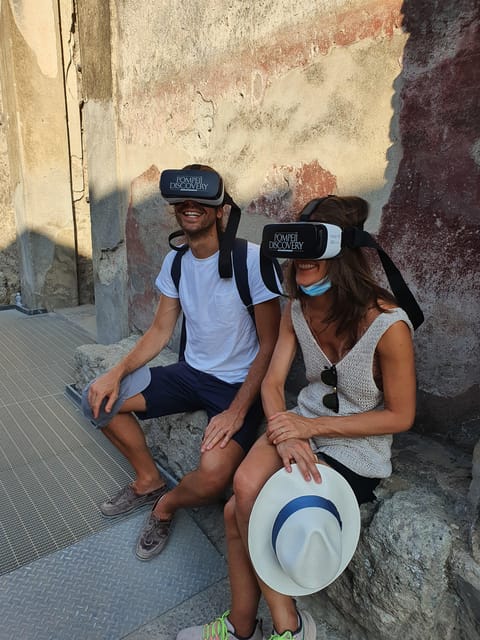
Pompeii can be overwhelming. You look at walls and streets and try to imagine doors, crowds, and daily routines. This tour tackles that problem with a guided walkthrough plus a 3D 360 VR layer that shows what several major spots looked like before Vesuvius buried the city in 79 A.D.
The key here is that the VR is not random. You do not just wander with goggles. The experience is tied to a sequence of specific places you would recognize on a classic Pompeii visit, which makes it easier to connect the virtual reconstruction to what is left today.
I also like that the experience is built for understanding, not just spectacle. The scenes are paired with a local, authorized storyteller, so when something changes, you know why it matters. Think of it as adding a set of stage lights to the ruins.
More Pompeii tours to compare:
- Pompeii: Entry Ticket and Guided Tour with an Archaeologist
★ 4.8 · 19,459 reviews - Pompeii: Small Group Tour with an Archaeologist
★ 4.8 · 12,264 reviews - Pompeii: Skip-the-Line Entrance Ticket with Audio Guide
★ 4.0 · 2,509 reviews
Nine famous places, and what to watch for at each stop
Instead of treating Pompeii as one big blur, this tour points you to nine well-known locations. Each one is chosen because it represents a different slice of city life, from politics and religion to markets and nightlife.
Here is the route in the order you will use it, and what you should look for at each stop.
The Forum: where city life made noise
The Forum is the civic heart of Pompeii, and the tour uses VR to help you see it as a living center, not only as stone foundations. You will get context about the idea of public space here, and why so much activity clustered in this area.
In practice, this stop is where the tour starts feeling real. Once you can visualize how the space worked, the rest of the city becomes easier to place in your mind. If you tend to get lost in ruins, this is the part that usually fixes that.
The Basilica: power, paperwork, and the scale of authority
Next up is the Basilica, one of the imposing structures that signals status. Pompeii’s public buildings are impressive even in ruin form, but VR helps you understand how the space functioned in daily life.
Watch for the sense of enclosure and the way these buildings were designed for public use. Even if you are not a “Roman architecture” person, you will likely appreciate how the design supported meetings, business, and civic activity.
Same stretch of coast, a completely different day out:
- Naples: Pompeii and Mt. Vesuvius with Lunch and Wine Tasting
★ 4.5 · 2,454 reviews - Pompeii: Skip-the-line-Ticket and Guided Tour
★ 4.6 · 1,152 reviews - Pompeii: Small-Group Tour of Pompeii and Herculaneum
★ 4.8 · 867 reviews - Pompeii: Guided Tour with Skip-the-Line Entry
★ 4.9 · 812 reviews
The Baths: social time, not just hygiene
The Baths are where the tour shifts from public politics toward everyday routine. VR lets you imagine the bathing environment as a social experience, with spaces that encouraged lingering rather than rushing.
This is a great counterbalance after the more formal structures. You get a reminder that a city is more than its monuments. People came here to talk, relax, and reset their day.
Houses of Faun or Menander: daily life, status, and domestic design
You will visit the House of the Faun or the House of Menander. The point is not only to see fancy rooms, but to understand what a home could say about identity and wealth.
These houses are famous for the way domestic life was organized. VR helps you read the layout and connect what you see now with what once happened inside. If you are interested in how people lived, this stop will feel like you are turning a page rather than looking at yet another wall.
One practical note: because it is one house option or the other, your exact scenes may vary. Still, the tour structure is designed to keep the experience cohesive.
The Bakery: food, work, and the speed of a city
Pompeii needed food production, and the Bakery is one of the places where that comes into focus. VR gives you a way to picture the movement of daily tasks and the rhythms of getting bread made and distributed.
This is one of the stops where the tour leans into the everyday reality of the city. You are not only seeing buildings, you are getting hints of process and routine.
The Large Theatre: performance and public emotion
The Large Theatre brings you back to communal entertainment. VR can help you grasp sight lines and the atmosphere, especially when you consider how performances shaped public life.
Even if you do not know the details of Roman theatre traditions, the point is simple: this was a place where people gathered. The tour’s emphasis on guided explanation makes it easier to understand why the theatre mattered to Pompeii’s social calendar.
The Quadriporticus: gladiator training energy
The Quadriporticus is tied to gladiators, and the tour specifically includes the chance to experience moments like gladiators’ training in this area. This is where you can feel the city’s appetite for spectacle.
You are not just looking at an empty arena-like space. The VR elements aim to show the action and purpose behind the layout, turning stone into a stage.
The Lupanar: nightlife around and inside the brothel
The last stop listed is the Lupanar, a brothel. The experience includes the chance to experience the nightlife around and inside it through VR.
This can be the most uncomfortable part, in a fair way. It is not sanitized. Pompeii’s reality included sex work, and this tour does not shy away from that fact. If you would rather keep things strictly family-friendly, you might want to think hard before booking.
But if you are there to understand the city fully, this stop is part of the picture rather than an optional add-on.
The storyteller factor: why the headset is not the whole point
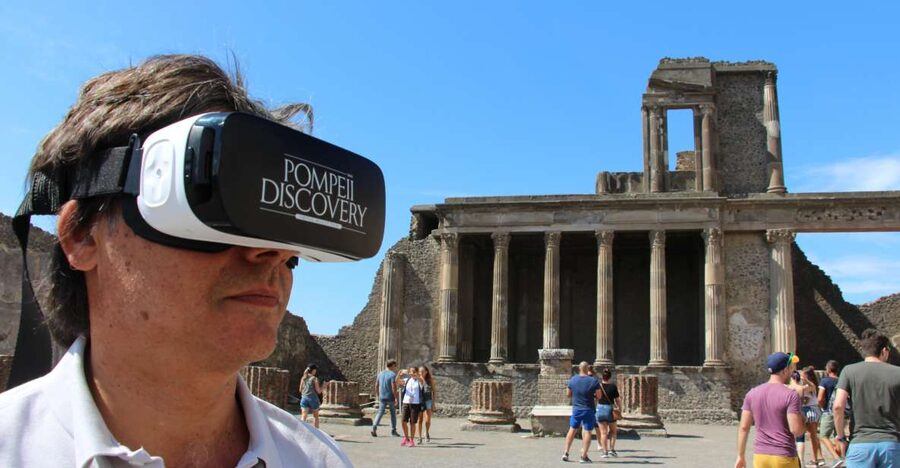
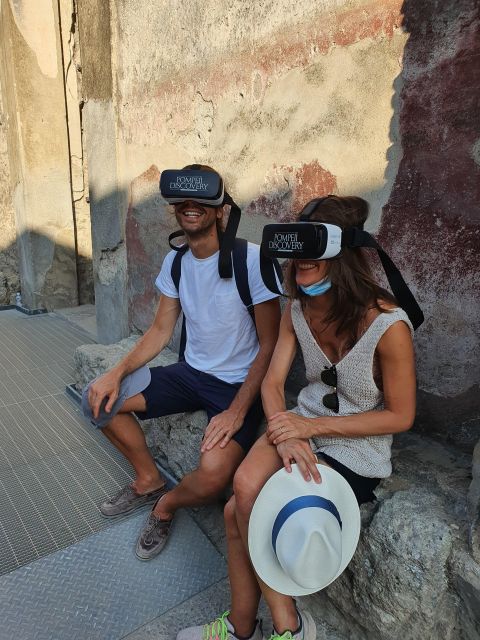
The headline for this tour is VR, but the real value is how it is paired with live guidance in your language. The tour includes a local, authorized guide in English or Italian, plus VR headsets for each participant.
When this format works well, you stop feeling like you are “watching” Pompeii and start using it. You are given context and then shown how that context fits the location in front of you. That is the difference between tech for entertainment and tech that builds understanding.
If you get Maria Novella as your storyteller, you are likely to notice the same thing that shows up in strong feedback: clear, professional narration that keeps the moving parts from turning into noise. The VR adds the picture, but the guide keeps it readable.
What the VR scenes add beyond classic ruins walks
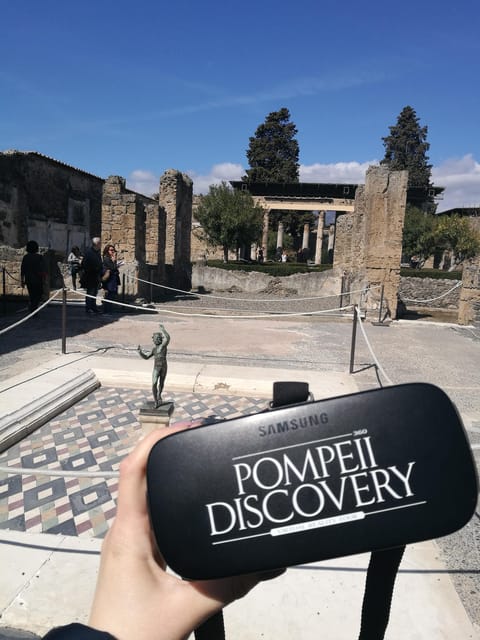
A standard Pompeii visit can be spectacular, but it often has a gap. You see a wall, a floor, a doorway outline. Then you invent the rest in your head.
This tour tries to reduce that guessing by adding 3D reconstruction scenes at major locations. In particular, it includes:
- the possibility to assist to the activities of the shops
- a theatrical performance element
- gladiator training moments tied to the Quadriporticus
- nightlife scenes around and inside the Lupanar
These elements matter because they shift you from “static sightseeing” into “human rhythm.” Pompeii becomes a place where people shopped, watched shows, trained, and socialized, even though the city is gone.
It also helps you remember the visit later. A list of sights is easy to forget. A sequence of scenes with context tends to stick.
Price and value: $226.57 per group up to 2
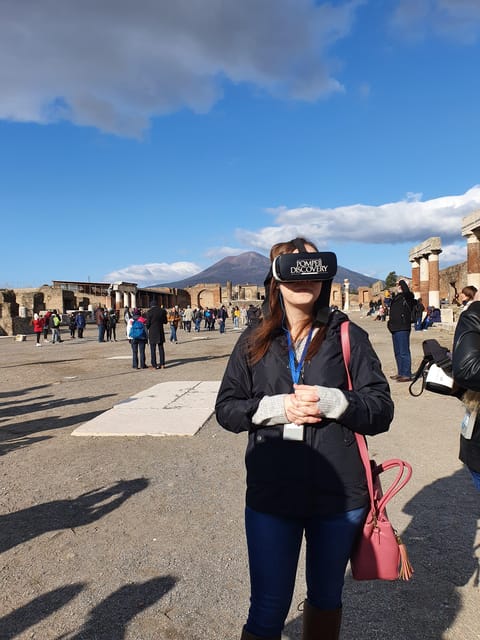
This is priced at $226.57 per group up to 2, and it is a private group experience. That matters because you are not paying per person in a giant crowd setting.
What you get for that price is more than just the headset. It includes:
- a local, authorized guide in English or Italian
- VR headsets for each participant
- skip-the-ticket-line access (the ruins entrance ticket is separate)
- a guided VR route through nine named places
Is it cheap? No. But it is not trying to compete with the lowest-cost entry-level tour. If you are traveling with one other person, the per-group setup can make the experience feel more reasonable than per-person pricing would.
The big “value check” is this: if VR helps you understand Pompeii faster and remember more, you are buying time and clarity. If you dislike wearing headsets or you are mainly there for bare ruins, you might not feel the same payoff.
Also note that the tour is valid 1 day, with starting times you choose from availability. That flexibility can help you plan around weather and other stops in the area.
Your Pompeii checklist: shoes, expectations, and comfort
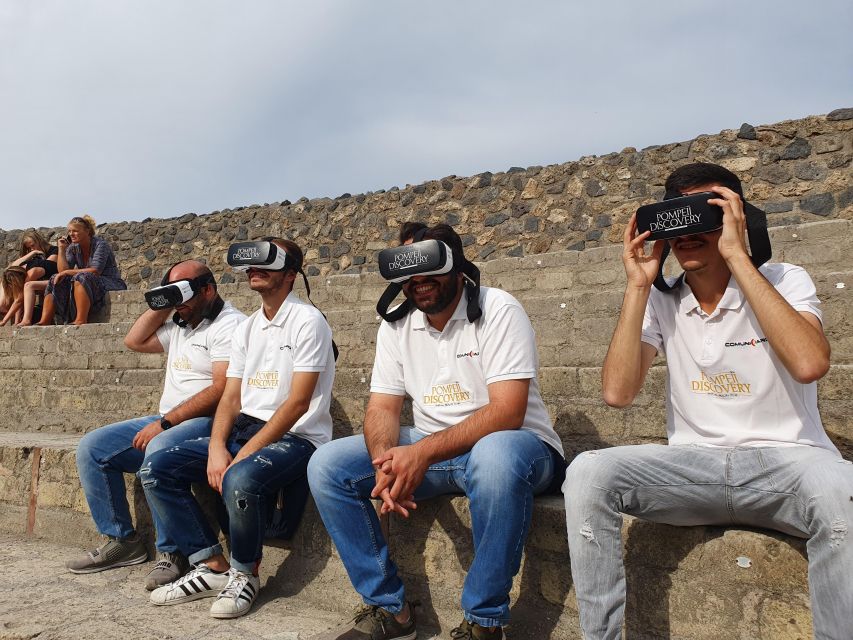
You will walk through a real archaeological site. VR is only part of the experience. So bring sensible gear.
The tour asks you to bring:
- comfortable shoes
- a passport or ID card for children
If you wear glasses or have sensory sensitivities, think ahead about headset comfort. People with epilepsy should not book the experience, and children under 8 are not suitable.
And keep your expectations grounded. This is not a magical time machine. It is a guided reconstruction experience that helps you picture what you are seeing now.
Who this VR Pompeii tour is best for
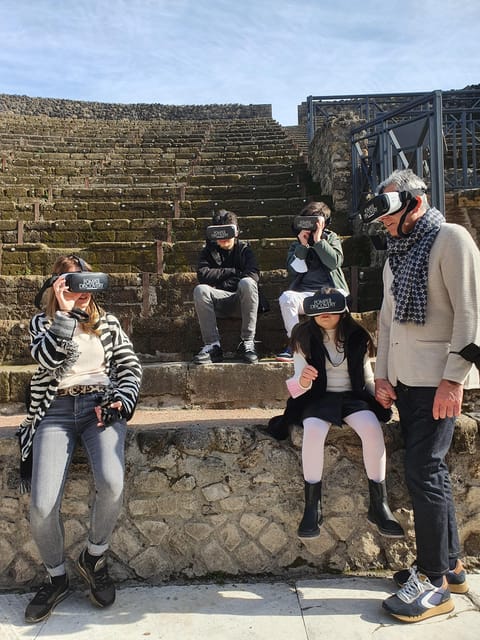
This tour is a strong fit if you:
- want a guided Pompeii visit, not a self-guided scramble
- enjoy visual learning and want help imagining daily life before 79 A.D.
- are traveling with one companion and want a private setup
- appreciate educational storytelling tied directly to recognizable sites like the Forum and Basilica
It may be a weaker fit if you:
- strongly prefer purely outdoor, no-tech sightseeing
- are traveling with children under 8
- have epilepsy or a medical reason to avoid VR headsets
- would rather skip mature content like the Lupanar
If you fall somewhere in the middle, I suggest you treat this as an “understanding tour.” It is best when your goal is meaning, not only photos.
Should you book Pompeii Discovery Virtual Tour 360?
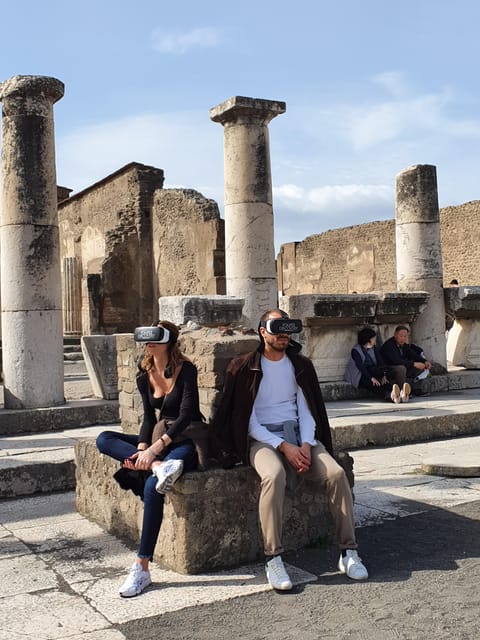
Book it if you want a Pompeii experience that explains what you are seeing, using 360 VR as a guide tool rather than a gimmick. The nine-place structure helps you avoid the common problem of losing the story in a sea of ruins.
Skip or reconsider if you know you will hate the headset format, or if the idea of scenes connected to the Lupanar feels like a deal-breaker for your trip style. Also remember the Pompeii entrance ticket is not included, so price it correctly in your overall budget.
If you want a memorable Pompeii visit that helps the ruins turn into scenes of real city life, this is one of the more logical ways to do it.
FAQ
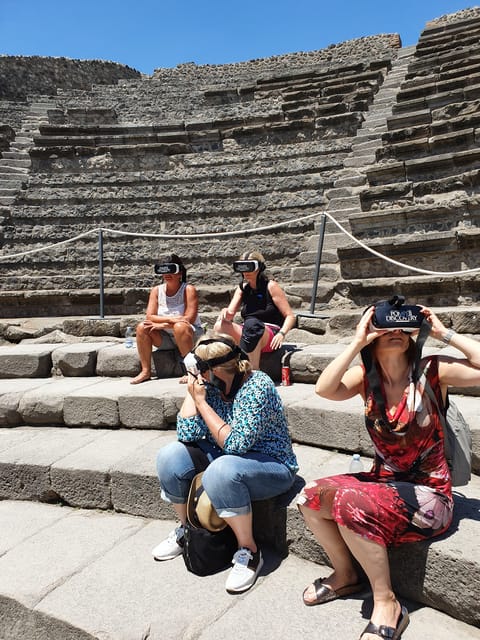
What is included in the Pompeii Ruins Virtual Tour 360°?
The tour includes a local and authorized guide in your language, VR headsets for each participant, and the guided virtual tour experience. The Pompeii entrance ticket is not included.
Do I need to buy the Pompeii entrance ticket?
Yes. The entrance ticket of Ruins is not included, even though the tour offers skip-the-ticket line.
How long is the tour valid, and can I choose a time?
It is valid for 1 day. You can check availability to see starting times.
Is this a private tour or a group tour?
This is a private group experience, priced per group up to 2.
What languages are available?
The live tour guide is available in English and Italian.
Is it suitable for children?
It is not suitable for children under 8 years. If children are included, the tour requests a passport or ID card for children.
Is it wheelchair accessible?
Yes, the tour is wheelchair accessible.
Recently reviewed around Pompei Campania
- From Sorrento: Pompeii with an Archaeological Guide & Ticket★ 4.6 · 19 reviews
- From Positano: Pompeii Ruins Small Group Guided Tour★ 4.8 · 82 reviews
- Pompeii Positano Amalfi Day Trip from Rome by Car, No Bus!★ 5.0 · 5 reviews
- Pompeii VIP 3h Tour: Skip-the-line with your Archaeologist★ 4.9 · 13 reviews
- Pompeii & Virtual Museum Private 2-in-1 Kid’s Tour★ 4.9 · 9 reviews
- Pompeii & Vesuvius★ 4.3 · 12 reviews
- From Naples: Pompeii Wheelchair-accessible with a Guide★ 5.0 · 8 reviews
- Pompeii Tour_Skip the line ticket + audioguide★ 4.7 · 17 reviews
Pompeii Tours, compared.

Entry Ticket and Guided Tour with an Archaeologist
Read our review →

Pompeii Small Group Tour with an Archaeologist
Read our review →
Skip-the-Line Entrance Ticket with Audio Guide
Read our review →
Pompeii and Mt. Vesuvius with Lunch and Wine Tasting
Read our review →
Archaeological Park Tour with Ticket on request
Read our review →
Browse the lists this tour appears in