
Reviewed · POMPEII TOURS
Pompeii: Guided Tour with Skip-the-Line Entry
Pompeii can feel overwhelming on your own, but this guided tour makes it readable fast. What makes it especially appealing is skip-the-line entry through a separate entrance, paired with a live archaeologist guide who helps you connect buildings to daily life. Guides like Francesco, Frankie, Angelo, and Anna are repeatedly praised for turning the site into a clear story you can actually follow.
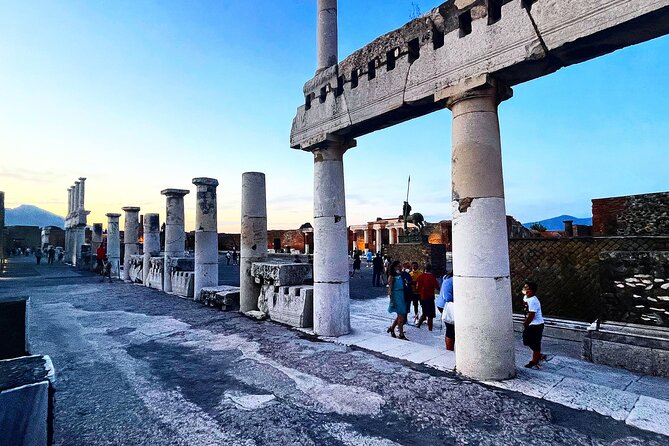
I also like that you do not just get a list of sights. You get a route through civic anchors like the Forum and Basilica, plus the thermal baths and Theater, and the best guides manage crowds and heat with smarter pacing and shade breaks. One drawback: even with the streamlined entry, you are still walking in Pompeii’s outdoor ruins for about 2 to 3 hours, mostly on uneven ground, so plan your energy for the full experience.
Key things I’d watch for
- Separate entrance, skip-the-line access, so you start seeing real stone sooner
- Live guide in Italian or English, with storytelling that explains what you are looking at
- Group tour or private option, often small enough to ask questions without shouting
- Core stops covered: Antiquarium, Basilica, Forum, thermal baths, Theater
- Daily-life glimpses: a bakery area plus typical residential blocks
- Crowd-smart routing is a big part of the value, with some guides using reverse routes to see places like the House of the Vettii earlier
Why Pompeii feels different with guided skip-the-line entry
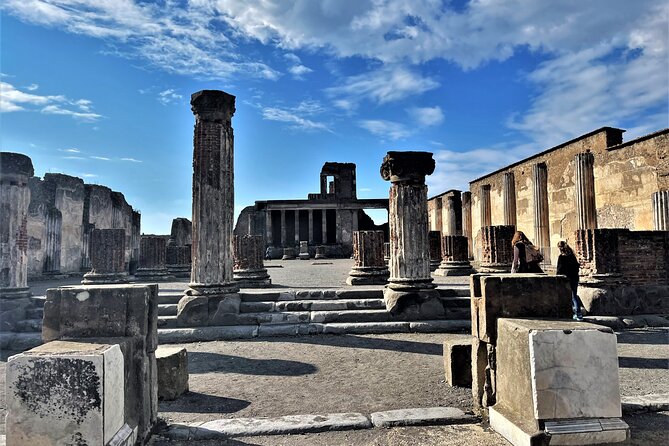
Pompeii is not hard to understand because it is dramatic. It is hard to understand because it is huge. You need context to connect one doorway to a whole system of jobs, politics, entertainment, worship, and home life. This is where a guide earns their fee.
The skip-the-line ticket matters more than it sounds. At major ruins, the slow part is not the ruins. It is the gate. With a separate entrance, you reduce the time you would otherwise spend standing around while everyone else is filtering in. That gives you more usable minutes inside, which is the real currency on a 2 to 3 hour visit.
More Pompeii tours to compare:
- Pompeii: Entry Ticket and Guided Tour with an Archaeologist
★ 4.8 · 19,459 reviews - Pompeii: Small Group Tour with an Archaeologist
★ 4.8 · 12,264 reviews - Pompeii: Skip-the-Line Entrance Ticket with Audio Guide
★ 4.0 · 2,509 reviews
Where you meet, and how to start without stress
You meet your guide at Ristorante Bar Sgambati, and you should look for the Enjoy Pompeii red sign. That sounds small, but it is the kind of detail that prevents a bad start, especially if you arrive a bit late or the area feels confusing.
Tours run with a live guide in Italian or English, and you can choose between a group experience or a private option. That flexibility is useful because Pompeii suits different styles: some people want a structured highlights route, while others want conversation and a tighter pace.
The heart of Pompeii: Forum, Basilica, and what civic life meant
The tour typically focuses on the places that made Pompeii function as a city, not just a collection of ruins. Expect to spend time around civic anchors such as the Forum and Basilica. These are the sites that help you understand how Roman urban life worked day to day.
Here is the practical payoff of learning this way. Once you know what a Forum was for, you stop treating it like a photo backdrop. It becomes a place where people gathered, did business, listened to public messages, and handled civic matters. The Basilica also helps explain Roman priorities. This was not only about grand architecture, it was about the day-to-day flow of people and decisions.
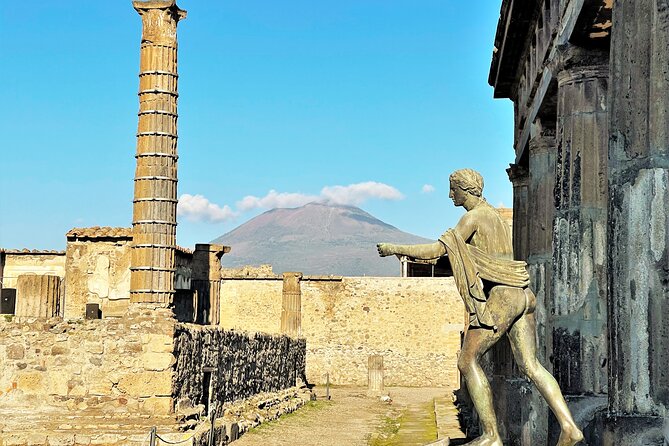
You will also hear context about the city before the eruption of Vesuvius in 79 AD, when daily life in Pompeii moved along in a very organized rhythm. That story is what keeps the ruins from feeling frozen and dead.
Antiquarium and the Theater: where learning clicks
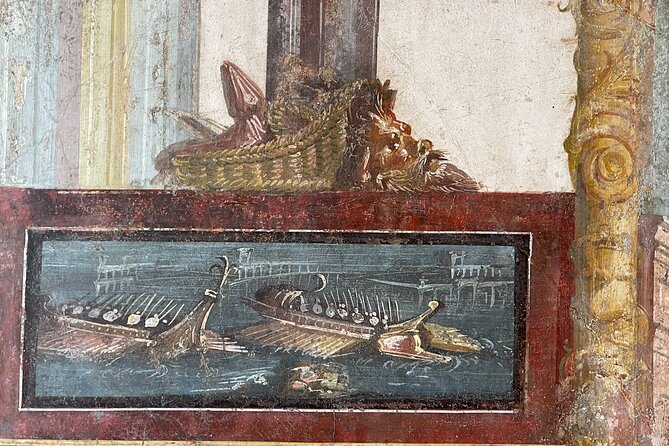
The itinerary includes the Antiquarium, which helps you understand what you are seeing before you rush into the wider site. Even if you are not a museum person, this is a smart stop because it sets the vocabulary. You start recognizing architectural details instead of just admiring them.
Then there is the Theater, another key piece of civic life. Roman theaters were not only for entertainment. They were also part of public identity and community rhythm. On this tour, you are not left guessing. The guide frames what it likely meant in Pompeii’s social life, which makes the building feel more purposeful and less random.
A few more Pompei Campania trips worth comparing
- Pompeii: Skip-the-line-Ticket and Guided Tour
★ 4.6 · 1,152 reviews - Pompeii: Skip-the-Line Entry Ticket with Digital Guide App
★ 4.1 · 770 reviews - Pompeii: Afternoon to Sunset Guided Tour with Ticket
★ 4.9 · 484 reviews - Pompeii: Tour with Archaeologist Guide & Skip-the-Line Entry
★ 4.5 · 478 reviews
Thermal baths: the social side of Roman engineering
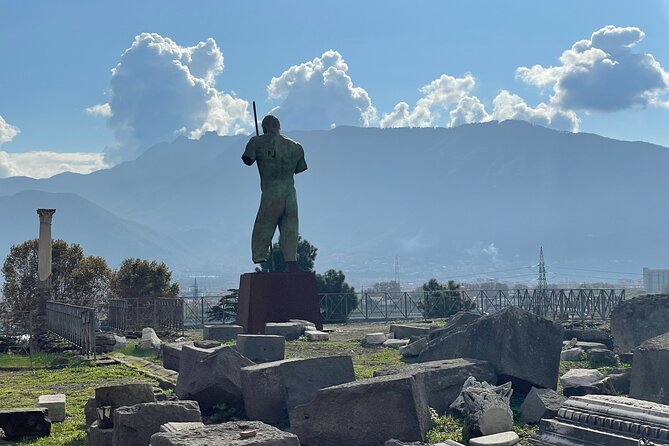
Pompeii’s thermal baths are one of the best ways to see how Romans blended practicality with comfort. Even in ruined form, the bath complex is easy to grasp once someone explains the layout and why certain spaces existed.
What I like about this part of the tour is that it is not only about the structure. You are also learning the human angle. Baths were social spaces. People talked, relaxed, and built relationships as part of their routine. In a city of shops, homes, and civic structures, the bath gives you a different kind of daily-life picture than a Forum does.
Shops and homes: the bakery and residential blocks you can actually picture
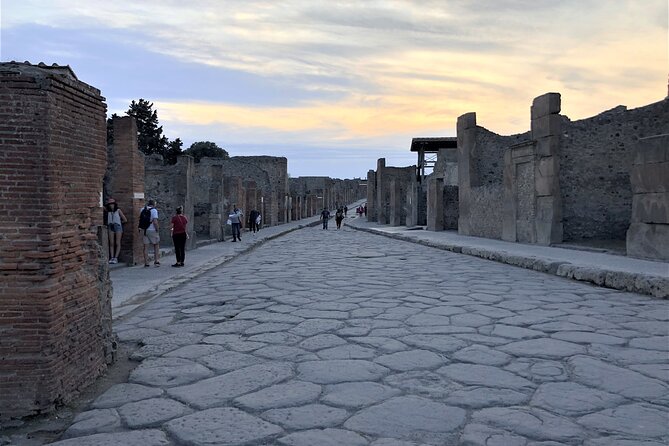
Pompeii is famous for big monuments, but daily life happened in smaller ways. This tour includes stops that point you toward commercial and residential neighborhoods. You will see remains connected to a bakery, plus typical housing blocks.
That is a huge value for first-timers. It is easy to walk through Pompeii and only remember the headline sights. The bakery and housing areas help you build a more complete image, like how food production worked, where routine labor likely happened, and what kind of home spaces people had.
One practical note: these areas can be easier to overlook if you are not looking with guidance. A guide helps you notice the details that show function, not just decoration.
House of the Vettii, and why routing can change your experience
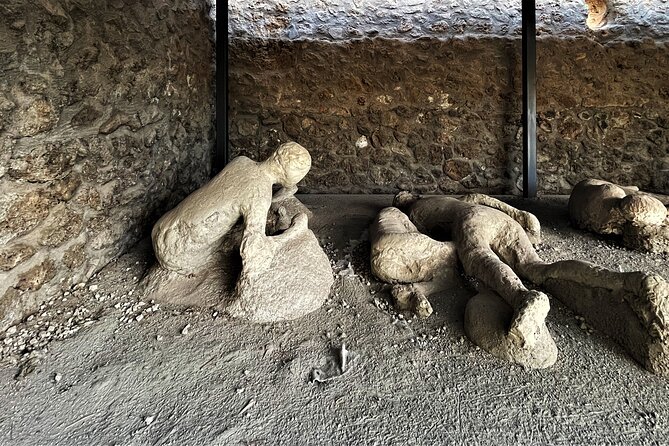
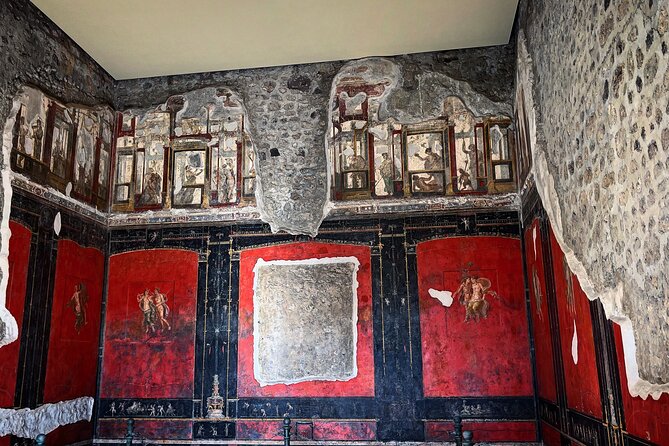
A highlight included on this tour is the House of the Vettii. What makes this stop special is not just the name. It is the experience you get from timing and routing.
Some guides deliberately bring you there early, when it is quieter. Others may use a reverse route compared with the most common walking patterns. That matters because Pompeii crowds move like a wave. If you hit a major house at the wrong moment, you can feel herded and spend more time waiting than looking.
When you see the House of the Vettii with breathing room, the art and architecture make more sense. You can take in what you are looking at without constantly sidestepping people for every photo.
How guides handle heat, shade, and the real tempo of Pompeii

Pompeii is often hot, and it can be brutally sunny with limited shade. In multiple guide experiences, the recurring theme is comfort planning. Guides are praised for keeping people in shaded spots during explanations and for giving short breaks so your brain can reset.
You may even feel the difference in the tour’s flow. Some guides are noted for not rushing you through stops, and for making time for questions while still keeping the group on track. That is especially important because Pompeii rewards curiosity. If you ask why something was built a certain way, you want a guide who can answer without cutting you off.
Names that come up again and again include:
- Francesco, Frankie: humor plus efficient crowd avoidance
- Angelo: strong storytelling, and he also brings Vesuvius context since he has a volcanologist background
- Anna: a personal connection to Pompeii paired with art history and clear explanations
- Alessandra: careful guiding through busier moments
You do not need a specific guide name. The point is that this tour style tends to combine clarity with pacing, and that is what makes the ruins feel less like a checklist.
Private or small group: which format fits your pace
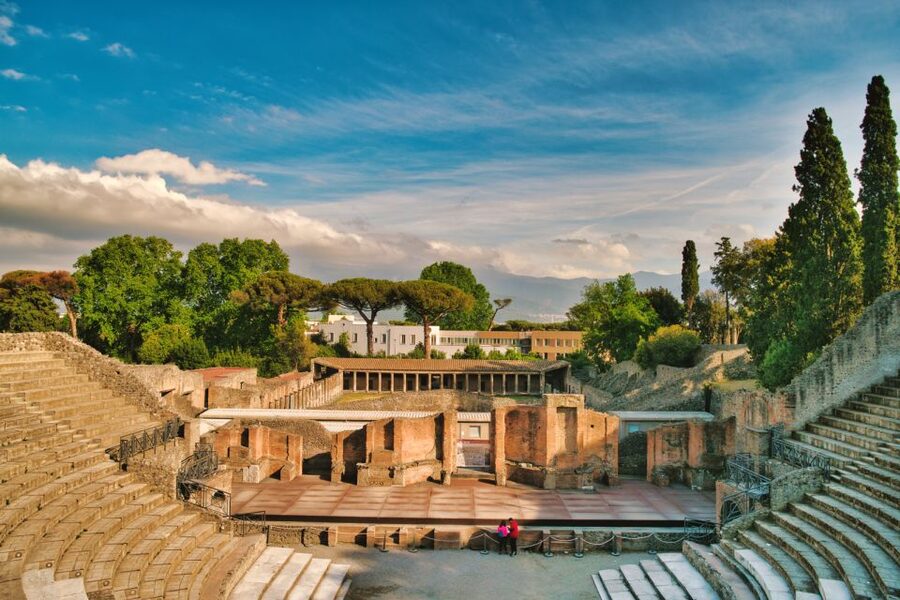
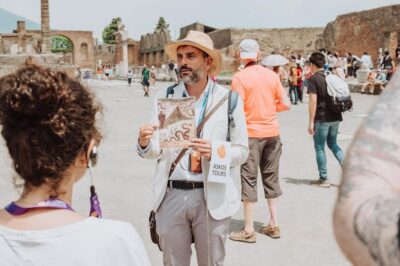
If you like structure and quick context, the group option works well because you still get a guided walk through the essential highlights. Many people also report that group size is small, which can make questions easier and reduce the feeling of being trapped behind others.
If you want more control, the private option can be the better match. Private tours usually make it simpler to customize pace, stop longer at a favorite house, or ask more questions without worrying about timing. Either way, the core experience stays the same: you are seeing key civic and daily-life areas with skip-the-line entry.
Price and value: is $58 worth it?
At $58 per person, the question is not only if you get into Pompeii. You do, and the skip-the-line part is a big chunk of the practical value. When you only have a 2 to 3 hour window, every minute inside matters.
You also get:
- Skip-the-line entry ticket
- Walking tour of Pompeii
- A live guide in Italian or English
Compared with paying for entry and trying to figure out the site on your own, the guide is what turns ruins into meaning. Pompeii’s highlights are impressive, but without explanations they can blend together. With this tour, you are paying for time saved at the gate and for clarity inside the park.
One extra value angle: there is a day-by-day pricing wrinkle. On the first Sunday of each month, entrance is free of charge. If you are traveling around that schedule, you may want to double-check how the tour price interacts with free entry, but the key point is that the site itself can be cheaper to access on that day.
Timing tips: morning vs afternoon and how to plan your day
You have some control through when you go. Pompeii can be scorching, and shade breaks are not guaranteed everywhere, even with a smart guide. If you are sensitive to heat, consider choosing a time slot where the day feels more manageable.
One recurring tip from the guide style is that afternoon tours can sometimes feel better because of a breeze from the mountains. Even if you do not chase the perfect weather window, the guide’s heat planning still helps.
Also think about what you want after the tour. Pompeii is large, and many people leave the guided portion hungry to continue exploring on their own. In some guide experiences, you get advice for what to see next, including how to move toward a later stop like Vesuvius if you have time.
Who should book this Pompeii tour, and who should rethink it
This tour is a strong fit if:
- You want a focused highlights route in about 2 to 3 hours
- You like understanding how buildings connect to daily life
- You appreciate help navigating crowds and the heat
- You want either a small group experience or a private walk
It may be less ideal if:
- You have pre-existing medical conditions, since the tour is not listed as suitable for that situation
- You want a fully unhurried, all-day explore with no structure
- You are traveling with kids and expect a kids-first approach, because this tour is not presented as a child-only program and may feel a bit long for younger attention spans
Should you book this skip-the-line Pompeii guided tour?
If your priority is seeing Pompeii’s main sights with meaning and saving time at the entrance, I think this is a very solid choice. The combination of skip-the-line entry plus a live guide who helps you connect the Forum, Basilica, thermal baths, Theater, and everyday zones like the bakery and homes makes the experience much easier to remember.
Book it if you want structure without feeling trapped, and if you value crowd-smart routing and shade breaks. If you love Pompeii so much that you want hours and hours, treat the tour as your starting backbone, then plan extra time to wander afterward with your new bearings.
FAQ
How long is the Pompeii guided tour?
The tour lasts about 2 to 3 hours.
Is the entry ticket included, and does it really skip the line?
Yes. Your ticket includes skip-the-line access through a separate entrance.
Where do I meet the guide?
Meet at Ristorante Bar Sgambati and look for the Enjoy Pompeii red sign.
What is included in the price?
Included are the skip-the-line entry ticket, a walking tour of Pompeii, and a tour guide.
Is parking included?
No. Parking is not included.
What languages are the tours offered in?
The live tour guide offers Italian and English.
Can I choose a private tour or only a group tour?
You can choose either a private option or small groups.
Is there a special free-entry day?
Yes. On the first Sunday of each month, entrance is free of charge.
Is this tour suitable if I have a medical condition?
It is listed as not suitable for people with pre-existing medical conditions.
Recently reviewed around Pompei Campania
- From Sorrento: Pompeii with an Archaeological Guide & Ticket★ 4.6 · 19 reviews
- From Positano: Pompeii Ruins Small Group Guided Tour★ 4.8 · 82 reviews
- Pompeii Positano Amalfi Day Trip from Rome by Car, No Bus!★ 5.0 · 5 reviews
- Pompeii VIP 3h Tour: Skip-the-line with your Archaeologist★ 4.9 · 13 reviews
- Pompeii & Virtual Museum Private 2-in-1 Kid’s Tour★ 4.9 · 9 reviews
- Pompeii & Vesuvius★ 4.3 · 12 reviews
- From Naples: Pompeii Wheelchair-accessible with a Guide★ 5.0 · 8 reviews
- Pompeii Tour_Skip the line ticket + audioguide★ 4.7 · 17 reviews
Pompeii Tours, compared.
Entry Ticket and Guided Tour with an Archaeologist
Read our review →

Pompeii Small Group Tour with an Archaeologist
Read our review →
Skip-the-Line Entrance Ticket with Audio Guide
Read our review →
Pompeii and Mt. Vesuvius with Lunch and Wine Tasting
Read our review →
Archaeological Park Tour with Ticket on request
Read our review →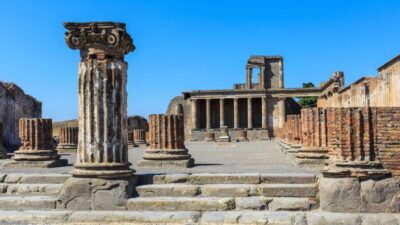
Browse the lists this tour appears in