
Reviewed · POMPEII TOURS
Pompeii Private Tour with an Archaeologist Guide
Pompeii is one of those rare places where a guide can change everything. With an archaeologist leading you, the ruins stop feeling like random walls and start making sense as neighborhoods, daily routines, and public spaces. I especially love the archaeologist-style explanations and the private format where you can ask questions and keep moving at a pace that actually works.
You do need to plan for one big consideration: the Pompeii entrance ticket is not included in the tour price. Some people report paying an extra amount on site, so it is smart to budget for the park ticket in advance and confirm what your booking includes.
The good news is that this is a focused, highlights-first route. In about 2 hours, you can expect a classic overview built around major anchors like the Stabian Baths, the Forum area, and signature houses, without feeling like you are racing the clock.
Key points before you go
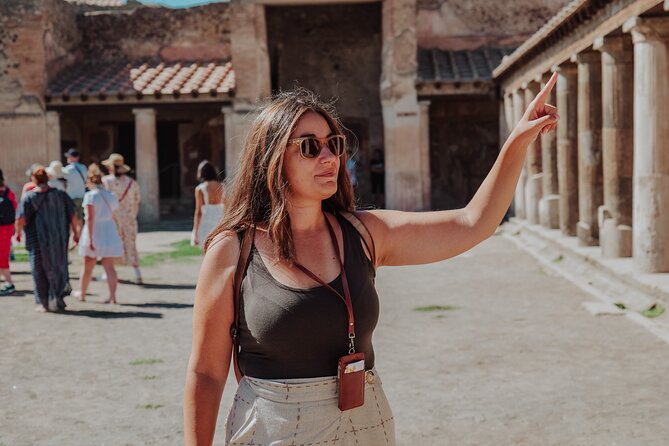
- Private, archaeologist-guided Pompeii with your own group and undivided attention
- A tight 2-hour highlights route that hits homes, theaters, baths, and forum spaces
- Stabian Baths plus Forum-area stops give you both everyday life and civic life
- English-speaking guide and lots of time for questions
- Comfort planning matters since Pompeii involves uneven stone and a lot of walking
- Entrance ticket planning is essential, since the park ticket is not always baked into the rate
Pompeii is huge, and that is exactly why this format works
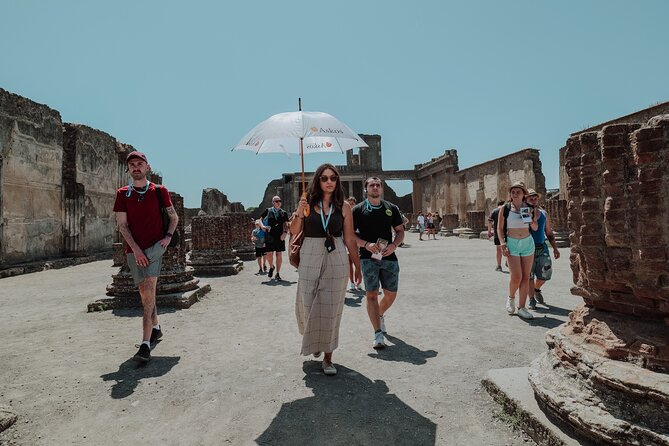
Pompeii can feel overwhelming fast. The site is enormous, the streets are uneven, and it is easy to lose the thread if you are just following your own map. A private archaeologist guide helps you connect what you are seeing to why it mattered, from how people shopped and ate to how public buildings shaped daily life.
What I like most is that you are not locked into a lecture. In private tours, the guide can slow down when something catches your eye or speed up when you want to cover more ground. You also get real time for questions, which is crucial in Pompeii, because many details come with context, interpretation, and explanation.
This style also tends to help with crowd pressure. Several guides referenced in past experiences, like Rossana, Mena, Jolanda, Paolo, Michele, and Vito, were praised for guiding people around busier moments and keeping the visit flowing. Even if crowds never fully disappear, you can reduce the time you spend waiting, backtracking, or staring at a wall with no idea what you are looking at.
More Pompeii tours to compare:
- Pompeii: Entry Ticket and Guided Tour with an Archaeologist
★ 4.8 · 19,459 reviews - Pompeii: Entry Ticket with Optional Audio Guide
★ 4.2 · 12,360 reviews - Pompeii: Small Group Tour with an Archaeologist
★ 4.8 · 12,264 reviews
Meeting point, first steps, and how the 2 hours are paced
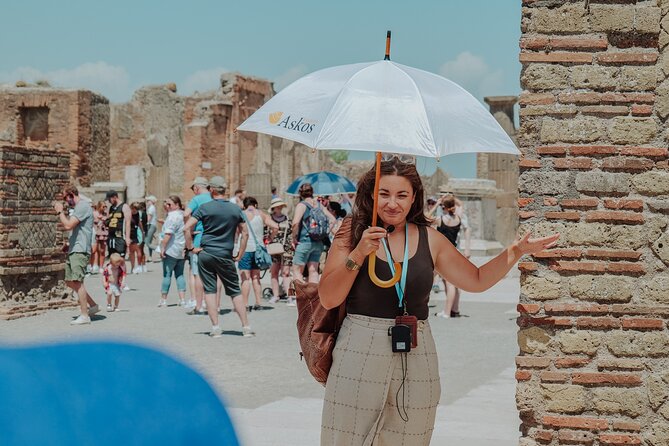
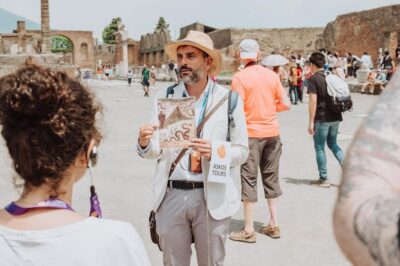
The meeting point is Via Villa dei Misteri, 1, 80045 Pompei NA, Italy. Your guide meets you there and brings you to the park entrance area, specifically the main entrance called Porta Marina Superiore. The guide will hold a sign with Askos Tours on top, so it is usually straightforward to spot them.
This matters because Pompeii arrival logistics can eat up your day. By starting together, you lose less time hunting for the correct entrance and you get into the ruins while your energy is still high.
The overall route is designed for a true highlights visit. You spend short but meaningful blocks at each stop, often around 5 to 10 minutes per area. That structure helps you see a lot without getting “ruined out.” It is also why some people come back later for extra wandering, because they realize the site rewards longer visits.
Practical tip: wear closed shoes. Pompeii is made of stone, and flip-flops are a bad idea on uneven ground. If you are traveling in heat, you will be grateful for supportive footwear and a plan for water breaks.
Stop-by-stop: what each highlight is actually teaching you
Porta Marina Superiore and your entry moment
You start at the Archaeological Park of Pompeii, at Porta Marina Superiore. At this stage, the guide sets the tone: what Pompeii is, what the big themes are, and how the layout connects streets, homes, and civic buildings.
This is also where you should confirm your ticket situation. The tour price does not include the Pompeii entrance ticket. Yet the route description notes admission ticket included at the park entry. In real life, that means you should double-check what your confirmation says and be ready to purchase the park ticket if needed, since some visitors reported paying about 20 euro per person extra.
A few more Pompeii trips worth comparing
- Pompeii Ruins Private Tour with Optional Skip-the-Line Entry
★ 4.9 · 732 reviews - Pompeii private tour with an Official Guide
★ 5.0 · 631 reviews - Pompeii Private Tour with an Archaeologist and Skip The Line – 3 hours
★ 5.0 · 564 reviews - Visit in Pompeii – Pompeii Private Tour with Ada
★ 5.0 · 436 reviews
Casa dei Vettii (House of the Vettii)
This is where Pompeii shifts from “big ruins” into “private life.” The House of the Vettii is known as a high-status home, so you get a sense of how affluent residents lived, decorated spaces, and used their rooms.
Why it is worth the stop: homes like this are where you see Pompeii as a social snapshot, not just a tragic event. You often notice how space is organized, how art supports identity, and how everyday routines were built into the architecture.
A possible drawback: because it is private, your guide will tailor what they emphasize. If you want the deepest art-and-architecture level, you may wish you had more than 2 hours.
Lupanar
Next is the Lupanar, a building tied to sexual commerce in Roman cities. It is one of the most talked-about places at Pompeii, and it can be uncomfortable if you are sensitive to the topic.
But for most people, it is also one of the most revealing stops. It shows that ancient cities had a full range of services, and it illustrates how Roman urban life included both formal and informal economies.
If you visit with teens or you just do not want certain subjects discussed, it is worth telling the guide early. A good archaeologist guide can frame it in context while respecting your boundaries.
House and Thermopolium of Vetutius Placidus
This stop pairs a home with a thermopolium, essentially an ancient refreshment spot. In plain terms, it is where people could grab food and drink without cooking at home.
This is a favorite kind of stop on Pompeii tours because it connects architecture to a daily habit you recognize. A home nearby shows the gap between domestic comfort and street-level eating, and the thermopolium brings you into the rhythm of commerce.
You may also notice how Roman cities were designed for movement. Even short explanations here tend to make the whole street network feel more logical.
Teatro Grande (Grand Theatre)
Now you get Pompeii’s public entertainment side. The Teatro Grande helps you understand what people did when they wanted culture, distraction, and community.
Theatres matter because they were civic spaces. They show the city’s investment in public events and collective experiences.
This is a quick stop, but with the right guide, even 5 minutes can help you read the building instead of just walking past it.
House of the Faun
The House of the Faun is a big-name residence, and it offers another high-status view of Pompeii. The key here is contrast: you are comparing how different elite homes display power, taste, and status.
What you will get from a guide is context, like where your attention should land and what details matter. Without that, it is easy to get “big house fatigue.” With a guide, you can stay focused on the most telling features.
Stabian Baths (Terme Stabiane)
This is one of the main showstoppers on the route. Baths were more than hygiene. They were social hubs, fitness spaces, and places to talk, meet, and relax.
The Stabian Baths give you Pompeii’s public routine in action. You can connect street life to indoor life, then back to the city’s larger layout. This is also the kind of stop where the guide’s interpretation really matters, because many areas invite questions: how did people circulate, what did they do in each part, what made these spaces feel comfortable?
If you love the everyday side of ancient life, this is often where the tour starts feeling personal.
Via dell’Abbondanza
Now you walk. Via dell’Abbondanza is one of the key streets, and walking it helps you feel Pompeii as a grid of routes, not a scattered pile of buildings.
This street stop is short, but it is useful. It helps you orient. Once you understand the street logic, the Forum-area stops make more sense because you can picture the city flow.
Practical tip: if you want photos, plan them quickly. The street scenes are great, but you will also want your attention for what the guide points out.
Forum Baths
Back into the bath theme, but now you shift into a different zone. Forum Baths help you compare public spaces and how “city life” was organized in different neighborhoods.
A guide will often use this to explain how Pompeii worked as a set of overlapping districts: leisure, business, and civic functions were all close, but not identical.
If you are not a fan of repeats, you might feel this is another baths stop. Still, in Pompeii, it is a smart comparison point.
Macellum
The Macellum is the market building. This is where you see how food supply and trade likely worked day to day.
If you like to think like a local, this is a strong stop. It turns Pompeii into a place where people ate, talked prices, and moved through daily routines.
A guide helps you read market architecture as function, not just stone. You will get more out of it if you pay attention to where people would have entered, moved, and gathered.
House of Menander
This residence is another major elite home, and it often becomes memorable because it shows elite culture in a way that connects art and identity. Again, a good guide helps you focus on the features that say the most.
In a private tour, you can ask questions that make these homes click: Why this room? What did this design communicate? How does this compare to other houses you saw earlier?
Granaries of the Forum
Now you shift from homes and leisure to supply. Granaries explain why cities could survive and function. Food storage is logistics, and logistics is power.
This is a great stop for anyone who likes the “how did they keep everything running” side of history. It also grounds the whole city story in something practical.
Foro de Pompeya (Forum area)
Finally, you reach the Forum area. This is the civic center of the city in Roman terms, a place tied to governance, public life, and community rhythm.
If you remember only one thing from the day, make it the way the Forum ties the rest together. Baths, markets, theatres, and homes are not isolated. They exist in relation to the city center, and that is what a good guide helps you see.
What you gain in 2 hours, and what you may not
This tour is designed for a compact Pompeii overview. You get major highlights across multiple categories, and you get them in a logical order that builds from entrances into neighborhoods, then to public life.
Still, Pompeii is huge. One recurring regret in similar experiences is having too little time after the guide ends, because the site does not let you “just see it once.” People often wish they had 4 hours or more to wander deeper through the neighborhoods that caught their attention.
So here is the deal: if you have only a short window, this tour is a strong way to get your bearings fast. If you are hoping for a slower, more art-focused day where every detail gets time, you might want a longer version or extra solo time after.
Rain is usually not a full deal-breaker either. People have done this kind of private tour in wet weather and found the guide kept things moving and the ruins still felt atmospheric.
Price and value at about $178.45 per person for a private archaeologist
At $178.45 per person for about 2 hours, the value hinges on one thing: you are paying for expertise plus time. Entrance fees are separate, and you are also not paying for transport, so you are really buying the guide, the pacing, and the attention.
That attention is the point. Pompeii rewards a guide because so much of what you see depends on explanation. An archaeologist can help you connect symbols, layouts, and building use. And in a private setting, you do not have to fit your questions into a group schedule.
Also, there are group discount factors built into the offering, which is helpful if you are traveling with friends or family. It is also booked about a month in advance on average, so if you want a specific time slot, plan ahead rather than hoping for last-minute luck.
Best for who, and who might want a different approach
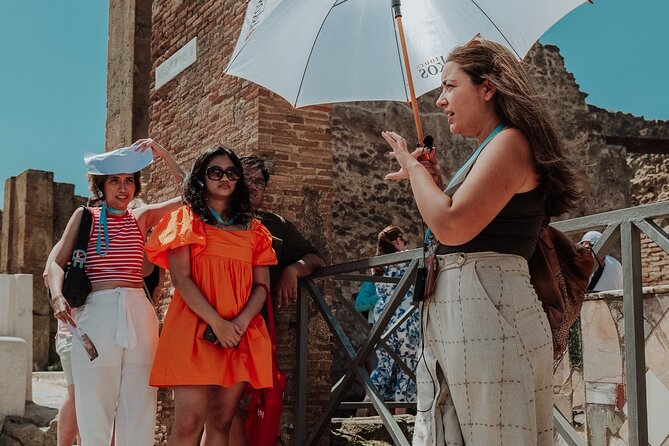
This tour fits best if you:
- want a strong first-timer orientation to Pompeii
- like asking questions and getting answers in context
- prefer not to fight crowds for every key building
- travel as a couple, small group, or family and want a flexible pace
You might consider a different option if you:
- want to spend half a day in one neighborhood or one major building category
- want a very slow, art-by-art analysis style where 2 hours feels too short
- have very specific interests that require more time than a highlights route
One more practical note: Pompeii walking can be hard on your feet. Even if you are generally mobile, you will benefit from taking the tour slowly when needed. Past experiences included guides adapting pace for kids and for mobility constraints, which is exactly where private format helps.
Quick planning checklist so your Pompeii day stays comfortable
- Closed-toe shoes only. Pompeii stone is not flip-flop friendly.
- Bring water and plan for breaks, since this is still a walk through uneven outdoor ruins.
- Dress for sun or rain. Pompeii weather can shift your comfort level quickly.
- If you have question topics, think of 3 or 4 before you arrive. A good guide will happily follow your interests.
Should you book this Pompeii archaeologist tour?
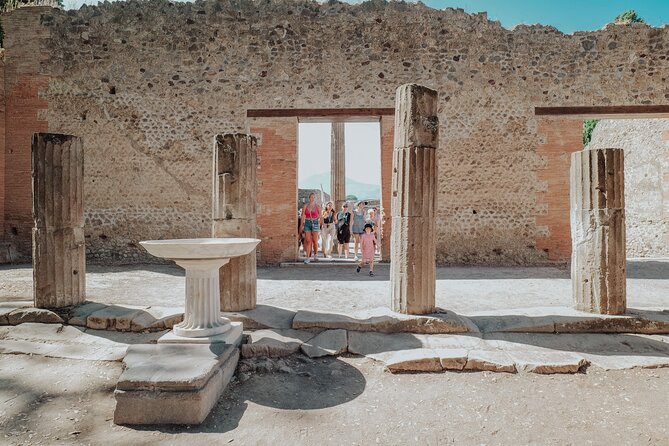
If you have about 2 hours and you want the big Pompeii highlights explained well, this is a smart choice. The private format is the real win, because you can ask what you care about instead of guessing. The route is built around major anchors like Stabian Baths and Forum-area spaces, plus a mix of homes and market life that makes Pompeii feel like a real city.
Just do not skip the one planning item that can surprise people: confirm how the Pompeii entrance ticket is handled for your specific booking. If you handle that upfront and wear proper shoes, this tour is a high-value way to turn a short visit into a coherent, memorable day.
FAQ
What is the duration of this private Pompeii tour?
The tour is about 2 hours.
Is this tour private or shared?
It is private. Only your group participates.
What language is the tour offered in?
The tour is offered in English.
Where do we meet the guide?
The meeting point is Via Villa dei Misteri, 1, 80045 Pompei NA, Italy. Your guide will be holding a sign with Askos Tours.
Is the Pompeii entrance ticket included in the price?
The tour does not include the Pompeii entrance ticket. The route details also mention admission at the park entrance, so it is worth confirming what your booking includes and being ready to purchase the park ticket if needed.
What is included in the tour price?
Included items are guidance and assistance by an Archaeologist, plus the private tour.
Is transportation included?
No. Transportation is not included.
What should I wear for Pompeii?
Closed shoes are best. Flip-flops can be difficult on the ruins.
Can service animals join the tour?
Yes, service animals are allowed.
Is there free cancellation, and how late can I cancel?
Cancellation is free. You can cancel up to 24 hours in advance for a full refund.
Recently reviewed around Pompeii
- Sorrento: Pompeii and Vesuvius Day Trip with Entry and Lunch★ 4.4 · 11 reviews
- From Sorrento: Pompeii with an Archaeological Guide & Ticket★ 4.6 · 19 reviews
- Sorrento: Pompeii & Herculaneum Day Trip Entry and Lunch★ 4.6 · 27 reviews
- Pompeii: Skip-the-Line Guided Archaeological Discovery Tour★ 4.2 · 13 reviews
- 2-Hour Private Walking Tour of Pompeii★ 4.7 · 22 reviews
- From Positano: Pompeii Ruins Small Group Guided Tour★ 4.8 · 82 reviews
- Pompeii Positano Amalfi Day Trip from Rome by Car, No Bus!★ 5.0 · 5 reviews
- Pompeii VIP 3h Tour: Skip-the-line with your Archaeologist★ 4.9 · 13 reviews
Pompeii Tours, compared.
Entry Ticket and Guided Tour with an Archaeologist
Read our review →

Pompeii Small Group Tour with an Archaeologist
Read our review →
Skip-the-Line Entrance Ticket with Audio Guide
Read our review →
Pompeii and Mt. Vesuvius with Lunch and Wine Tasting
Read our review →
Archaeological Park Tour with Ticket on request
Read our review →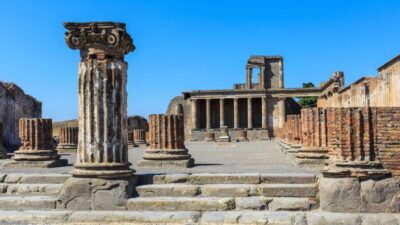
Browse the lists this tour appears in