
Reviewed · POMPEII TOURS
2 Hours Private Walking Tour in Pompeii with an Archaeologist
Pompeii is one of those places where you can see the past with your own eyes, not just read about it. This 2-hour private walking tour brings an archaeologist-licensed guide into the mix, so you understand what you’re looking at, fast. You’ll cover the key public spaces and also peek into everyday Roman life through smaller, less obvious stops.
I especially like that you get public landmarks such as the theatres, thermal baths, forum, and sacred area, with explanations that help you connect the dots. I also like the focus on real daily routines, including a thermopolium (Roman fast food), bakery, fabric market, and houses, so Pompeii feels lived-in rather than staged.
One consideration: the Pompeii entrance fee is not included (listed as €20 per person), and the tour requires good weather, so plan for an adjustment if conditions are poor.
Key Things to Know Before You Go
- Private and personalized: your group only, guided at a pace that makes sense for you
- Archaeology degree guide: licensed guide with a degree in archaeology, not a general sightseeing host
- Two layers of Pompeii: big public sites plus everyday businesses and homes
- Thermes, forum, theatres: you’re not skipping the iconic anchor points
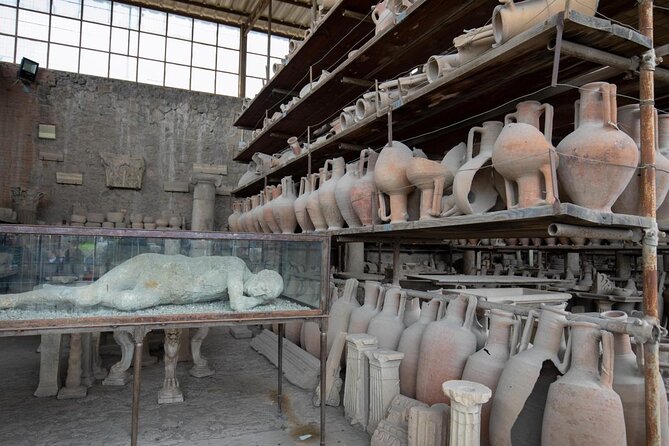
- Everyday food and work: thermopolium, bakery, and fabric market help explain daily Roman life
- Short but focused: 2 hours is enough to get oriented, then decide what to explore next
Pompeii Makes Sense Fast When You Have an Archaeologist
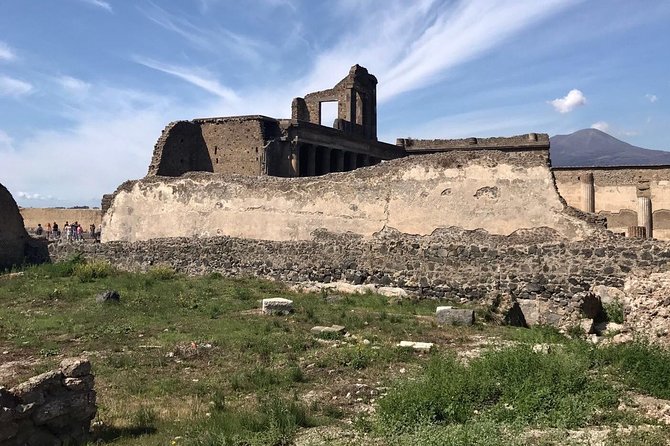
If you’ve ever wandered around Pompeii with an audio guide, you know the common problem. You see a lot. You still struggle to tell what matters most. This kind of tour fixes that by using a licensed archaeologist guide to give you a clear framework while you walk.
You’ll be walking through an UNESCO World Heritage Site, but in a way that’s built for real understanding. Pompeii is packed, so having someone sort it into public spaces versus private life is a huge help. In two hours, that framing is what turns scattered ruins into a story you can follow.
And yes, Pompeii is impressive on its own. The difference here is that you don’t just stand in front of walls. You learn what Roman daily life looked like, how public buildings worked, and how regular people ate, shopped, and lived.
More Pompeii tours to compare:
- Pompeii: Entry Ticket and Guided Tour with an Archaeologist
★ 4.8 · 19,459 reviews - Pompeii: Entry Ticket with Optional Audio Guide
★ 4.2 · 12,360 reviews - Pompeii: Small Group Tour with an Archaeologist
★ 4.8 · 12,264 reviews
The 2-Hour Walking Plan, With Enough Time to Actually Learn
This tour is timed for an efficient circuit. You’ll start at Piazza Esedra, 10/13, 80045 Pompei NA, Italy, and you’ll end back at the same meeting point. That keeps logistics simple, especially if you’re also planning an afternoon or evening elsewhere.
The duration is about 2 hours, so expect a brisk, high-information walk. It’s not a slow museum-style experience. The goal is to show you the most important areas and explain how they fit together, then leave you ready to explore on your own if you want more.
You also have multiple tour times to choose from. If your day is already tight, the scheduling flexibility is a real value point.
Pompeii Archaeological Park: Your Main Stops for Big Roman Life
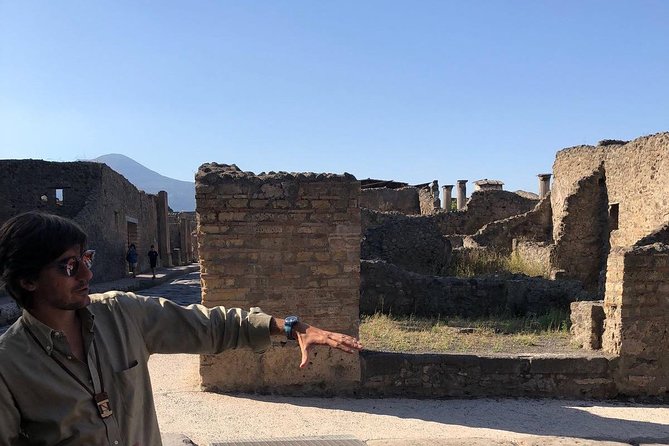
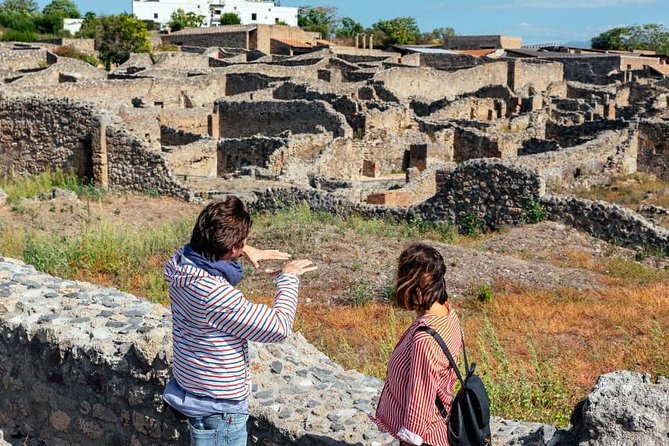
You’re led through the Pompeii Archaeological Park, where the guide focuses on the “must-see” areas and makes them understandable. The public spaces are where Pompeii really shows off how Romans organized community life.
Theatres, Thermal Baths, and Why Romans Loved Public Space
Pompeii’s theatres are a great first reality check. It’s not just that people watched shows. It’s that entertainment and social status were tied together, and architecture shaped how crowds gathered.
Then you move into the thermal baths, which are more than a place to get clean. Baths were a social routine and a major part of everyday life. With an archaeologist guiding you, you’re less likely to treat the ruins like random rooms and more likely to understand how the layout supported time, movement, and public behavior.
More walking tours in Pompeii:
- Pompeii: Guided Walking Tour with Entrance Ticket
★ 4.3 · 1,423 reviews - Discover Pompeii: French Walking Tour of the Buried City
★ 4.8 · 253 reviews - Pompeii 3 Hours Walking Tour Led by an Archaeologist
★ 5.0 · 126 reviews - Pompeii: Highlights Guided Walking Tour
★ 4.6 · 105 reviews
The Forum (Main Square) and the Sacred Area
The forum is Pompeii’s central public stage, the kind of place where civic life happened. It helps to see it early in your tour, because it becomes your mental anchor. Once you understand the forum, the rest of the city feels like it has a map.
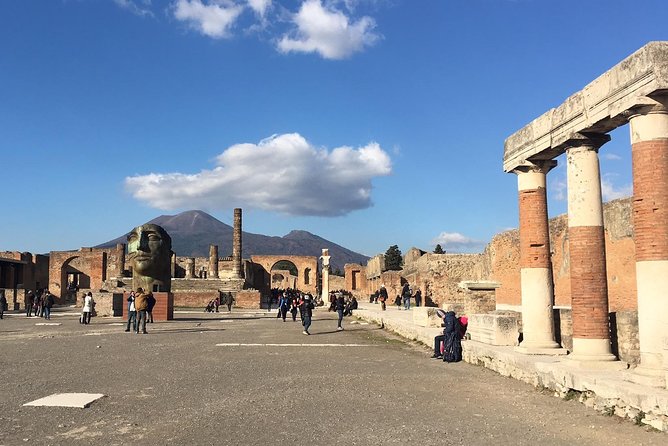
You’ll also visit the sacred area, which adds another layer. Romans didn’t keep religion in one corner of life. It showed up in public routines and shared spaces. Seeing these areas with context helps you read the city rather than just view it.
What About “Hidden and Secret Areas”?
This experience mentions the chance to discover areas out of the tourist routes while still covering the clearest public highlights. In practice, that’s what you want in Pompeii. You get the big hits, then you get a few moments where the city feels more personal and less like a checklist.
Private Roman Life: Thermopolium, Bakery, Fabric Market, Houses
Pompeii is famous for dramatic scenes, but the daily story is what makes it stick in your mind. This tour includes private and semi-private spaces connected to ordinary routines, like eating, trading, and living.
Thermopolium: Roman Fast Food, Pompeii Style
The thermopolium is one of the most fun stops because it shows you how people fed themselves on a regular basis. Think of it as the ancient version of quick meals, where the layout and activity point you to how patrons would stop, order, and move on.
Bakery and Fabric Market: Work You Can See
A bakery gives you a direct link to food production. Even in ruins, you can understand that someone had to make bread day after day, and that the business mattered enough to be part of daily commerce.
The fabric market takes you into another everyday engine of the city: textiles and trade. It’s a strong counterpoint to the big civic buildings you see elsewhere. Together, these stops help you grasp that Pompeii was both a public show and a working community.
Houses: Seeing Private Life Without Getting Lost
You’ll also look at houses, which helps you understand the difference between public space and private space. Even when a home is partially ruined, you can often see the general idea of how spaces were used. With a guide, that becomes much easier to interpret.
If you like ruins that feel like they belong to real people, this portion is why the tour gets consistently strong marks. It helps you stop thinking of Pompeii as one big monument and start thinking of it as a city made of neighbors.
Why Private Format Matters in Pompeii
Pompeii is busy. Even when it’s not overcrowded, it still feels like a place where you can get swept along. A private walking tour changes the pacing and the emphasis.
You’re not trying to match a group’s speed. You can ask questions when something clicks, or when it doesn’t. And because the tour is designed for a focused 2-hour arc, the guide can tailor what you spend time on.
It’s also sized for value. The price is $336.43 per group, up to 8 people. That can work out surprisingly well if you’re traveling with friends or family. A private guide can cost a lot more per person in other destinations, and here the “per group” structure can stretch the budget.
Price and Value: What You’re Paying For (and What You’re Not)
Let’s break the numbers into something useful. You pay $336.43 per group (up to 8). The Pompeii entrance fee is not included, listed as €20 per person.
So the total you’ll spend depends on how many people you’re booking for. If you’re traveling as a small group, the guide portion becomes cost-effective fast, and you’re only adding the required site entry per person.
Also, this price includes a licensed guide with a degree in archaeology. That matters because Pompeii ruins can look similar from place to place. The difference between a generic tour and an archaeology-led walk is how clearly you understand what you’re seeing.
One more practical note: booking seems to be popular, with an average booking window around 7 days in advance. If you have a specific time slot you want, it’s smart to lock it in early.
Getting Started at Piazza Esedra, and How the Tour Stays Simple
You meet at Piazza Esedra, 10/13 and you return there at the end. That matters because Pompeii can be logistically messy if you’re trying to connect to other plans.
The tour uses a mobile ticket, which is convenient. You’re also told it’s near public transportation, which is handy if you’re building a day around buses or trains.
The experience is listed as most travelers can participate, and service animals are allowed. If you have mobility needs, you’ll want to consider that Pompeii walking can involve uneven ground and steps, but the tour itself is described as broadly suitable.
Weather, Booking Timing, and the Reality of Short Tours
This is a good weather requirement experience. If it’s canceled due to poor weather, you’ll be offered a different date or a full refund. That’s important because Pompeii can’t be enjoyed the same way in rain.
One more factor that affects planning: confirmation is expected within 48 hours of booking, subject to availability. So you’re not always booking blindly, but it’s still best to keep some flexibility if you’re traveling around busy dates.
And a simple but real note: the experience is non-refundable and cannot be changed. That doesn’t mean you should avoid it. It means you should book confidently if your dates are firm and the weather forecast is usually decent for your trip.
Who This Tour Is Best For
This tour fits best if you want a guided Pompeii visit that doesn’t eat your whole day. I think it’s ideal for:
- First-timers who need orientation without reading every sign
- People who like the everyday side of history, not just the big monuments
- Small groups and families who want a personalized pace
- Anyone who wants archaeology context, not just a walking commentary
If you already know a lot about Pompeii and want hours of deep site detail, you might find 2 hours tight. But for most visitors, that time is exactly what you need to get grounded and then choose your next stops.
Should You Book This Pompeii Archaeologist Walking Tour?
I’d book it if you want Pompeii to make sense quickly. The mix of public anchors (theatres, thermal baths, forum, sacred area) plus everyday spaces (thermopolium, bakery, fabric market, houses) is a smart way to understand how the city functioned.
It also helps that the guide is described as archaeology-trained, and the overall sentiment around the experience is strongly positive, with many people highlighting the guide quality. If you’re traveling with a group, the per-group price up to 8 can be a strong value, especially compared to paying a higher private rate per person elsewhere.
If you’re on a tight schedule, have firm dates, and can handle weather dependence, this is a practical way to see real Pompeii, not just pass through ruins.
Recently reviewed around Pompeii
- Mt. Vesuvius Wine Tasting and Lunch Experience from Pompeii★ 4.5 · 20 reviews
- Pompeii Small Group with an Archaeologist and Skip The Line★ 5.0 · 121 reviews
- Pompeii from Afternoon to Sunset★ 5.0 · 108 reviews
- Private Guided Tour and VR Headsets in the Ancient Pompeii★ 5.0 · 3 reviews
- Visit Pompeii with a local expert guide★ 5.0 · 10 reviews
- Traditional Neapolitan Dinner in Pompei – Villa Franca – Family Restourant★ 5.0 · 8 reviews
- Discover Pompeii on this Guided Walking Tour of the Buried City★ 4.0 · 9 reviews
- Transfer from Pompeii to Naples or viceversa★ 5.0 · 3 reviews
Pompeii Tours, compared.
Entry Ticket and Guided Tour with an Archaeologist
Read our review →

Pompeii Small Group Tour with an Archaeologist
Read our review →
Skip-the-Line Entrance Ticket with Audio Guide
Read our review →
Pompeii and Mt. Vesuvius with Lunch and Wine Tasting
Read our review →
Archaeological Park Tour with Ticket on request
Read our review →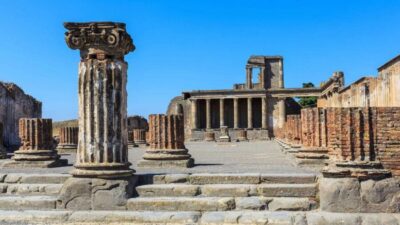
Browse the lists this tour appears in