
Reviewed · POMPEII TOURS
Pompeii Private Tour with an Archaeologist and Skip The Line – 3 hours
Pompeii is one of those rare places where you can feel a city snap back into focus, block by block. A private tour with an archaeologist turns the walking into a guided story you can follow, with guides you may recognize from past visits, like Eliana Sandretti, Amadeo, and Luisa.
Two things I especially like about this experience: the tight 3-hour route that covers the big landmarks without wandering in circles, and the chance to save time with skip-the-line help at the ticket office. One thing to consider up front: Pompeii entry fees are not included in the tour price, so you should budget for the park ticket on arrival.
Key things to know before you go
- Private, your own pace: only your group, so questions are welcome and the guide can slow down when you need it
- A smart start and finish: begins at Porta Marina Superiore and ends near Porta Marina Inferiore, looping you back to the meeting point
- The “best hits” within 3 hours: theaters, forum areas, baths, markets, and several key homes
- Ticket help can reduce friction: skip-the-line at the ticket office is available on request in advance, plus a link to buy entrance tickets
- Watch the walking: expect lots of steps and uneven, sometimes slippery surfaces
A 3-hour private route through Pompeii’s must-see areas
This is built for people who want Pompeii to make sense fast. You meet at Hortus Pompei, a restaurant and garden bar near Porta Marina Superiore, then your guide leads you through a carefully chosen loop and sends you back to the same meeting point at the end.
The headline is simple: 3 hours is long enough to see Pompeii’s most important zones, but short enough that you are not spending your whole day lost between walls. That matters because Pompeii is big, and even when you think you know where you are going, the ruins can trick you. A private guide keeps you oriented, and you spend your energy looking, not figuring out routes.
You also get the human factor. Pompeii is not just stones. A good archaeologist guide turns what you see into everyday life: where people shopped, how the city gathered, and what certain buildings were for. In the reviews that stand out, guides like Amadeo and Eliana Sandretti are praised for strong explanations, story-driven pacing, and patience when people ask lots of questions.
More Pompeii tours to compare:
- Pompeii: Entry Ticket and Guided Tour with an Archaeologist
★ 4.8 · 19,459 reviews - Pompeii: Entry Ticket with Optional Audio Guide
★ 4.2 · 12,360 reviews - Pompeii: Small Group Tour with an Archaeologist
★ 4.8 · 12,264 reviews
Porta Marina start to Porta Marina finish, and why that loop works
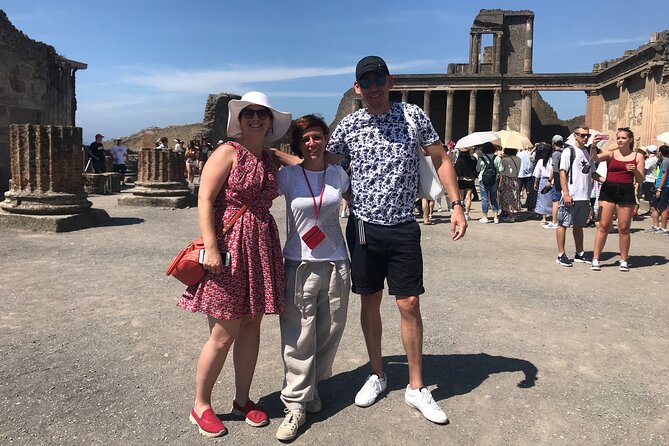
Your tour starts at Porta Marina Superiore and ends near Porta Marina Inferiore, which gives you a natural flow through the site. You will not feel like you are backtracking constantly. Instead, the landmarks come in a logical order, moving you from public spaces into daily-life areas and back toward the departure zone.
This looping pattern also helps with timing. Pompeii can get crowded, especially around the most photographed points. A private guide can adjust where you stand for views and where you pause for the best angles, which is exactly what many praised in their experience. If you want photographs, you also want motion. Slow enough to understand, fast enough to keep moving.
Skip-the-line ticket help, and the real cost of entry
Here’s the part that can cause confusion if you do not plan it early. Your tour price covers the private guided experience and includes “assistance before and during the tour.” But Pompeii park entrance fees are listed as not included, with the standard note that adults pay 19 euros per person, while under 18 entry is free.
So think of this tour price as the guide and service. You still need to purchase the Pompeii Archaeological Park ticket separately.
The good news: skip-the-line help is available, but it is only on request in advance. The experience also provides a link to buy the entrance ticket in advance. In practice, I recommend you do two things early:
- Buy your park entry ticket as soon as you can, using the provided link if you received it
- Confirm that your booking request for skip-the-line at the ticket office is marked correctly
One review complaint was basically this: the tour felt expensive until the park entry fee was added and the ticket purchase steps were harder than expected. That is fixable with a bit of upfront prep.
Odeon to Teatro Grande, Roman entertainment without the guesswork
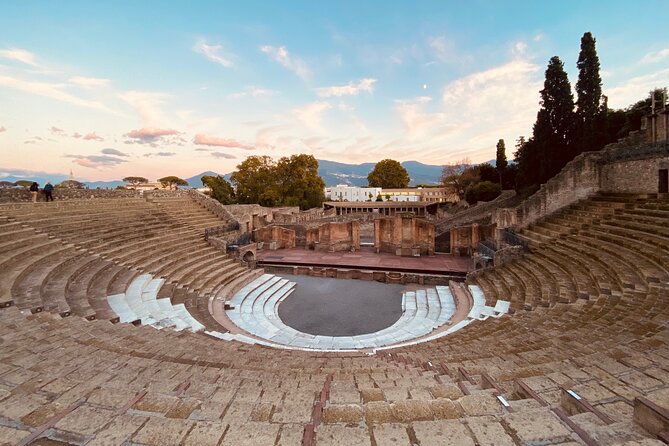
The first major architectural hit is the area around the small theater, the Odeon, sometimes referred to as Teatro Piccolo. From there you move to the Teatro Grande, the large theater. Each stop is short, but the guide’s job is not to read every inscription. It is to show you how Pompeians used these spaces and why theaters mattered in a city where public gatherings were life.
Here is what you’ll appreciate most: theaters are not just “pretty ruins.” They are built social machines. With a guide, you can connect the seating layout, the stage orientation, and the acoustics logic to the idea of performance as a civic event.
Practical note: theaters usually mean steps and open sun. If you visit in the hottest part of the day, you will feel it. Some guides are praised for finding shaded spots when possible, which is a small detail that can make a big difference.
A few more Pompeii trips worth comparing
- Pompeii Ruins Private Tour with Optional Skip-the-Line Entry
★ 4.9 · 732 reviews - Pompeii private tour with an Official Guide
★ 5.0 · 631 reviews - Visit in Pompeii – Pompeii Private Tour with Ada
★ 5.0 · 436 reviews - Pompeii Private Tour with an Archaeologist and Skip The Line
★ 5.0 · 391 reviews
The main street, the Forum zone, and the feeling of civic life
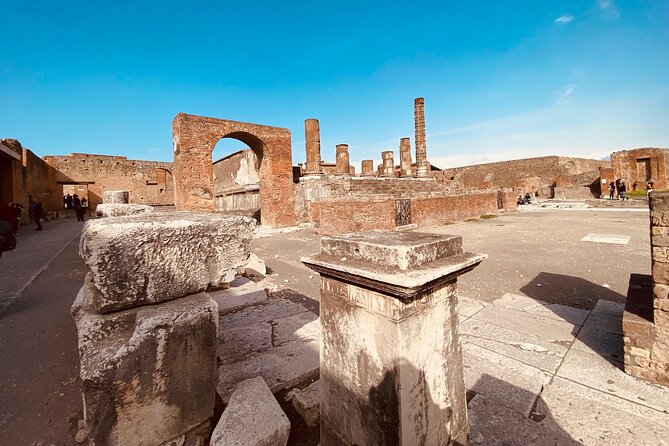
From the theaters you continue toward the main street of Pompeii and into the big public areas. This is where the city shifts from entertainment to politics, commerce, and justice.
One of the key stops is the Forum (Foro di Pompei). Then you reach the court of justice, often called the Pompei Basilica in tourist language. The value of a guided visit here is simple: without context, you may see walls and platforms and assume everything is ceremonial. With an archaeologist guide, you understand that these were working spaces for decisions, gatherings, and business.
Two more stops deepen this sense of civic rhythm:
- Granai del Foro, an archaeological deposit area tied to storage and the city’s systems
- The structured “courthouse” feeling at the Basilica area, where the layout tells a story of authority
If you like to understand how people organized themselves, you will feel rewarded here. Multiple guides are praised for turning the ruins into a believable day in 79 AD, including how strangers and neighbors moved through the same streets.
Stabian Baths and Granai areas, where “real life” shows
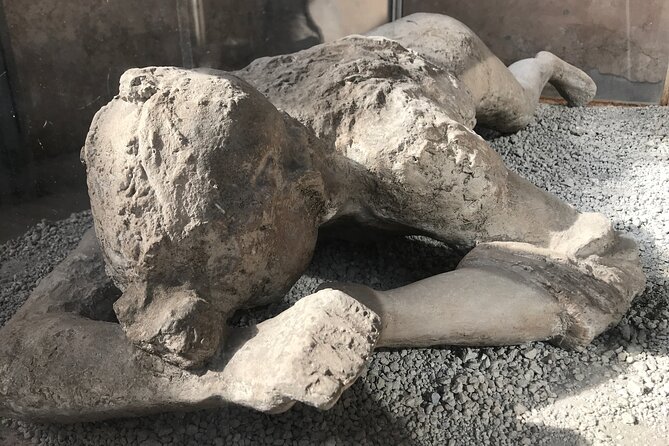
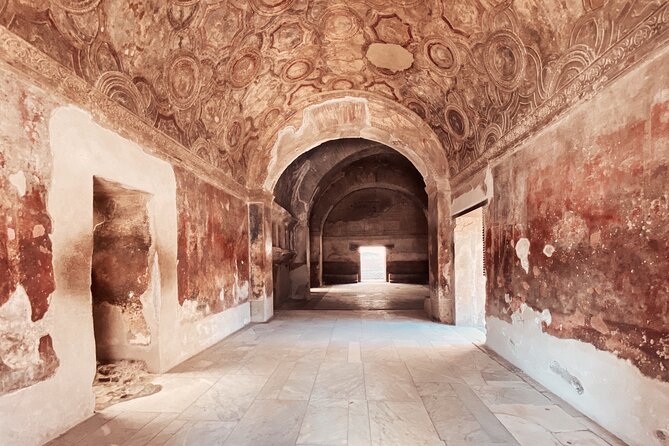
A big attraction on this route is the Stabian Baths (Terme Stabiane), described as the first baths of Pompeii. Baths were the social gym and meeting place rolled into one. They were also where routines happened: washing, relaxing, and talking while the city went on around you.
This stop is not about memorizing room names. It is about recognizing the logic. Even from a short visit, you can see the flow of spaces and understand that bathing was a whole experience, not just a quick rinse.
After that, the route continues into the Forum-related areas again via the Granai stop. Storage links to food systems. It is a reminder that a city has infrastructure behind the drama.
If you tend to enjoy practical topics like how cities function, baths plus storage is a strong combo. And because you are with an expert, you are not stuck guessing which parts are essential and which are decorative.
Temples, Jupiter and Venus, plus the “in-between” zones
As the tour moves through central areas, you also visit key religious points, including a stop for the Temple of Jupiter and a stop for the Temple of Venus.
Temples in Pompeii are worth seeing with a guide because they set the emotional tone. The city was not just public administration and work. It also had spaces where people expressed hope, duty, and identity. The archaeologist approach helps you notice what looks similar and what functionally mattered.
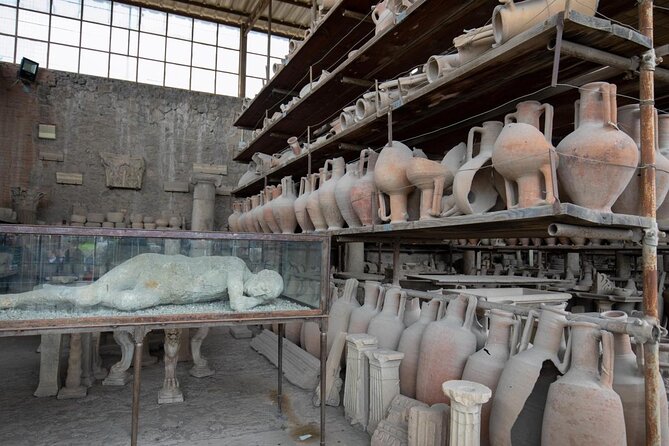
Between temples you pass through other zones that many visitors would skip if they only chased the postcard views. You get small stops that still deliver context, like the Quadriporticus of the theatres, described as the gladiators’ barrack area, and the Lupanar, the brothel or prostitution area.
Quadriporticus gladiator zone and the Lupanar, social reality in stone
Some ruins feel distant until you realize people used them for everyday habits, even if those habits are uncomfortable to talk about. The tour does both the polite and the blunt versions of Pompeii.
The Quadriporticus stop, described as a gladiators’ barrack area, helps you understand that entertainment was backed by training, living arrangements, and discipline. It makes the theater stops feel more grounded. You are not just watching. You are seeing the machinery of who prepared.
Then you move to the Lupanar, the brothel area. This stop is short, but the guide’s role is important: you learn what the space was and how it fit into the city’s social map. It is a reminder that Pompeii was a full city, not a museum display of saints and scholars.
If you prefer tours that avoid anything suggestive, this one might feel too direct. But if you want Pompeii to feel honest, not sanitized, you will likely appreciate it.
Casa del Poeta Tragico, Casa del Menandro, and mosaics you can actually spot
A major highlight on this route is shifting from public buildings into domestic spaces. You get a stop at Casa del Poeta Tragico, focused on the Cave Canem mosaic. It is short, but that mosaic does a lot of work. It shows you how owners used small details to communicate personality and protect their space, even in a city built for display.
Later, you visit Casa del Menandro, known for frescoes and mosaics. This is one of the best places to see how Pompeii had artistic ambition at home, not just in temples and big civic areas.
If you have ever walked through ruins and wished someone would tell you where to look, this part delivers. The guide helps you notice patterns and tells you what those decorations and symbols were doing socially. In the reviews, guides are praised for making connections, not just listing facts, so you end up remembering scenes instead of fragments.
Macellum, Eumachia’s building, and the working city behind the show
Pompeii is famous for drama and architecture, but it is also famous for commerce. This tour covers that angle well.
You stop at the Macellum, the meat and fish market. Then you visit Edificio di Eumachia, described as the wool market. These are ideal stops for a guide-led approach because markets are busy by nature, and you may not automatically understand what made a market functional just from walking through.
A few additional points keep the “working city” theme going:
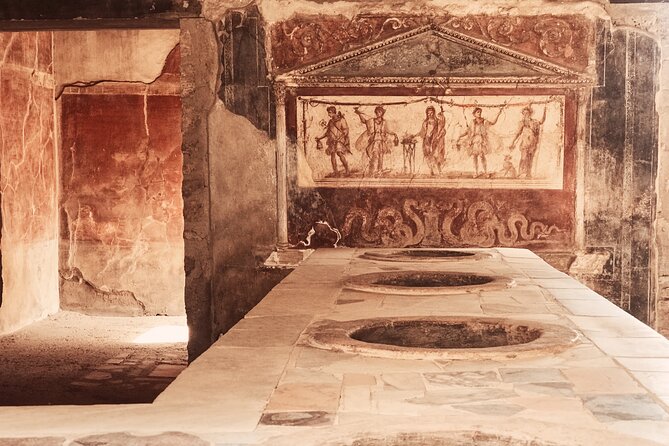
- Termopolio di Vetuzio Placido, a take-away shop and fast food area
- Fullonica di Stephanus, described as a laundry
These sound like quick side stops, but they matter because they show the city’s rhythm. Food served quickly. Clothes were cleaned as a service. Trade moved daily.
If you love the feeling of how people actually lived, these market and workshop stops are where the tour becomes more than sightseeing.
What the walking and steps are really like
Plan for a physical tour. Pompeii is built on uneven ground, and you will encounter steps and surfaces that can be slippery. One of the clearest practical messages from the reviews is to wear good shoes and expect a moderate balance challenge.
The positive side of being in a private group is that your guide can adjust. Several experiences highlight that guides made room for mobility challenges, slowed the pace, and helped people keep up with patience. If you have concerns, tell your guide early so they can plan micro-adjustments.
This tour is best if:
- you want a guided route rather than map-reading for hours
- you enjoy architecture and how buildings relate to daily life
- you like asking questions and not feeling rushed
Price value: when this is worth it, and when it might sting
At $302.32 per group with a note of up to 1 participant, the price can feel steep if you are thinking of it like a standard group tour. The value improves if you treat it as a paid lesson in orientation and interpretation. Pompeii is not a place where you save your money by wandering, because the quality jump comes from understanding what you are seeing.
So I view the cost this way:
- If you want the highlights only and do self-guided walking, you will spend less overall
- If you want expert interpretation and a structured route in a short window, a private archaeologist tour can feel like good value
The strongest praise in past experiences focuses on the guide factor: people mention guides who arrived early, stayed engaging, answered lots of questions, and adapted to the group’s needs. That is where your money goes.
Still, do not let the tour price blind you to entry tickets. Budget the 19 euros adult park ticket separately, and keep the skip-the-line request and ticket purchase steps straight ahead of time.
Should you book this Pompeii private archaeologist tour?
Yes, if you want Pompeii to feel guided, not chaotic. The route hits theaters, civic spaces, baths, major temples, houses with famous mosaics, and the market and workshop side of city life. In past experiences, the biggest difference is the guide’s storytelling and the way they keep you engaged through short stops that actually build understanding.
Skip it or choose a different style if you want minimal walking, or if you dislike tours that include the more personal parts of Roman life, like the Lupanar. Also be honest about the budget math: private plus Pompeii entry tickets means you should confirm the total cost before you go.
If you book, do one smart thing early: plan your park entry purchase so the skip-the-line process works the way you expect.
FAQ
How long is the Pompeii private tour with an archaeologist?
It runs about 3 hours.
Is this a private tour?
Yes. It is private, and only your group participates.
What language is the tour offered in?
The tour is offered in English.
Where do we meet, and where does the tour end?
You meet at Hortus Pompei, Restaurant & Garden Bar, Via Villa dei Misteri, Piazza Porta Marina Superiore 1 (80045 Pompeii). The tour ends back at the meeting point.
Are Pompeii entrance tickets included in the price?
No. Pompeii entrance tickets are not included. Under 18 years old is noted as free, and the adult entry fee is listed as 19 euros per person.
Does the tour include skip-the-line access?
Skip the line at the ticket office is available on request in advance.
Is there a mobile ticket?
Yes. A mobile ticket is included.
Is food included in the tour?
No. Meals and food are not included.
Is the cancellation policy flexible?
You can cancel for free up to 24 hours in advance for a full refund. The experience requires good weather, and if it is canceled due to poor weather, you are offered a different date or a full refund.
Recently reviewed around Pompeii
- Sorrento: Pompeii and Vesuvius Day Trip with Entry and Lunch★ 4.4 · 11 reviews
- From Sorrento: Pompeii with an Archaeological Guide & Ticket★ 4.6 · 19 reviews
- Sorrento: Pompeii & Herculaneum Day Trip Entry and Lunch★ 4.6 · 27 reviews
- Pompeii: Skip-the-Line Guided Archaeological Discovery Tour★ 4.2 · 13 reviews
- 2-Hour Private Walking Tour of Pompeii★ 4.7 · 22 reviews
- From Positano: Pompeii Ruins Small Group Guided Tour★ 4.8 · 82 reviews
- Pompeii Positano Amalfi Day Trip from Rome by Car, No Bus!★ 5.0 · 5 reviews
- Pompeii VIP 3h Tour: Skip-the-line with your Archaeologist★ 4.9 · 13 reviews
Pompeii Tours, compared.
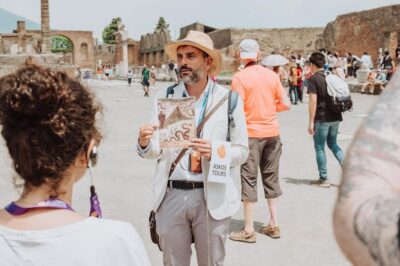
Entry Ticket and Guided Tour with an Archaeologist
Read our review →

Pompeii Small Group Tour with an Archaeologist
Read our review →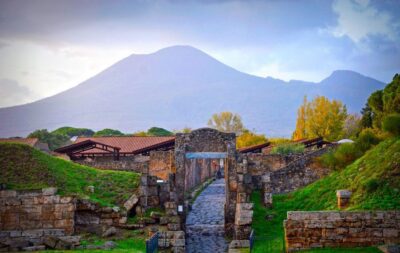
Skip-the-Line Entrance Ticket with Audio Guide
Read our review →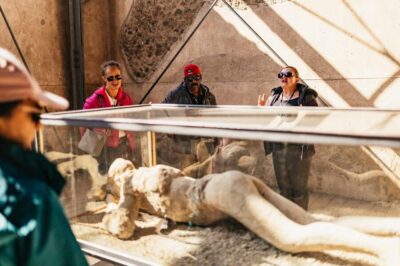
Pompeii and Mt. Vesuvius with Lunch and Wine Tasting
Read our review →
Archaeological Park Tour with Ticket on request
Read our review →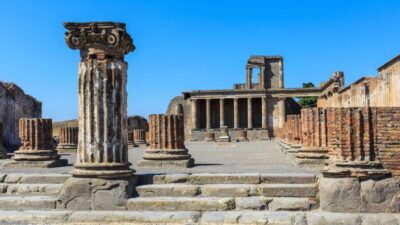
Browse the lists this tour appears in