
Reviewed · POMPEII TOURS
Pompeii Private Tour with an Archaeologist and Skip The Line
Pompeii is the kind of place that can feel endless, but this private, archaeologist-led sprint through the site makes it make sense fast. I love the archaeology-first stories that turn carved stones into real daily life, and I love the 2-hour pace that keeps you moving without feeling rushed. The one big thing to consider is that Pompeii entrance tickets are not included, so you need to buy them to get the skip-the-line benefit.
The route is built around Pompeii’s most memorable zones, from the theaters and Stabian Baths to the Forum, the gladiator area, and the casts of people who died in 79 AD. You’ll also pass through the Lupanar area, which is part of Pompeii’s adult district, so it may help to tell your guide what level of detail you want.
Key Highlights You’ll Feel Right Away
- Private group up to 10 so your guide can tailor the route and answers to your questions.
- Skip-the-line support with a prebook link shared before the tour, plus help to avoid the ticket office line.
- The “Roman city in one walk” plan, covering theaters, temples, baths, markets, and home life.
- Casts of victims show the human side of the eruption, not just the ruins.
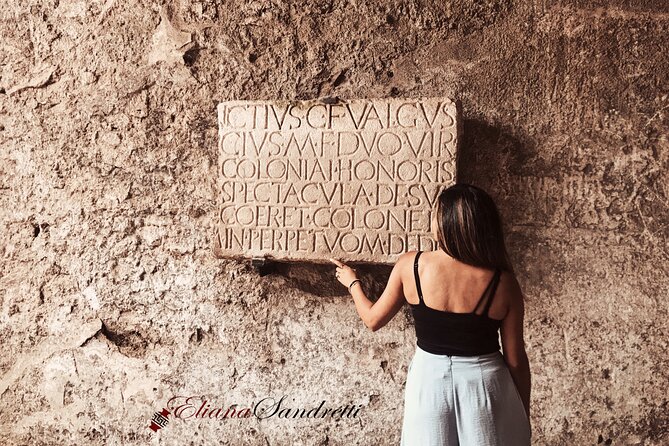
- Guides with real drive, like Luisa, Eliana Sandretti, Antonio, and Luciana, are repeatedly praised for keeping things efficient and engaging.
- Kid-friendly and family-friendly adjustments when needed, including pacing and shade choices.
Why This Pompeii Tour Works in About Two Hours
Pompeii is huge. Even if you think you know what you want to see, you can lose time trying to choose between theaters, temples, villas, baths, and the Forum. This tour is designed like a smart route, not a museum shuffle.
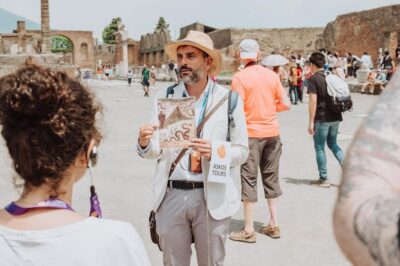
You get a guided walk that targets Pompeii’s high-impact spaces: public buildings, everyday streets, and the homes and spaces that reveal class and routine. Guides named Luisa, Eliana Sandretti, Antonio, and Viktoria have been singled out for turning ruins into lived-in places, with explanations that match what you are actually standing in front of.
One more practical reason it works: Pompeii can be crowded and hot. A private guide can often route you around the worst bottlenecks and keep your group from getting stuck in a sea of sun hats.
More Pompeii tours to compare:
- Pompeii: Entry Ticket and Guided Tour with an Archaeologist
★ 4.8 · 19,459 reviews - Pompeii: Entry Ticket with Optional Audio Guide
★ 4.2 · 12,360 reviews - Pompeii: Small Group Tour with an Archaeologist
★ 4.8 · 12,264 reviews
Price and Ticket Reality: What $375.05 Really Means
The tour price is $375.05 per group (up to 10 people) for about 2 hours. That’s not cheap, but it’s also not just “someone walking with you.” You’re paying for an authorized archaeologist guide and a private format where the route can be shaped around your interests.
Here’s the part that trips people up: Pompeii entrance tickets are not included. The ticket cost is 19 euros per person (and under 18s get free tickets), and you need that ticket to make the skip-the-line part work the way you expect.
A simple way to think about value:
- If you travel as a small group, the guide cost spreads out fast.
- If you’re only paying for one person, you may feel like you are paying a lot for a short walk.
- If you don’t want to handle tickets at all, you’ll need to decide if buying them in advance feels worth it.
Meeting Point, Language, and How the Skip-the-Line Actually Fits
You meet at Piazza Esedra, 10, 80045 Pompei NA, Italy and the tour ends back at the meeting point. You’ll be in English (multiple languages are only available on request).
Skip-the-line is included, but it is tied to tickets. The operator sends a link one day before the tour so you can buy online and avoid the ticket office line. High season is the time to buy entrance tickets in advance because lines get long.
Weather matters here. The experience requires good weather, and if it’s canceled due to poor weather, you’ll be offered another date or a full refund. That’s worth noting because Pompeii is mostly outdoors.
Stop 1: Pompeii Archaeological Park Tour Kickoff and the Big City Scan
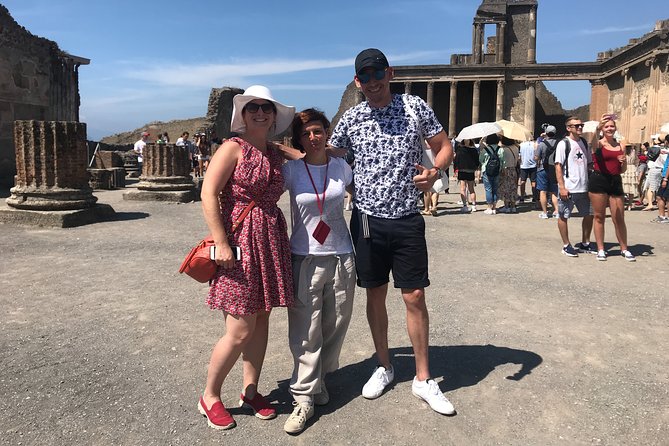
This is where you get oriented. After buying your entrance ticket, you’ll tour Pompeii’s main zones with a guided “survey” that covers a lot of ground in a short time. Admission for the archaeological park itself is not included in the tour price, so plan on the 19 euro per person ticket.
You’ll see:
- Theaters and temple areas, which show the public and religious structure of the city.
- A rich house, a window into wealth, daily comfort, and social display.
- Stabian Baths, Pompeii’s best Roman spa experience.
- Shops and fast food, because Pompeii was not a quiet ruin by the time it stopped living.
- The Lupanar area (brothel district), part of the adult side of the city.
- The Forum and the gladiator area.
- Casts, including bodies of people who died during the eruption of 79 AD.
Why this works: Pompeii is easiest to understand when you see how public life and private life connect. The guide’s job is to connect dots as you walk, instead of leaving you with scattered facts.
Possible drawback: you do cover a wide range of topics in a short window. If you want more depth on one area, your best move is to ask for that focus as early as possible, since the tour is private and can be tailored.
A few more Pompeii trips worth comparing
- Pompeii Ruins Private Tour with Optional Skip-the-Line Entry
★ 4.9 · 732 reviews - Pompeii private tour with an Official Guide
★ 5.0 · 631 reviews - Pompeii Private Tour with an Archaeologist and Skip The Line – 3 hours
★ 5.0 · 564 reviews - Visit in Pompeii – Pompeii Private Tour with Ada
★ 5.0 · 436 reviews
Stop: The Small Theater (Odeion) and Roman Acoustics
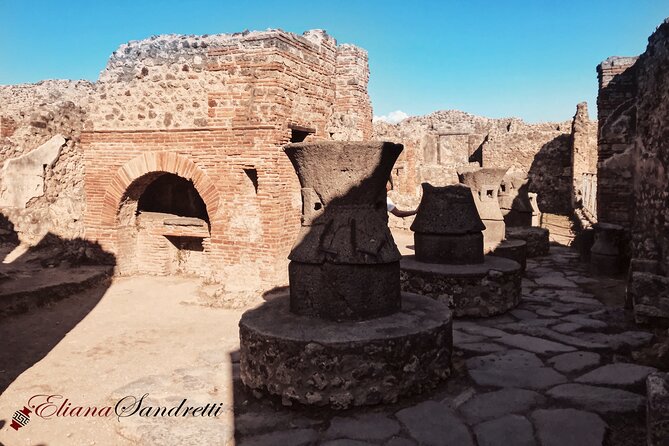
Next you’ll head to the Small Theater (Odeion), where you’ll hear how the Romans recreated acoustics that still matter today. This stop is short, but it changes the way you see the larger theaters later.
The practical benefit: it gives you a quick mental model for what theater life was like, so when you reach the grand stage you can picture how sound and performance would have felt.
If you are traveling with kids, this is often a good pivot point. It’s a clear, visual concept that breaks up the heavier topics like the eruption and the casts.
Stop 2: Teatro Grande, Pompeii’s Main Theater Moment
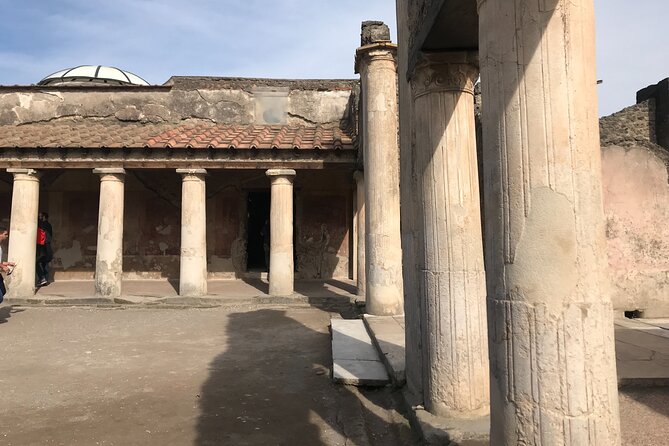
Then comes Teatro Grande, the Great Theater of Pompeii, described as the most important theater in the archaeological park. You’ll spend around 15 minutes here.
What you get in that time:
- A sense of scale, and why this building mattered for civic life.
- A view of the structure that helps you understand how performance and public messaging worked.
- Context that ties back to the small theater’s acoustics, so it all clicks together.
Drawback to consider: theaters are popular photo spots. If you are picky about getting low-crowd photos, your guide’s crowd management matters a lot, and private tours usually do better than self-guided wandering.
Stop: Via dell’Abbondanza, Pompeii’s Main Street Walk-Through
After the theaters, you cross via dell’Abbondanza, Pompeii’s main street. This isn’t just a corridor between landmarks. It’s the city’s rhythm: shops, signage, and the evidence of commerce.
Why I like including a main street in the route: it helps you stop treating Pompeii like an art gallery. It feels more like a place where people lived, traded, ate, and argued.
Stop 3: Granai del Foro and the Casts by the Granaries
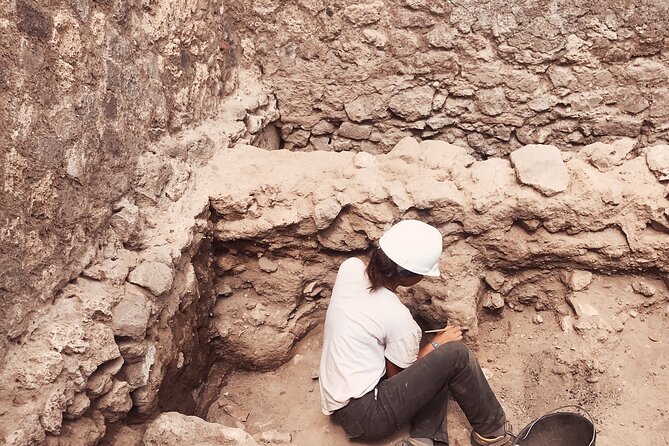
At Granai del Foro, you’ll see the granaries of the Forum and get another chance to admire the casts linked to the victims of the eruption. This area also includes an archaeological deposit with amphorae and work tools.
Spend time here because it changes the story from drama to logistics. Food storage and supply systems made the city function, and the granaries are where that reality shows up in stone and objects.
In a 2-hour tour, this is the kind of stop that prevents Pompeii from becoming only about big buildings. You see the infrastructure.
Stop 4: Stabian Baths (Terme Stabiane), Roman Spa Culture
Next is the Stabian Baths (Terme Stabiane), described as the best spa in Pompeii. You’ll get about 15 minutes here.
What’s useful about this stop:
- Baths were social spaces, not just hygiene.
- They show how Romans mixed routine with status.
- They are visually impressive in a way that keeps the pace lively after the more solemn cast moments.
Possible drawback: Roman bath areas can feel like they blend into other ruins if you are not guided. That’s why the archaeologist-led explanations matter here.
Stop 5: Foro di Pompei, Markets and Temples in the Center
Then you’re in Foro di Pompei, the main square with markets and temples. The time is short, around 10 minutes, so your guide will likely focus on what is most telling rather than every carved detail.
Why it’s worth it even at 10 minutes: the Forum is the clearest symbol of civic identity. You see how religion, trade, and social life concentrated into one space.
Stop 6: Pompei La Basilica and the Courtroom Idea
After the Forum, you visit Pompei La Basilica, the ancient court where justice was administered, with about 15 minutes here.
This stop gives you a different kind of picture of daily life. You are not only learning what people believed or how they ate. You also see where decisions were made and social rules were enforced.
If you like understanding how systems work, you will likely find this part more satisfying than just another viewpoint.
Temple of Jupiter and the Main Square Power Focus
You’ll also visit the Temple of Jupiter, which appears in the main square area. This is the “why this place mattered” stop.
The value is that your guide can connect the architecture and placement to civic religion and authority. Pompeii is full of religious symbolism, and the Forum makes it easiest to see that symbolism as city planning, not decoration.
Stop 7: Gladiator Barracks and the Quadriporticus of the Theatres
Next is the Quadriporticus of the theatres, where you visit the Gladiator Barracks and learn about the apartments and training areas. This is about 15 minutes.
What makes this memorable is the contrast. Pompeii’s theaters are about performance for the public, but the gladiator side shows the training engine underneath the spectacle.
Also, the gladiator area is one of those zones where your guide’s storytelling matters. Names like Max, Mattia, and Danilo have been praised for explaining how gladiators lived and trained, not just pointing at walls.
Stop 8: Vicolo del Lupanare, the Adult District Area
Then comes Vicolo del Lupanare, the ancient red district light area linked to a brothel. You’ll spend about 15 minutes, and this part is listed as admission free.
Keep it honest: this is adult content in a historic context. If you are traveling with kids, or if your group prefers lighter topics, you can ask your guide to adjust the level of detail, since the experience is described as tailor made.
After this, you also visit the Temple of Venus, tied to the city’s divinity. That shift from adult district to sacred space highlights how Pompeii mixed everything in the same city fabric.
Stop 9: Casa del Fauno, Pompeii’s Luxury House
Finally, you’ll reach Casa del Fauno, the House of the Faun. It’s one of the richest and most luxurious residences in Pompeii, with about 15 minutes.
Even without getting lost in every room, this stop helps you understand:
- how wealth displayed itself through layout and decoration
- how elite life was structured around space and view
- why Pompeii feels so personal compared with other ruins
This is a great closing stop because it pulls the tour from public spaces back into a home. If you’ve had questions about Roman class differences, this is where you get some of the clearest visual answers.
The Pace, Crowd Control, and Why Guides Like Luisa and Eliana Get Mentioned
In Pompeii, your biggest enemy is often time, not information. People come expecting to stroll. They end up stuck at entrances, under the noon sun, or rereading the same brochure signs.
Here’s what sets this private format up for success:
- Guides are praised for avoiding crowds and keeping you on a smart circuit.
- Many tours include enough breathing room for pictures, and some guides even help with group photos.
- If weather shifts, a guide like Luciana has handled a heavy rain situation by explaining history with images until the timing improved, then getting the group in via a back way.
Guides such as Antonio and Luisa have also been praised for being efficient while still answering questions. And if you’re traveling as a family, Viktoria is specifically mentioned for keeping kids engaged and finding shady spots in hot conditions.
Who Should Book This Pompeii Private Tour
This is a strong fit if:
- you have limited time and want to cover the key areas in a meaningful order
- you want an archaeologist’s voice, not just descriptions on a sign
- you dislike crowds and would rather let your guide handle routing
- you want a private experience where your group size stays together
It might not be the best fit if:
- you want the cheapest possible Pompeii visit
- you are happy wandering on your own and reading signs slowly
- you don’t want to handle entrance tickets separately, since tickets are not included
Also, remember you only have one language offered by default, English. If multiple languages matter for your group, you’ll need to request it ahead.
Should You Book This Pompeii Private Tour?
I’d book it if you care about getting your time to count. Pompeii rewards structure, and this tour gives you exactly that structure: theaters, baths, Forum core, justice space, gladiator training, adult district context, and a top-tier house ending. In about 2 hours, you come away with a mental map that you can carry into any self-guided wandering afterward.
Just be very clear on the one deal-breaker detail: buy the 19 euro entrance ticket per person. If you do that, the skip-the-line support actually helps. If you don’t, you can end up paying for a guided experience that still requires entry waiting.
If your goal is Pompeii without the stress, this private archaeologist tour is a smart use of time, and it gives you the kind of explanation that turns ruins into a story you can repeat.
FAQ
Are Pompeii entrance tickets included in this tour?
No. Pompeii entrance tickets are not included. The entrance ticket cost is 19 euros per person, and under 18s have free tickets.
How much is the private tour?
The price is $375.05 per group, with the group size capped at up to 10 people.
How long does the tour last?
The tour lasts about 2 hours.
Where do we meet, and where does the tour end?
You start at Piazza Esedra, 10, 80045 Pompei NA, Italy and the activity ends back at the meeting point.
Does the tour really skip the line?
Skip the line is included. The operator also sends a link one day before the tour to buy online tickets in advance, to help you avoid the ticket office line.
What language is the tour offered in?
The tour is offered in English. Other languages are only available on request.
Is food and drinks included?
No. Food and drinks are not included.
What should kids bring for free tickets?
Under 18s have free tickets, but they need to come with ID or passport because the day of birth can be checked.
What happens if the weather is bad?
This experience requires good weather. If it is canceled due to poor weather, you can choose another date or request a full refund.
Recently reviewed around Pompeii
- Sorrento: Pompeii and Vesuvius Day Trip with Entry and Lunch★ 4.4 · 11 reviews
- From Sorrento: Pompeii with an Archaeological Guide & Ticket★ 4.6 · 19 reviews
- Sorrento: Pompeii & Herculaneum Day Trip Entry and Lunch★ 4.6 · 27 reviews
- Pompeii: Skip-the-Line Guided Archaeological Discovery Tour★ 4.2 · 13 reviews
- 2-Hour Private Walking Tour of Pompeii★ 4.7 · 22 reviews
- From Positano: Pompeii Ruins Small Group Guided Tour★ 4.8 · 82 reviews
- Pompeii Positano Amalfi Day Trip from Rome by Car, No Bus!★ 5.0 · 5 reviews
- Pompeii VIP 3h Tour: Skip-the-line with your Archaeologist★ 4.9 · 13 reviews
Pompeii Tours, compared.
Entry Ticket and Guided Tour with an Archaeologist
Read our review →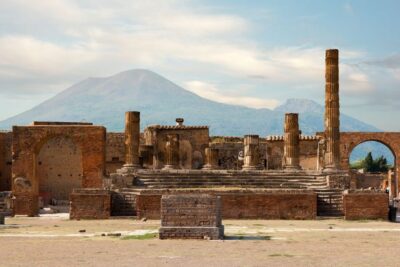

Pompeii Small Group Tour with an Archaeologist
Read our review →
Skip-the-Line Entrance Ticket with Audio Guide
Read our review →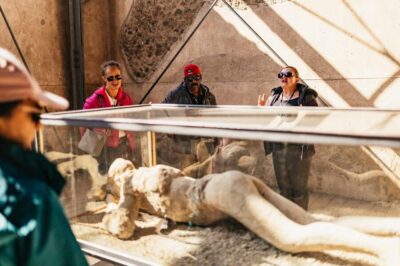
Pompeii and Mt. Vesuvius with Lunch and Wine Tasting
Read our review →
Archaeological Park Tour with Ticket on request
Read our review →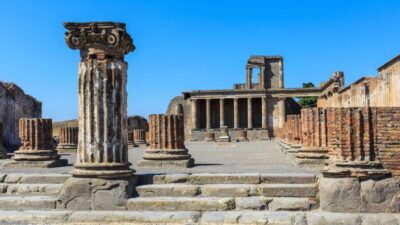
Browse the lists this tour appears in