
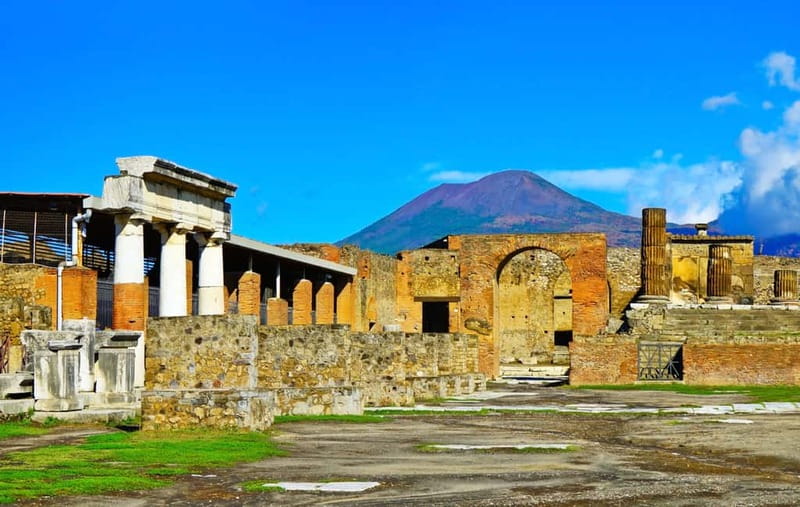
Reviewed · HERCULANEUM TOURS
Pompeii & Herculaneum Tour with an archeologist
This tour is interesting because you compare how Vesuvius hit two nearby Roman cities in AD 79, with your guide pointing out what changes and what stays the same. I like the clear start at the Forum in Pompeii, which quickly frames the city as both political and commercial. I also like the better-preserved feel of Herculaneum, where you can actually see how people lived in buildings that survived much more intact.
One consideration before you go: entry tickets are not included in the price, so you should plan for extra costs. Also, the info on pickup/drop-off looks inconsistent, so confirm what you personally get when you book.
Key highlights you should care about
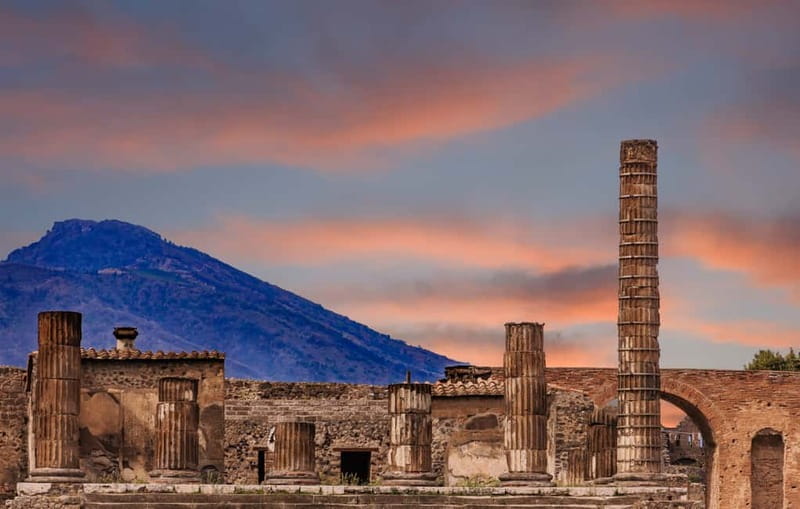
- Archaeologist-led explanations that turn stone and shadows into daily life details
- Pompeii’s Forum first, so the rest of the city streets make sense fast
- Herculaneum’s superior preservation, including upper floors that still stand
- Casa del Salone Nero and Casa Sannitica, two named houses you can picture after
- Thermal baths and recreation, with decorations preserved in a way that feels unreal
- Small group of up to 8, which helps you ask questions instead of rushing past
Why Pompeii and Herculaneum Feel Different on the Same Day
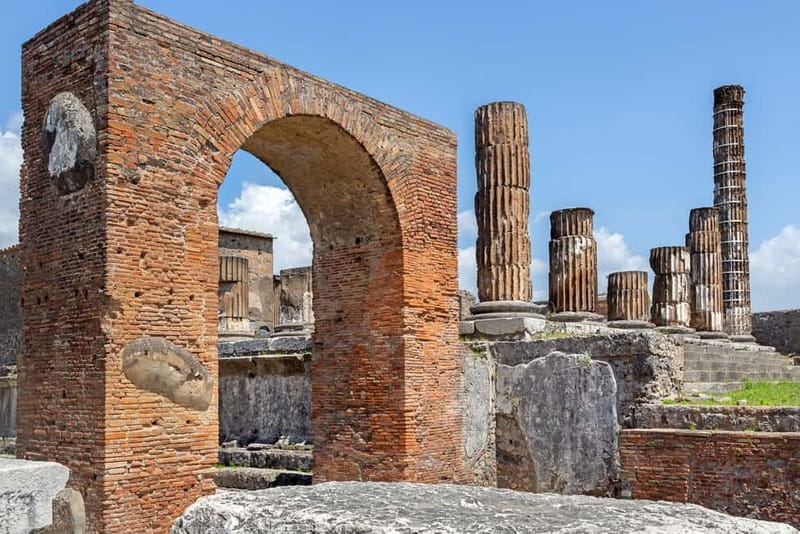
If you only visit one site, Pompeii or Herculaneum, you miss the whole point of comparing outcomes after AD 79. Doing both in one outing gives you a more honest picture. Same eruption, different preservation, and you can feel that difference as you move from city to city.
In Pompeii, the vibe is more about public life. The Forum sits right at the start of the route, and that matters. When you understand the political and commercial center, the streets you walk next stop feeling like a random maze. You start spotting the logic of how people moved and what spaces were for.
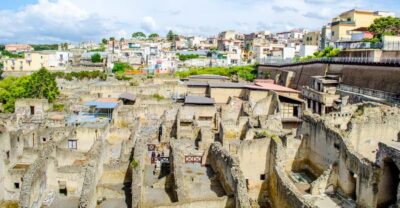
In Herculaneum, the vibe is more intimate. This is described as a jewel of archaeology, and I can see why. People talk about it as glamorous and wealthy, a seaside holiday spot for Rome’s rich. And the reason that reputation survives is visible on site: upper floors in elegant buildings remain standing, and you get a strong sense of everyday interiors rather than just ruins.
More Herculaneum tours to compare:
- Pompeii: Small-Group Tour of Pompeii and Herculaneum
★ 4.8 · 867 reviews - Pompeii and Herculaneum: Guided Tour with an Archaeologist
★ 5.0 · 164 reviews - From Naples: Pompeii and Herculaneum VIP Tour with Lunch
★ 4.4 · 129 reviews
Meeting Point, Tour Length, and How the 5 Hours Really Work
This tour runs for about 5 hours, and you’ll need to check availability for the exact starting times. That time window is long enough to feel you saw more than the highlights, but short enough to avoid the tired, shuffle-through feeling that can happen when tours get too ambitious.
You start at Coffee Shop Vittoria and you end back at the same meeting point. I like that. When you finish where you started, you do not have to solve transportation puzzles on top of everything else.
The group is small, limited to 8 participants, and the tour is in English with a live guide. Small matters here because Pompeii and Herculaneum reward attention. If you are stuck behind ten people, you lose the chance to ask the one question you keep thinking about.
One more practical note: this experience is marked wheelchair accessible. That is useful to know upfront, but it still helps to be ready for uneven surfaces and walking time typical of archaeological sites.
Pompeii Starts at the Forum, the City’s Public Heart
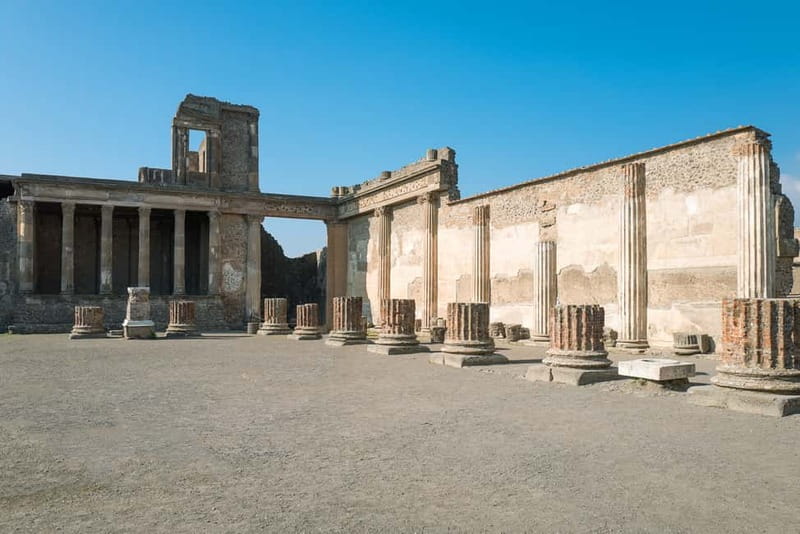
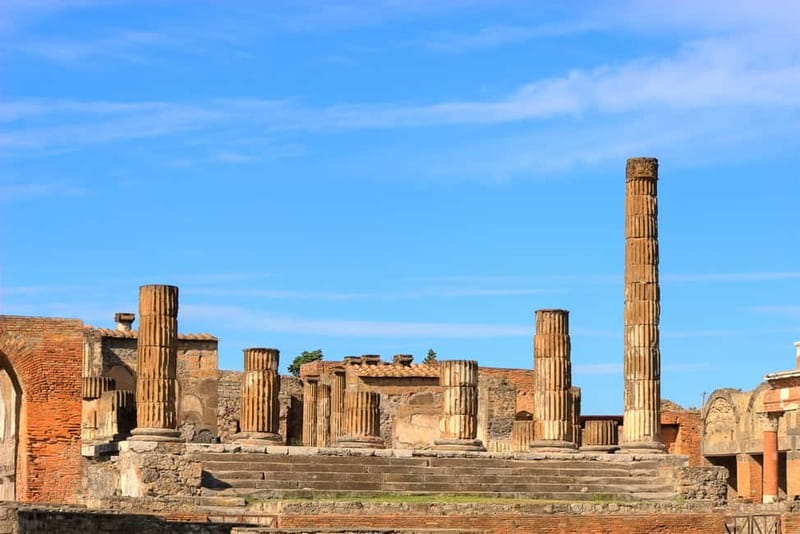
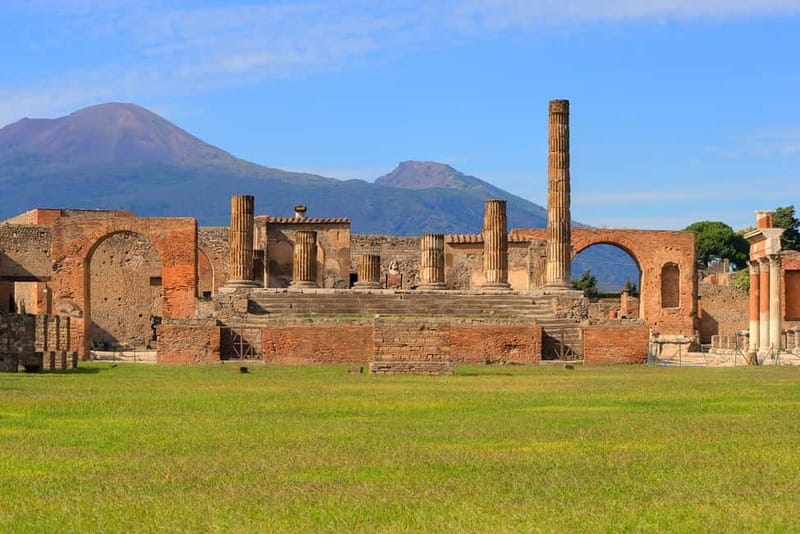
Your route begins in Pompeii at the Forum, the center of the city’s political and commercial life. This is a smart way to start, because the Forum gives you a mental map. You learn what mattered here, who used what spaces, and why public buildings were not just decoration.
From the Forum, you move into the dense web of streets. This is where an archaeologist guide really helps you move from sightseeing to understanding. You can look at walls and thresholds and realize they were part of a system: where commerce happened, how people organized their time, and how the city worked day to day.
The guide’s explanations also set up the comparison you will make later with Herculaneum. Even if both towns were buried by Vesuvius in AD 79, they did not end up looking like carbon copies of each other. Starting in Pompeii prepares you to notice those differences instead of just being impressed by ruins in general.
If Pompeii is your first archaeological site in Italy, the Forum start can make the whole place click. If you have been to other Roman sites already, you still benefit, because the route focuses on what to look for and what questions to keep asking while you walk.
Walking Pompeii Streets Like a Story, Not a Checklist
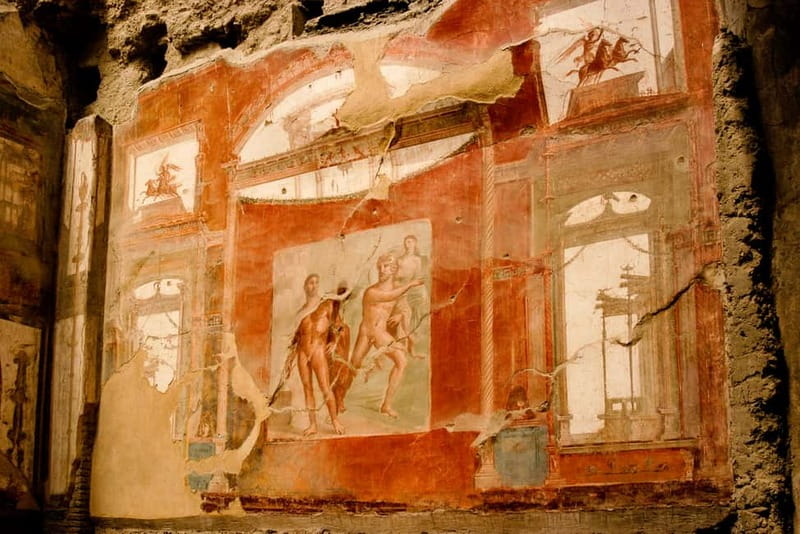
After the Forum, you walk the streets that connect everything. And yes, it can feel crowded with sights, but the guide helps you slow down where it counts. Pompeii’s street network can look repetitive at first. With good commentary, it becomes readable. You start noticing how public areas feed into smaller spaces, and how buildings relate to pedestrian flow.
This part of the tour is about learning how the eruption changed the cities. You will hear how both locations were buried in AD 79, but the impact did not land the same way in the places you are seeing.
That’s the key. Instead of treating Pompeii as a single dramatic moment, you treat it as a city frozen at a specific time. The archaeologist helps you connect what you see now with how it likely functioned then, from political gatherings and commerce to the everyday movement between buildings.
The value here is practical. When you understand what street areas were for, your photos get better. You stop shooting random corners and start framing the spaces the guide pointed out. You also leave Pompeii with fewer “I saw stuff” memories and more “I get it” memories.
More Pompeii tours to compare:
- Pompeii: Entry Ticket and Guided Tour with an Archaeologist
★ 4.8 · 19,459 reviews - Pompeii: Small Group Tour with an Archaeologist
★ 4.8 · 12,264 reviews - Pompeii: Skip-the-Line Entrance Ticket with Audio Guide
★ 4.0 · 2,509 reviews - Naples: Pompeii and Mt. Vesuvius with Lunch and Wine Tasting
★ 4.5 · 2,454 reviews
Herculaneum Comes Next, and the Preservation Changes the Mood
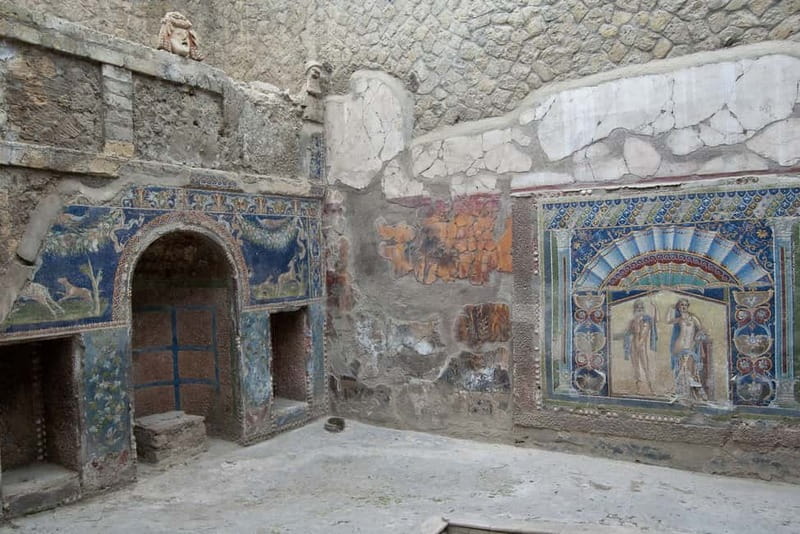
Then you move to Herculaneum, often described as a jewel of archaeology. This town is portrayed as glamorous, overlooking the sea, and serving as a holiday retreat for the rich people of Rome. Even before you get into specific houses, that context shapes your viewing.
Herculaneum is generally presented as better preserved than Pompeii. That comes through when you see upper floors of elegant buildings still standing. In other words, you get more than the basic outlines. You see a stronger sense of what it looked like when people walked those rooms.
Your archaeologist guide explains the differences and similarities between the two cities, and that comparison becomes the spine of the whole tour. You are not just collecting highlights. You are building a clear story about how one catastrophe produced two different archaeological experiences.
And honestly, this is where the tour can feel almost emotional. You look at charred remains and still see forms and furniture that feel astonishingly close to how they were used.
Casa del Salone Nero and Casa Sannitica: Seeing Life Above Ground
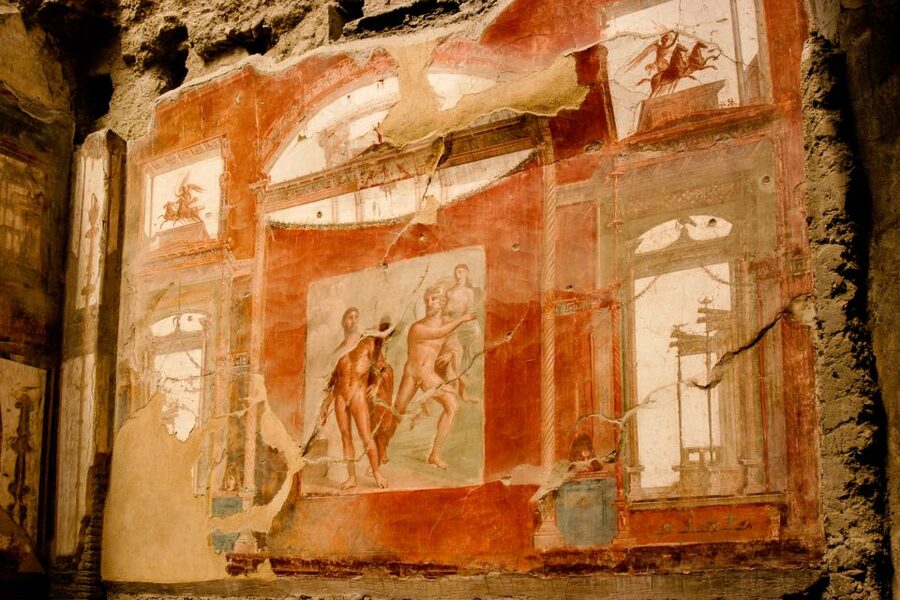
Two named houses in Herculaneum stand out for a reason: they help you see interiors and architecture without guesswork. You will visit places like Casa del Salone Nero and Casa Sannitica, where upper floors of elegant buildings remain standing.
That matters because it changes how you interpret the buildings. In Pompeii, many spaces feel more open, more “what’s missing” than “what still stands.” In Herculaneum, you can look upward and still understand the building’s structure and scale.
Your guide uses these houses to show how Herculaneum differs from Pompeii after AD 79. You also get to focus on objects and surfaces, not just walls. The tour description specifically points out beautiful mosaics and charred but extraordinarily intact furniture, and that is exactly the kind of detail that keeps this from becoming generic ruin-watching.
If you like architecture, you will enjoy how the houses let you picture daily life in a setting that once looked refined. If you are more interested in social history, the guide’s comparison helps you see who lived where, why the layout mattered, and how leisure and comfort shaped the rich holiday retreat atmosphere.
Mosaics, Intact Furniture, and the Thermal Baths Scene
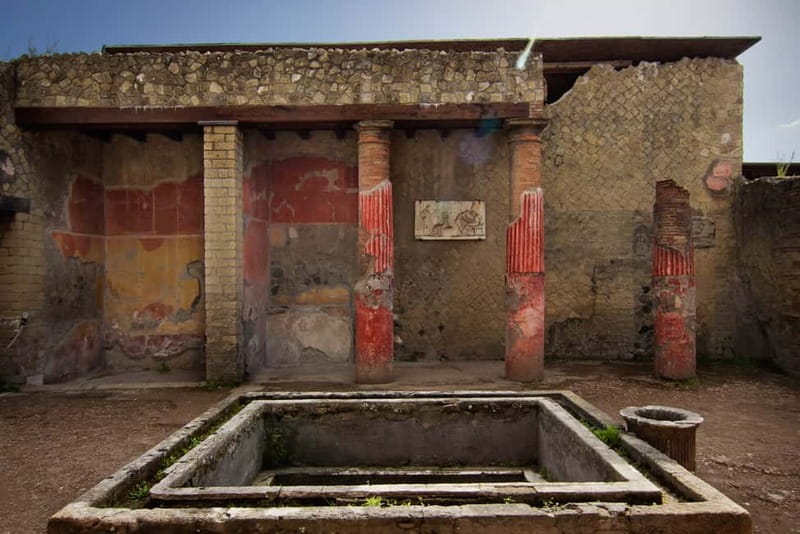
One of the most memorable sections is the thermal baths. You admire fine decorations that have been perfectly preserved, and you also learn about recreational bathing culture.
That is a great pairing. It is not only about visual wow. You connect what you see to a daily ritual. Baths were social, not just functional. The guide helps you understand that the spaces were designed for relaxation and interaction.
And then there are the mosaics and the furnishings. The tour points out beautiful mosaics and furniture that is charred but extraordinarily intact. That combination hits differently than typical ruins. Instead of imagining interiors, you see recognizable elements, and your brain can do the rest.
This is also where a strong guide earns their fee. When the commentary is good, you stop thinking of objects as fragments and start thinking of them as parts of a living environment. Your perspective shifts from disaster as spectacle to disaster as abrupt interruption.
If you have only ever seen museums, this feels like the missing bridge. Museums tell you what survived. Here, you watch survival happen in real scale.
Skip-the-Line Entry, Tickets, and Real Value for $993.72
Let’s talk money in a way that helps you decide. The price is $993.72 per group, with up to 8 participants. That means your actual per-person cost depends on whether you fill the group.
If you end up with the full eight, the math works out to about $124 per person for the guided experience, before entry tickets. If fewer people book, your share can climb. So the best value is for a group that fills close to capacity or for solo travelers who do not mind paying a premium for a small group.
Two important points to budget for:
- Entry tickets are not included, so you need to add that on top of the tour fee.
- The pricing experience includes skip-the-line access via a separate entrance, which is useful at busy sites.
About pickup/drop-off, the info is inconsistent. One part indicates pick up and drop off, another says pickup and drop off is not included. I strongly recommend you confirm your exact plan at booking, so you are not surprised on the day.
Also, there is a note about free entrance on the first Sunday of each month. In that case, tickets cannot be reserved ahead, so entry is not guaranteed. Translation: it can lower your cost, but it adds uncertainty.
Who Should Book This Archaeologist-Led Tour
This is ideal if you want more than visuals. If you like explanations that connect buildings to how people lived, an archaeologist guide is the point. The small group size helps, too, because Pompeii and Herculaneum are not the kind of places where you benefit from constant rushing.
If you are trying to choose between Pompeii-only and a combined visit, I’d lean toward this combo. Herculaneum’s better preservation, upper floors, and intact details add a different kind of understanding, and your guide can walk you through the differences.
If you are on a tight schedule and want one efficient way to cover both cities, this half-day style outing fits well. You get a structured route, a start at the Forum, named houses in Herculaneum, mosaics, and a thermal bath segment, all within about five hours.
And if you care about service quality, the tour has solid feedback for the guiding. One guide named Maria is praised for being really great, with very interesting, place-specific knowledge. Another guide is described as wonderful and masterfully guiding the group, with history brought to life by explanations.
Should You Book Pompeii & Herculaneum With an Archaeologist?
I would book it if you want guided interpretation and you like the idea of comparing two cities shaped by the same eruption. The Forum start in Pompeii helps you orient yourself, and the preserved upper floors and named houses in Herculaneum help you keep your imagination grounded.
I would pause and double-check the practical stuff if you hate surprise add-ons. Entry tickets are not included, and pickup/drop-off information is inconsistent in the details provided. If you sort those two issues early, the tour looks like strong value for a small group.
One more decision check: this tour works best when you can stay focused. You get the most out of it when you listen, look closely at the interiors and mosaics, and let the guide’s comparisons shape what you notice.
FAQ
How long is the Pompeii and Herculaneum tour?
The tour duration is 5 hours. Starting times vary, so you need to check availability.
What is the group size for this experience?
It is a small group limited to 8 participants.
Is there an archaeologist guide, and is the tour in English?
Yes. You’ll have a specialist archaeologist guide, and the live tour guide is in English.
Are Pompeii and Herculaneum entry tickets included in the price?
No. Entry tickets are not included.
Where does the tour start and end?
The tour starts at Coffee Shop Vittoria and ends back at the meeting point.
Does the tour skip the line?
Yes. You use a separate entrance for skip-the-line access.
Is the tour wheelchair accessible?
Yes, the tour is listed as wheelchair accessible.
Is it free on the first Sunday of the month?
Entrance is free of charge on the first Sunday of each month, but tickets cannot be reserved ahead of time, so entry is not guaranteed.
Recently reviewed around Pompei Campania
- From Sorrento: Pompeii with an Archaeological Guide & Ticket★ 4.6 · 19 reviews
- From Positano: Pompeii Ruins Small Group Guided Tour★ 4.8 · 82 reviews
- Pompeii Positano Amalfi Day Trip from Rome by Car, No Bus!★ 5.0 · 5 reviews
- Pompeii VIP 3h Tour: Skip-the-line with your Archaeologist★ 4.9 · 13 reviews
- Pompeii & Virtual Museum Private 2-in-1 Kid’s Tour★ 4.9 · 9 reviews
- Pompeii & Vesuvius★ 4.3 · 12 reviews
- From Naples: Pompeii Wheelchair-accessible with a Guide★ 5.0 · 8 reviews
- Pompeii Tour_Skip the line ticket + audioguide★ 4.7 · 17 reviews
Herculaneum Tours, compared.
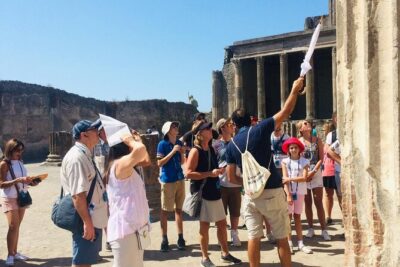
Pompeii and Herculaneum Small Group Tour with an Archaeologist
Read our review →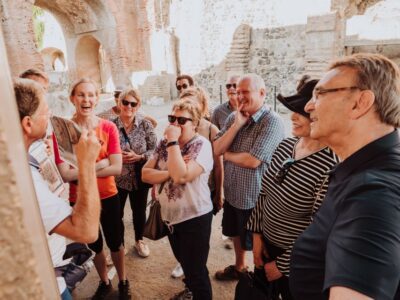
Herculaneum Entry Ticket with Optional Audio Guide
Read our review →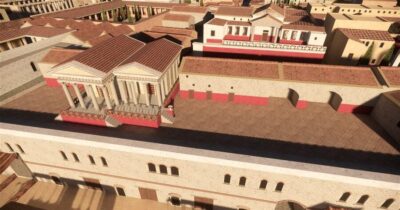
Herculaneum: 3D Walking Tour with Skip-the-Line Ticket
Read our review →
Guided Day Tour of Pompeii and Herculaneum with Light Lunch
Read our review →
Private Day Tour to Vesuvius, Herculaneum & Pompeii with Pick Up
Read our review →

Herculaneum: Skip The Line Entrance ticket + Audioguide
Read our review →Browse the lists this tour appears in