
Reviewed · POMPEII TOURS
Pompeii Ancient City Walking Tour – Italian & English Guide
Pompeii is one of those places where a good guide changes everything. This tour ties the big ruins to real stories, so the houses, temples, and the eruption backdrop make more sense as you walk. You also get a structured route across the park, not just a free-for-all stroll.
Two things I really like are the walk-through Pompeii with a live guide and the practical help at the ticket office entrance. The route hits major stops like the Tempio di Apollo, the Anfiteatro Romano, and the standout villa areas such as the Villa dei Misteri and Casa del Fauno.
One possible drawback to plan for: the price does not include the Pompeii entrance ticket, which is €22 per person. So you’ll want to budget for that extra cost before you go.
Key highlights worth marking on your map
- Ticket-office entry facilitation to reduce time spent figuring out logistics on the day
- Pompeii Archaeological Park as the anchor of the experience, including major temples and Roman public space
- Casa del Fauno and its famous Alexander mosaic recreation topic
- Villa dei Misteri with nine sequential painted scenes tied to an initiation rite and Dionysus worship
- Roman Catholic Sanctuary of Pompeii on Day 2, with a included visit time
- Small group size up to 25, helpful for questions and keeping the pace sane
Getting to Pompeii with a plan, not just a ticket
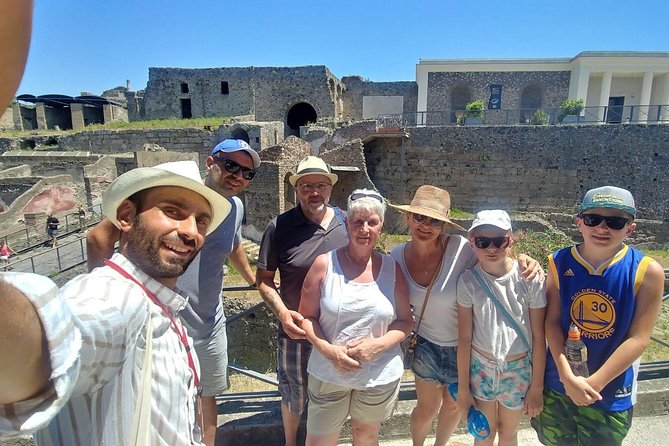
Pompeii can feel overwhelming fast. The streets stretch, the ruins sprawl, and if you arrive with only a map, you’ll still be left asking what you are actually looking at. A guided walking tour gives you the right kind of structure, so you can connect buildings to people, daily life, and the catastrophe that froze it all in place.
This tour is built around Pompeii Archaeological Park first, then a focused finish on Day 2. That matters because Pompeii is not one “attraction.” It is a whole city, and the best way to understand it is to move through it with context as you go.
The group setup also helps. The tour caps at 25 people, which usually keeps questions possible and the pace more manageable than the biggest bus tours.
More Pompeii tours to compare:
- Pompeii: Entry Ticket and Guided Tour with an Archaeologist
★ 4.8 · 19,459 reviews - Pompeii: Entry Ticket with Optional Audio Guide
★ 4.2 · 12,360 reviews - Pompeii: Small Group Tour with an Archaeologist
★ 4.8 · 12,264 reviews
Where you meet, how you start, and why the ticket-office help matters
You meet at Piazza Porta Marina, 80045 Pompei NA, Italy, and the tour ends back at the same meeting point. That simple start-and-finish loop is practical, especially after a long day walking.
The one operational advantage worth paying attention to is that the guide provides facilitation at the Ticket Office entrance gate. It does not mean the entrance fee is included, but it can save you from the most frustrating part of Pompeii, which is standing around while you confirm where to go next.
Here’s how I’d use this in real life. I’d arrive a little early, find your meeting spot in the plaza, and keep your confirmation handy on your phone. When you have that sorted, you can spend your energy on the ruins instead of chasing tiny details.
Day 1 route: the main ruins, temples, and the villas that tell the story
Day 1 is where you get most of the “wow, now I get it” moments. The day starts at Pompeii Archaeological Park and moves through a sequence of major sights that show how Roman public life and private wealth mixed in one city.
Pompeii Archaeological Park: your orientation walk through the big names
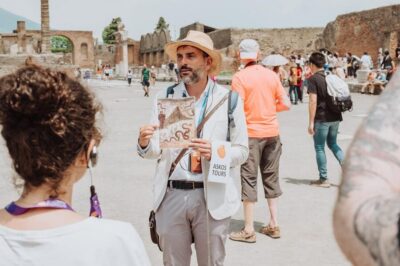
At the entrance, you meet the guide with a sign for Sesto Continente Tours. After entering, your time is mostly spent moving past major landmarks such as the Anfiteatro, Tempio di Apollo, Tempio di Giove, and several key residences.
The park stop is listed for about 2 hours, but think of it as more than a quick circuit. It is the backbone of the day. If you only take one thing from Day 1, make it this: you want your first contact with Pompeii to include both public and private spaces, so the city feels like a living place instead of a pile of walls.
More walking tours in Pompeii:
- Pompeii: Guided Walking Tour with Entrance Ticket
★ 4.3 · 1,423 reviews - Discover Pompeii: French Walking Tour of the Buried City
★ 4.8 · 253 reviews - Pompeii 3 Hours Walking Tour Led by an Archaeologist
★ 5.0 · 126 reviews - Pompeii: Highlights Guided Walking Tour
★ 4.6 · 105 reviews
Casa del Fauno: when mosaics act like history lessons
A short stop takes you to Casa del Fauno, one of the larger homes in Pompeii. The big draw is the mosaic pavement recreation featuring Alexander the Great’s battle against Dario III.
Even in a ruined city, the mosaic tells you about taste and aspiration. This is the kind of artwork wealthy residents chose to show off. You are not just seeing a floor, you are seeing how power and culture were displayed in ordinary walking space.
Tempio di Giove Capitolino: Roman religion with a mountain backdrop
Next up is the Tempio di Giove Capitolino and the wider idea of the Capitoline triad linked to Giove, Giunone, and Minerva. You are also staring at the reminder that Pompeii’s story includes the Vesuvio in the background.
This is where a guide’s storytelling really helps. When you get the religious angle and the political Roman framing together, the temples stop being random ruins and start becoming intentional landmarks.
Tempio di Apollo: the oldest religious building angle
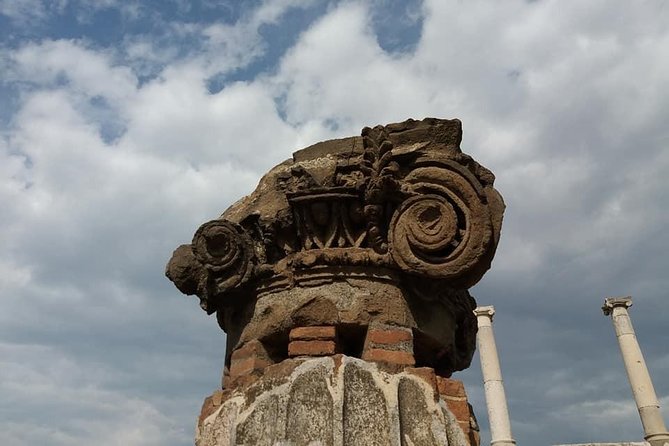
The Temple of Apollo is presented as one of the oldest religious buildings in Pompeii. The stop also highlights a reproduction connected to the bronze statue depiction of Apollo, shown holding a bow and arrow, placed among Corinthian columns.
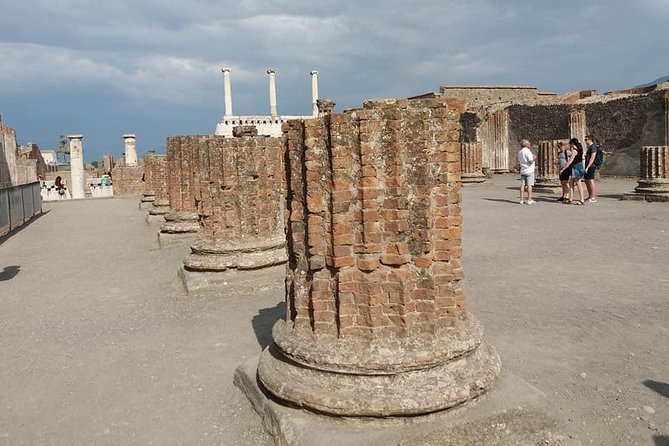
If you like architecture, pay attention to how the columns are arranged and how the temple space feels designed for viewing and ritual movement. Even if the original details are gone, the layout still communicates meaning.
Anfiteatro Romano: the timeline and the crowd size you should know
The Roman Amphitheater is one of the most striking landmarks on any Pompeii list. It was built in 80 BC and could seat up to 20,000 people, arranged in 3 sections by class.
That detail changes how you picture the place. This was entertainment, yes, but it was also a social machine. When your guide explains the seating structure, you can usually spot the logic behind who would watch from where.
Casa del Menandro: a house named after a painting, not a family name
At Casa del Menandro, the key point is the naming. It is not named for the original owners, it is named for a fresco depicting the Greek poet Menander. The stop is short, but it gives you a good lesson in how Pompeii gets interpreted.
When you see the label in your guidebook, it helps to know why that label exists. It is a reminder that Pompeii’s names often come from surviving images and famous finds.
Casa dei Vettii: wealth after freedom, shown through wall painting
In Casa dei Vettii, you get another quick but meaningful look at how status shifted. The home is associated with the Vettii brothers, freed slaves who, after gaining liberty, did not hold back on spending for a show of new standing.
Frescoes and wall paintings are the focus here. The value of a stop like this is that you learn to notice decoration as a signal. In a place frozen by disaster, the walls still speak loud.
Villa dei Misteri: the initiation scenes and the Dionysus thread
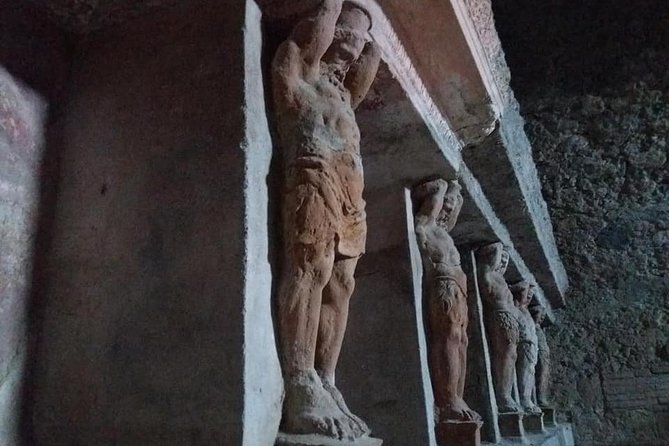
The day ends with Villa dei Misteri. This is the stop people often remember later. The reason is the sequence of nine painted scenes on the walls of the initiation room, which connect to a rite of passage for a bride moving into adult status, along with the worship of Dionysus, tied to wine and fertility.
You’ll get more out of this if you treat it like a story panel by panel, even during a short viewing window. A guide can help you keep the scenes straight so you are not just admiring paint, you are tracking meaning.
Day 2: the Roman Catholic Sanctuary of Pompeii, a calmer hour
Day 2 includes a visit to the Roman Catholic Sanctuary of Pompeii for about 1 hour, and the entrance is marked as included.
This stop works well as a contrast. Pompeii is the main event of course, but shifting to a sanctuary gives you a breather from the dense ruins. It also adds a layer of how people continued to relate to the place long after the ancient city ended.
If you are someone who likes variety, you’ll probably enjoy this second-day pacing. It feels like a breather without skipping the connection to the location itself.
Guides and language: English first, with support when the group is mixed
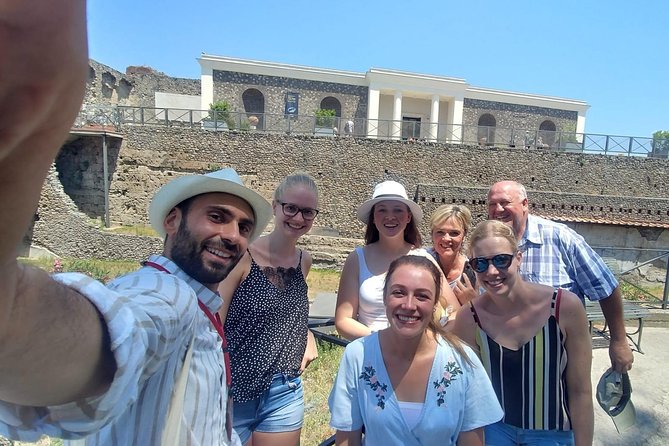
The tour is offered in English. In practice, what you’ll care about is whether you can follow what is being explained at each stop.
One guide named Simone was praised for explanations that were both engaging and thorough. In a mixed language group situation, he was also described as helpful when people needed information repeated in Italian.
That tells you something practical for your expectations. If you speak some Italian, do not be shy about asking for a repeat. And if your group is mixed, being able to switch back and forth is a big help.
Cost and tickets: how to budget without surprises
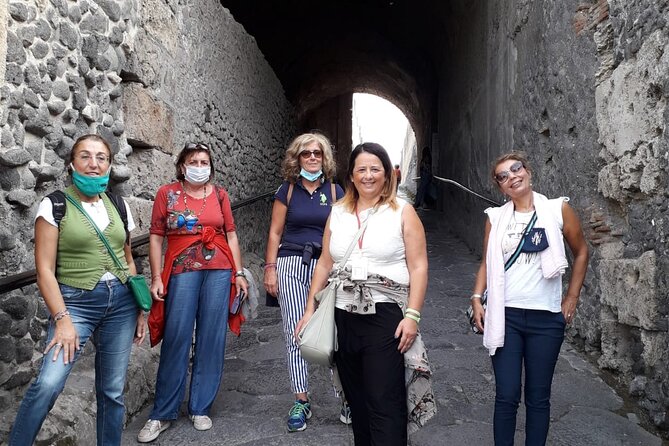
The tour price is listed at $36.12 per person, but the important add-on is the Pompeii entrance ticket of €22.00 per person, which is not included.
So what are you paying for, beyond the ticket?
- You are paying for the guide’s planning and route across major sites
- You are paying for the ticket office entrance facilitation
- You are paying for condensed, guided interpretation at key buildings like the amphitheater and the villas
It’s also worth noting the categories that can qualify for free entrance at Pompeii: minors under 18, EU seniors +65, journalists, and students or teachers from the EU. If any of those apply to you, verify your eligibility before you go, because your total cost can change a lot.
Bottom line: figure on the tour plus the €22 entrance unless you qualify for a free entry category.
Pacing and comfort: what a two-day feel really means for your legs
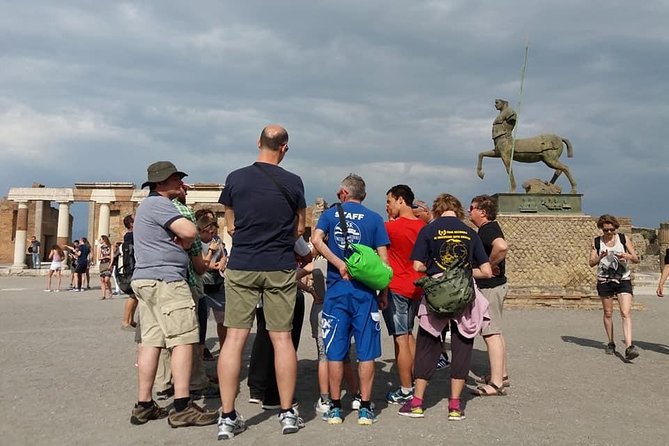
The tour is listed as lasting 2 days (approx.), with Day 1 heavily focused on the main park and Day 2 on the sanctuary. Even when stops are listed as short, Pompeii walking adds up quickly because you are moving between sites and absorbing context as you go.
Here’s how to make it comfortable:
- Wear shoes with grip, because Pompeii paths can be uneven
- Bring water and plan for sun, even when the weather looks mild in the morning
- Use your guide’s route logic as a reason to keep moving, instead of drifting off for side photos
Also remember the tour runs with good weather required. If conditions are poor, the experience can be canceled with an alternative date or a full refund.
How to make the most of the guide at every stop
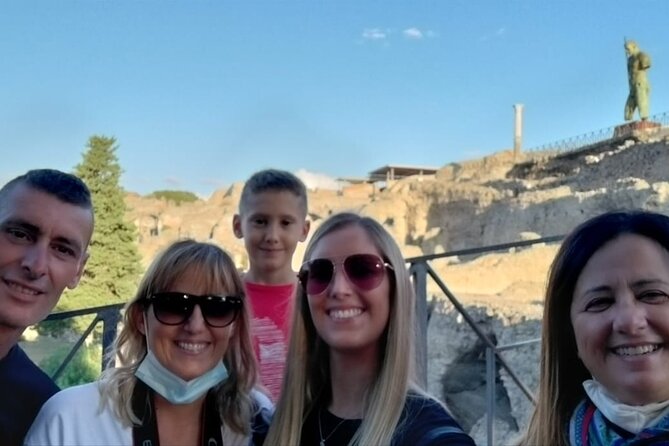
This is the kind of tour where you get more back when you actively listen. The best outcomes I’ve seen with guides in Pompeii are not about memorizing dates. It’s about learning what to notice.
Here are a few things to do that take very little effort:
- Before the amphitheater, ask how the seating worked by class. It helps your brain map the room
- At Casa del Fauno, look at the mosaic topic as a clue to status and taste, not just artwork
- At Villa dei Misteri, treat the scenes like a sequence. Even a basic walkthrough helps
If you want Italian explanations, try to ask early rather than waiting until you are tired. And if you are worried about finding the meeting point, keep your confirmation visible and arrive with time to spare at Piazza Porta Marina.
One more practical note. I have seen real booking situations where communication failed and the guide was not met at the right place. That is rare, but it is enough to justify a simple habit: message once ahead of time if you have contact details, and bring your confirmation. If something looks off, act quickly.
Should you book this Pompeii guided walk?
I’d book it if you want the best shot at understanding Pompeii without getting lost in details. The ticket office entry help, the small group size up to 25, and the mix of major temples plus signature villas like Casa del Fauno and Villa dei Misteri make it a strong value for a first or second time visit.
I might skip it if you already know Pompeii well and prefer to wander freely with your own pace. Also, budget carefully if you plan to pay the €22 entrance fee, since that cost is separate from the tour price.
If your priority is stories plus structure, this is the kind of tour where you’ll feel the ruins start to connect into one city.
FAQ
What is the meeting point for the Pompeii walking tour?
The tour starts at Piazza Porta Marina, 80045 Pompei NA, Italy, and it ends back at the same meeting point.
How much does the tour cost, and is the entrance ticket included?
The tour price is $36.12 per person. The Pompeii entrance ticket is not included and costs €22.00 per person.
How long is the tour?
It is listed as lasting about 2 days.
What language is the guide offered in?
The tour is offered in English.
How big is the group?
The activity has a maximum of 25 travelers.
Is the tour wheelchair or stroller friendly?
The details provided only say that most travelers can participate. No other accessibility specifics are given.
Are service animals allowed?
Yes, service animals are allowed.
Is the tour dependent on weather?
Yes, it requires good weather. If canceled due to poor weather, you will be offered a different date or a full refund.
Can I cancel for free?
Yes. You can cancel up to 24 hours in advance for a full refund. If you cancel less than 24 hours before the start time, the amount paid is not refunded.
Is the Roman Catholic Sanctuary of Pompeii included on Day 2?
Yes. Day 2 includes a free visit time of about 1 hour, and the admission is listed as included.
Recently reviewed around Pompeii
- Mt. Vesuvius Wine Tasting and Lunch Experience from Pompeii★ 4.5 · 20 reviews
- Pompeii Small Group with an Archaeologist and Skip The Line★ 5.0 · 121 reviews
- Pompeii from Afternoon to Sunset★ 5.0 · 108 reviews
- Private Guided Tour and VR Headsets in the Ancient Pompeii★ 5.0 · 3 reviews
- Visit Pompeii with a local expert guide★ 5.0 · 10 reviews
- Traditional Neapolitan Dinner in Pompei – Villa Franca – Family Restourant★ 5.0 · 8 reviews
- Discover Pompeii on this Guided Walking Tour of the Buried City★ 4.0 · 9 reviews
- 2 Hours Private Walking Tour in Pompeii with an Archaeologist★ 5.0 · 15 reviews
Pompeii Tours, compared.
Entry Ticket and Guided Tour with an Archaeologist
Read our review →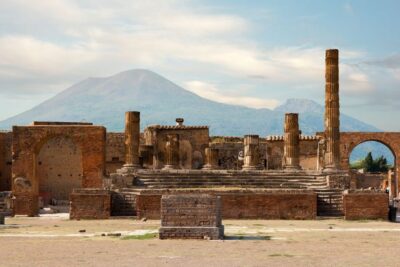

Pompeii Small Group Tour with an Archaeologist
Read our review →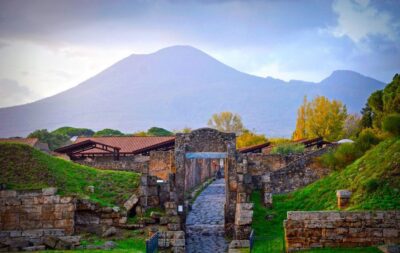
Skip-the-Line Entrance Ticket with Audio Guide
Read our review →
Pompeii and Mt. Vesuvius with Lunch and Wine Tasting
Read our review →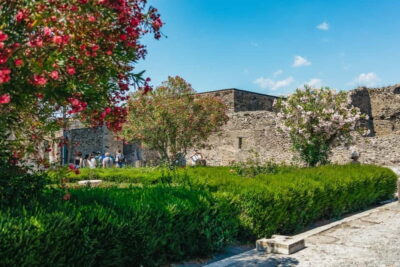
Archaeological Park Tour with Ticket on request
Read our review →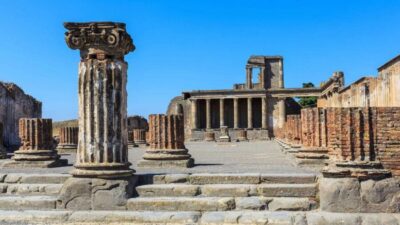
Browse the lists this tour appears in