
Reviewed · POMPEII TOURS
Pompeii 3 Hours Walking Tour Led by an Archaeologist
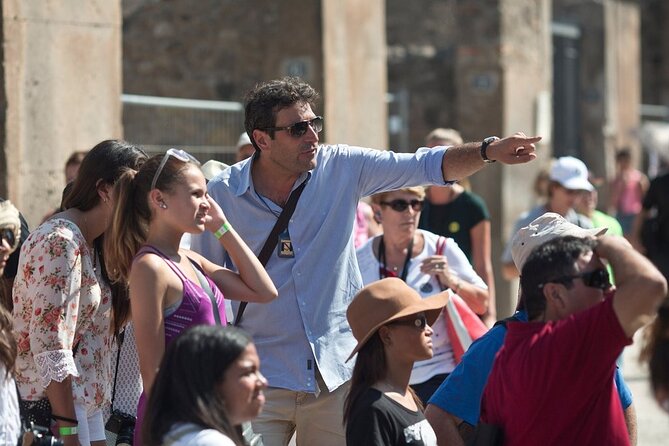
Pompeii can feel overwhelming fast, like you’re wandering through an open-air museum with no map. This 3-hour private walking tour gives you a focused route, with an expert guide helping you read what you’re seeing in real time. I like that it mixes the big civic spaces with the places people actually used every day, like the thermal baths and the busy forum zone.
There is one catch to plan for: Pompeii is huge and exposed, with minimal shade. Come ready for sun, heat, and lots of walking. If that sounds annoying, it will be annoying, but a good guide makes the time fly instead of dragging.
What really elevates this experience is the caliber of the person leading you. In past tours with Askos Tours, guides including archaeologists and specialists like Daniela Mantice, Monica, and Antonella have explained details clearly and answered questions without rushing. You’ll get a personalized feel since it’s private, and the tour is described as customizable for your group.
Key Highlights You’ll Care About
- Private group pacing so you can ask questions and move at a human tempo
- Admission ticket fees included for key ticketed stops, plus free-entry sights built into the route
- Daily-life Pompeii, not just monuments from baths and a brothel to theaters and grand homes
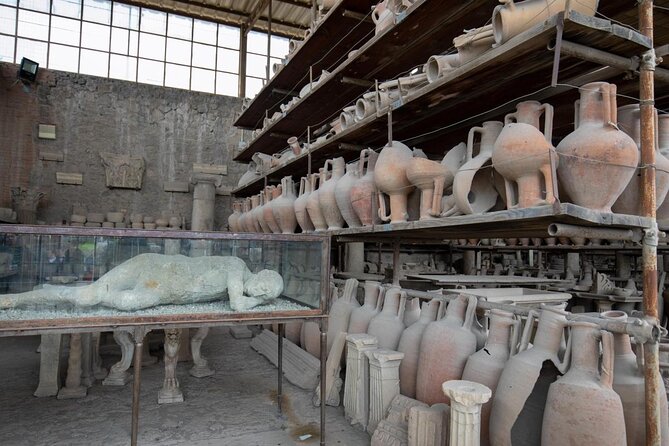
- The eruption’s lasting evidence seen through casts at the granaries area, including a dog and a tree
- Professional archaeologist guidance that connects architecture, everyday routines, and the city’s layout
- Straightforward logistics with a meeting point at Porta Marina Superiore and free luggage storage nearby
Why a 3-Hour Pompeii Walk Beats Wandering Alone
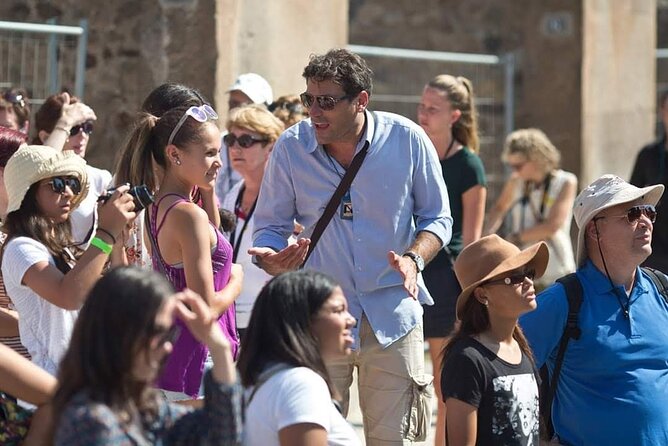
I love Pompeii most when I can connect the dots between places. Without context, you might admire a fresco or a doorway and still miss what it meant to the people who lived there. With this format, you get a guided thread through the ancient city, so the ruins start to feel like a real place with routines, jobs, and entertainment.
A 3-hour window also helps. Pompeii is vast, and full-day plans can turn into a stamina test. This tour keeps it tight, with short stops that still allow you to look closely and ask why something was built the way it was.
Best of all, it’s not just sweeping views. It’s hands-on interpretation, especially around how Romans used public buildings, how wealthy homes were decorated, and how entertainment shaped daily life.
More Pompeii tours to compare:
- Pompeii: Entry Ticket and Guided Tour with an Archaeologist
★ 4.8 · 19,459 reviews - Pompeii: Entry Ticket with Optional Audio Guide
★ 4.2 · 12,360 reviews - Pompeii: Small Group Tour with an Archaeologist
★ 4.8 · 12,264 reviews
Meeting at Via Villa dei Misteri and Getting Oriented Fast
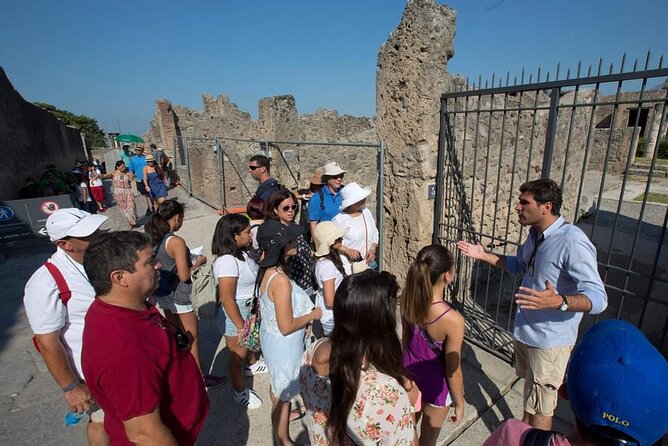
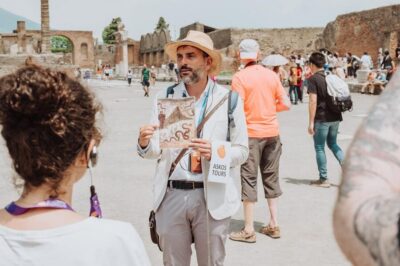
The tour starts and ends at Via Villa dei Misteri, 1, 80045 Pompei NA, Italy. You’ll meet at the main entrance of the archaeological site, called Porta Marina Superiore. The guide will be holding a sign showing Askos Tours, which makes the start less of a scavenger hunt.
This is one of those small logistics wins that matters in Pompeii. The grounds are easy to get turned around in, and arriving with a plan helps you avoid wasting your best morning or afternoon. At the meeting point, there’s a free luggage store, so you can drop bags safely before you walk.
The tour runs rain or shine. That’s good news because Pompeii weather can shift. Just remember that wet ruins can be slippery, and the ground can feel uneven underfoot.
Entering the Pompeii Rhythm: Basilica, Forum, and the Granaries
Your first stop is the Pompeii Archaeological Park area at Porta Marina Superiore. The admission ticket is included here, so you’re not scrambling for lines or deciding what’s worth paying for. This is a great setup because it anchors you at the site’s entry point and gets you moving with purpose.
Next comes the Basilica, described as an open portico that sheltered merchants and other activities. The useful thing here is not the label. You’ll learn how public spaces worked as practical marketplaces and meeting zones, not just “pretty ruins.” Look for how the architecture supported commerce and gathering.
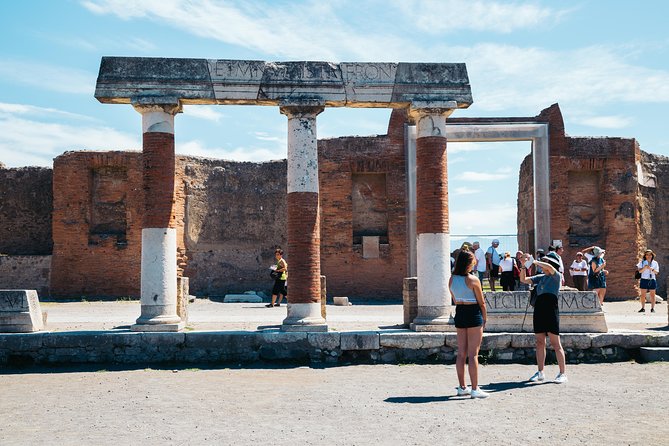
Then you head to the Foro de Pompeya, the ancient main square. This is where you get a sense of civic gravity. Even if you have only a basic idea of Roman city life, the forum shows why these places mattered: laws, business, movement, and social visibility all converged here.
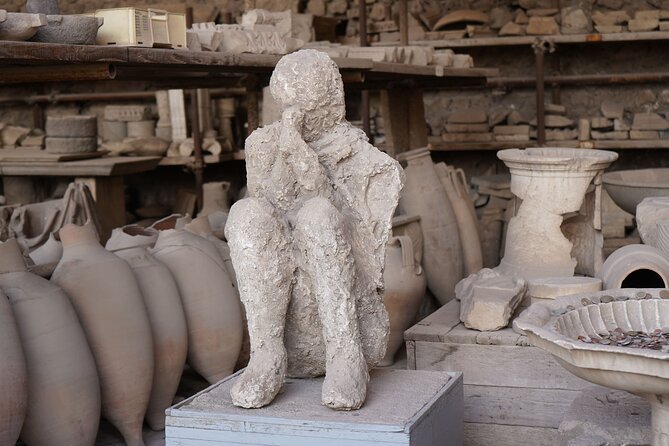
The tour really turns tangible at the Granaries of the Forum. This stop includes admission tickets and focuses on details you might otherwise overlook: marble tables and baths for fountains that adorned house entrances, plus casts connected to the eruption. You’ll specifically see casts of victims, along with a dog and a tree. It’s a heavy moment in a tour full of architecture, but it also makes the tragedy concrete, not abstract.
Practical note: these areas are central and exposed, so even though stops are timed, your sun exposure will add up. A hat and sunscreen are not optional, they’re your strategy.
Grand Homes Up Close: House of Menander and House of the Faun
Pompeii’s houses are where you see the gap between average daily life and wealth. This tour smartly includes two of the most memorable residential stops, and it does it in a way that helps you compare styles and priorities.
The House of Menander is presented as one of Pompeii’s richest homes, known for architecture, decoration, and contents. The key advantage of being guided here is context. You’re not only looking at rooms, you’re learning why certain decorative choices and layouts signaled status and taste.
Then you move to the House of the Faun, described as one of the largest and most impressive private residences in Pompeii. This stop is valuable because the scale helps you understand the social world of the city. Big homes like this weren’t only places to sleep. They were stages for showing culture, power, and connection.
At both houses, expect to spend time orienting yourself visually. The ruins can be confusing at first glance, but with an archaeologist guide, you’re more likely to notice relationships between spaces, how rooms would have functioned, and what kinds of wealth were displayed in the built environment.
More walking tours in Pompeii:
- Pompeii: Guided Walking Tour with Entrance Ticket
★ 4.3 · 1,423 reviews - Discover Pompeii: French Walking Tour of the Buried City
★ 4.8 · 253 reviews - Pompeii: Highlights Guided Walking Tour
★ 4.6 · 105 reviews - Pompeii: 3D Walking Tour with Entry Ticket
★ 4.3 · 102 reviews
Thermal Baths, the Lupanar, and Roman Entertainment at the Theaters
One of my favorite parts of Pompeii tours is when they stop treating the city like one big monument. This route gives you Roman life in different flavors, starting with bathing.
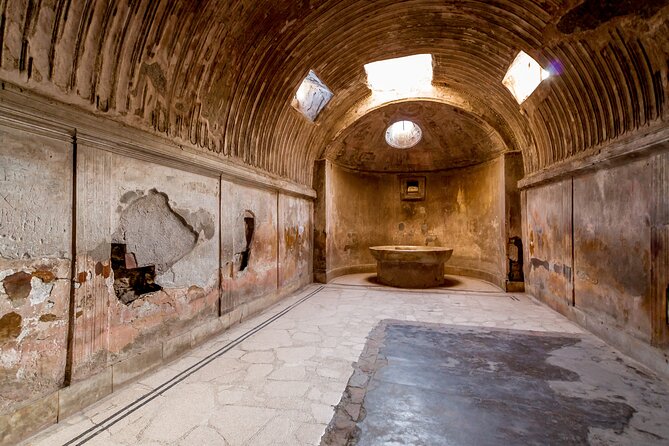
The Stabian Baths, also called Terme Stabiane, are described as the oldest thermal complex in the city. That fact matters because it frames the baths not as a luxury idea, but as a functional institution. You’ll see a wide thermal layout and get a sense for how people would have used a multi-room bathing system as part of daily routine.
Next you visit the Lupanar, the most famous brothel in the ruined Roman city of Pompeii. This is a stop that can surprise people, and it shouldn’t be handled as shock value. With the right guide, it becomes another window into social reality, including how the city’s entertainment and commerce overlapped in public space.
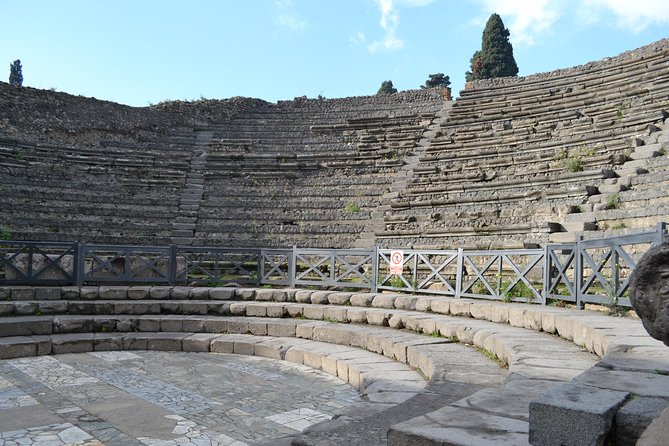
If the brothel and baths feel like extremes, the theaters bring you back toward art and community gathering. You’ll stop at the Odeon, also called Teatro Piccolo, a smaller theater. Short and focused, it’s a chance to see how performance spaces shaped civic life.
Then you reach Teatro Grande, described as Pompeii’s most important theater. The route gives you time to look at a central piece of public entertainment. Even if you do not know Roman theater history in detail, a guide can help you connect the building’s form to its purpose: gathering, spectacle, and shared experience.
Private Tour Energy, Easy Q and A, and the Human Side of Pompeii
The standout pattern in strong Pompeii guides is simple: they can turn details into meaning. This tour’s reviews and descriptions point to guides who answered questions clearly, explained technical points, and kept the tone lively. Names that have come up include Daniela Mantice, Monica, and Antonella, with people praising both expertise and the ability to explain in a way that sticks.
Because it’s private, you’re not competing with a loud group for attention. That matters at Pompeii, where even a great building can become a blur if you’re rushing. You get a steadier rhythm, and your guide can adjust the pace to keep everyone engaged.
Also, the guide provides practical help at the end. You can ask for direction on how to get back to your accommodation or the closest train station, which is handy if you’re not a local and you’re trying to avoid a last-minute panic.
Time, Pace, and What to Bring for a Minimal-Shade Site
This is a 3-hour walking tour, and the timing per stop is structured but not frantic. Many stops are around 20 minutes, with the first stop at the entrance area slightly longer, and the baths slightly longer. That setup works well because Pompeii rewards looking, not just checking boxes.
Still, do not underestimate how exposed Pompeii is. The tour info explicitly notes minimal shade, and you’ll feel that. Bring sunscreen and a hat, and plan on taking your pace seriously, not heroically.
One more thing: the terrain at Pompeii can be uneven, and you’ll be walking between structures that don’t line up like a modern sidewalk. Treat your visit like you’re moving through an archaeological site, not a theme park.
Price of $256.99: Is It Good Value for Pompeii?
Let’s talk value without pretending this is cheap. At $256.99 per person, this tour is priced as a premium experience. The question is what you’re buying besides time and walking.
Here’s what you do get for that price:
- A professional archaeologist guide
- Admission ticket fees included for the Pompeii Archaeological Park area and other ticketed points (the granaries stop is specifically noted as ticketed)
- A private experience where only your group participates
- English language guiding
- A guided route that covers major stops that first-time visitors often struggle to piece together
What you do not get is transportation to or from attractions. But that’s common for Pompeii tours, and it’s the part that depends on where you’re staying.
In value terms, I think this price makes sense if you care about interpretation and want your time in Pompeii to feel efficient. If you just want to wander the ruins with a map app and take pictures, you could do it cheaper. But if you want to understand how the spaces worked, why certain homes were decorated the way they were, and how the eruption’s impact is reflected in what you can still see, this becomes a smarter buy.
Who This Tour Fits Best (and Who Might Prefer Another Plan)
This tour fits best if you’re:
- Visiting Pompeii for the first time and want a clear route
- Interested in daily Roman life, not only sweeping visual highlights
- Want an archaeologist in your corner to answer questions
- Traveling as a group that benefits from private pacing
It may be less ideal if you:
- Are extremely heat-sensitive, since Pompeii is noted as exposed with minimal shade
- Prefer long unstructured time wandering without a guided thread
- Want a flexible day without timed stops
Families can participate too, with one condition: children must be accompanied by an adult.
Should You Book the Askos Tours 3-Hour Pompeii Private Walk?
If you want Pompeii to feel understandable and connected, I’d book it. The combination of a professional archaeologist guide, a timed route through major categories of Roman life, and admission included at key points is a strong formula for first-time success.
I’d especially consider this tour if you like tours that are not cookie-cutter. Guides with names like Daniela Mantice, Monica, and Antonella have been singled out for turning Pompeii into something you can really picture, down to technical and cultural details. Plus, with a private format, you get a more personal, less rushed experience.
If you do book it, set yourself up for the sun. That is the real boss of Pompeii, not the ruins. Bring the basics for heat, and you’ll get far more out of every stop.
FAQ
How long is the Pompeii walking tour?
It runs for approximately 3 hours.
Is this tour private?
Yes. It is a private tour, so only your group participates.
What language is the tour offered in?
The tour is offered in English.
Are admission tickets included?
Admission ticket fees are included. The Pompeii Archaeological Park admission is included at the meeting stop, and the granaries of the Forum stop includes an admission ticket as well. Other listed stops are described as free.
Where do we meet, and is there luggage storage?
You meet at Via Villa dei Misteri, 1, 80045 Pompei NA, Italy, at the Porta Marina Superiore main entrance area. There is a safe luggage store at the meeting place for free.
Does the tour run in bad weather?
The tour takes place rain or shine.
Recently reviewed around Pompeii
- Mt. Vesuvius Wine Tasting and Lunch Experience from Pompeii★ 4.5 · 20 reviews
- Pompeii Small Group with an Archaeologist and Skip The Line★ 5.0 · 121 reviews
- Pompeii from Afternoon to Sunset★ 5.0 · 108 reviews
- Private Guided Tour and VR Headsets in the Ancient Pompeii★ 5.0 · 3 reviews
- Visit Pompeii with a local expert guide★ 5.0 · 10 reviews
- Traditional Neapolitan Dinner in Pompei – Villa Franca – Family Restourant★ 5.0 · 8 reviews
- Discover Pompeii on this Guided Walking Tour of the Buried City★ 4.0 · 9 reviews
- 2 Hours Private Walking Tour in Pompeii with an Archaeologist★ 5.0 · 15 reviews
Pompeii Tours, compared.
Entry Ticket and Guided Tour with an Archaeologist
Read our review →

Pompeii Small Group Tour with an Archaeologist
Read our review →
Skip-the-Line Entrance Ticket with Audio Guide
Read our review →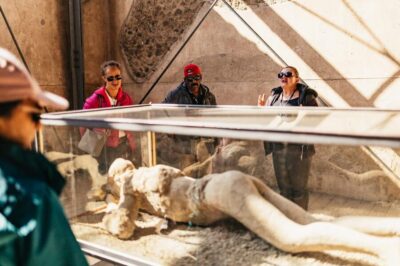
Pompeii and Mt. Vesuvius with Lunch and Wine Tasting
Read our review →
Archaeological Park Tour with Ticket on request
Read our review →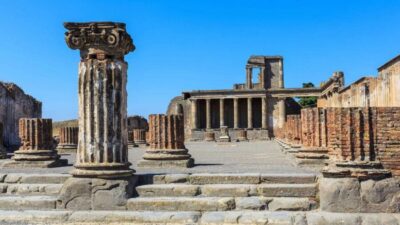
Browse the lists this tour appears in