
Reviewed · POMPEII TOURS
Pompeii 3hours Villa of Mysteries tour with an Archaeologist
What makes this Pompeii tour interesting is the mix of small-group pacing and privileged access to the Villa of the Mysteries, explained by an archaeologist as you move through the ruins. I like that it is focused and human-scaled, and I like that you get help turning walls, streets, and rooms into real Roman daily life. The only drawback is timing, 3 hours is not enough to see every corner of Pompeii.
Guides such as Theresa, Yolanta, and Anna Sorrento come up again and again in feedback for making the walk feel clear and practical, with lots of time for questions. Plan for one consideration too: this tour is not suitable for wheelchair users or people with mobility impairments.
Key reasons this Pompeii tour works

- Archaeologist-led focus that connects what you see to how people lived and worshipped in ancient Pompeii
- Privileged Villa of the Mysteries access, with expert commentary on the famous frescoes
- Small group pacing designed to help you experience sites at quieter moments
- A tight route across both houses and public life, so you get the full picture without guesswork
- Clear audio setup reported by some guests, often with ear pieces so you do not miss key points
- Skip-the-line Pompeii Plus ticket included, saving time at the entrance gates
Entering Pompeii at Porta Marina Superiore, then moving with purpose

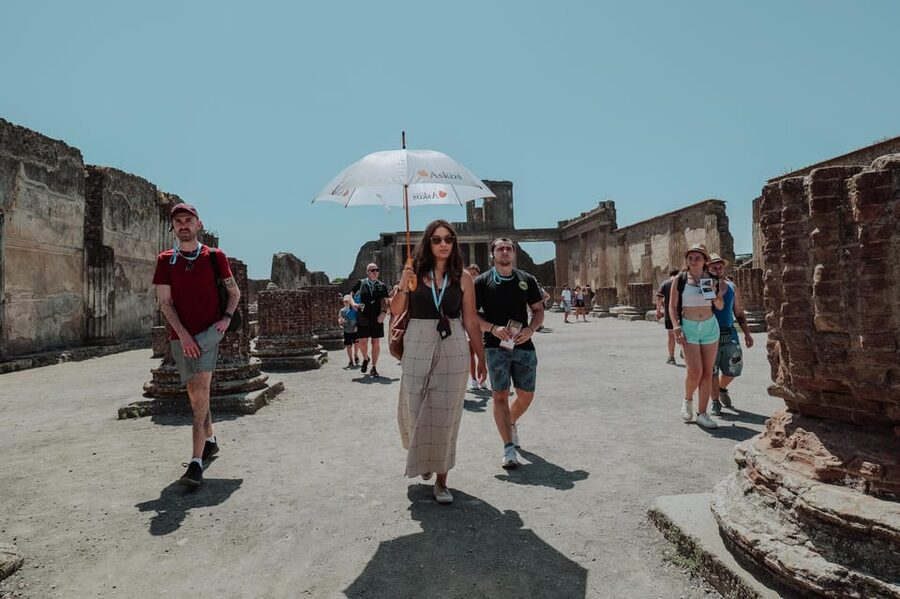
This is not the kind of Pompeii visit where you wander for hours hoping the ruins make sense. You start at Porta Marina Superiore, the entrance gate where your guide meets you holding a sign that says ASKOS TOURS. From there, you work your way through cobbled streets and into areas that feel less crowded than the big tour stampede.
I love how the tour gets you moving fast, but not rushed. The route is built to cover key Pompeii highlights in a logical flow, so you can understand the city as a place, not just a list of famous buildings.
One more practical note you should respect: the tour goes rain or shine. Comfortable closed-toe shoes matter, and in summer, bring a hat. Flip-flops are a bad idea on uneven stone.
More Pompeii tours to compare:
- Pompeii: Entry Ticket and Guided Tour with an Archaeologist
★ 4.8 · 19,459 reviews - Pompeii: Small Group Tour with an Archaeologist
★ 4.8 · 12,264 reviews - Pompeii: Skip-the-Line Entrance Ticket with Audio Guide
★ 4.0 · 2,509 reviews
The first stops: Pompeii as a city, not a museum
Early on, you get a “how to read Pompeii” lesson just by how the guide frames each area. You start near the city gate and then transition into the residential side of the ruins, where Pompeii feels intimate. That matters, because once you understand how Romans lived in these houses, the public spaces that come later make more sense too.
Your archaeologist guide also helps with one of the biggest challenges at Pompeii: pacing. Several guides on the roster are praised for guiding people through calmer pockets, which is exactly what you want when the site is busy.
You will also notice how the tour mixes domestic life with public life. The guide talks about things like political discussion, commerce, and religious ceremonies taking place in Pompeii spaces. That framing is what turns a theatre or a forum area into something you can actually picture.
Pompeian houses: House of the Vettii, House of the Faun, House of Menander, and House of the Tragic Poet

A big part of the value here is that you do not just see one house and call it a day. The route includes multiple houses, each giving you a different angle on Roman domestic life.
House of the Vettii: learning the language of rooms
When the tour hits the House of the Vettii, you are usually ready for it by then, since you have had time to get oriented at the start. This is one of the stops that helps you understand how a Pompeian home worked, with rooms, surfaces, and decoration that would have shaped everyday life.
In Pompeii, frescoes are a big deal, and this tour repeatedly calls them out. Even if you are not an art person, you can start spotting what seems intentional versus what was practical. That is where an archaeologist guide earns their keep.
Same stretch of coast, a completely different day out:
- Naples: Pompeii and Mt. Vesuvius with Lunch and Wine Tasting
★ 4.5 · 2,454 reviews - Pompeii: Skip-the-line-Ticket and Guided Tour
★ 4.6 · 1,152 reviews - Pompeii: Small-Group Tour of Pompeii and Herculaneum
★ 4.8 · 867 reviews - Pompeii: Guided Tour with Skip-the-Line Entry
★ 4.9 · 812 reviews
House of the Faun: seeing how scale changes the feel
Next comes the House of the Faun. Houses like this often feel like they are designed for display as much as for living. That is why this stop helps you compare “normal house” scale with something more impressive.
The tour rhythm keeps it understandable: you get a guided story first, then you have time to look without feeling totally lost. It is a better approach than trying to do it all alone, especially for people who only have one visit window.
House of Menander and House of the Tragic Poet: domestic detail, then context
Later, the route brings you to the House of Menander and the House of the Tragic Poet. This is where you start seeing patterns: how decoration, layout, and architectural choices support what people did day to day.
If you like asking questions, this is also where the tour shines. Reviews mention guides who invite people to stop and ask, and who answer clearly as you stand in front of what they are talking about.
Large Theatre, Forum Baths, Basilica, Foro Civile di Pompei, and Temple of Apollo
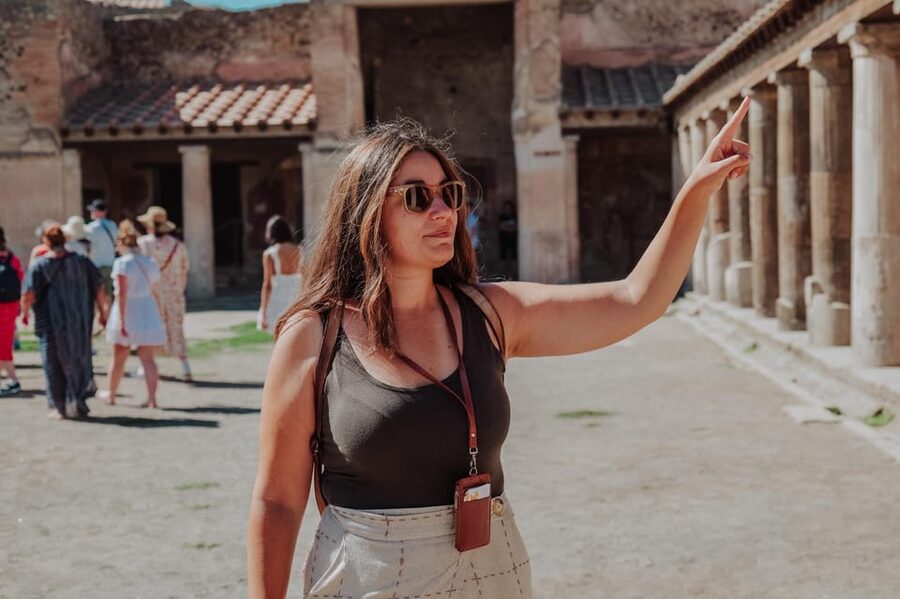
After you get your bearings in the houses, the tour shifts outward into public life. This is where Pompeii stops being just “a bunch of buildings” and starts feeling like a functioning city.
Large Theatre: public gatherings with a clear walkthrough
The Large Theatre is on the list for a reason. A theatre is not only a place to watch. It is a place where a community shows up together, in a space built for sound, movement, and spectacle.
Your archaeologist guide helps connect the theatre to broader public routines. That is the difference between standing in a giant room and actually understanding why it mattered.
Forum Baths: a reminder that hygiene and social life were linked
The Forum Baths stop shifts you toward everyday routines beyond the home. Baths were a big part of Roman life, and in Pompeii they are also a good way to see how public architecture shaped daily schedules.
Your guide’s commentary keeps it practical: you learn what you are looking at and why it would have been used, rather than treating it like random stone walls.
Basilica and Foro Civile: political talk and city business
Next up are the Basilica and the Foro Civile di Pompei. These spaces help you picture civic life. The guide’s framing focuses on the kinds of things that happened there, such as political debate, commercial exchange, and religious ceremonies.
If you want Pompeii to feel more human, this is a great stretch. It is also where a tour can save you from missing the bigger picture. When you are on your own, it is easy to wander past areas like these without really grasping their role.
Temple of Apollo: making the religious spaces readable
The Temple of Apollo rounds out this public-life portion. A temple might look straightforward from far away, but up close it becomes easier to understand how Romans organized belief in physical space.
What I like about the way the tour handles this stop is that it does not treat religion as a separate topic. Instead, it slots temples into the same city logic you just learned from the forum areas.
The Lupanare: seeing one of Pompeii’s more unusual spaces with context
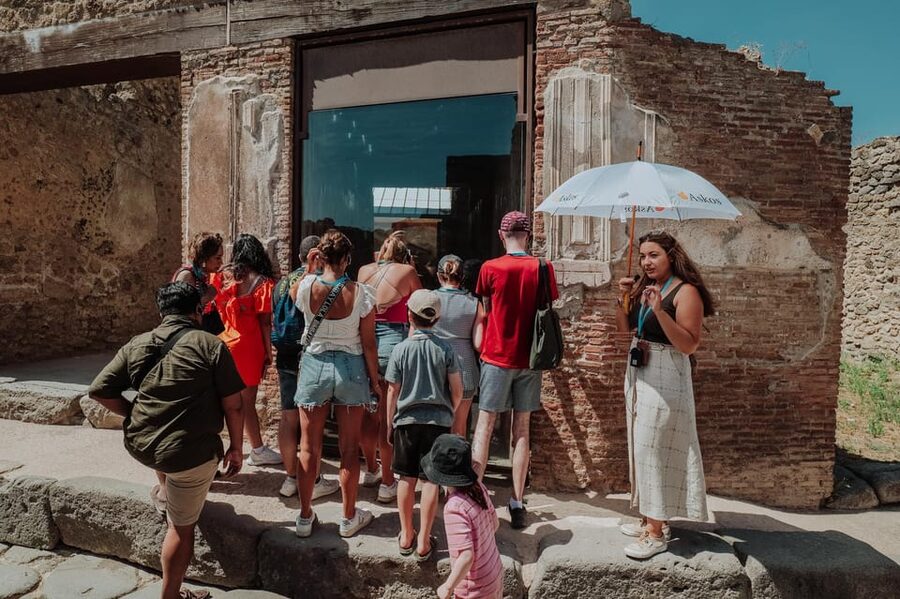
Mid-route, you pass through the Lupanare. This is one of those Pompeii stops that can surprise first-time visitors, mainly because it does not fit the clean, postcard idea of ruins.
The tour keeps it grounded by giving it context within the city. You are not just looking at an odd building. You are seeing how Pompeii included all types of social and economic life, not only the formal or ceremonial areas.
If you prefer a guided explanation for sensitive or unexpected sites, this is one reason the archaeologist-led format matters. A guide helps you stay focused on architecture and daily reality, instead of getting stuck on shock or silence.
Villa of the Mysteries: what you came for, and why the guide changes everything
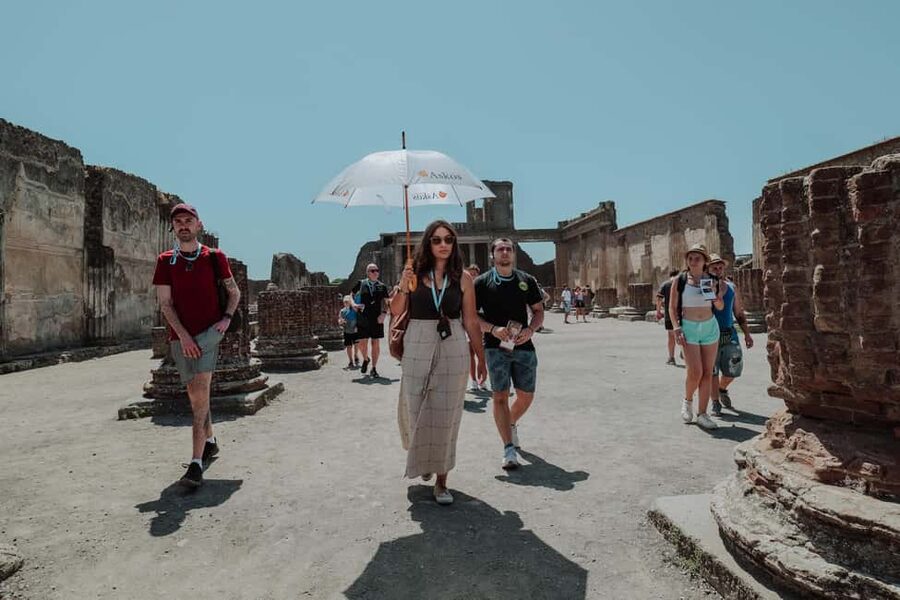
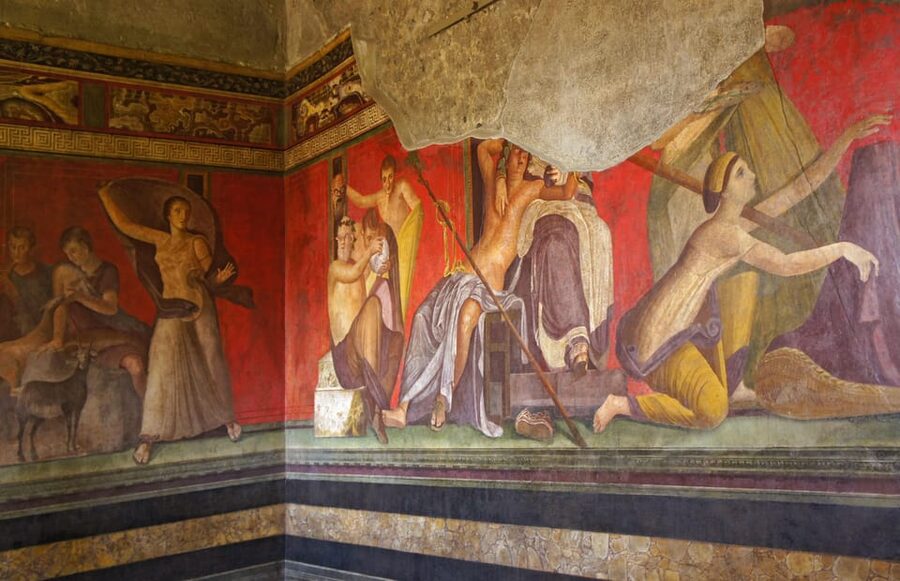
The highlight is the Villa of the Mysteries, the stop that many people plan around. This is where the “mysteries” promise becomes real, because the guide focuses on the famous frescoes with expert commentary.
This is also the part that helps the whole tour click. After seeing multiple houses and public buildings, the villa feels like a different category: still Roman life, but with added purpose and symbolism you can feel even before you fully interpret it.
What you should expect is time to look, time to listen, and time to ask questions. Reviews praise guides for making fresco details feel easier to spot and understand, including comments about pointing out things that you might otherwise miss.
One practical benefit: privileged access and smart timing can mean you get a quieter moment than you would on a free-for-all visit. That is not a small thing at Villa of the Mysteries, because you want your attention working on the artwork, not fighting the crowd flow.
The 3-hour route: what fits, what gets left out, and how to plan your day

This tour is set to last 3 hours, and that is the right idea if you want a guided Pompeii experience without losing your entire day. Many guests describe the time as flying by, mainly because the guide keeps moving you through meaningful spaces instead of letting you spend it in confusion.
But it is still a sprint. Pompeii is vast, and even with a strong route, you will not see everything. I suggest planning one of these strategies:
- Treat this as your anchor tour, then stay afterward to explore on your own
- Or, if you only have one Pompeii window, add an extra hour or two after the tour to wander slowly
A useful reminder from the reviews: you should use the bathroom before the tour starts. Some guests note that once inside, facilities are not where you want them to be.
Price and value at $88: why the ticket + guide can be worth it
At $88 per person, this is not a bargain-basement tour. The value comes from the mix of things you actually use:
- A 3-hour small group archaeologist-led format, which gives you time to ask questions and look without rushing
- Pompeii Plus entrance included, with access to the Archaeological Park and the Villa of the Mysteries
- Skip-the-ticket-line help at the entrance gates
If you were planning to visit the Villa anyway, the included ticket is part of what you would likely pay on your own. Add the guide, and you are paying for interpretation, crowd management, and a route that hits multiple key sites without wasting your hours.
Several reviews also highlight that some guides are active in Pompeii work and projects, which can translate into better explanations on what you are seeing right then.
The only reason to pause is if you are the kind of visitor who wants total freedom to set your own pace and roam off-route. If that is you, you might prefer self-guided walking. If you want clarity and momentum, the $88 makes sense.
What to bring and how to survive Pompeii comfortably
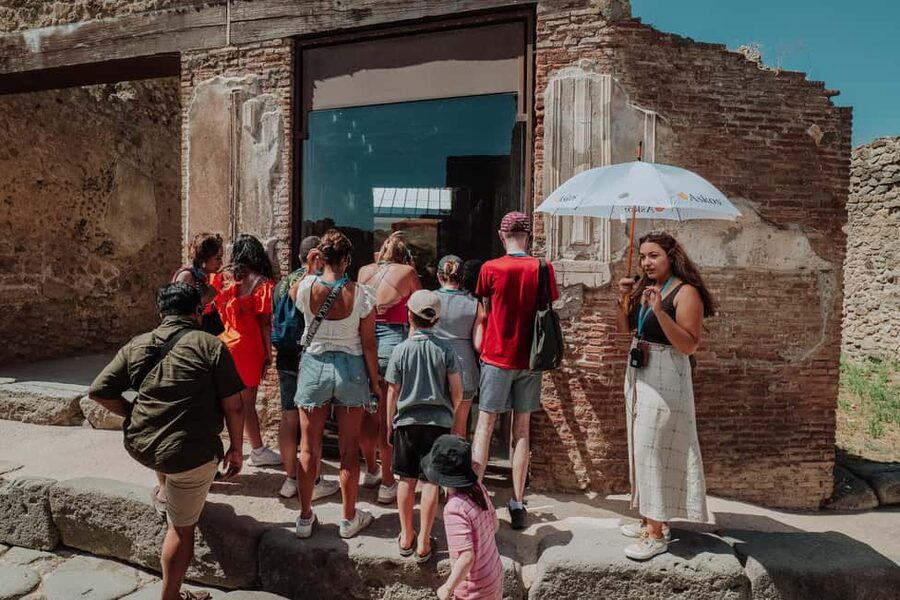
Pompeii is a stone workout. The tour helps you with timing, but your body still needs basic support.
Do this:
- Wear comfortable, closed-toe shoes with good grip
- In summer, bring a hat
- Bring water. Some guests mention refill points, but you will feel better with your own bottle too
- Bring your passport or ID card, since you need ID for entry
A fun detail from the feedback: guides often keep people engaged with humour and banter, but you should still expect a lot of walking on uneven ground.
Small pets are allowed inside the Archaeological Park if they are under 10 kg and kept on a leash. The tour is also rain or shine, so pack accordingly.
Who this Pompeii archaeologist tour suits best
This tour is a great fit if you want:
- Pompeii highlights in a structured route, with help interpreting what you are seeing
- A guided approach to the Villa of the Mysteries frescoes, where commentary matters
- A small group format that gives you a better chance to ask questions
It is not a good fit if you need wheelchair access or have mobility impairments, since the tour is not suitable for those needs.
It also works well for mixed-age groups. One review praises the 3-hour option for a parent and their 20-year-old daughter, which is a sign that the pacing is accessible if you are comfortable walking.
Should you book this Pompeii and Villa of the Mysteries tour?
Yes, I would book it if:
- You are prioritizing the Villa of the Mysteries
- You want a guide to connect houses, forums, and temples into one city story
- You value smart timing and crowd avoidance more than wandering aimlessly
Skip it (or consider a different format) if:
- You want total freedom and no guided route
- You need step-free access, because this one is not designed for wheelchair use
If you book, do one more thing: arrive ready to walk, and set aside some time after the tour to keep exploring. The guided route gives you the map in your head, and Pompeii is much more rewarding once you understand what you are actually seeing.
Recently reviewed around Pompei Campania
- From Sorrento: Pompeii with an Archaeological Guide & Ticket★ 4.6 · 19 reviews
- From Positano: Pompeii Ruins Small Group Guided Tour★ 4.8 · 82 reviews
- Pompeii Positano Amalfi Day Trip from Rome by Car, No Bus!★ 5.0 · 5 reviews
- Pompeii VIP 3h Tour: Skip-the-line with your Archaeologist★ 4.9 · 13 reviews
- Pompeii & Virtual Museum Private 2-in-1 Kid’s Tour★ 4.9 · 9 reviews
- Pompeii & Vesuvius★ 4.3 · 12 reviews
- From Naples: Pompeii Wheelchair-accessible with a Guide★ 5.0 · 8 reviews
- Pompeii Tour_Skip the line ticket + audioguide★ 4.7 · 17 reviews
Pompeii Tours, compared.

Entry Ticket and Guided Tour with an Archaeologist
Read our review →

Pompeii Small Group Tour with an Archaeologist
Read our review →
Skip-the-Line Entrance Ticket with Audio Guide
Read our review →
Pompeii and Mt. Vesuvius with Lunch and Wine Tasting
Read our review →
Archaeological Park Tour with Ticket on request
Read our review →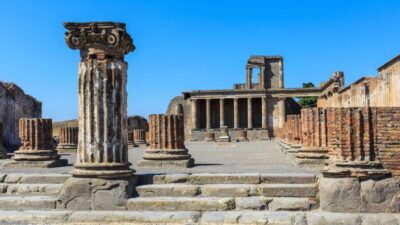
Browse the lists this tour appears in