
Reviewed · POMPEII TOURS
Pompeii 3h Private & Quality Tour with your Archaeologist
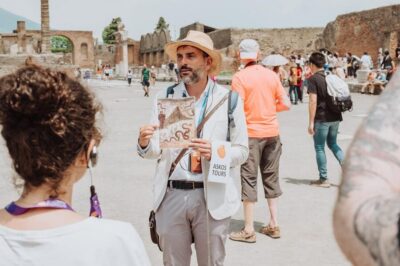
Pompeii is one of those places where you can walk for hours and still feel like you barely scratched the surface. What makes this tour interesting is that you get an archaeologist guide who can explain what you are looking at, not just point it out. I especially like the skip-the-line start, because it saves your limited time inside the ruins.
The one tradeoff to keep in mind is that the Pompeii admission ticket is extra, so your total cost depends on how many people are in your group.
Key highlights you can actually use
Private, archaeologist-led route focused on the most meaningful areas.
Skip-the-line entry arranged through a link to buy the admission ticket directly.
A fast but not rushed 3 hours with time for questions and small course corrections.
Domus and restoration details you may miss on your own, including recently opened areas.
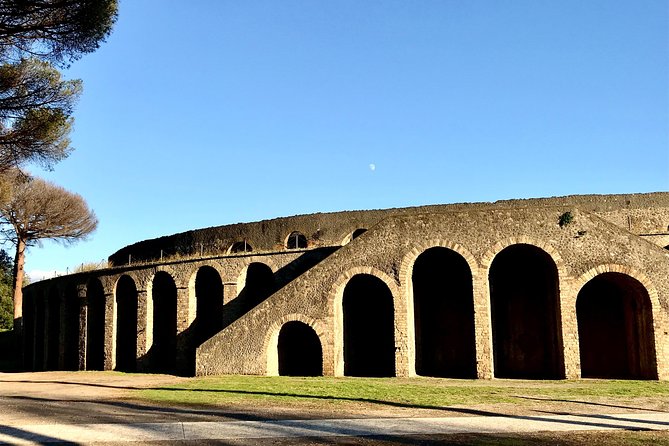
A strong ending at the Amphitheatre that helps the whole site click into place.
Pompeii moves faster with an archaeologist guiding your eyes
Pompeii can feel like a maze at first. Streets, doorways, mosaics, and walls all blur together when you are on your own, and it is easy to miss why certain rooms matter. With an archaeologist guide, you learn how to read the site while you walk.
I like that the tour is structured around big themes you can picture, like daily life, public spaces, and what the eruption preserved. That makes the ruins feel less like scenery and more like evidence.
You also get something practical: a guide who can answer the quick questions you only think of when you stand right in front of a painting, a doorway, or an imprint in the plaster.
More Pompeii tours to compare:
- Pompeii: Entry Ticket and Guided Tour with an Archaeologist
★ 4.8 · 19,459 reviews - Pompeii: Entry Ticket with Optional Audio Guide
★ 4.2 · 12,360 reviews - Pompeii: Small Group Tour with an Archaeologist
★ 4.8 · 12,264 reviews
Entering at Porta Marina Superiore, with your time protected
The tour starts at Scavi di Pompei, Biglietteria Porta Marina Superiore, near Via Villa dei Misteri 2. The big benefit is that you begin from the main entrance and avoid common waiting, thanks to the skip-the-line admission ticket link you receive before the tour.
In a three-hour visit, “getting in” is more than a formality. Every minute you lose at the entrance turns into extra pressure later, and then you speed-walk past the very details you paid to see. Starting smart means you actually have time to stop and look.
When you arrive, you will be set up to walk the route in a logical order, not in a random shuffle across the park. That alone makes the experience feel more efficient and less exhausting.
Antiquarium stop: coins, artifacts, and a clearer eruption timeline
Before you head deep into the ruins, you pass through the antiquarium. This is where your guide helps you connect objects to dates and history, instead of treating them like museum trivia.
Two small examples I think are worth knowing ahead of time: your guide may show a coin that helped modify the eruption date, and a very heavy golden arm cuff recovered from the site. Those kinds of details are the reason the tour feels more “real” than a standard walking tour.
If you usually skip the pre-ruins intro area, don’t. It makes the rest of Pompeii easier to understand, especially when your guide starts pointing out what the eruption preserved and what remains uncertain.
Basilica, Forum, and Temples: public life you can follow in 3 hours
Once you are in the heart of Pompeii, you move through the Basilica, the Forum area, and toward the main Temples. This section is the payoff for people who want the “big city” feeling, not just private homes.
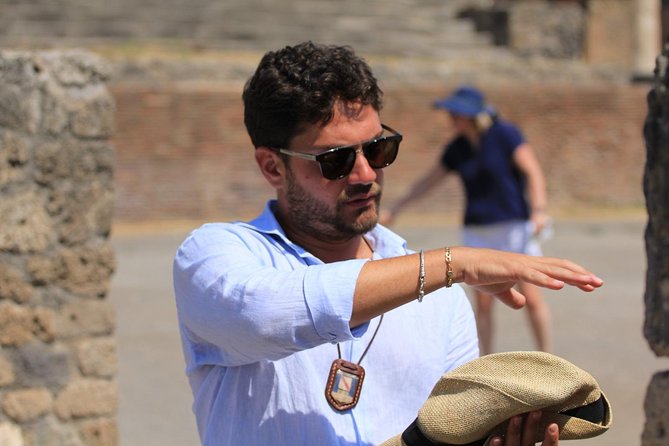
The guide’s role is key here. They connect spaces to how people would have used them, including the idea of the market in the Forum and the way religious and civic life blended in the same urban footprint.
A common challenge at Pompeii is that you can see buildings without understanding their purpose. Here, you get a running explanation as you walk, so you are not guessing what you are looking at.
A few more Pompeii trips worth comparing
- Pompeii Ruins Private Tour with Optional Skip-the-Line Entry
★ 4.9 · 732 reviews - Pompeii private tour with an Official Guide
★ 5.0 · 631 reviews - Pompeii Private Tour with an Archaeologist and Skip The Line – 3 hours
★ 5.0 · 564 reviews - Visit in Pompeii – Pompeii Private Tour with Ada
★ 5.0 · 436 reviews
Greater Decumano, thermal traces, and the Lupanare area
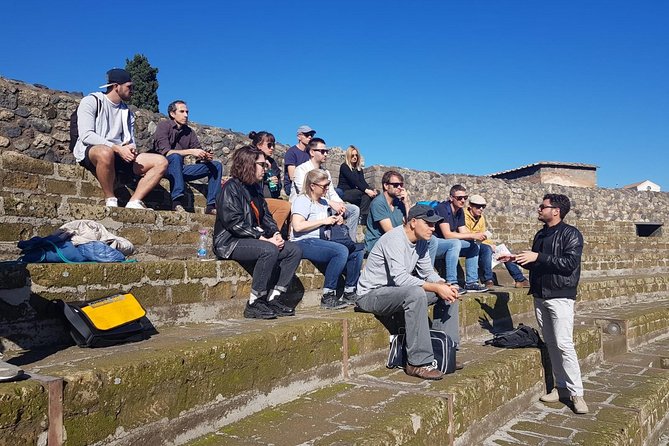
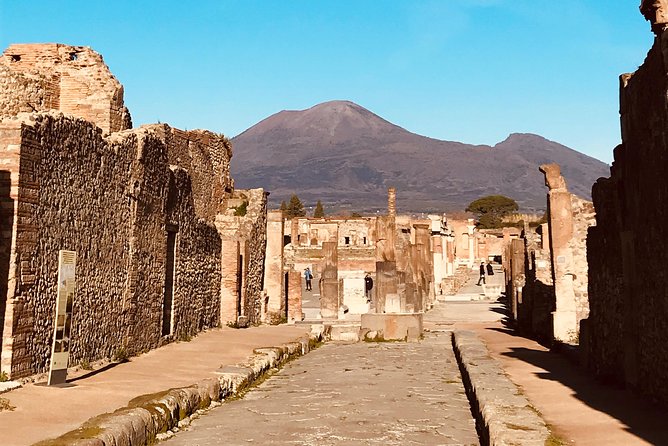
Next comes the Greater Decumano, one of the main streets that helps you orient yourself. Your guide highlights nearby views into the thermal system, so you get a sense of how public bathing and daily routines worked.
Then you pass by the Lupanare, a well-known spot that visitors often approach with curiosity. On this tour, it is not just name-dropping. You get context for what the area represents in the city’s social landscape.
This part is a good example of why a private guide helps. If you have questions, you can ask them right away, and the guide can adjust the explanation to what you are actually seeing.
Domus highlights: the paintings, the layouts, and newly opened rooms
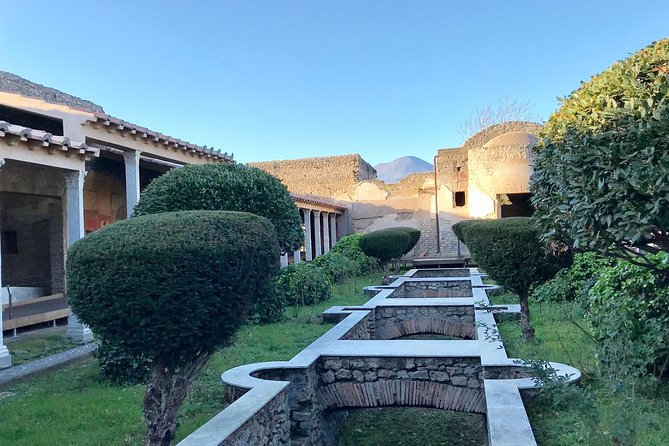
If you like interior details, this tour is built for you. You will explore several domus, including recently opened spaces such as the Domus of Leda and the Swan.
The guides are praised for how they make wall paintings and room layouts feel like stories, not just decoration. One name you might hear in English-led groups is Riccardo, described as bringing the Roman world to life through thoughtful, engaging explanations.
What to expect during this stretch is a mix of big-picture orientation and close looking. You will be guided to where paintings sit in context, why rooms are arranged the way they are, and how daily life could have played out inside.
You can also get restoration context. For example, you may see references to restorations made around the House of Golden Cupids. Hearing how those repairs relate to what was discovered helps you understand what you are seeing now, not just what was once there.
Via dell’Abbondanza to the Fugitives’ Garden and the plaster molds
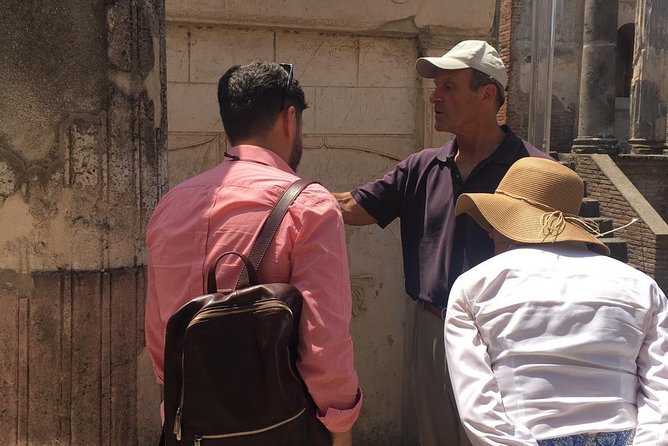
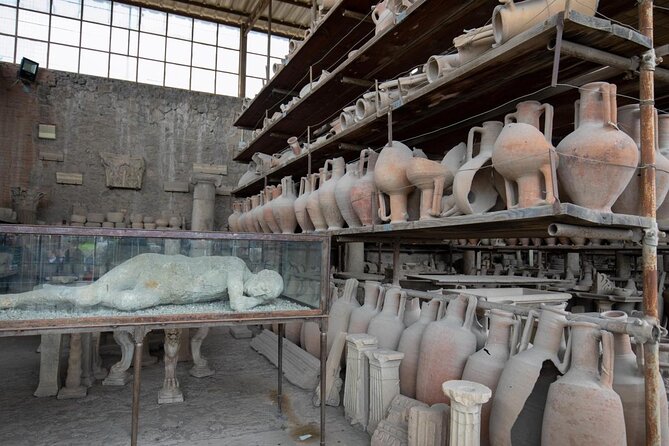
One of Pompeii’s most powerful sections is the area connected to the eruption panic. You walk along Via dell’Abbondanza and reach the so-called Fugitives’ garden, where people tried to escape and died.
The guide explains what you can see thanks to the moulds left behind. This part matters because it shifts Pompeii from “interesting ruins” into something emotionally grounded and physically specific.
A strong guide keeps this section respectful and focused. You do not just stare, you understand what the impressions represent, and why they are still so significant in how modern people understand Pompeii today.
If you are someone who gets overwhelmed by intense imagery, pace yourself here. The tour is private, so you can slow down if you need an extra moment.
Great Gymnasium: daily objects, even charred food
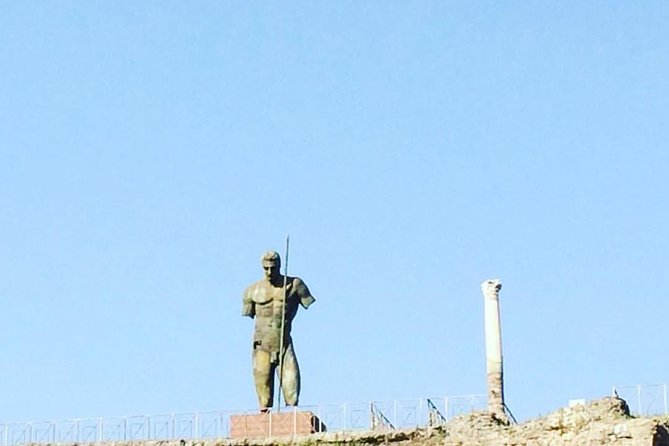
After the dramatic eruption area, the route moves to the Great Gymnasium. This is where the tour becomes very practical, in the best way.
You may see charred food and other daily objects displayed. It sounds small until you realize what it does to your mental picture of the city. Instead of imagining Pompeii as an architectural museum, you start picturing real meals, routines, and personal belongings.
This is also a section where an archaeologist guide adds value fast. You get explanations that connect the objects to Pompeii’s everyday life, and you are not left wondering what the point of each item is.
The Amphitheatre finish: how the story lands
The tour ends at the Amphitheatre, which is a smart final stop. By the time you reach it, you have already built a sense of Pompeii as a functioning city, with public spaces and private rooms, civic life and daily life.
This ending helps you tie the entire route together. Even if you have seen amphitheatres elsewhere, Pompeii’s one feels different when you understand the city that used it.
Guides are often praised for managing time efficiently at this stage. That matters because an amphitheatre is also easy to rush through, but it is worth giving it a proper look.
Price and what you’re really paying for (up to 10 people)
The price is $385.32 per group for up to 10 people, for about 3 hours. Admission to Pompeii is not included, and the ticket is €19 per person.
Here is how that usually shakes out in real life. If you fill the group with 10 people, you are essentially splitting the guide cost, and the per-person value can be strong. If it is just you or two people, the guide cost per person is higher, so the real question is whether you want a highly guided, interpretation-heavy visit rather than doing Pompeii on your own or with a cheaper group tour.
For me, the value hinges on one thing: Pompeii is not short, and it is not self-explanatory. You are paying for time saved at the entrance plus expert interpretation while you walk, especially in domus, public buildings, and the eruption-related areas.
If you can travel with friends or family, this tour tends to make more financial sense. If you are a solo traveler, you might still find it worth it if you care a lot about the details and want a guide who can answer questions as you go.
Who this tour fits best, and who might want another plan
I think this is ideal for people who want Pompeii to feel understandable, not just impressive. It is also a great fit if you want a private experience where your pace can be adjusted, especially for families with a wide age range.
For example, this tour has been done smoothly for a group that included an 8-year-old and adults up to age 62, with the guide managing the pace efficiently. If your group includes seniors or kids, a private archaeologist guide is often the difference between a “walk around” and a “learn while walking.”
On the other hand, if you prefer minimal talking and mostly want photos, you may find the guidance too structured for your style. In that case, you could consider a lighter self-guided plan instead.
Also, keep in mind you are covering a lot in three hours. You will see many major spaces, but it is still a compact route, not a slow meander.
Language, group feel, and why private helps with questions
This tour is offered in English. It is private, so only your group participates, with a maximum group size of up to 10 people.
Private matters at Pompeii because the questions are the whole point. You might wonder about what a space was used for, why a restoration looks like it does, or how an object fits into the larger story of the site. A good archaeologist guide, like those named in past tours such as Paolo or Patrizia, can shape explanations to the people in front of them.
Even if you think you will not have questions, you will. Pompeii has a way of sparking curiosity when you see a detail up close.
Before you go: make the most of a short 3 hours
Wear shoes you can trust on uneven stone. The ruins are outdoor and walk-heavy, with surfaces that feel different than sidewalks back home.
Bring water, and plan for a warm day when you can. A three-hour walk inside Pompeii can feel longer in sun, and the best part of the tour is the stops where you actually look.
Finally, if you care about specific areas, don’t be shy about asking. Some guides have been praised for being receptive to requests and for adjusting the tour while keeping the main route intact.
Should you book this Pompeii archaeologist tour?
If you want Pompeii to make sense, this is an easy yes. The combination of skip-the-line entry, a focused three-hour walk, and an archaeologist guide who can explain what you see is exactly what turns Pompeii from impressive ruins into something you remember.
I would book it if your group is at least a couple of people, because then the group price becomes more reasonable. I would also book it if domus interiors, restoration details, or eruption evidence matter to you.
Skip it only if you would rather browse slowly without much explanation, or if your group cannot comfortably walk for about three hours on uneven surfaces. If you are on the fence, ask yourself one simple question: do you want Pompeii as a place you understand, or just a place you visited?
Recently reviewed around Pompeii
- Mt. Vesuvius Wine Tasting and Lunch Experience from Pompeii★ 4.5 · 20 reviews
- Pompeii Small Group with an Archaeologist and Skip The Line★ 5.0 · 121 reviews
- Pompeii from Afternoon to Sunset★ 5.0 · 108 reviews
- Private Guided Tour and VR Headsets in the Ancient Pompeii★ 5.0 · 3 reviews
- Visit Pompeii with a local expert guide★ 5.0 · 10 reviews
- Traditional Neapolitan Dinner in Pompei – Villa Franca – Family Restourant★ 5.0 · 8 reviews
- Discover Pompeii on this Guided Walking Tour of the Buried City★ 4.0 · 9 reviews
- 2 Hours Private Walking Tour in Pompeii with an Archaeologist★ 5.0 · 15 reviews
Pompeii Tours, compared.
Entry Ticket and Guided Tour with an Archaeologist
Read our review →

Pompeii Small Group Tour with an Archaeologist
Read our review →
Skip-the-Line Entrance Ticket with Audio Guide
Read our review →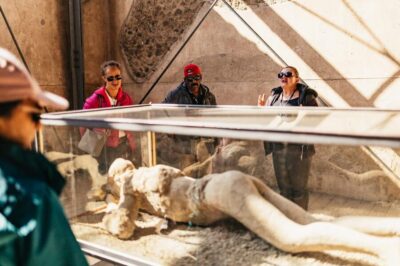
Pompeii and Mt. Vesuvius with Lunch and Wine Tasting
Read our review →
Archaeological Park Tour with Ticket on request
Read our review →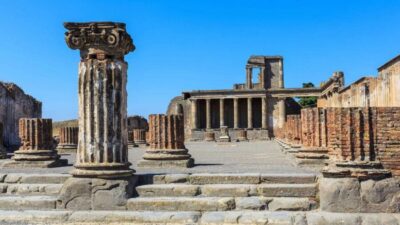
Browse the lists this tour appears in