
Reviewed · HERCULANEUM TOURS
Pompeii: Small-Group Tour of Pompeii and Herculaneum
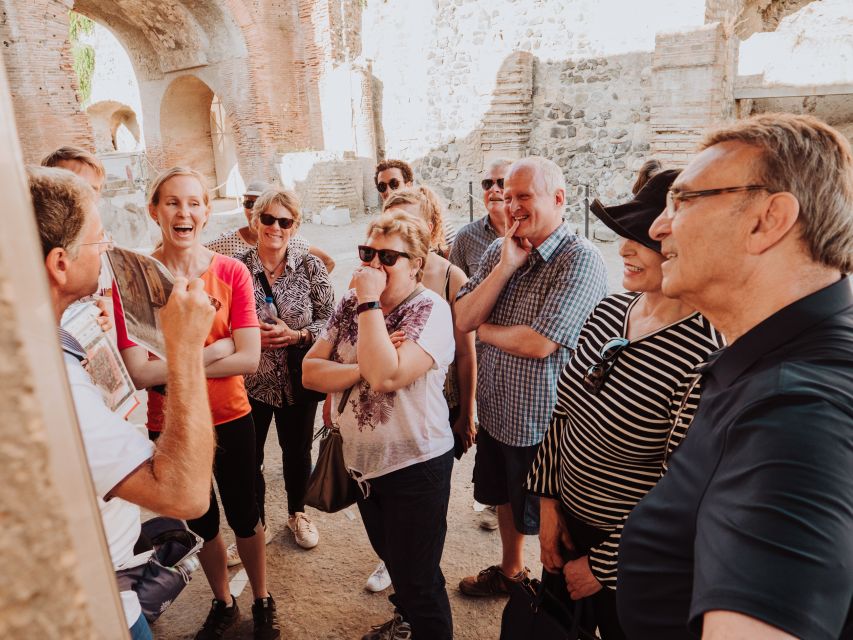
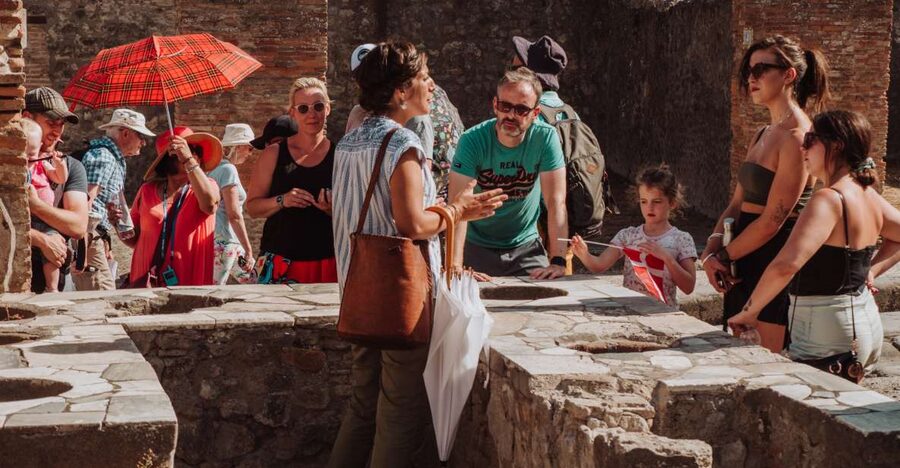
Pompeii and Herculaneum are two of Italy’s biggest Roman “time machines,” but they feel totally different once you understand what you are looking at. This small-group tour pairs those ruins with an archaeologist guide, so the ash, the mud, and the street-level details make sense fast. I especially like that you get a focused walk through the highlights without being shoved around in a crowd.
Two things I really love: the up-to-20 group size (so you can actually ask questions), and the way guides turn stone, mosaics, and preserved rooms into stories you can picture. Guides on recent tours included names like Diego, Alfredo, Julia, and Sergio, and the common thread was clear explanations and fun, human details. One possible drawback is that the day moves at a steady pace and the lunch window is short, so you may need to plan for quick meals.
Key points to know before you go
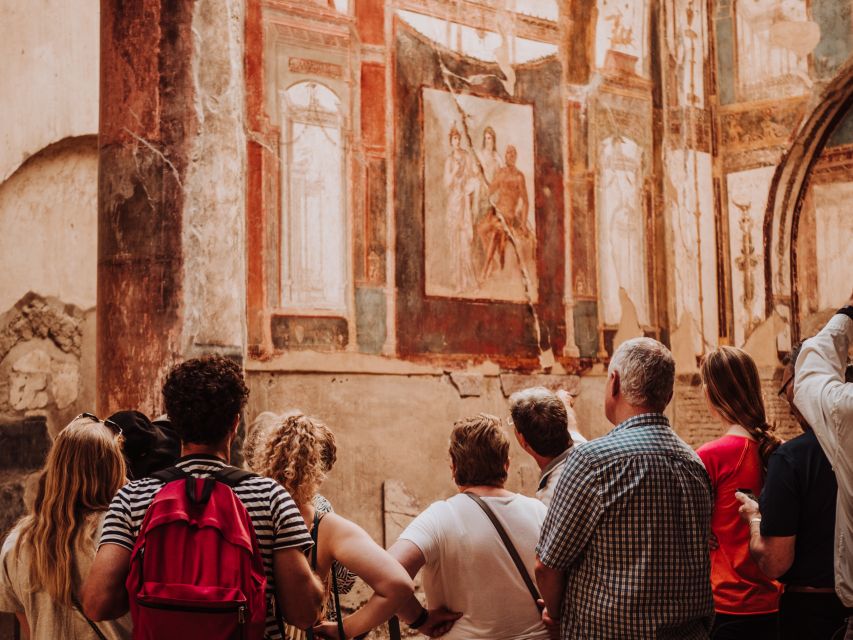
- Archaeologist guide: you get on-the-ground context for what survived the 79 A.D. eruption
- Small group: up to 20 people, with headsets when the group is over 10
- Two sites, one day: Pompeii first, then a transfer to Herculaneum by Circumvesuviana train
- Herculaneum’s preservation: learn why this site is smaller but often feels more intact
- Skip-the-line entry: tour includes entry handling and avoids the worst waiting
- Short lunch break: plan for grab-and-go rather than a long sit-down meal
Why Pompeii plus Herculaneum works better than doing just one
Most people think Pompeii is the main event, and it is. But the bigger win here is the contrast. Pompeii gives you the scale of a major Roman city, with many buildings buried under layers of ash and pumice after Vesuvius erupted in 79 A.D. Herculaneum, just down the road, can feel even more striking because it was buried differently, under a thick wall of mud that helped preserve more of what was inside buildings.
That contrast matters on a guided walk. Without help, you can see impressive ruins and still miss the point. With a guide, you start noticing the clues: how everyday life worked, how wealth showed up in homes and decoration, and why the two sites survived in such different ways.
You also get a better sense of Roman life across class lines. Pompeii often shows the bustle of a city that looked grand on the surface, but also heartbreaking in what happened to its people. Herculaneum leans toward the intimate, more “lived-in” feel, since details like floors, mosaics, and interior artwork were preserved when conditions trapped them.
More Herculaneum tours to compare:
- Pompeii and Herculaneum: Guided Tour with an Archaeologist
★ 5.0 · 164 reviews - From Naples: Pompeii and Herculaneum VIP Tour with Lunch
★ 4.4 · 129 reviews - Pompeii & Herculaneum: Skip-the-line & Digital Guide App
★ 4.0 · 35 reviews
Where you meet at Porta Marina Inferiore and how to find your group
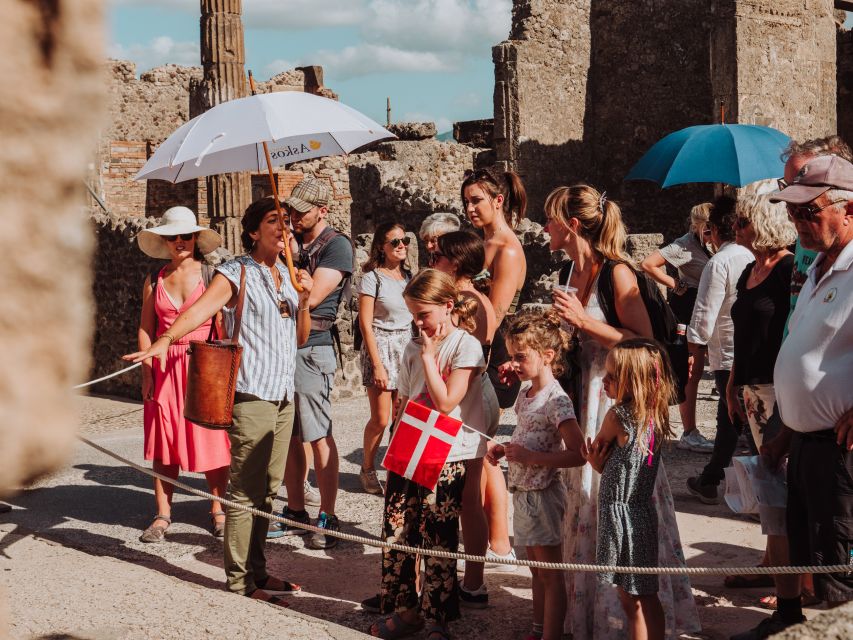
Meet at Piazza Porta Marina Inferiore, 1, at the left side of the Pompeii entrance called Porta Marina Inferiore. It is close to the Arte bus stop. Your guide carries a sign that says Askos Tours, which is a lifesaver when there are lots of tour groups clustered around the entrances.
The meeting spot is also described as only a few minutes from the Circumvesuviana station Pompei-Villa dei Misteri. In other words, if you are building your own plan before the tour, you have a nearby train option and you are not walking blind across the city.
Tip: wear comfortable shoes and keep your phone accessible, because you will be moving through the ruins and meeting points can get busy.
Pompeii for 2 hours: what your archaeologist guide helps you see
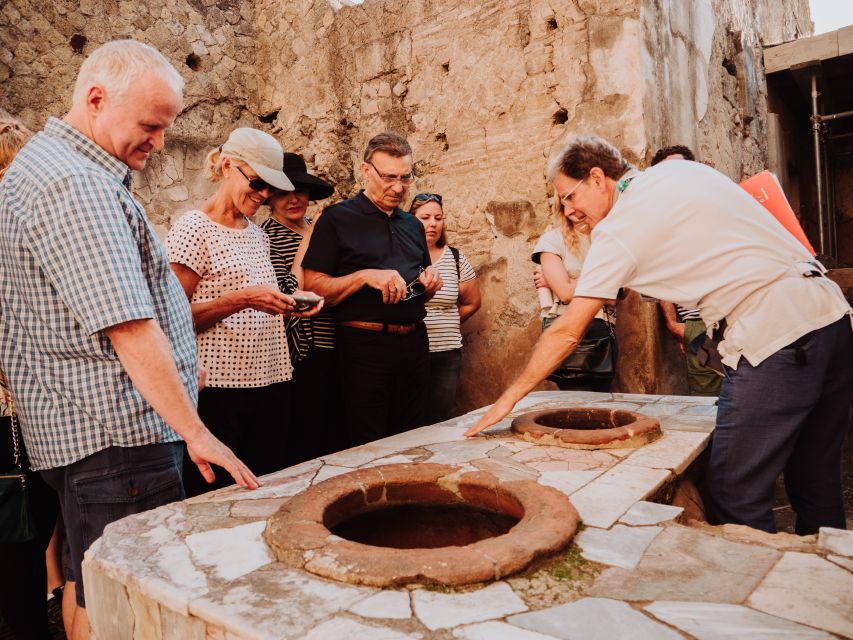
The tour begins with a guided walk inside the Pompeii Archaeological Site for about 2 hours. This is the part where a guide makes the biggest difference, because Pompeii is huge and visually busy. You will not “just follow a route.” Instead, you will focus on how the city worked and what the eruption conditions did to the place.
You can expect explanations tied to three key ideas.
First, the eruption preservation story. Pompeii was covered by tons of pumice and volcanic ash, and the ash layer is described as roughly four meters. That kind of burial preserved materials and spaces in ways that would be impossible in an open ruin. Your guide should help you connect what you are seeing to that survival.
Second, daily life details. Even when you are standing in what looks like rubble, you can still understand the Roman city from street patterns, architectural layout, and household spaces. Several guides on recent tours used stories and practical context to help people understand why certain buildings existed where they did.
Third, emotional impact. Pompeii can be intense. One of the most affecting elements is how guides point out the human aftermath, including references you might hear about plaster casts that bring victims into sharper focus. If you have ever wondered how 79 A.D. became so real in museums and documentaries, this is where it clicks.
The small-group format helps here too. If someone asks a question about an inscription, a doorway, or a wall painting, you are not stuck hearing nothing because you are too far back. On tours with groups around 20, the use of headsets (when the group exceeds 10) is often what keeps the explanation clear.
A short break after Pompeii, plus lunch planning reality
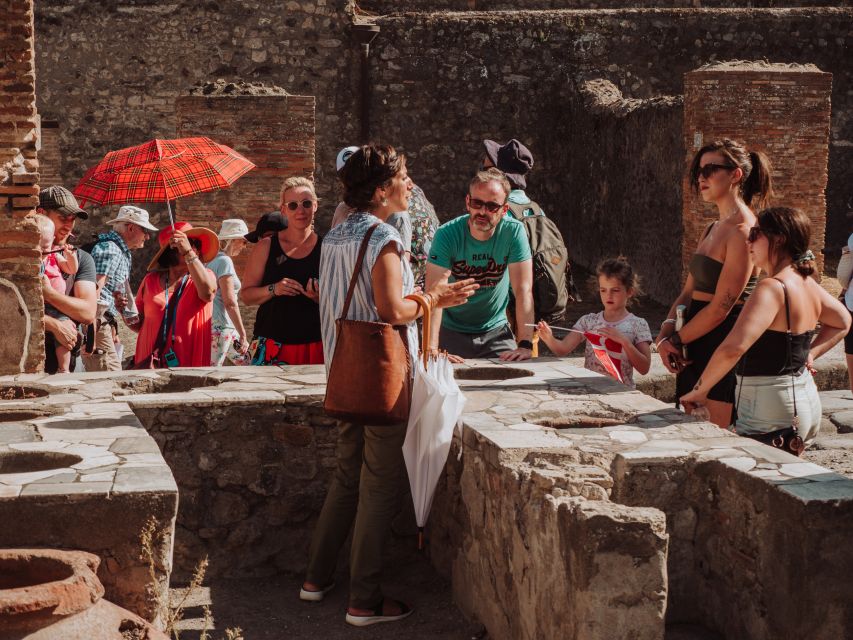
After Pompeii, you get 30 minutes of break time. You are also given time to grab lunch or stroll through souvenir shops just outside the ruins.
This is the part to manage carefully. A 30-minute window is enough for:
- a quick snack or sandwich,
- a bathroom stop,
- and maybe a cold drink if it is hot.
But it is not built for a slow meal or a long sit-down break. Some people have wished they had a bit more time to rest in shade and eat properly.
Practical advice:
- If you know you get hungry, consider a snack before you head into Pompeii so you are not rushing at the end.
- If you want a sit-down lunch, you might find it easier to keep expectations flexible and focus on something quick nearby.
- Summer heat is real in Campania, so water matters as much as food.
More Pompeii tours to compare:
- Pompeii: Entry Ticket and Guided Tour with an Archaeologist
★ 4.8 · 19,459 reviews - Pompeii: Small Group Tour with an Archaeologist
★ 4.8 · 12,264 reviews - Pompeii: Skip-the-Line Entrance Ticket with Audio Guide
★ 4.0 · 2,509 reviews - Naples: Pompeii and Mt. Vesuvius with Lunch and Wine Tasting
★ 4.5 · 2,454 reviews
The transfer to Ercolano by Circumvesuviana: learn while you move
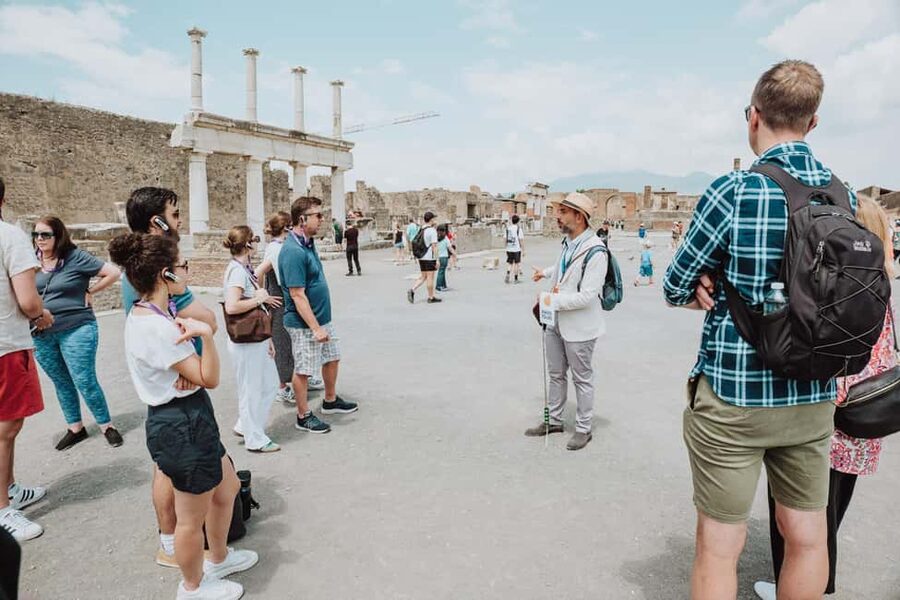
Next comes the ride from Pompeii to Ercolano (Herculaneum) using the Circumvesuviana train. The transfer is described as about 20 minutes, and the total train segment on the day runs around 30 minutes when you include timing around boarding and getting your bearings.
This is not just travel time. Guides often use the ride to set up what you will see next. In one recent tour, the guide talked about growing up on a farm, which sounds random until you realize what they were doing: connecting daily work and routines to what Roman households were doing in the first century.
When the train is running late, the day can run long. The important point for you is that the operator is aware of how train disruptions can affect timing, and it is a normal part of planning around a live commuter line. Build in patience.
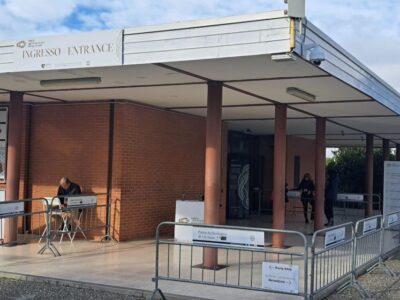
Also note the big logistics change: you finish the tour in Ercolano, at Parco Archeologico di Ercolano. Your day ends there, not back at Pompeii.
Herculaneum for 2 hours: smaller, more intact, and easier to picture
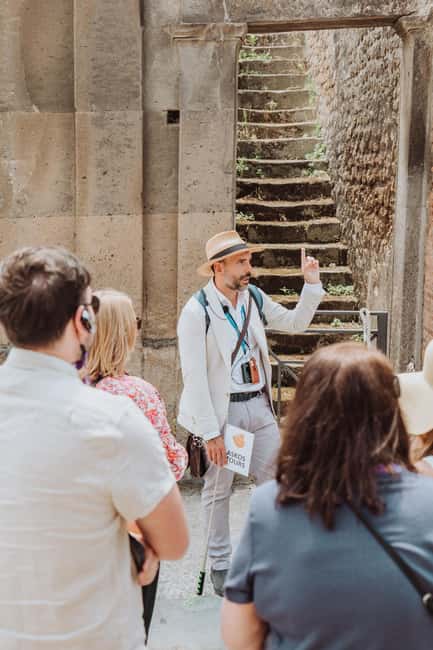
Herculaneum is the second guided stop, with about 2 hours at the Archaeological Site of Herculaneum.
If Pompeii feels like a city-scale disaster you are walking through, Herculaneum often feels like a neighborhood that got interrupted mid-life. That comes down to preservation. Herculaneum was buried by an avalanche of mud described as about 20 meters thick, and that conditions helped keep many details intact.
During your walk, you should focus on the preservation clues:
- Second floors and upper-level spaces that might otherwise have collapsed long ago
- Carbonized wooden objects, which can be hard to imagine surviving unless you understand the burial environment
- Intact paintings and mosaics, where color and pattern help you see how people lived and decorated their homes
Your guide should connect this to Roman lifestyle. Several guides emphasized the opulent way wealthier citizens lived, but Herculaneum also helps you understand daily habits in a way that feels personal. When mosaics and wall paintings survive, you stop thinking of the site as “old buildings.” You start thinking of it as people choosing décor, arranging rooms, and moving through a space that looks familiar in shape even if the culture is Roman.
And because it is smaller than Pompeii, you have a better chance to absorb the walk. Crowds still happen, but guides often adjust the flow to keep things manageable and help you see the best areas without getting stuck staring at the same landmark everybody else is posting from.
Pacing, heat, and staying comfortable for a 5.5-hour ruin day
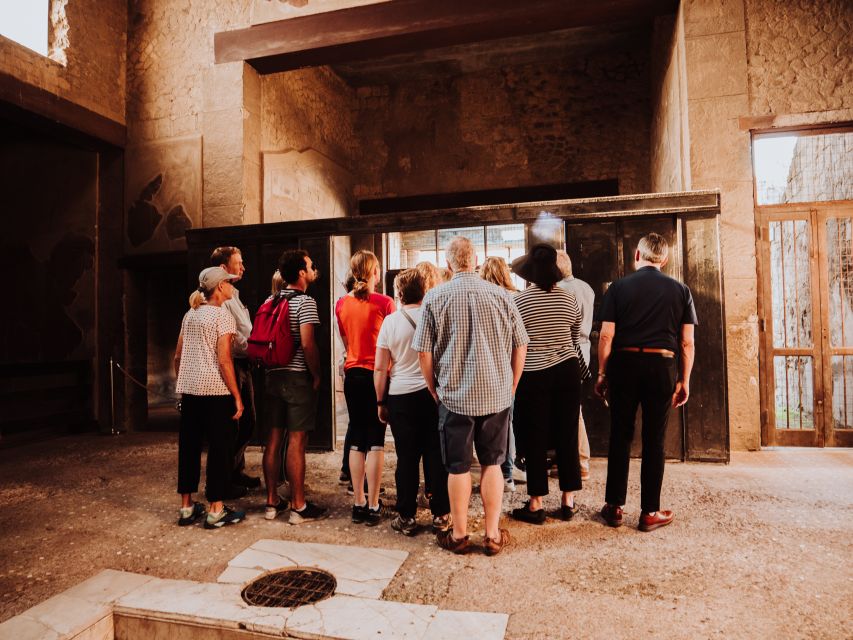
This is not a quick museum visit. The whole tour runs about 5.5 hours, and that time is spent doing real walking on uneven ground.
A few comfort points that matter:
- Wear comfortable clothes and supportive shoes.
- Bring sunglasses, a hat, and water in summer.
- Pack a raincoat or poncho for sudden showers.
- Have your passport or ID card with you.
If you are the type of traveler who gets cranky after 90 minutes in the sun, plan for it. Use the lunch break to reset, and rely on your guide to shift to calmer pockets when crowds build.
The upside is that the small-group structure keeps pacing civilized. With up to 20 people, you are not constantly waiting for someone else to catch up, and the guide can slow down for questions that actually matter.
Price and value: what you are paying for besides ruins
The exact tour price is not stated in your details, but the value picture is clear.
You are paying for:
- a live archaeologist guide with structured explanations,
- a walk that focuses on the best areas of both sites,
- small-group handling,
- and skip-the-ticket-line help.
Tickets are also mentioned. The tour notes entry handling for both sites, and it specifically lists Herculaneum entry costs: 16.00 euros for adults and 2.00 euros for EU citizens aged 18 to 25.
Here is how I think about value for you. If you arrive alone, you can buy tickets and wander, but you will likely spend more time figuring out what you are looking at. With an archaeologist guide, you get meaning attached to the ruins. You also save time on ticket lines and reduce the risk of missing the parts that matter most for understanding the eruption and daily Roman life.
If you love ruins, this is the difference between seeing a site and understanding it.
Who should book this Pompeii and Herculaneum tour
This tour is a good fit if:
- you want Pompeii and Herculaneum together in a single half-day,
- you like walking tours with real explanations,
- you plan to ask questions and not just take photos.
You might want to think twice if:
- you have mobility impairments or use a wheelchair, because the tour is stated as not suitable for those situations,
- you need lots of downtime, because the lunch break is only 30 minutes and the day is paced.
It is also a smart choice for first-timers doing a day trip and trying to maximize what they learn without getting buried in guidebooks.
Should you book this Pompeii and Herculaneum small-group tour?
I would book it if you want the ruins with context. Pompeii alone can feel like an endless maze, and Herculaneum alone can feel like a beautiful but easy-to-understand site where you still miss the why. Combined with an archaeologist guide, the two places start talking to each other, and you walk away with more than memories.
If your top priority is a slow, self-paced stroll with long lunch breaks, you may find the timing a bit tight. But if you can handle a steady walk and you bring water, you will likely feel the value quickly.
If you do book, pay attention to the meeting point details, look for the Askos Tours sign at Porta Marina Inferiore, and plan your lunch like a quick reset, not a long restaurant meal.
FAQ
How long is the Pompeii and Herculaneum small-group tour?
The tour duration is 5.5 hours.
How large is the group?
The group is kept small, with a maximum of 20 people.
Where do we meet the guide?
You meet at Piazza Porta Marina Inferiore, 1, on the left side of the Pompeii entrance named Porta Marina Inferiore, close to the Arte bus stop. The guide has an Askos Tours sign.
What languages is the tour offered in?
The live guide conducts the tour in English and Italian.
How do you get from Pompeii to Herculaneum?
You travel by the Circumvesuviana train to Ercolano.
Is there time for lunch?
Yes. After the Pompeii guided portion, there is a 30-minute break that includes time to grab lunch, or to stroll in the souvenir shops outside the ruins.
Does the tour include tickets and skip-the-line entry?
The tour includes skip-the-ticket-line service, and it provides entry for both sites. Herculaneum entry is listed as 16.00 euros for adults and 2.00 euros for EU citizens aged 18 to 25.
What should I bring or wear?
Bring comfortable clothes. In summer, bring sunglasses, a hat, and water. Bring a raincoat or poncho for sudden rain. You should also carry a passport or ID card.
Is the tour suitable for wheelchair users or limited mobility?
No. The tour is not suitable for people with mobility impairments or wheelchair users.
Recently reviewed around Pompei Campania
- From Sorrento: Pompeii with an Archaeological Guide & Ticket★ 4.6 · 19 reviews
- From Positano: Pompeii Ruins Small Group Guided Tour★ 4.8 · 82 reviews
- Pompeii Positano Amalfi Day Trip from Rome by Car, No Bus!★ 5.0 · 5 reviews
- Pompeii VIP 3h Tour: Skip-the-line with your Archaeologist★ 4.9 · 13 reviews
- Pompeii & Virtual Museum Private 2-in-1 Kid’s Tour★ 4.9 · 9 reviews
- Pompeii & Vesuvius★ 4.3 · 12 reviews
- From Naples: Pompeii Wheelchair-accessible with a Guide★ 5.0 · 8 reviews
- Pompeii Tour_Skip the line ticket + audioguide★ 4.7 · 17 reviews
Herculaneum Tours, compared.
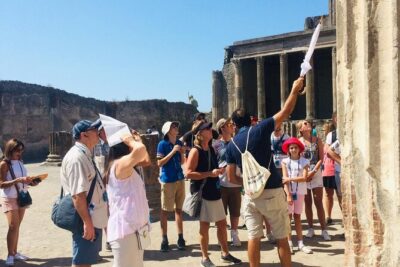
Pompeii and Herculaneum Small Group Tour with an Archaeologist
Read our review →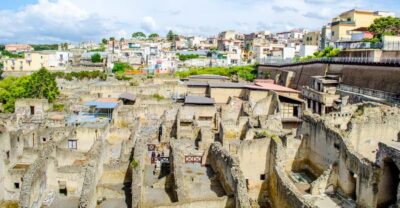
Herculaneum Entry Ticket with Optional Audio Guide
Read our review →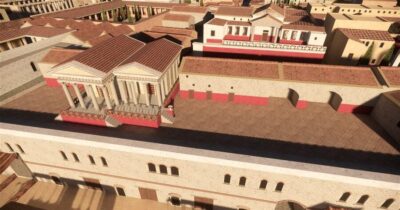
Herculaneum: 3D Walking Tour with Skip-the-Line Ticket
Read our review →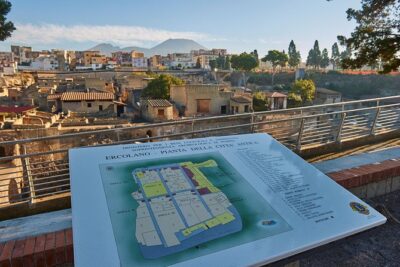
Guided Day Tour of Pompeii and Herculaneum with Light Lunch
Read our review →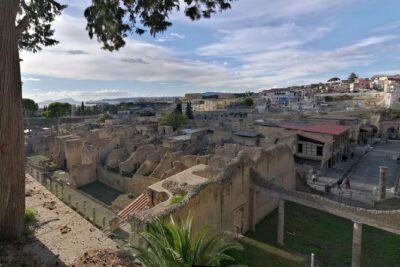
Private Day Tour to Vesuvius, Herculaneum & Pompeii with Pick Up
Read our review →
Herculaneum: Skip The Line Entrance ticket + Audioguide
Read our review →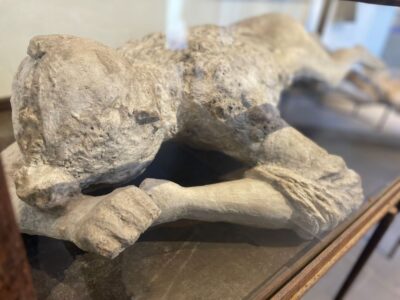
Pompeii and Herculaneum: Guided Tour with an Archaeologist
Read our review →Browse the lists this tour appears in