

Reviewed · POMPEII TOURS
Pompeii: Small Group Tour with an Archaeologist
Pompeii is already jaw-dropping, but what makes this tour different is how fast you can get meaning out of the stones. I love two things right away: an archaeologist guide who explains what you are looking at, and headsets that help you hear clearly as you move through busy areas. The one catch is that Pompeii is full of steps, ramps, and uneven ground, so if your mobility is limited, this may be a tough match.
You start at Porta Marina Superiore, one of the city gates, and you walk in like a Roman arriving for work, business, or an evening stroll. Soon the tour steers you toward the Forum, Pompeii’s public center, where the city’s rhythm starts to make sense.
You can choose a shorter 2-hour version that hits major highlights, or a 3-hour option that also adds a visit to the Villa of the Mysteries. Either way, you get guidance first, then time to stay inside the park and explore on your own with better instincts.
Key things to know before you go
- Archaeologist-led storytelling: you see streets, buildings, and art with context, not just sightseeing.
- Porta Marina Superiore entry: you enter through an original gate, then get your bearings fast.
- Forum and civic center focus: you learn how Pompeii worked day to day, not only what it looked like.
- Art you can stand close to: frescoes, mosaics, and preserved details are part of the experience, not background noise.
- Lupanar stop with an explanation of the name: you see the brothel beds and wall paintings with context.
- Villa of the Mysteries for the longer tour: expect especially detailed fresco viewing when you choose 3 hours.
Pompeii, the City That Stopped, and Why a Guide Changes Everything
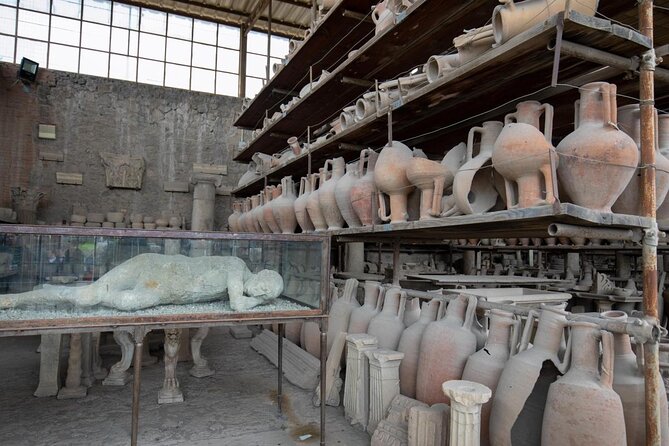
Pompeii is one of those places where you can walk for hours and still feel like you are just looking at ruins. A good archaeologist guide fixes that fast. They point out the small tells that turn a building into a daily scene, like who would have used a doorway, where people gathered, and why a room was meant for a specific kind of life.
This tour is built for that goal. You get a structured walk, with stops at the big power points of Pompeii’s public and private life, plus art and street-level details that you might miss without direction. In the more than 12,000 five-star style comments, the guides are repeatedly praised for making the information stick and for keeping the group engaged with stories and humor.
One practical reason I like this format: Pompeii is huge, and you do not want to waste your first hour wandering randomly. Starting with an archaeologist means you can later return to the areas that genuinely pull you in.
More Pompeii tours to compare:
- Pompeii: Entry Ticket and Guided Tour with an Archaeologist
★ 4.8 · 19,459 reviews - Pompeii: Skip-the-Line Entrance Ticket with Audio Guide
★ 4.0 · 2,509 reviews - Naples: Pompeii and Mt. Vesuvius with Lunch and Wine Tasting
★ 4.5 · 2,454 reviews
2 Hours vs 3 Hours, and the Real Choice: Villa of the Mysteries
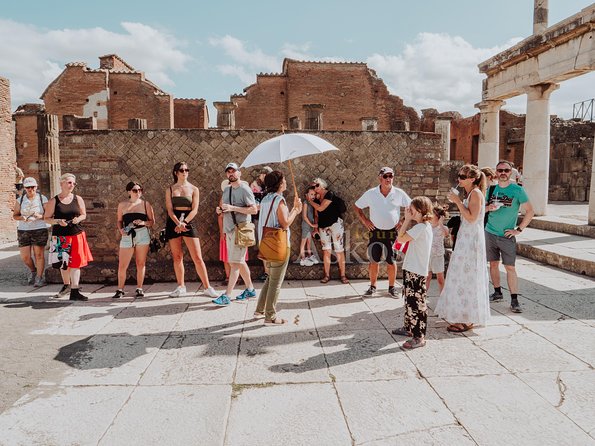
This is a pick-your-depth kind of tour. The 2-hour option is designed to deliver the essentials at a pace that still leaves time to roam on your own afterward. The 3-hour version adds a visit to the Villa of the Mysteries, which is the extra time many people feel is worth it.
Why? Because Pompeii art is not all the same. The Villa of the Mysteries is especially tied to the experience of seeing frescoes up close, and your guide can help you notice what is going on in the paintings rather than just admire color. If you are the type who likes to slow down for details, that extra hour is often the difference between quick viewing and real understanding.
If you are short on time in Naples or you want to keep the afternoon flexible for wandering, choose 2 hours. If you want more of the art side and not just the big street scenes, choose 3 hours.
Getting In Through Porta Marina Superiore, Then Learning the City’s Layout
The tour begins by entering Pompeii at Porta Marina Superiore, one of the city’s gates. That sounds like a minor detail, but it is actually a smart way to begin. You walk in through an original entry point, then the guide guides you to the roads and spaces that connect the city’s functions.
From there, you move along the main streets and gradually push toward the Forum, Pompeii’s civic heart. This is where you start to feel the city as a place that handled public life, business, legal matters, and gatherings.
I also like that this tour is not only about monuments. It nudges you into the habit of looking for clues: how spaces were arranged, how people would have moved, and what a building likely meant. With the headsets, it is easier to hear the explanation while still watching your step and following the group.
The Forum, Basilica, and the Business of Roman Public Life

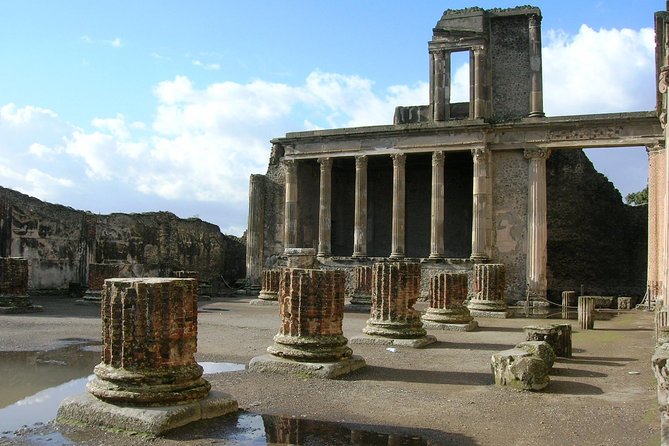
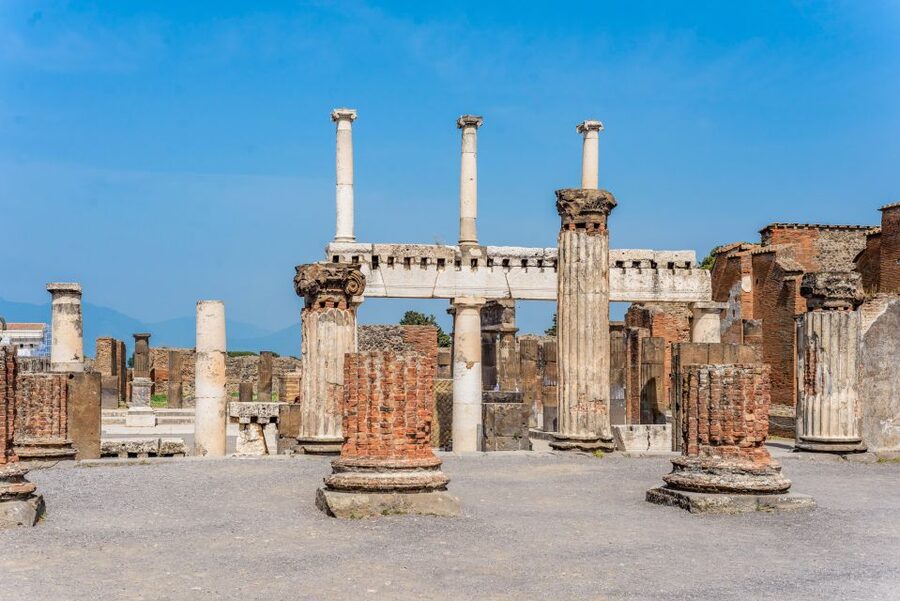
The Forum is one of those spots where, without context, you might think, so what? During the tour, it becomes the city’s working stage. You will see why this space was so central and how Pompeii’s public routines played out in stone.
One highlight is time around the Basilica, which served as a kind of hub for legal and business activity. Even if you do not remember every Roman term, the guide’s explanations help you map the buildings to real functions. You start to notice how people would have used the area.
You will also get a feel for the way the city connected to its landscape. When you look in the direction of Mount Vesuvius, the story gains a sharper edge. You are not just visiting ruins, you are standing in the bowl that caught the eruption and froze a city mid-sentence.
A small but important travel tip: Pompeii can get crowded. The guide’s job here is not only to talk, it is to manage the flow so you keep moving without feeling like you are stuck behind a wall of people.
Same stretch of coast, a completely different day out:
- Pompeii: Skip-the-line-Ticket and Guided Tour
★ 4.6 · 1,152 reviews - Pompeii: Small-Group Tour of Pompeii and Herculaneum
★ 4.8 · 867 reviews - Pompeii: Guided Tour with Skip-the-Line Entry
★ 4.9 · 812 reviews - Pompeii: Skip-the-Line Entry Ticket with Digital Guide App
★ 4.1 · 770 reviews
Temples, Baths, and the Great Theatre Stops That Make Pompeii Feel Alive

Pompeii is famous for houses and art, but it is also a full city with religion, recreation, and public routine. This tour includes stops that show those layers.
You may pass the Temple of Apollo, and the tour also includes time around major civic-religious landmarks like the Temple of Jupiter. Your guide connects these buildings to public life and belief, not just to architecture.
Then you get into everyday Pompeii rhythms with sights like the thermal baths and other public spaces. Baths in Pompeii were social as well as practical, so explanations here help you understand why these places mattered beyond cleanliness. If you only picture Rome as marble and generals, this part of the tour quietly corrects the picture.
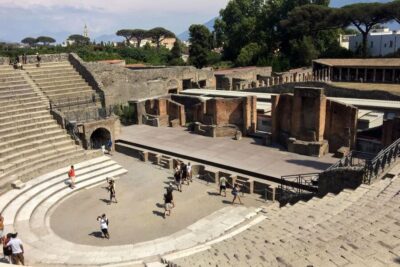
The tour also includes Pompeii’s Great Theatre, a place where the city’s cultural life played out. When you step into the theatre area, it is easy to imagine crowds and performances. In the comments from guide-led groups, theatre moments are often described as big wow points, especially when the guide ties the building to how entertainment worked in Roman times.
Houses, Frescoes, Mosaics, and Seeing the Lupanar With Context
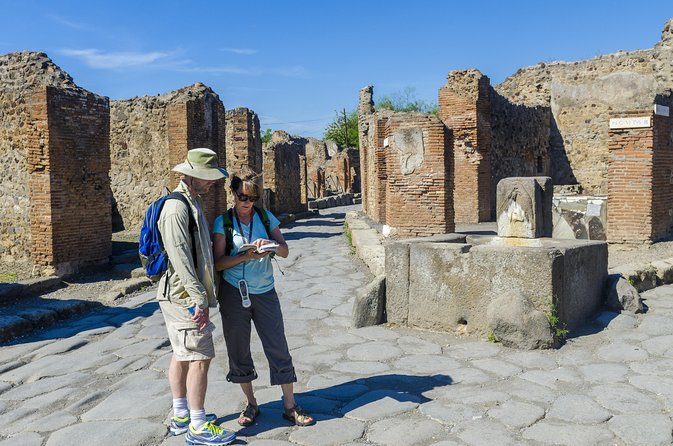
Now we get to the part most people remember: preserved walls and artworks. This tour gives you close access to frescoes, mosaics, and other surviving decoration so you are not just reading labels. You are looking at what Roman households and businesses chose to display.
Stops can include places like the House of the Faun, the House of the Vettii, and the House of Menander. These are not random choices. They help you compare how different homes and wealthy spaces were arranged, decorated, and used.
One of the most talked-about stops is the Lupanar, Pompeii’s well-known brothel. You do not just see the stone beds and painted walls, your guide explains how the place got its name. The tone matters here, and multiple guides have been described as handling adult themes with sensitivity, even when families are in the group.
If you are worried about being overwhelmed by the subject matter, focus on what the guide is doing: putting the brothel in its historical and cultural context, then helping you notice physical details. That approach turns shock into understanding.
There is also a clue-heavy element to some house visits. People who enjoy detective-style looking tend to love when guides point out how to tell the difference between street-facing commercial space and more private areas.
Plaster Casts, the 79 AD Story, and What You Can Still See Today
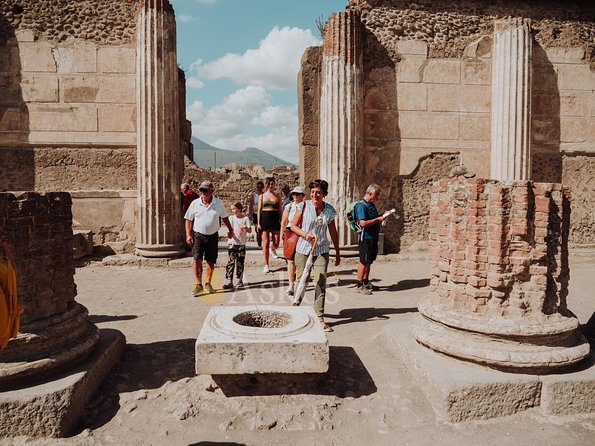
Pompeii’s eruption story is central, and the tour includes time to see plaster casts. These casts help you connect the eruption to real people, not just a date in a textbook.
One real-world detail to know: plaster casts are not necessarily spread through multiple buildings as you might imagine from older imagery. Some tour notes indicate the casts are now presented in display cases, including a small number of sealed displays. So if you are expecting casts everywhere, you may not find them that way. The guide will point you to what is available.
Your archaeologist guide also connects what you see around you to the bigger timeline, including how Pompeii developed from earlier settlements into a bustling Roman city by the first century AD. Standing in the streets and doorways, the timeline makes more sense because you can see how the city is laid out.
This is also where your guide’s delivery matters. In the past, guides like Alessandra, Anna, Teresa, and Michele have been praised for making the story vivid and for answering questions in a way that helps you keep the big picture while still appreciating the small details.
After the Tour: How to Spend Your Remaining Time Inside the Park
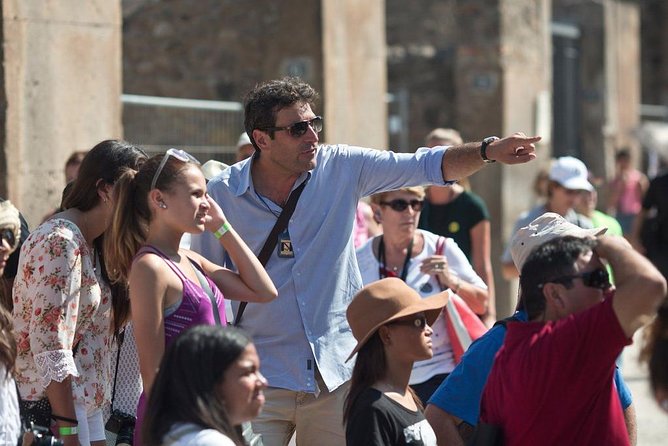
One reason this tour feels like good value is the built-in handoff. You start with the archaeologist-led route, then you are free to stay in the park and explore on your own after the guided portion ends.
To use that time well, I recommend you make a short list during the tour: one place you want to re-visit for art, one place you want to revisit for scale, and one place you want to check for photos and close viewing. Your guide will usually share practical suggestions about where the rest of the site is worth your time.
This is where the tour’s crowd strategy can help you. Several guides were described as avoiding the most congested spots and moving around more smoothly. That means you are not just hearing about quiet corners, you are actually getting a preview of them.
Also keep in mind the park is huge. Even with a guided tour, plan for walking and time to stop. If you do not want to sprint, choose an earlier start time so you still have good daylight and more areas open when you finish the guided portion.
Price and Value for a $40 Archaeologist Tour
At around $40 per person, this tour is often a strong buy because the ticket and the guide are bundled. You do get the Pompei Express entry ticket included, plus a 2- or 3-hour guided visit with an archaeologist. That matters, because Pompeii admission alone can feel like a sunk cost if you arrive with no plan.
You also get headsets when the group reaches a certain size, which sounds small until you are standing near a wall and the guide is talking at full voice into a crowd. Headsets help you stay in sync with the explanation without turning your day into constant hand-sign translation.
And finally, you get your money’s worth through the after-tour freedom. Spending the remaining time with the right mental map is where this kind of tour pays off. You can walk slower, spot details sooner, and decide what deserves a second look.
Should You Book This Pompeii Small-Group Tour With an Archaeologist?
Book it if you want the fastest path from ruins to understanding. This is especially a smart pick if it is your first time in Pompeii, or if you want a guided route that hits the Forum and key houses while still making time for art and the Lupanar.
Consider a different plan if you need step-free access or mobility-friendly routes. This tour is not recommended for wheelchair users or people with mobility impairments, and the terrain includes steps, ramps, and slight climbs.
If you fit the walking pace, this tour is one of the best ways to see Pompeii without wandering in circles, and it gives you enough direction to make your self-guided time feel purposeful.
FAQ
How long is the Pompeii small-group archaeologist tour?
It runs for 2 hours or 3 hours, depending on the option you choose. The longer option includes a visit to the Villa of the Mysteries.
What is included in the price?
The included items are the entry ticket, a 2- or 3-hour guided tour with an archaeologist, and headsets for listening when available for groups of 16 or more. You can also explore the archaeological site on your own after the tour.
What languages are available for the live tour guide?
The live guide is offered in French, Spanish, German, Portuguese, English, and Italian. Shared and private options may not always offer the same languages, so check the language options for your preferred type.
Do I skip the ticket line?
Yes, the tour includes skip-the-ticket-line entry.
Can I book a private group instead of a small group?
Yes, private group tours are available.
Where do I meet the guide?
The meeting point can vary depending on the option booked. The tour enters the site at Porta Marina Superiore, and a cloakroom service is located next to that entrance (subject to availability).
What should I bring?
Bring a passport or ID card. A copy is accepted.
What is not allowed on the archaeological site?
Smoking is not allowed, and luggage or large bags are not allowed. Mobility scooters are also not allowed.
Is this tour suitable for wheelchair users or limited mobility?
It is not suitable for wheelchair users or people with mobility impairments. The tour is not recommended because of steps, ramps, and steep climbs.
Recently reviewed around Pompei Campania
- From Sorrento: Pompeii with an Archaeological Guide & Ticket★ 4.6 · 19 reviews
- From Positano: Pompeii Ruins Small Group Guided Tour★ 4.8 · 82 reviews
- Pompeii Positano Amalfi Day Trip from Rome by Car, No Bus!★ 5.0 · 5 reviews
- Pompeii VIP 3h Tour: Skip-the-line with your Archaeologist★ 4.9 · 13 reviews
- Pompeii & Virtual Museum Private 2-in-1 Kid’s Tour★ 4.9 · 9 reviews
- Pompeii & Vesuvius★ 4.3 · 12 reviews
- From Naples: Pompeii Wheelchair-accessible with a Guide★ 5.0 · 8 reviews
- Pompeii Tour_Skip the line ticket + audioguide★ 4.7 · 17 reviews
Pompeii Tours, compared.
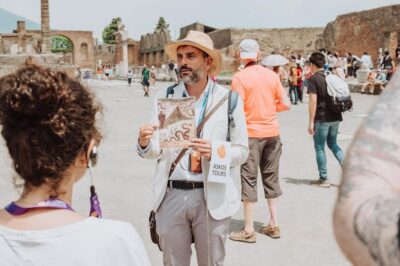
Entry Ticket and Guided Tour with an Archaeologist
Read our review →

Pompeii Small Group Tour with an Archaeologist
Read our review →
Skip-the-Line Entrance Ticket with Audio Guide
Read our review →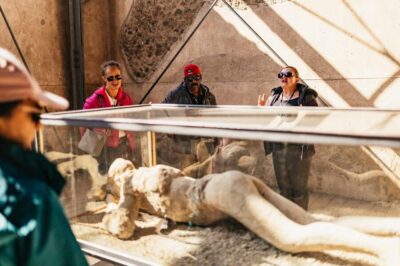
Pompeii and Mt. Vesuvius with Lunch and Wine Tasting
Read our review →
Archaeological Park Tour with Ticket on request
Read our review →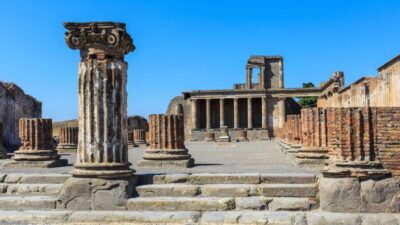
Browse the lists this tour appears in