
Reviewed · POMPEII TOURS
Pompeii: 2-Hour Guided Tour with an Archaeologist
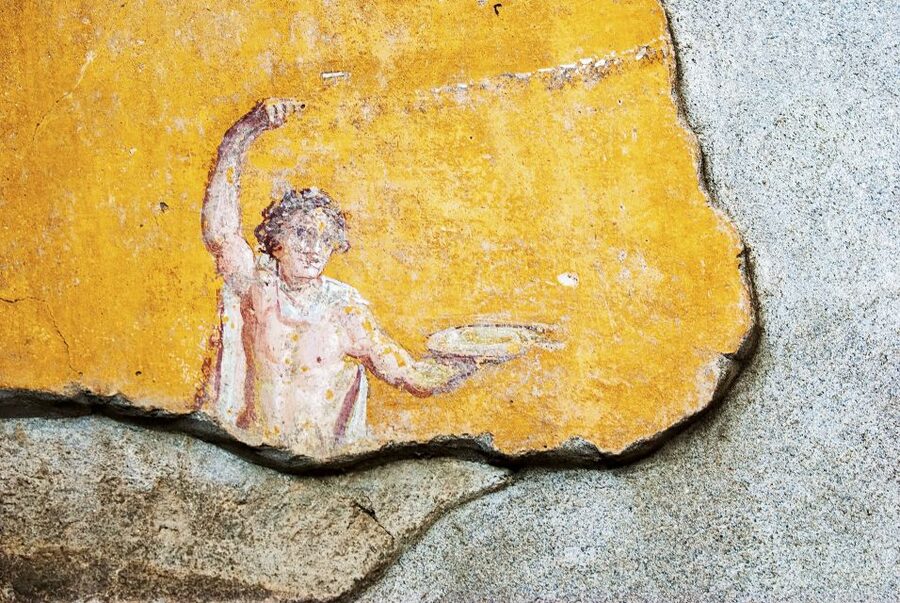
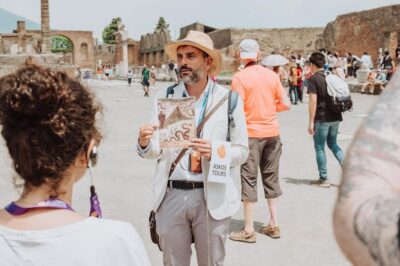
Pompeii is interesting in a very specific way. It is not a pile of old stones, it is a whole town frozen in time by the eruption of Vesuvius in 79 AD. What I really like about this 2-hour archaeologist-led format is that you get a focused route through the western core plus the kind of storytelling that turns the ruins into real daily life. Guides like Rosalina and Tonia (and other names you might get) tend to bring the place to life fast, with respect for what happened.
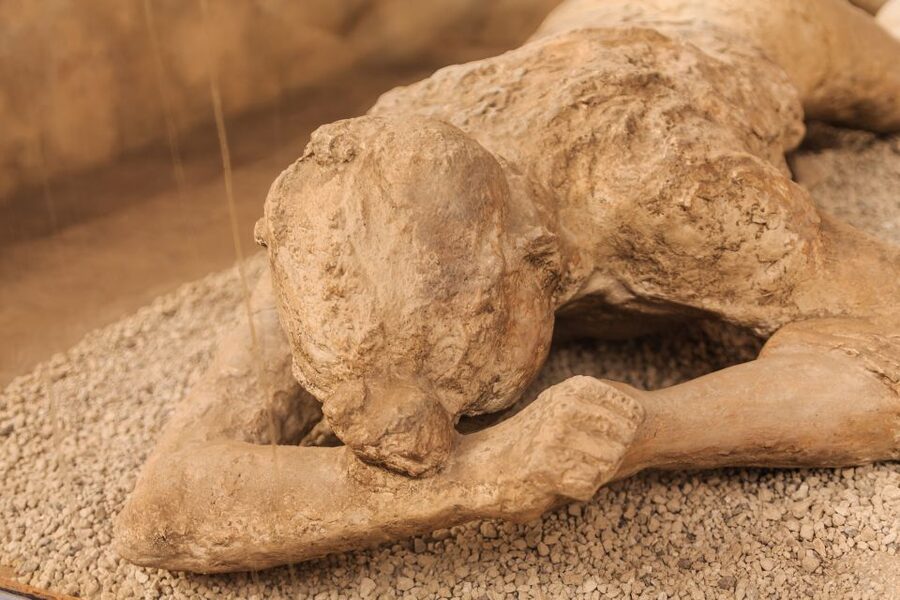
Two standout parts for me are the chance to see the Forum and Basilica as the political heart of the city, and the plaster casts that show humans and animals at the moment of death. If you are short on time, this tour’s tight pacing helps you understand more without wandering for hours. One possible drawback to keep in mind: at two hours, it is not enough to see everything, so you will want to pick your priorities ahead of time and come ready to walk.
Key takeaways before you go
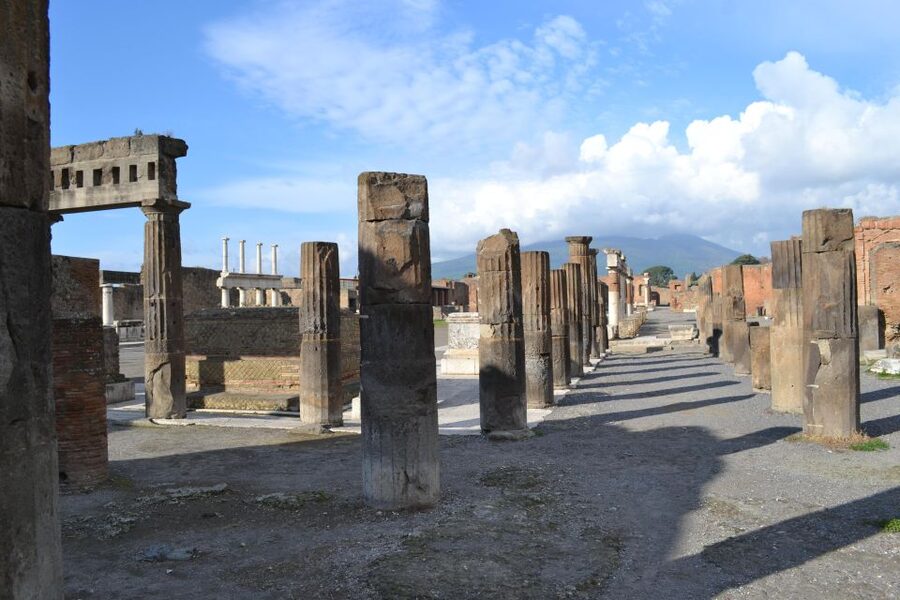
- Archaeologist-led route focused on the city’s most important public buildings and busy streets
- Forum, Basilica, and thermal bath areas explained in plain, practical terms for how people lived
- Lupanar (brothel) and other everyday stops that show the less-pleasant side of Roman life
- Plaster casts of people and animals plus a look at everyday spaces like a bakery
- Private group feel, often with disposable earphones to keep you hearing clearly
A 2-hour Pompeii route that actually helps you see more
Pompeii is big. Even if you love archaeology, wandering on your own can turn into a long loop of wow, cool columns, next, and then you leave with only half the story. A guided 2-hour visit is built for understanding, not just sightseeing.
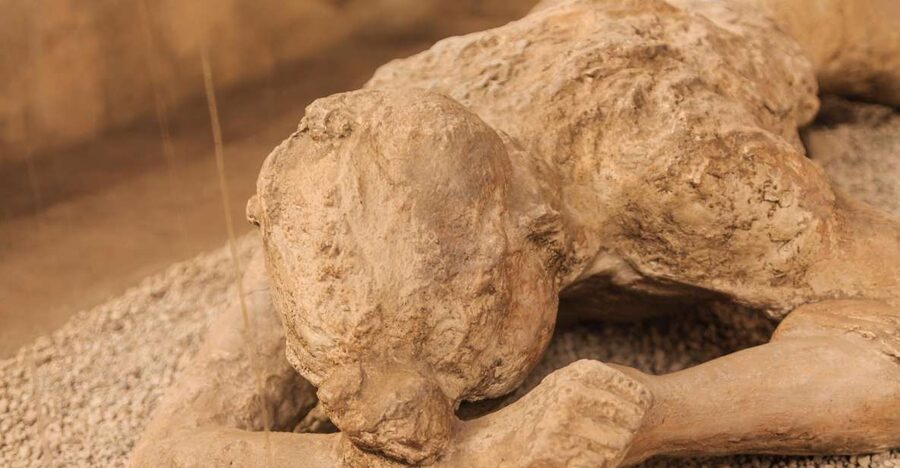
This tour focuses on the western part of Pompeii, where you find a concentration of public life: political buildings, baths, theaters, and major neighborhoods. That matters because Pompeii becomes much easier to read when you start with the spaces Romans used every day and then move into homes and side streets.
You also get the kind of framing an archaeologist brings. The guide explains how Pompeii was buried under molten ash and lava, then later rediscovered in the 18th century, and why UNESCO inscribed Pompeii and Herculaneum as a complete and vivid snapshot of daily society. You walk away with a clearer sense of what you are looking at, not just what it looks like.
More Pompeii tours to compare:
- Pompeii: Entry Ticket and Guided Tour with an Archaeologist
★ 4.8 · 19,459 reviews - Pompeii: Small Group Tour with an Archaeologist
★ 4.8 · 12,264 reviews - Pompeii: Skip-the-Line Entrance Ticket with Audio Guide
★ 4.0 · 2,509 reviews
Meeting at Porta Marina and getting oriented fast
You meet by Porta Marina Superiore, the main entry point used for this western-side walk. The meeting location is given as Pompei – Porta Marina, Via Villa dei Misteri, 2, and guides start you at the front edge of the action instead of easing in with far-away sights.
I like this approach because it cuts down on the most annoying part of Pompeii visits: confusion at the start. One practical caution, based on a real hiccup I’ve seen people deal with, is that the meeting spot can be tricky for GPS navigation. Give yourself a few extra minutes, and if you rely on your phone, double-check the street name.
From there, the tour’s job is simple. You get your bearings and then you keep moving. Earphones are included for bigger groups, which helps if you are walking in a cluster or during busier times when voices carry over street noise.
Temple of Apollo to the Foro Civile di Pompei: the city’s public face
The tour commonly kicks off with major religious and civic anchors, including the Temple of Apollo. Even if you have seen Roman temples elsewhere, Pompeii’s version hits differently because it sits inside the grid of a real city. The guide can help you connect the temple’s role to what people did outside, day after day.
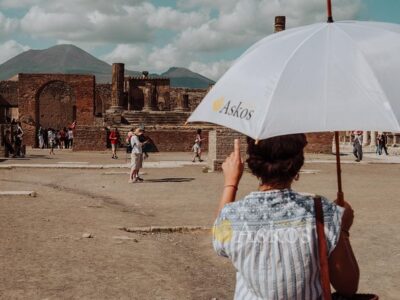
Next comes the Foro Civile di Pompei, the civic center where politics and social life overlapped. This is where Pompeii stops being a ghost town and starts feeling like a workplace. You get a clearer idea of how public spaces shaped daily routines, from conversations and displays of status to official business.
Then you’ll see the Basilica, often described as a court house. That stop is more useful than it sounds. It is not just a big hall, it is part of how Romans handled legal matters and social order, which gives you a better lens for everything else you see.
Basilica, public baths, and the Roman day-to-day in 79 AD
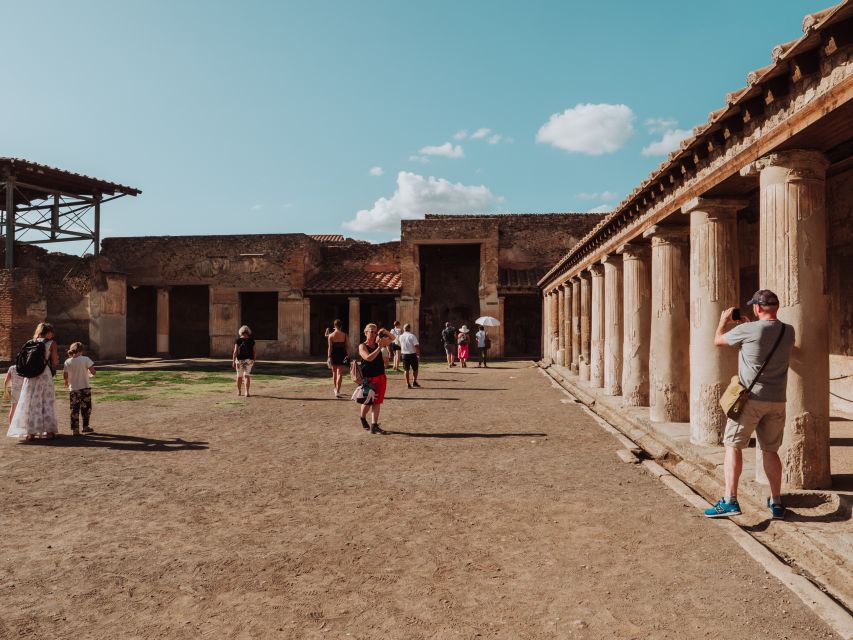
After the forum area, the tour brings you into places tied to leisure and routines, including Forum Baths and thermal bath areas. Baths were social hubs, not just places to get clean. Once the guide explains the function of the spaces, you can start to interpret the layout and what each room likely offered.
You may also move through stops like the Termopolium Capuano (a Roman fast-food style eatery) and other home-and-street scenes that show how commerce and everyday life worked. This is one reason this tour feels strong for value. It does not only point at famous monuments. It connects those monuments to how Pompeii ran.
One of my favorite parts of a good Pompeii guide is how they handle scale. Pompeii has so much detail that it is easy to get overwhelmed. A strong guide keeps the story tight and ties the sights to the same big theme, public order, private life, and what changed when the city was buried.
A few more Pompei Campania trips worth comparing
- Pompeii: Skip-the-line-Ticket and Guided Tour
★ 4.6 · 1,152 reviews - Pompeii: Guided Tour with Skip-the-Line Entry
★ 4.9 · 812 reviews - Pompeii: Skip-the-Line Entry Ticket with Digital Guide App
★ 4.1 · 770 reviews - Pompeii: Afternoon to Sunset Guided Tour with Ticket
★ 4.9 · 484 reviews
Homes like the House of Menander and the House of the Faun
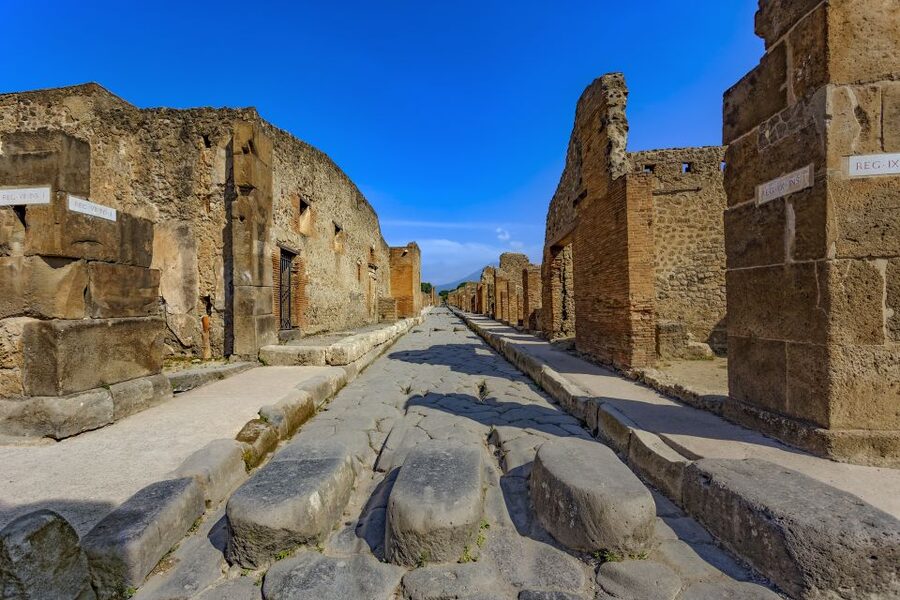
A guided stop through major homes is where Pompeii turns from architecture into human routine. You can walk past doorways and windows all day, but without context you miss the point of domestic spaces.
This tour includes high-profile houses such as the House of Menander and the House of the Faun, along with other famous residences like the House of the Vettii and the House of the Tragic Poet. You will also encounter the kinds of rooms and courtyards that help you imagine who lived there and what their days looked like.
The guide’s role is to help you read the layout. You start noticing distinctions that would otherwise be invisible, like how a home balanced privacy with public-facing rooms, or how mosaics and decorative choices signaled status. When you get it, you stop treating Pompeii like a museum and start treating it like a neighborhood you could almost visit today.
The Lupanar, theaters, and the parts of Roman life most people skip
The most surprising stop is usually the Lupanar, Pompeii’s well-known brothel. It can feel uncomfortable, but that discomfort is part of what makes the site important. The guide keeps the tone factual and helps you understand how the business of sex worked in the city’s economy and street culture.
I also like that the tour does not ignore entertainment. You will see stops linked to performance and crowds, including the Large Theatre and the Amphitheater of Pompeii. That gives you a bigger picture of public life, because Roman entertainment was not a side hobby, it was a major social event.
If you are the type who wants only the clean, pretty, postcard parts of Pompeii, this portion might not be your favorite. But if you want Pompeii to make sense as a real society, it is one of the stops that delivers.
Plaster casts, a bakery scene, and the tragedy you cannot forget
One of the defining experiences at Pompeii is seeing plaster casts of humans and animals made from the evidence left at the time of death. A good archaeologist guide does more than point. They explain what the casts represent, why the preservation was possible, and how the site became a powerful record of that moment.
This is also where the tour’s pacing matters. Two hours is short, but the cast stop is emotionally heavy, so you get a real chance to absorb what you are seeing without rushing to the next room immediately.
The tour also includes a look at everyday food space, including a bakery where you can still see remains of utensils and even the food traces left behind. It is a small detail that hits hard, because it connects the tragedy to routine. People were eating, working, and living, right up to the point the eruption changed everything.
Where the UNESCO story fits in (and why you should care)
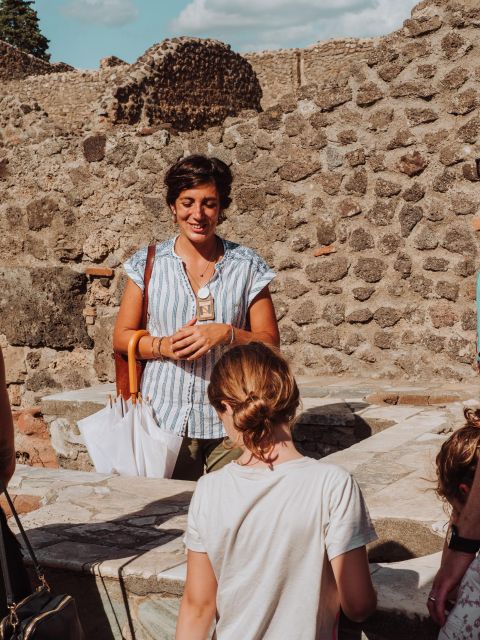
UNESCO’s wording gets repeated for a reason, Pompeii is a rare snapshot. The guide explains that Pompeii and Herculaneum create a complete and vivid picture of daily society at a specific moment in the past. In plain terms, the city gives you a rare look at how people lived, not just what rulers built.
That UNESCO framing helps you get more out of every stop on the tour. When you walk through public buildings, you understand why they existed. When you move past homes, you understand what needs they served. When you reach the cast area, you understand why Pompeii is still studied so intensely today.
If you have visited other ruined sites, you might notice Pompeii feels different because it is so readable. That is exactly what this kind of guided route tries to protect: you do not want to leave Pompeii with only surface impressions.
Price and value: what $175.74 per person buys you
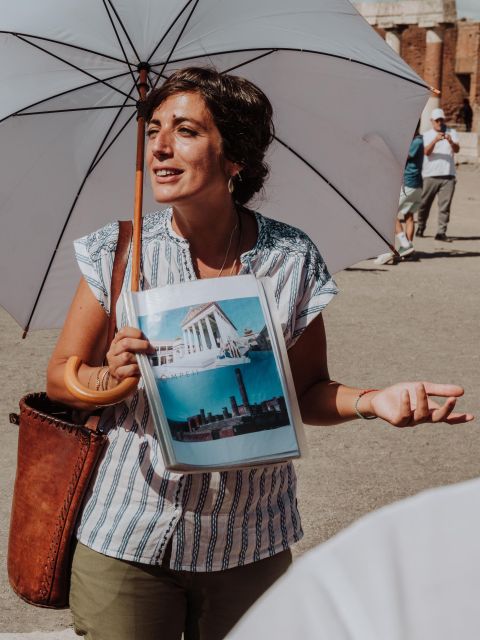
This tour costs $175.74 per person for a 2-hour experience. It is not a budget pick, but it is also not paying only for a ticket and a few quick photos.
Here is what you actually get for your money, based on the included items:
- Guide (with archaeologist-led style interpretation)
- Pompeii entry tickets included
- Disposable earphones for larger groups
Value comes from compression. Pompeii takes effort to understand. Paying for a good guide helps you see the right things in the right order, and it saves you from spending half the time figuring out what you are looking at.
Also, it is a private group experience. Private guiding changes the flow. You can go at a pace that works for your group, ask questions, and avoid some of the bottlenecks that happen in larger tours.
So yes, the price is high. But if you want meaning in your time at Pompeii, this is the kind of spending that can make a short visit feel full.
Languages, earphones, and pacing that keeps you moving without racing
The guide can lead in French, German, Spanish, Italian, and English. That matters because you want the explanation to land clearly, especially when the tour covers both public architecture and more sensitive topics like the Lupanar and the casts.
Disposable earphones are included if the group is larger. That is practical because Pompeii can get noisy with footsteps, other visitors, and street-level sounds. Hearing the guide clearly keeps you from losing the thread of the story mid-walk.
Pacing is also a theme in the feedback. People describe the tour as well paced and fast-moving in a good way, with guides who use storytelling to keep everyone engaged. You should still wear comfortable shoes, and bring water, sunglasses, and a sun hat. The ruins do not care that you paid for a tour.
Should you book? My take for the right type of visit
Book this tour if you want a guided, archaeologist-style understanding of the most important Pompeii sights in a short time window. It is a smart fit for first-timers, for groups who want structure, and for anyone who hates the idea of wandering around with no explanation.
Skip it or consider a longer visit if you are the type who likes slow, open-ended exploration. Two hours will not cover everything, and you may find yourself wishing you had more time after hitting the bigger hits like the Forum, baths, and theater areas.
If you can, pick this tour when you have enough energy to walk. Pompeii is a leg-day with history attached, and the best results come when you show up ready to move.
FAQ
How long is the Pompeii guided tour?
The tour duration is 2 hours.
Where do I meet the guide?
You meet at Porta Marina Superiore. The meeting point is listed as Pompei – Porta Marina, Via Villa dei Misteri, 2 (meeting point may vary depending on the option booked).
What are the main sites you visit?
The tour includes major areas such as the Forum, the Basilica, thermal baths (Forum Baths), and the Lupanar (brothel). It also includes plaster casts of humans and animals, and a bakery where you can see remains of utensils and even food.
Is Pompeii entry included in the price?
Yes. Pompeii entry tickets are included, along with the guide and disposable earphones for bigger groups.
What languages are available for the live guide?
The live guide offers French, German, Spanish, Italian, and English.
What should I bring for the tour?
Wear comfortable shoes and bring sunglasses, a sun hat, and water.
Is it free on the first Sunday of the month?
Entrance is free of charge on the first Sunday of each month, but tickets cannot be reserved ahead of time, so entry is not guaranteed.
Recently reviewed around Pompei Campania
- From Sorrento: Pompeii with an Archaeological Guide & Ticket★ 4.6 · 19 reviews
- From Positano: Pompeii Ruins Small Group Guided Tour★ 4.8 · 82 reviews
- Pompeii Positano Amalfi Day Trip from Rome by Car, No Bus!★ 5.0 · 5 reviews
- Pompeii VIP 3h Tour: Skip-the-line with your Archaeologist★ 4.9 · 13 reviews
- Pompeii & Virtual Museum Private 2-in-1 Kid’s Tour★ 4.9 · 9 reviews
- Pompeii & Vesuvius★ 4.3 · 12 reviews
- From Naples: Pompeii Wheelchair-accessible with a Guide★ 5.0 · 8 reviews
- Pompeii Tour_Skip the line ticket + audioguide★ 4.7 · 17 reviews
Pompeii Tours, compared.
Entry Ticket and Guided Tour with an Archaeologist
Read our review →
Pompeii Small Group Tour with an Archaeologist
Read our review →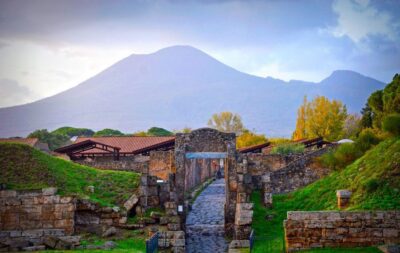
Skip-the-Line Entrance Ticket with Audio Guide
Read our review →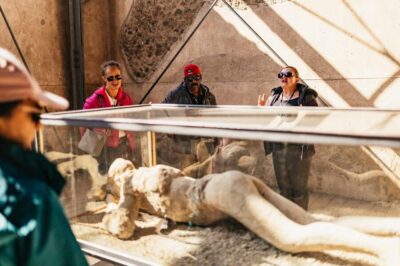
Pompeii and Mt. Vesuvius with Lunch and Wine Tasting
Read our review →
Archaeological Park Tour with Ticket on request
Read our review →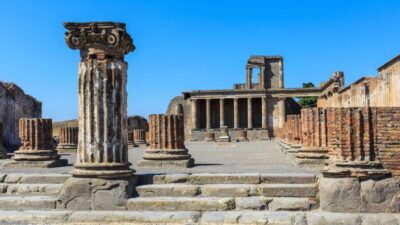
Browse the lists this tour appears in