
Reviewed · POMPEII TOURS
Small Group Guided Walking Tour of Ancient Pompeii Highlights
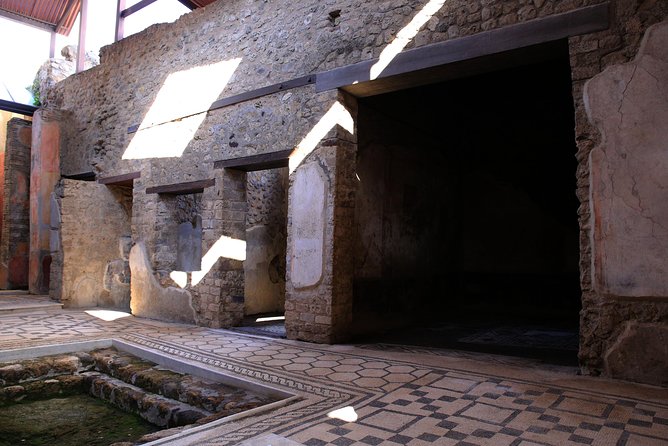
Pompeii is already a star attraction. What makes this tour more interesting is the small-group walking format plus skip-the-line access, so you spend your time looking at ruins instead of waiting at entrances. You also get a guide who can turn stone, streets, and buildings into something you can picture.
Two things I like a lot: the professional guide with entrance tickets included, and the pace that keeps the highlights from feeling like a checklist. This tour also works well even if you have teenagers in tow, as long as they can handle a couple hours of walking and heat.
The main consideration is timing. The tour runs on a booked schedule, and the guide will not wait if you’re late, because your entry times are fixed. Plan for sun, dust, and uneven ancient paving.
Key things to love about this Pompeii highlights walk
- Small group size (max 18), which makes questions actually possible
- Skip-the-line access that saves you time at busy entry points
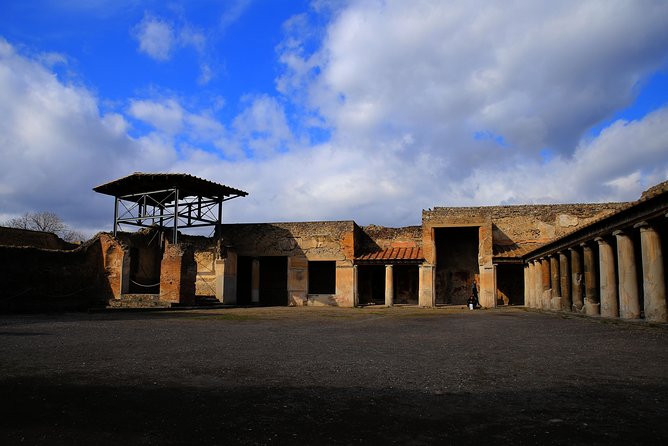
- A route that hits major anchors like Teatro Grande and the Roman bath complex
- Short stop format that fits Pompeii’s layout without a marathon feel
- A guide-led explanation that makes spaces like theaters and baths feel social, not just archaeological
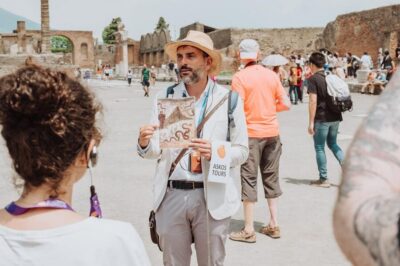
- Clear communication using a radio system with an ear piece (easy to follow, not distracting)
Pompeii on foot with skip-the-line flow
Pompeii can feel overwhelming at first. You see streets, columns, walls, and platforms, but it’s hard to know what you’re looking at until someone connects the dots. This tour is built for that exact problem. It’s a guided walk through the best-known sites, where you get enough context to make the ruins make sense fast.
The big practical win is that you’re not stuck standing in line. The tour includes guaranteed skip-the-line access, and you enter at scheduled times, which keeps the group moving. At Pompeii, small time savings add up quickly, especially on warm days.
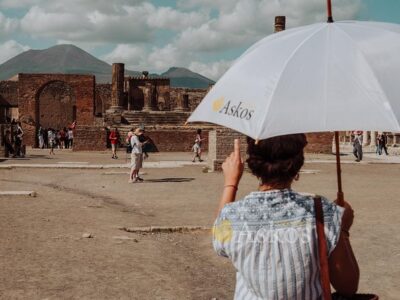
You’ll also like the human scale. The tour is capped at 18 travelers, so you’re not just herded around in a crowd. With fewer people, you get more back-and-forth with the guide, and you can actually hear explanations instead of relying on vague hand gestures.
More Pompeii tours to compare:
- Pompeii: Entry Ticket and Guided Tour with an Archaeologist
★ 4.8 · 19,459 reviews - Pompeii: Entry Ticket with Optional Audio Guide
★ 4.2 · 12,360 reviews - Pompeii: Small Group Tour with an Archaeologist
★ 4.8 · 12,264 reviews
Price and value: what $107.23 includes, and why it matters
The listed price is $107.23 per person for about 2 hours of guided walking. That might sound like a lot until you break down what you get.
You’re paying for three things that are hard to replace on your own:
- A professional guide who explains what you’re seeing and why it mattered
- Entrance tickets included, so you are not piecing together add-ons
- Skip-the-line access, which is often the difference between enjoying Pompeii and feeling stressed
If you’re comparing against DIY entry or a larger group tour, the value gets clearer. Here, you’re paying for speed plus clarity. You’re also walking at a steady but manageable pace, with short stops designed for staying engaged. People who want a quick but meaningful orientation to Pompeii usually find this works better than trying to “figure it out” during your first visit.
Your 2-hour route: from UNESCO entry to theaters, baths, and the Lupanar
This tour is a guided confirmation for use only with the guide. In other words, your ticket isn’t a free pass to roam whenever you want. You’re joining a planned sequence.
The tour starts at Coffee Shop Vittoria, Via Mare, 80045 Pompei NA, Italy. It ends back at the same meeting point, so you’re not stuck planning a complicated pickup.
You’ll move through five key stops, each about 20 to 30 minutes. That stop length is one of the smart bits here. It keeps you from zoning out, but it also gives the guide enough time to explain what you’re seeing rather than rushing through photos.
Here’s what each part is really about.
Stop 1: Private Tours of Pompeii, UNESCO focus
You kick off with an introduction at a UNESCO World Heritage Site area. This opening matters because Pompeii isn’t just “old buildings.” It’s a preserved time capsule of an entire urban system, from public spaces to private life.
In this first stretch, expect the guide to set the frame: what caused the city to freeze in time, what you should watch for as you walk, and how the site is organized. Once you get that mental map, the rest of the tour feels less random.
A small drawback: because this is an intro moment, you might want a slightly longer first explanation if you’re the type who likes deep timelines. Still, for most people, it’s the right amount of setup for a two-hour highlights walk.
More walking tours in Pompeii:
- Pompeii: Guided Walking Tour with Entrance Ticket
★ 4.3 · 1,423 reviews - Discover Pompeii: French Walking Tour of the Buried City
★ 4.8 · 253 reviews - Pompeii 3 Hours Walking Tour Led by an Archaeologist
★ 5.0 · 126 reviews - Pompeii: Highlights Guided Walking Tour
★ 4.6 · 105 reviews
Stop 2: Teatro Grande, the big open-air stage
Next up is Teatro Grande, an open-air theater with seating for around 5,000. When you’re standing in the space, it’s easy to think theaters are just buildings for shows. The guide helps you see how these were public gathering points, built for visibility and sound.
Why this stop works: you can look at the physical design and understand why an audience would feel part of the action. Pompeii’s theater spaces give you a real sense of civic life, not just ruins.
Timing tip: theaters can be brighter and hotter than shaded streets. If you’re visiting in peak summer, this is one reason why having a guide who keeps the pace brisk helps you get through the exposed parts efficiently.
Stop 3: Odeon, Teatro Piccolo, smaller stage, closer feel
After the big theater, the tour moves to the Odeon, Teatro Piccolo, with capacity around 800. The point of this stop is comparison. You’ll start noticing what changes between spaces designed for larger audiences versus smaller performances.
You may find the explanations here help you read the architecture. Even without fancy technical knowledge, you’ll be able to spot why a smaller venue changes the atmosphere. It’s a good stop if you like human-scale details, because 800 is still large, but it feels more intimate than Teatro Grande.
Again, you’ll be moving through in a compact time window, so don’t expect a long lecture. This is an orientation stop that hands you the basics and lets you appreciate the rest on your own later.
Stop 4: Terme del Foro, a bath complex buried in 79 A.D.
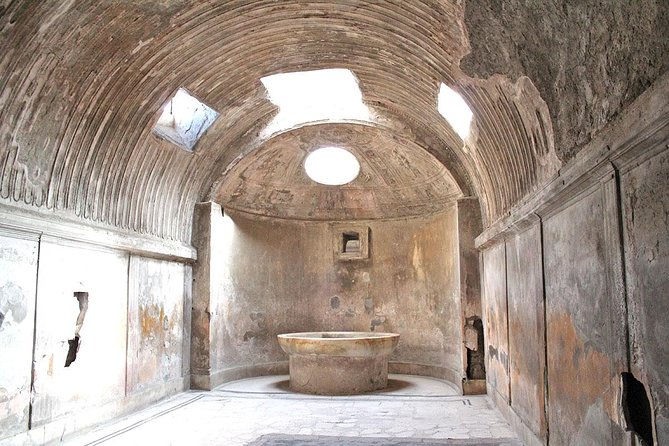
Then comes Terme del Foro, a Roman bath complex. It’s buried by the eruption of Vesuvius in 79 A.D. That fact is not just trivia. It’s why these spaces hold so much emotional power, and why baths are often one of the most memorable stops on Pompeii tours.
This is where you can shift from “look at buildings” to “imagine daily routines.” Even if you’ve never studied Roman culture, a bath complex is easy to grasp. It was social. It was practical. It was part of being out in the city.
One small caution: the surface paths and uneven stone underfoot can be noticeable here. Wear shoes you trust on real ground. The tour is explicit about walking on original ancient streets, and that is not the place for fashion sneakers with slippery soles.
Stop 5: Lupanar, the brothel with surviving frescoes
The final major stop is the Lupanar, often described as appointment houses or brothels. Some frescoes are still visible, and the guide explains what you’re looking at, including how the artwork relates to the women who worked there.
This stop can feel more direct than the theaters or baths, so if you’re traveling with kids or teens, it’s a good idea to know your comfort level ahead of time. The tour does include family participation rules, but “allowed” and “comfortable” can be different things.
What makes it worthwhile is context. You’re not just seeing murals. You’re learning how the space fits into city life and how Pompeii records private realities alongside public culture. If you like tours that connect the dots rather than avoiding tough topics, this stop is usually the one that people remember most.
What your guide actually does, and why the best ones make it fun
Pompeii needs a translator. You can read signs, but you can’t feel the city unless someone explains it in plain language. This tour leans hard into that.
Guides in this program often have strong archaeological backgrounds. You might meet guides like Lello, who brought real passion and a clear, story-driven approach, or Italo, who is described as friendly, informative, and fun. Another guide you could encounter is Susanna, who mixed education with entertaining explanations and even worked to accommodate late arrivals.
One detail I’m glad this tour uses: a radio system with a small ear piece for communication. That means you’re not constantly craning your neck. You hear the story without the guide shouting over the crowd.
The best part is the balance. You get enough information to understand what you see, without feeling trapped in a lecture. Many visitors like that the stops aren’t overlong, so attention stays sharp in summer heat. And if you travel with teens, a clear and upbeat guide style can be the difference between tolerance and genuine interest.
Logistics that affect your day more than you think
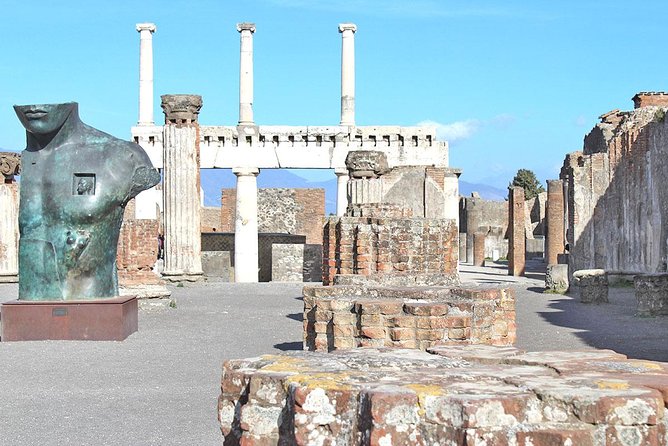
This is a walking tour, and it’s on comfortable shoes territory. The streets are ancient. The ground is uneven. Plan footwear like you mean it.
Here’s the practical checklist:
- Dress code: smart casual
- Bring comfortable walking shoes
- Arrive 10 minutes early at the meeting point, because the guide will not wait
- The tour is in English
- Service animals are allowed
- It’s near public transportation
That last point matters in Pompeii because getting there can be half the battle. If you’re relying on transit, you’re in a better position than if you’re trying to time a complicated taxi plan.
Also, expect a real group experience. The tour is capped at 18. That’s big enough to feel social, but small enough to ask questions and move efficiently.
After the tour: how to use the rest of your Pompeii time
One reason this tour is popular is that it gives you orientation. Once the tour ends, you’re back near where you started, and you can keep exploring on your own.
This is key because Pompeii is huge. The tour hits the major anchors in a structured way. After that, you know what to look for, whether you’re circling back for a second view of a theater, trying to find bath details with fresh eyes, or stopping for a snack.
If you like to map your visit, treat the guided walk as your compass. You now understand the main categories of spaces, so wandering doesn’t feel like aimless wandering.
If you hate crowds, you may find the guided portion easier to manage than the big tour groups that can swallow time. The best tours keep the group moving without turning Pompeii into a slow-moving line.
Who this Pompeii highlights tour is best for

This tour fits a lot of travel styles, but it shines for:
- First-time Pompeii visitors who want the highlights with context
- Families who want a structured, not-too-long visit
- Teenagers, especially if your guide brings energy and keeps explanations clear
- People who prefer small-group interaction over passive sightseeing
If you’re the type who loves spending half a day in one neighborhood of ruins, you might find two hours a bit short. But you can solve that by pairing this tour with self-guided time after. Think of it as the “get your bearings fast” version of Pompeii.
Should you book? A clear call
Book it if you want the best odds of a satisfying first visit. You get skip-the-line access, entrance tickets, and a guide who can explain Pompeii in a way that makes the ruins feel alive. The small group size and radio communication help you actually follow along.
Skip it only if you strongly prefer independent wandering with no structured stops, or if you know you won’t enjoy walking on uneven ancient streets. Also consider your comfort level with the Lupanar topic, especially with younger kids.
If your goal is to leave Pompeii understanding what you saw and why it matters, this is a solid choice for your time and money.
Recently reviewed around Pompeii
- Mt. Vesuvius Wine Tasting and Lunch Experience from Pompeii★ 4.5 · 20 reviews
- Pompeii Small Group with an Archaeologist and Skip The Line★ 5.0 · 121 reviews
- Pompeii from Afternoon to Sunset★ 5.0 · 108 reviews
- Private Guided Tour and VR Headsets in the Ancient Pompeii★ 5.0 · 3 reviews
- Visit Pompeii with a local expert guide★ 5.0 · 10 reviews
- Traditional Neapolitan Dinner in Pompei – Villa Franca – Family Restourant★ 5.0 · 8 reviews
- Discover Pompeii on this Guided Walking Tour of the Buried City★ 4.0 · 9 reviews
- 2 Hours Private Walking Tour in Pompeii with an Archaeologist★ 5.0 · 15 reviews
Pompeii Tours, compared.
Entry Ticket and Guided Tour with an Archaeologist
Read our review →
Pompeii Small Group Tour with an Archaeologist
Read our review →
Skip-the-Line Entrance Ticket with Audio Guide
Read our review →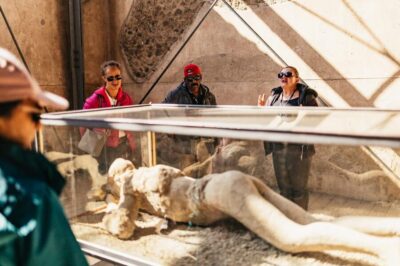
Pompeii and Mt. Vesuvius with Lunch and Wine Tasting
Read our review →
Archaeological Park Tour with Ticket on request
Read our review →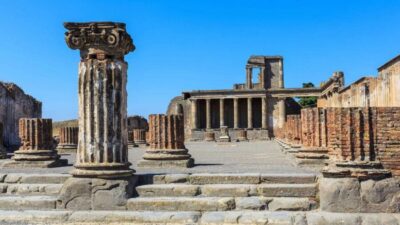
Browse the lists this tour appears in