Reviewed · POMPEII TOURS
Skip the Line Private Pompeii Guided Tour
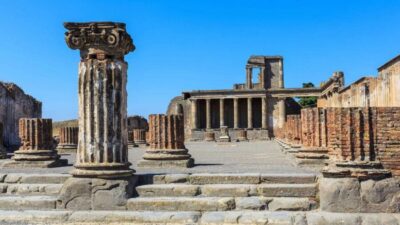
Pompeii is one of those places that can feel both thrilling and overwhelming fast, and this skip-the-line private tour is designed to keep you moving with purpose. I like the idea of a guided highlights route that gets you into the Archaeological Park quickly, then gives you enough time to actually look at the details.
Two things I really like are the focus on major public spaces, like the Forum area and the theatre, and the fact that it is truly private, so you can ask questions without waiting for a large group. The possible drawback is that it is only about 2 hours, so if you love to linger in one spot, you might feel a little time pressure.
If you want Pompeii to make sense in a short visit, this is the kind of plan that can work well, especially when you choose a morning or afternoon time that fits your day. Just note that Pompeii site entry is listed as not included, even though some individual stops show admission as included, so it is smart to check what you personally need to bring or pay before you go.
Key highlights to know before you go
- Priority admission helps you avoid the worst of the waiting and start seeing ruins sooner
- Private guide attention means you can ask questions as you walk, not at the end
- Forum-first route connects Apollo, the square, granaries, baths, and homes in a logical loop
- Mosaics and interior spaces like the House of the Tragic Poet and the boar house are built into the walk
- Big public drama and darker corners include Teatro Grande and the Lupanar
- Mobile ticket is included, making it easier to manage your arrival
Skip-the-line entry at Pompeii: what your 2-hour plan buys you
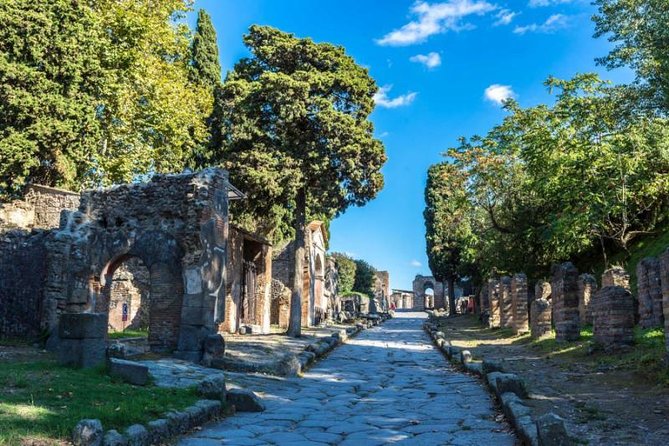
Pompeii can beat up your attention span. You step in, you see a lot, and then you realize you have spent half your time figuring out where to go next. What makes this tour practical is that it is built around the idea of time with payoff. You get skip-the-line entry, so you lose less energy before the ruins even begin.
Then the pacing is designed for a short window: about 2 hours to hit the most meaningful highlights. That does not mean you see everything. It means you see the things that help the whole city click together, the public spaces, the daily life zones, and a few of the most talked-about buildings.
Value-wise, $82.65 per person is not a bargain, but it is not a luxury, either, when you compare it to what you save in stress. Priority entry plus a guide is exactly what turns Pompeii from a self-guided “ruins buffet” into a coherent walk.
More Pompeii tours to compare:
- Pompeii: Entry Ticket and Guided Tour with an Archaeologist
★ 4.8 · 19,459 reviews - Pompeii: Entry Ticket with Optional Audio Guide
★ 4.2 · 12,360 reviews - Pompeii: Small Group Tour with an Archaeologist
★ 4.8 · 12,264 reviews
Meeting at Pompei Porta Marina, then getting oriented fast
Your tour starts at Pompei-porta Marina, the meeting point near the archaeological area. Coming in at a gate that makes sense matters because Pompeii has multiple entry points and you want your first 10 minutes to be about ruins, not navigation.
Because it is private, you should expect your guide to set you up quickly with direction and context. You will not be stuck listening to a one-size-fits-all lecture. Instead, you can ask questions on the spot, which is especially useful at Pompeii where small details often change what a building “means.”
Also, the tour ends back at the same meeting point. That keeps the day simple, especially if you plan to eat, take a bus, or connect to another activity after.
Pompeii Archaeological Park stop: the highlights that make the whole city make sense
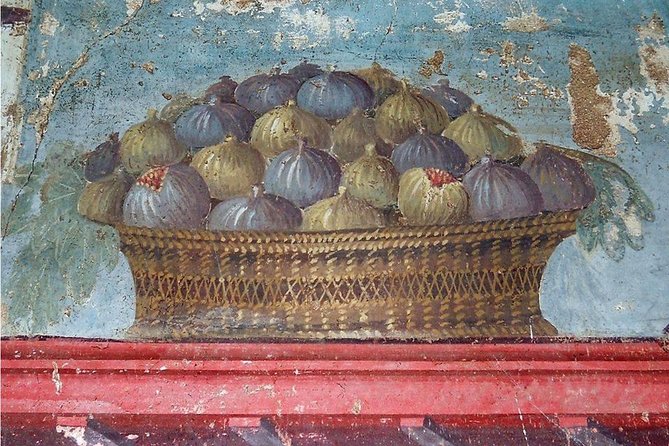
The first main stop is the Pompeii Archaeological Park, and it is where you get the widest sweep. In roughly two hours, you cover the kind of mix that helps you understand daily Roman life at a glance.
Here is what this opening chunk is built around:
- Theatres and public forums, which show how social life worked
- Temples, which explain what people worshipped and what spaces mattered
- Roman villas and shops, hinting at private comfort and everyday commerce
- Baths and the spa area, where hygiene and social time overlapped
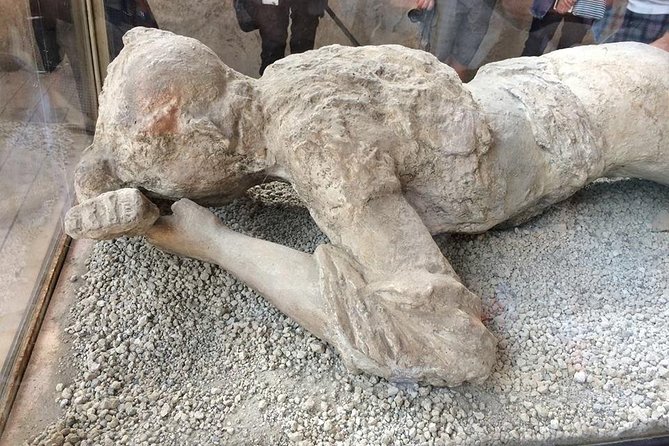
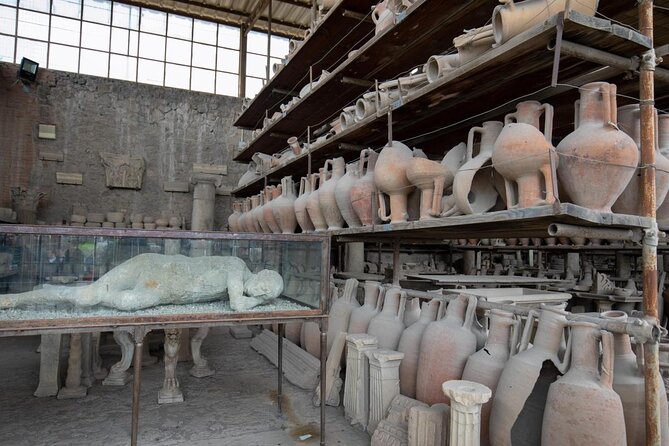
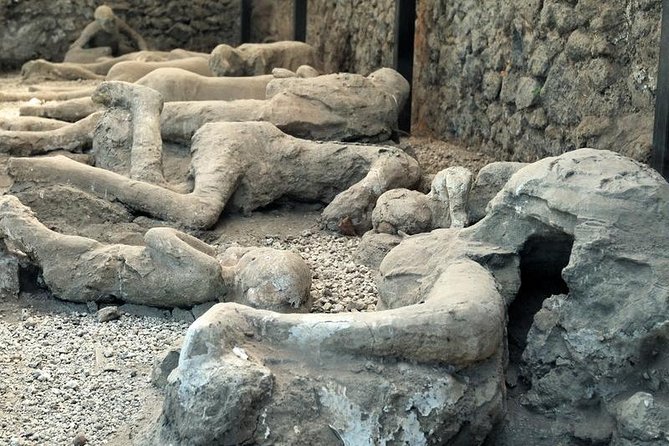
- Plaster casts, which help you visualize what the disaster preserved
- Brothel-related stops, which are historically specific and not just “shock value”
A good guide makes this segment count. The best part is not just naming buildings. It is connecting what you see to how Pompeii functioned as a lived-in city. If your guide is like the one praised as Paolo in feedback, you should feel the difference right away, especially in how clearly he answers questions and adds stories that fit what you are looking at.
One consideration: Pompeii is outdoors and uneven underfoot. Your tour time is short, so wear shoes you trust and accept that this is a walking experience, not a sitting one.
Temple of Apollo and Foro di Pompei: the public center you should recognize
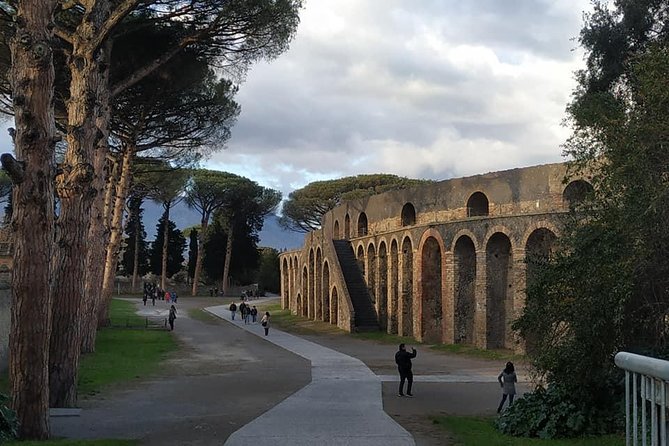
After the broad start, the route zooms in on the Temple of Apollo and the Foro di Pompei, or main square.
A few more Pompeii trips worth comparing
- Pompeii Ruins Private Tour with Optional Skip-the-Line Entry
★ 4.9 · 732 reviews - Pompeii private tour with an Official Guide
★ 5.0 · 631 reviews - Pompeii Private Tour with an Archaeologist and Skip The Line – 3 hours
★ 5.0 · 564 reviews - Visit in Pompeii – Pompeii Private Tour with Ada
★ 5.0 · 436 reviews
Temple of Apollo (10 minutes)
The Temple of Apollo is one of the first places where you can feel Pompeii’s religious and civic rhythm. Even in a short visit, you learn how temples functioned as more than backdrops. They shaped movement through the city and marked public identity.
At 10 minutes, this stop is not about reading every inscription. It is about getting the big idea in your head, then using that to understand what you will see in the Forum spaces right after.
Foro di Pompei (20 minutes)
The Foro di Pompei is the kind of place where you stop thinking in “ruin photos” and start thinking in “city layout.” In 20 minutes, you can get a strong sense of how a main square organized Roman urban life.
The practical win here is that the guide can point out how buildings relate to each other. When you understand that geometry, Pompeii stops feeling random.
Sculture Monumentali di Igor Mitoraj: contemporary art inside ancient streets
One of the more unusual stops is Sculture Monumentali di Igor Mitoraj, described as contemporary art in Pompeii. It is easy to wonder why modern sculpture belongs in an ancient ruin site, but it can actually help your eyes.
Placed in the right setting, contemporary work forces you to look again at scale, texture, and framing. It gives you a break from the Roman-only lens without turning the visit into a detour.
In a short tour, this stop also serves a simple purpose: it resets your attention while still keeping you inside the historic area.
Granai del Foro and Terme del Foro: food storage and Roman spa life
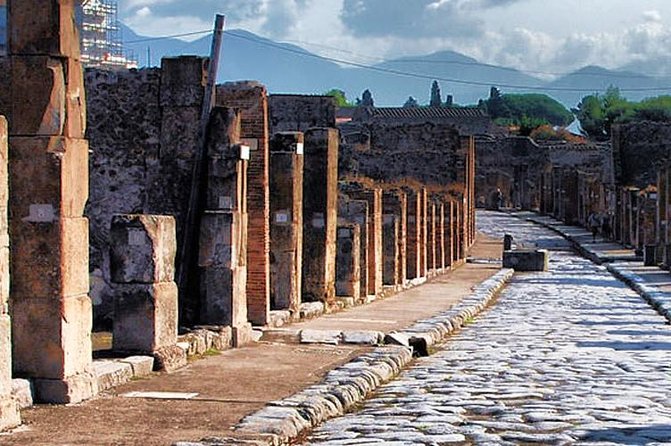
Next up are two stops that highlight very different sides of city living, public infrastructure and daily routines.
Granai del Foro (20 minutes)
The Granai del Foro are granaries connected to the Forum area. Grain storage is not glamorous, but it is power. It tells you what sustained the city and how resources were managed.
A good guide will connect granaries to the bigger story of how a city like Pompeii functioned during normal times, not just during tragedy. It also gives you a different perspective on the Forum beyond civic ceremony.
Terme del Foro (20 minutes)
Then you get the Terme del Foro, one of the baths sites described as among the most beautiful and best preserved. Baths at Pompeii are often where visitors start to understand daily life because the space is built for routine.
In this stop, look for what makes it feel real: the layout, the way rooms relate, and how bathing likely fit into social schedules. In a quick tour, this is a key moment where you move from “famous ruins” to “how people lived.”
Casa del Poeta Tragico: mosaics that reward close looking (10 minutes)
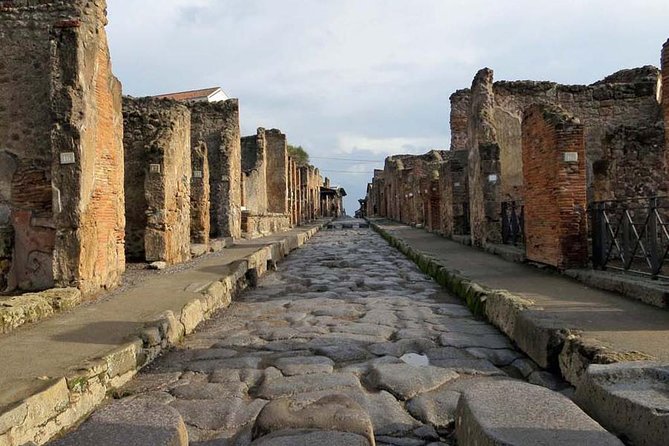
The Casa del Poeta Tragico, or House of the Tragic Poet, is short on time but famous in spirit. This is a mosaic-focused stop, and mosaics are one of Pompeii’s most accessible “wow” elements.
At 10 minutes, I treat this as a “hit the highlight” moment. You want to see the mosaic clearly, understand what you are looking at, then move on with context. When your guide gives you a quick interpretation, you stop seeing it as just decoration and start to see how display worked in Roman homes.
Practical tip: plan for bright daylight. Mosaics can look flat if you rush or if the sun is too harsh. Take a slow 30 seconds at the best angle and let your eyes do the work.
Casa del Cinghiale: more mosaics and a second look at home life (10 minutes)
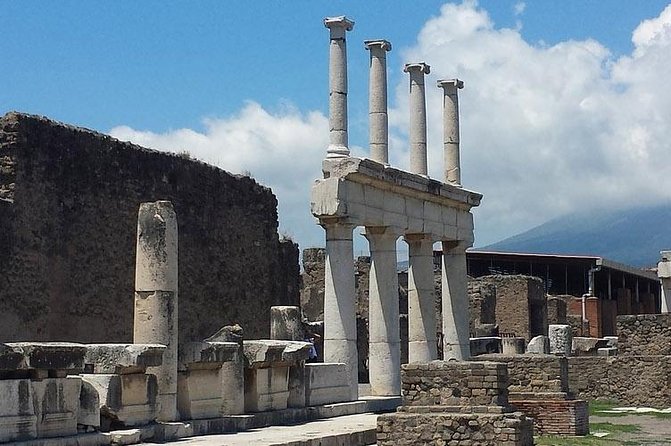
The Casa del Cinghiale, the boar house, is another quick mosaic stop, again with a 10-minute window. Seeing two homes back-to-back is smart in a short tour because it lets you compare how domestic spaces communicated status.
This stop works well if you like patterns. You begin to notice repeating themes in how mosaics are used and how room layout creates a sense of movement through the home.
If you are someone who loves architecture, this is also where you can appreciate the difference between public buildings and private interior choices.
Teatro Grande: where stories were performed and people gathered (20 minutes)
Then you step into Teatro Grande, the large theatre. This is one of the more emotionally satisfying Pompeii stops because it links to something universal: watching people react in a shared space.
The theatre is described as the place for comedy and tragedy. That matters because it tells you what kind of storytelling was valued. It is not only “a big old room,” it is a designed performance setting.
In 20 minutes, the guide should be able to point out why the building still feels functional even in ruins. Watch where audiences might have sat and how the stage area would have framed performances.
If you like cultural history, this is one of the best payoff points in the route.
Lupanar: the brothel and the darker side of Pompeii (20 minutes)
The Lupanar is included, with time set aside for about 20 minutes. It is described as the ancient home with erotic frescoes. This is one of the most sensitive topics on the tour, so I recommend going in with two expectations: it is historical, and it is not meant to be a salacious detour.
A good guide keeps it factual and grounded. You should come away with a clearer sense of how Pompeii contained all kinds of social spaces, including those we now treat as taboo or hidden.
Practical note: if you are traveling with kids or anyone who prefers to skip adult themes, it is worth checking with your guide ahead of time whether you want to spend time here or focus elsewhere.
Tempio di Venere and Tempio di Giove Capitolino: quick temple context (5 minutes each)
The last stretch wraps up with two temple stops:
- Tempio di Venere (5 minutes), described as one of the first temples of Pompeii
- Tempio di Giove Capitolino (5 minutes), the temple of the Forum
These are short by design. In a short tour, you do not have time to treat temples like a museum room. Instead, this ending works like a “full circle” moment. You started with an Apollo temple and the Forum, and now you finish with Venus and Jupiter connections, reinforcing the civic-religious core of the city.
If you walk out of Pompeii remembering how temples anchor public spaces, you will feel like the tour actually taught you something. That is the whole point of fitting these stops into 2 hours.
Price and value: is $82.65 per person worth it?
For $82.65 per person, you are paying for three main things:
- Skip-the-line entry, which saves time and reduces the stress of waiting
- A private guide, which turns the ruins into a guided story
- A tight route, where every stop has a reason and a time slot
Admissions fees for Pompeii ruins are listed as not included. That means your final cost can be a bit more depending on what you need to pay for entry on the day. The tricky part is that some individual stops list admission as included, while the main park admission is noted as not included. Before you go, double check what ticket you personally need, so you are not scrambling at the gate.
Even with that caveat, $82.65 often feels fair for a private, timed tour in a high-demand place like Pompeii. If you try to do the same route on your own, you will still pay for entry, and you will likely lose time figuring out what you are looking at.
Who this Pompeii tour suits best
This is a strong match if:
- You have a short stay and want the Pompeii “greatest hits” in about 2 hours
- You want private attention and the chance to ask questions as you walk
- You like a route that connects architecture with everyday life, not just photo stops
- You prefer choosing morning or afternoon times to match your schedule
It may not be the best fit if you want to wander slowly for a full half-day, or if you dislike any mention of the Lupanar topic. Also, because it is a walking tour with multiple stops, comfy shoes matter.
Should you book this skip-the-line private Pompeii tour?
I would book it if you want your Pompeii experience to feel organized and explained, and you hate wasting time in queues. The combination of priority admission, a private guide, and a route that hits the Forum area, key homes with mosaics, the theatre, and the temples is exactly how to get clarity fast.
I would think twice if you want a slow, flexible day or if the adult-theme stop is a dealbreaker. And because Pompeii entry is listed as not included, you should confirm your ticket needs before you show up.
If you’re traveling smart with limited time, this is one of those rare tours that respects your schedule and still takes the ruins seriously.
FAQ
Where does the Pompeii tour start?
The meeting point is Pompei-porta Marina – scavi80045 Pompei, Metropolitan City of Naples, Italy. The tour ends back at the same meeting point.
How long is the Skip the Line Private Pompeii Guided Tour?
It runs for approximately 2 hours.
Is this tour private or group-based?
This is a private tour/activity. Only your group will participate.
Is priority admission included?
Yes. The tour includes skip the line.
What ticket do I need for Pompeii?
Admissions fees for Pompeii ruins are not included. The itinerary notes admission included for certain stops, but the Pompeii park admission is marked as not included, so check what you personally need.
What is included besides the guide?
The tour includes the Tour Guide service and skip-the-line entry, and it also offers a mobile ticket.
Can I choose a morning or afternoon time?
Yes, you can choose morning or afternoon tour times.
Is the tour suitable for most travelers?
Most travelers can participate.
Are service animals allowed?
Yes, service animals are allowed.
What is the cancellation policy?
You can cancel for free up to 24 hours in advance for a full refund.
Recently reviewed around Pompeii
- Mt. Vesuvius Wine Tasting and Lunch Experience from Pompeii★ 4.5 · 20 reviews
- Pompeii Small Group with an Archaeologist and Skip The Line★ 5.0 · 121 reviews
- Pompeii from Afternoon to Sunset★ 5.0 · 108 reviews
- Private Guided Tour and VR Headsets in the Ancient Pompeii★ 5.0 · 3 reviews
- Visit Pompeii with a local expert guide★ 5.0 · 10 reviews
- Traditional Neapolitan Dinner in Pompei – Villa Franca – Family Restourant★ 5.0 · 8 reviews
- Discover Pompeii on this Guided Walking Tour of the Buried City★ 4.0 · 9 reviews
- 2 Hours Private Walking Tour in Pompeii with an Archaeologist★ 5.0 · 15 reviews
Pompeii Tours, compared.
Entry Ticket and Guided Tour with an Archaeologist
Read our review →

Pompeii Small Group Tour with an Archaeologist
Read our review →
Skip-the-Line Entrance Ticket with Audio Guide
Read our review →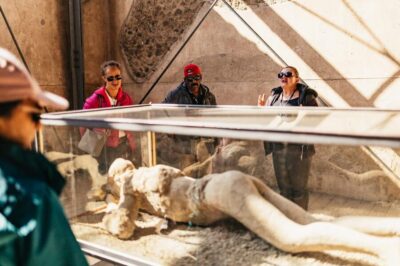
Pompeii and Mt. Vesuvius with Lunch and Wine Tasting
Read our review →
Archaeological Park Tour with Ticket on request
Read our review →