
Reviewed · POMPEII TOURS
Pompeii the Buried city
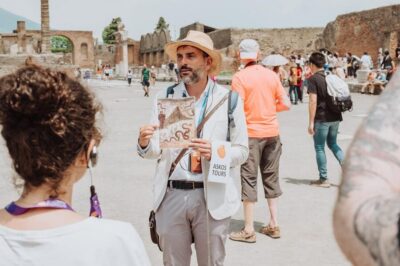
Pompeii is the kind of place that makes the past feel close, and this tour leans into that with a focused walk through the buried city and professional guides authorized in Campania. It is set up as a private, off-the-beaten-path experience, with a route designed to help you feel the ruins instead of just ticking boxes.
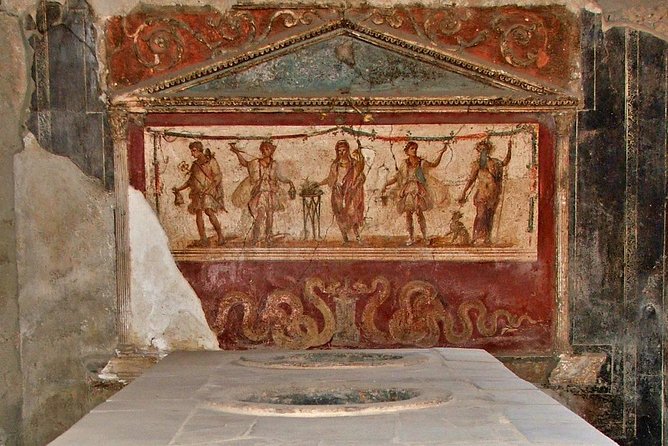
I love how the plan mixes big public spaces and everyday life. You will see the Forum and the Thermal Baths, and then you move into homes like Menandro’s House where you get a better sense of what ordinary people did day to day. And yes, you will also stop at the Lupanare brothel to look at its erotic frescoes, with explanations that keep it grounded in context, not shock.
One thing to consider is practical timing and add-on costs. The guided portion is about 2 hours, and Pompeii admission is not included, so you will pay the 16 euro ticket per person on top of the tour price.
Key highlights you will feel right away
- A route aimed at quieter sections: the visit includes the uncrowded southern part of the ruins.
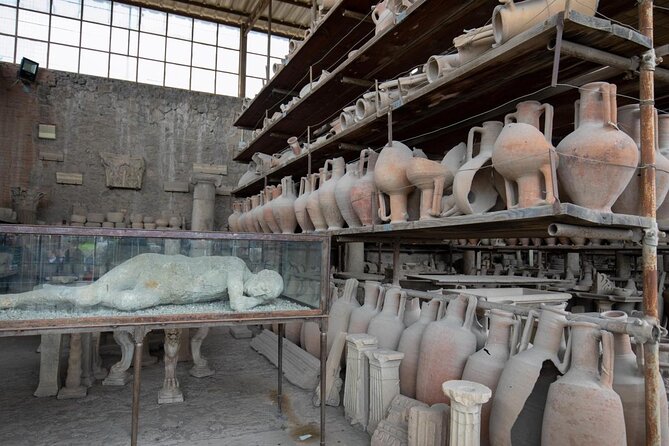
- Plaster casts that bring the tragedy into focus: you will see the famous casts of bodies from the 79 A.D. eruption.
- Public life first, then private life: Forum, thermal baths, and houses in one connected walk.
- Lupanare frescoes, explained: you get to see the brothel area and understand what you are looking at.
- Streets and theaters on the north side: after the south-side walk, you cross over toward Pompeii’s theaters.
- Private group, authorized local guide: you stay with just your group, led by a guide from the region.
Pompeii’s “buried city” effect, and why this route works
Pompeii is famous for a reason. The eruption in 79 A.D. didn’t just destroy buildings, it froze daily life in place. Walk the streets and you start noticing how the city was organized, not just how it looked after the fact. That is where this tour shines. Instead of sprinting past things, the guide gives you a thread to follow.
The biggest value here is the way the route is built. You are guided through the most important public and private sites, then steered toward parts of the park that are typically calmer. In other words, you get that slow, “how could this be real?” feeling that Pompeii can deliver when you are not constantly fighting crowds.
And because it is a private tour for up to 6 people, the guide can adjust on the fly. If someone in your group wants a little more detail on daily routines, or you want to slow down for a specific mural, you have that flexibility. This matters in Pompeii, where the difference between an okay visit and a memorable one is often pacing.
More Pompeii tours to compare:
- Pompeii: Entry Ticket and Guided Tour with an Archaeologist
★ 4.8 · 19,459 reviews - Pompeii: Entry Ticket with Optional Audio Guide
★ 4.2 · 12,360 reviews - Pompeii: Small Group Tour with an Archaeologist
★ 4.8 · 12,264 reviews
Where you start at Porta Marina, and how the 2 hours feel in real life
You meet at Pompei, Porta Marina – scavi (80045 Pompei). The tour ends back at that same meeting point, so you do not have to solve logistics mid-walk. This is also convenient if you are arriving by public transportation, since the meeting point is described as near public transit.
The duration is listed at about 2 hours. That sounds short until you remember Pompeii is enormous. With a guided route, you are not trying to cover the whole park. You are trying to see the most meaningful pieces in a way that makes them click.
For many groups, two hours lands in a sweet spot:
- You see major anchors like the Forum and baths.
- You still get time for the most emotionally powerful stops, like the plaster casts.
- You avoid the “we gave up and ran out of energy” feeling that happens when self-guided plans get too ambitious.
You should still expect uneven ground and lots of walking between sites. The tour says you need moderate physical fitness. If your legs get tired quickly, plan for breaks when the guide offers them, and keep water handy.
Forum and Thermal Baths: public life, not just ruins
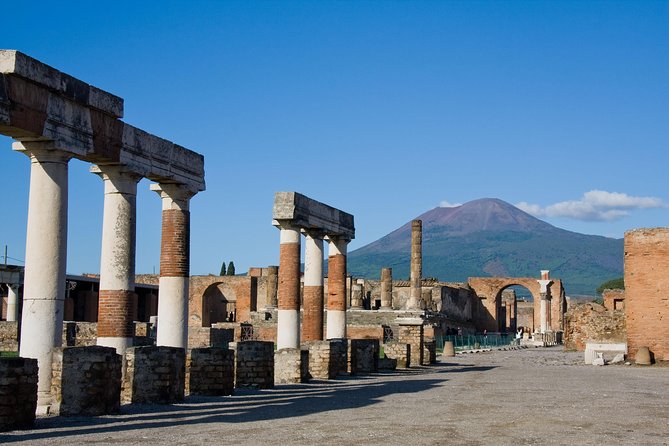
The tour typically begins inside the Pompeii Archaeological Park, with your guide taking you around the ancient city. One of the best sequences is the jump from public space to private life.
First up is the Forum, Pompeii’s main civic area. Here you start to understand how power, business, and community life were organized. It is not just stone columns. It is the layout that tells you where decisions were made, where people gathered, and how the city functioned day by day.
Then comes the Thermal Baths. Baths in Roman cities were social as well as practical. Even when you are looking at a site that is partially collapsed, you can still read the logic. Rooms, circulation, and the overall flow give you clues about how people moved, talked, and spent time.
What I like about this pairing is that it gives you two angles at once:
- The Forum shows the city as a public stage.
- The baths show it as a daily rhythm.
Together, they make Pompeii feel less like a museum and more like a place you might have walked into on a normal day.
Menandro’s House: reading a home like a story
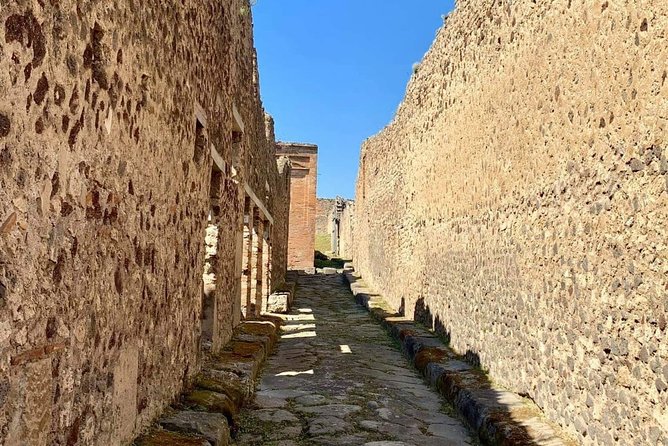
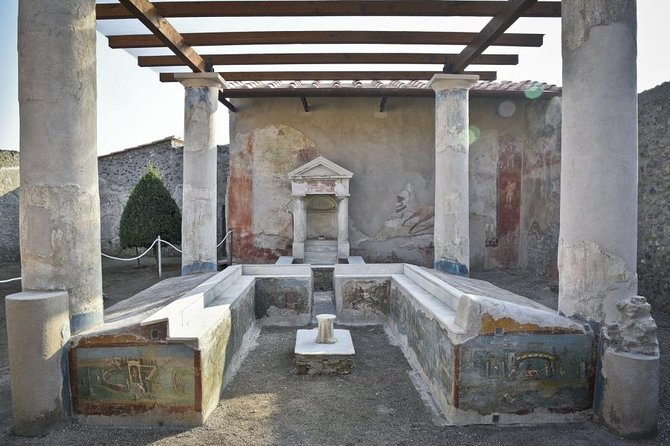
After the big public sites, the tour shifts into residential architecture, including Menandro’s House. Homes like this are where Pompeii stops being a set of monuments and starts feeling personal.
Even if you are not an art expert, you can learn to look. The guide’s job is to point out what mattered to residents: how rooms were used, how light and movement shaped daily living, and how decoration signaled identity and taste.
One reason this stop is worth it is that it changes your perspective. After walking through civic spaces, you begin to notice the smaller decisions that made daily life work. You stop thinking only about what happened during the eruption, and you start thinking about what life was like right before it.
This is also where many guides earn their reputation. A guide named Ilaria has been praised for explaining what life in Pompeii felt like and for answering questions clearly, which is exactly what you want when you are trying to read a house from hundreds of years away.
A few more Pompeii trips worth comparing
- Discover Pompeii: French Walking Tour of the Buried City
★ 4.8 · 253 reviews - Discover Pompeii: English Walking Tour of the Buried City
★ 4.2 · 24 reviews - Pompeii Ancient City Walking Tour – Italian & English Guide
★ 4.5 · 10 reviews - Discover Pompeii on this Guided Walking Tour of the Buried City
★ 4.0 · 9 reviews
Lupanare brothel and erotic frescoes: uncomfortable, important, contextual
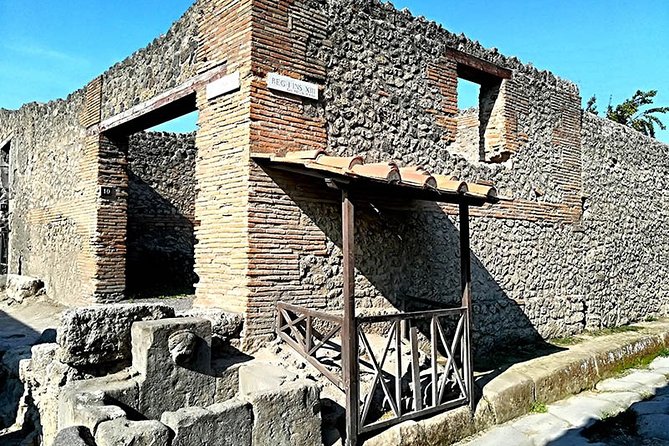
Yes, the tour includes the brothel called Lupanare, known for its erotic frescoes. If you are worried this will be handled like a gimmick, pay attention to how the guide frames it. The intent of this stop is to connect the artwork to the reality of the city.
In Pompeii, the presence of such spaces can shock modern visitors. But it also tells a truer story. Roman urban life included paid sex, and the Lupanare was part of a wider social ecosystem. When a guide gives you context, you are not just staring at images, you are learning what the space was for and how it fit into the city’s systems.
This stop can be emotionally heavy for some people, especially if you are also headed toward the plaster casts. If that feels like a lot for your group, the best move is to pace yourself. Ask your guide for a short reset, or take a moment to step back and let the information settle before moving on.
The plaster casts in the southern ruins: the stop that stays with you
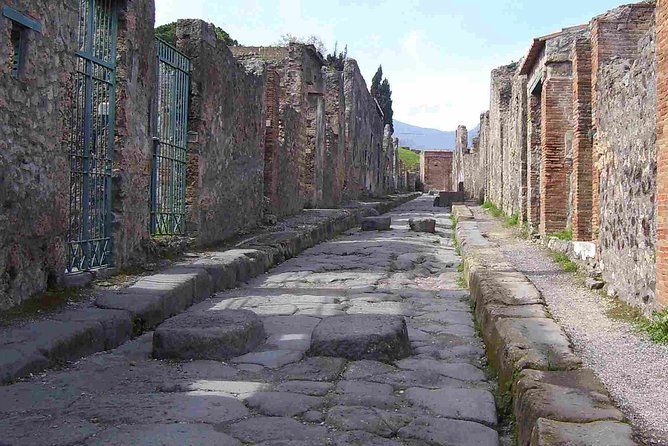
The tour specifically heads into the uncrowded southern part of the park. That is a real gift. The quieter setting makes the experience more focused, and it helps the impact of the next stop land fully.
Then you reach the famous plaster casts. These are the preserved impressions of bodies from those who died during the eruption of Mount Vesuvius in 79 A.D. The guide helps you understand what you are seeing, which makes a difference. If you show up with no context, you may stare and move on. If you understand what the casts represent, you process them differently.
This is one of those moments where the ruins stop being “cool history” and become human. You may find yourself looking longer than you planned. That is normal.
My advice: give yourself permission to slow down here. The temptation is to push for more sights, but this stop is the emotional center of many Pompeii visits for a reason. If you rush it, you might miss the meaning.
Also, since this tour is about 2 hours, efficient routes matter. The guide’s job is to make sure you get to this moment without losing time on wandering.
Theaters and the north-side street crossing: how to picture the daily crowd
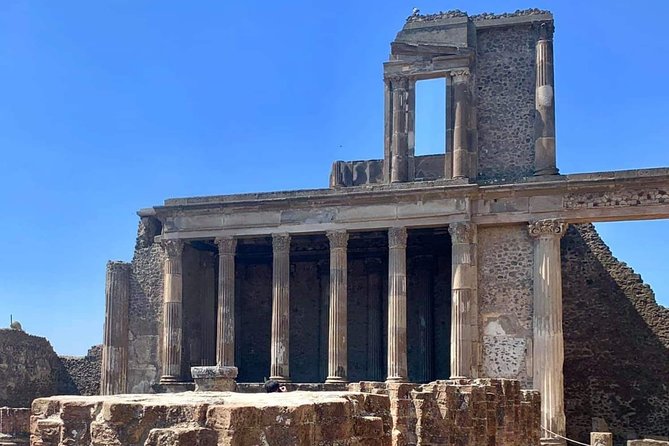
After the southern section and the casts, you move toward the theaters and then cross streets along Pompeii’s north side. This part of the itinerary is often where the city starts to feel like an actual place again.
Theaters in Pompeii show you entertainment and public gatherings. Even in ruins, you can picture the audience, the rhythm of performances, and the way people spent leisure time. It helps connect what you saw in the Forum and baths to how Pompeii’s residents relaxed, socialized, and came together.
Walking along the streets is not just about scenery. It helps your brain map the city. When you know where things are relative to each other, Pompeii clicks. You start seeing the city as a system, not scattered attractions.
Price and what you actually pay for this Pompeii tour
The tour price is $229.28 per group, valid for groups up to 6 people. That means the value depends heavily on how you book.
If you fill all 6 spots, the guided portion works out to roughly $38 per person before admission. Then you add Pompeii entry, which is 16 euro per person. (Admission is not included in the tour price.)
So for a full group, this can be a good deal for Pompeii because you are paying for a private guide and a focused route instead of trying to figure it out while managing crowds and time.
If you book for fewer than 6, the math changes fast. In that case, you are still paying for a private experience, just with fewer people sharing the cost. If you value personalized pacing, ask questions, and want a guide to lead you through the key sites, it may still be worth it. If you are mostly self-guiding and happy to read signs, you might compare options.
Mobile ticket, timing window, and weather reality
You get a mobile ticket, which is convenient for check-in. The tour is scheduled within the listed opening hours window: 9:00 AM to 1:00 PM, with dates running from 01/10/2025 to 11/30/2026. Since timing matters, aim to arrive early enough to avoid stress when you reach Porta Marina – scavi.
Weather matters here. The information says this experience requires good weather. If it is canceled due to poor weather, you will be offered a different date or a full refund. In real life, Pompeii can still be dramatic in less-than-ideal conditions, but rain and storms can limit what you can enjoy comfortably, especially when you are walking between sites on uneven surfaces.
One more small practical note: the itinerary is structured to fit a 2-hour window. That is not a “hang out all morning” plan. If you want a slower pace, consider starting earlier in your day and keeping the rest of your schedule flexible.
Who should book this private Pompeii experience
This tour is a strong match if you want:
- A private group format, where questions are welcome and pacing is not rushed.
- A guided pass through the Forum, baths, a key house, the Lupanare, the plaster casts, and theaters.
- A route that intentionally includes quieter sections, not just the busiest stops.
- A guide who can explain what you are looking at, including less comfortable topics like the Lupanare frescoes.
It can also work well for people with only moderate mobility needs, as long as you are comfortable with walking on uneven ground. The tour explicitly calls for moderate physical fitness, so you should not plan it as a low-effort stroll.
If you are traveling solo or as a couple and cost is your main driver, do the math on the group cap. If cost is manageable, I like the private setup for Pompeii because the park is too big for most people to get full value from without a plan.
Should you book Pompeii the Buried City?
If you want a Pompeii visit that feels organized, human, and emotionally meaningful, I would book it. You are not just passing landmarks. You are guided through public life, private life, the Lupanare’s context, and the plaster casts that define the tragedy of 79 A.D. You also get a private group format, which makes the experience feel less like a scramble.
I would think twice if:
- You hate paying extra on top of a tour fee, because Pompeii admission is 16 euro per person and not included.
- You need a long, self-paced visit, because this is about 2 hours.
- Your schedule is tight and weather worries you, since the tour requires good conditions.
If your goal is a high-impact Pompeii walk with clear guidance and a route built around the most memorable parts, this one is a solid pick.
FAQ
How long is the Pompeii the Buried City tour?
The tour lasts about 2 hours.
What is included in the price?
The price includes the guided service. Pompeii admission tickets are not included.
How much are the Pompeii admission tickets?
Admission tickets are 16 euro per person. Free entrance for under 18 is available with a valid ID document.
Where does the tour meet?
You meet at Pompei Porta Marina – scavi, 80045 Pompei, Metropolitan City of Naples, Italy.
Is this tour private?
Yes, it is a private tour or activity, and only your group participates.
What happens if weather is poor?
This experience requires good weather. If it is canceled due to poor weather, you will be offered a different date or a full refund.
Recently reviewed around Pompeii
- Mt. Vesuvius Wine Tasting and Lunch Experience from Pompeii★ 4.5 · 20 reviews
- Pompeii Small Group with an Archaeologist and Skip The Line★ 5.0 · 121 reviews
- Pompeii from Afternoon to Sunset★ 5.0 · 108 reviews
- Private Guided Tour and VR Headsets in the Ancient Pompeii★ 5.0 · 3 reviews
- Visit Pompeii with a local expert guide★ 5.0 · 10 reviews
- Traditional Neapolitan Dinner in Pompei – Villa Franca – Family Restourant★ 5.0 · 8 reviews
- Discover Pompeii on this Guided Walking Tour of the Buried City★ 4.0 · 9 reviews
- 2 Hours Private Walking Tour in Pompeii with an Archaeologist★ 5.0 · 15 reviews
Pompeii Tours, compared.
Entry Ticket and Guided Tour with an Archaeologist
Read our review →

Pompeii Small Group Tour with an Archaeologist
Read our review →
Skip-the-Line Entrance Ticket with Audio Guide
Read our review →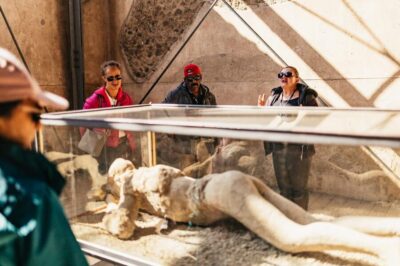
Pompeii and Mt. Vesuvius with Lunch and Wine Tasting
Read our review →
Archaeological Park Tour with Ticket on request
Read our review →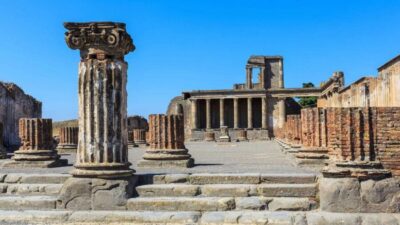
Browse the lists this tour appears in