
Reviewed · HERCULANEUM TOURS
Pompeii and Herculaneum small group Excursion from Naples
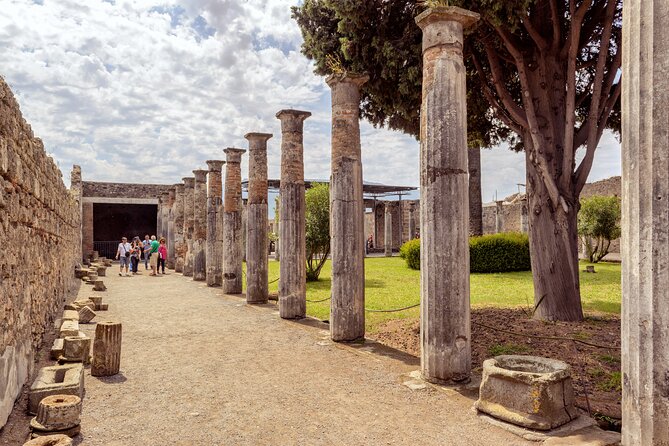
Pompeii plus Herculaneum in one day is interesting because you get to compare two Roman worlds side by side, both preserved in ways that still hit hard. I especially like the archaeologist-led small-group format and the skip-the-line entry that keeps your time focused inside the sites, not parked in lines. One drawback to plan for: it is a long day with lots of walking, so bring good shoes and expect some pace.
I also like that the tour is designed around smart logistics from Naples, with pickup from Starhotels Terminus and transportation by minibus to the ruins. Guides can be a major part of the experience, and the names Rafael, Gennaro, Michele Lamberti, Giulia, Diego, and Vincenzo show up in the guide credits, with themes of humor and clear explanations.
Key highlights at a glance
- Fast-track entry helps you spend more time looking and less time standing
- Small group size (max 20) keeps the pace manageable and questions more likely to land
- Two included park visits give you real time at Pompeii and Herculaneum
- Archaeologist guidance ties details together, street by street and house by house
- Focused stop list hits standout buildings like the Forum, baths, and major Herculaneum homes
Why Pompeii and Herculaneum on one ticket is a smart use of time
If you have limited hours in Naples, this is one of the clearest ways to see Pompeii and Herculaneum without turning your day into a transport puzzle. You travel directly to both sites, then get a guided plan that moves from big public spaces to everyday life, so you come away with a mental map instead of a pile of random ruins.
The real value is the comparison. Pompeii is famous for its wide urban layout, public buildings, and street life. Herculaneum feels more intimate, with many structures preserved in a way that makes you feel how rooms worked day to day. Seeing both in one outing helps you understand what changed between the cities, and how Roman life looked from the street to the courtyard.
More Herculaneum tours to compare:
- Pompeii and Herculaneum Small Group Tour with an Archaeologist
★ 5.0 · 1,350 reviews - Pompeii: Small-Group Tour of Pompeii and Herculaneum
★ 4.8 · 867 reviews - Guided Day Tour of Pompeii and Herculaneum with Light Lunch
★ 4.5 · 311 reviews
Meeting in Naples, then getting on the road without stress
The meeting point is Starhotels Terminus (P.za Giuseppe Garibaldi, 91, 80142 Napoli NA, Italy). Pickup is offered, and the tour includes round-trip transport by minibus, including service from Naples Central Station or train station. That matters because getting from the port or station into the countryside can eat up time if you do it on your own.
This tour is built for flow. You have a professional driver and organized timing, which helps you stay on schedule through both parks. The day is set for about 7 hours, so the more time you save at the front end, the more you get to spend when the ruins are in front of you.
A note on group energy
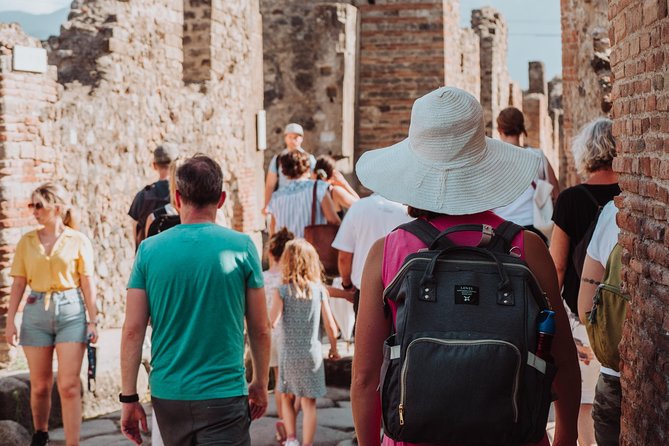
The maximum group size is 20 travelers, which is small enough for your guide to keep eyes on the group. In practice, that tends to mean fewer long waits at key crossings and smoother transitions between stops. It also helps on days when you might want to ask a follow-up question about a house, a bath, or a public building.
Entering Pompeii smoothly with your guided plan
Pompeii Archaeological Park is the first big block of time, with about 2 hours inside the park and admission included. You start with an overview that helps you understand what you are seeing: how Romans organized streets, how public and private spaces worked, and why the layout still makes sense even after so many centuries.
The skip-the-line entry is the kind of detail that sounds small until you are standing there watching the line crawl. With fast-track access, you lose less time before your tour can begin in earnest. That is especially helpful here because Pompeii is large, and every minute counts.
More Pompeii tours to compare:
- Pompeii: Entry Ticket and Guided Tour with an Archaeologist
★ 4.8 · 19,459 reviews - Pompeii: Entry Ticket with Optional Audio Guide
★ 4.2 · 12,360 reviews - Pompeii: Small Group Tour with an Archaeologist
★ 4.8 · 12,264 reviews - Pompeii Small Group Tour with an Archaeologist
★ 5.0 · 6,593 reviews
Pompeii stop-by-stop, what each one is for
After your main Pompeii time starts, you move through a sequence of highlights that function like a guided walk through the city’s most recognizable rhythms.
- Basilica (quick stop, admission free)
This is where you start to think like a Roman town planner. The basilica area relates to civic life and social activity, so even a short pause can clarify why this part of Pompeii mattered.
- Forum of Pompeii (short stop, admission free)
The Forum is the city’s public heartbeat. A brief stop is enough if your archaeologist guide frames it well, because it gives you a reference point for everything else: laws, commerce, and public gatherings.
- Via dell’Abbondanza (walk, short stop)
This street is one of those Roman anchors. Walking it, even at a guided pace, helps you picture how people moved through the city every day.
- House of Menander (short stop)
This is a house that helps you connect domestic life with art and status. When your guide points out what makes a house notable, it turns a preserved building into a story about who lived there and what they valued.
- Granaries of the Forum (short stop)
These stops matter because they show the city’s logistics. You start to see Pompeii not just as monuments, but as an engine that fed people and supported daily work.
- Stabian Baths, Terme Stabiane (short stop)
Roman baths were about health, meeting people, and routine. Even in a quick look, your guide can translate how the spaces were used and how bathing fit into a typical day.
- Lupanar (short stop)
This is one of Pompeii’s most talked-about sites for a reason. A guide helps keep it in context so you do not just see the label. You get a clearer sense of how the city handled commerce and vice.
- House of the Faun (short stop)
A major residence like this helps you understand scale. Even if you do not spend long inside, the stop can explain why some homes were built to impress.
- Odeon, Teatro Piccolo (short stop) and Teatro Grande (short stop)
These bring you to entertainment and public culture. The quick look at each helps you sense how performances shaped community life and how Romans designed for crowds.
By the end of Pompeii, you should feel like you have a core route in your head, public to private, civic to entertainment, and work to leisure.
The real drawback of Pompeii: it is not a slow museum
Pompeii can be hot, uneven underfoot, and visually overwhelming. Since this is an efficient route, you will cover a lot of ground. If you prefer long, quiet wandering, plan to treat this as a guided highlights tour, not a solo deep study. Your comfort depends on your walking pace and how long you like to linger when something catches your eye.
Herculaneum: where the day shifts into closer, room-scale ruins
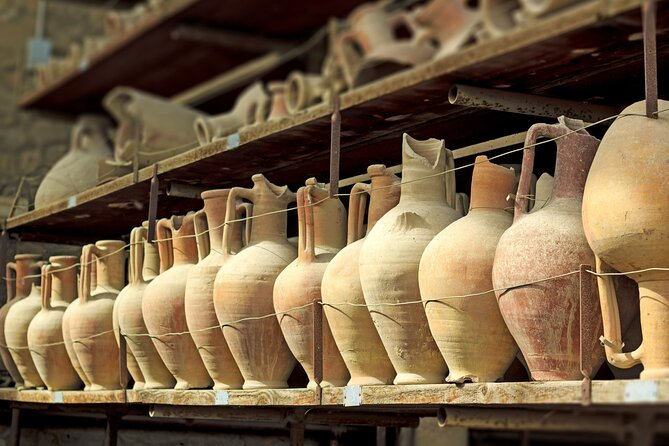
Then you move to Archaeological Park of Herculaneum, again with about 2 hours and admission included. Herculaneum often feels different because the preserved spaces can make daily life feel more immediate. Even when you only see certain features, your guide can connect houses and public spaces into a clearer picture of how people lived their routines.
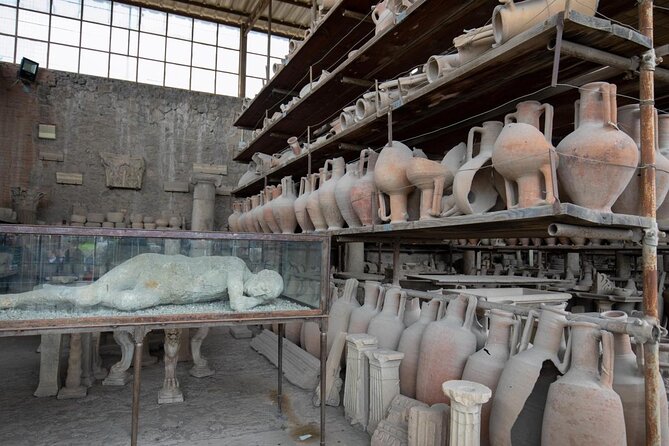
That helps you understand the eruption impact too, because the physical evidence is hard to ignore once you know what you are looking for: where people went, how buildings functioned, and what kinds of rooms were used every day.
Inside the Herculaneum highlights: houses you can picture
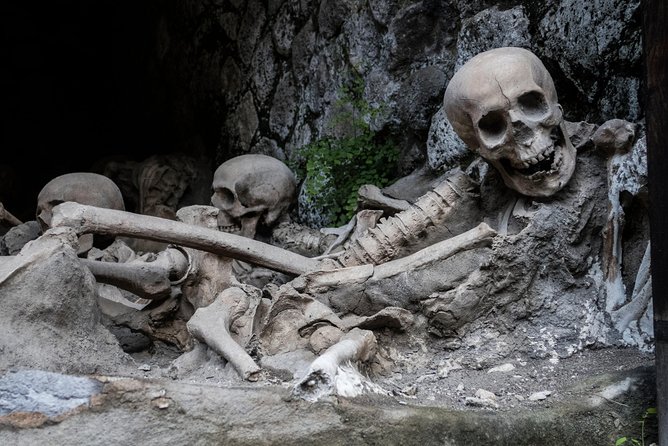
The Herculaneum portion includes a series of shorter stops, each designed to keep you oriented while still showing variety across the site.
- House of the Deer (short stop, admission free)
This is the kind of house stop that turns you from “I saw ruins” into “I can imagine the layout.” Your guide can point out what makes it notable so it feels more than a name tag.
- La Terrazza di M. Nonio Balbo, Nonio Balbo Terrace (short stop)
Terraces help you understand how houses used outdoor space. It also gives a change of view, which can be a relief after long stretches of walking.
- College of the Augustales (short stop)
This stop adds a civic or community layer to the story. You see how religious or social roles were organized in Roman life.
- Casa del Rilievo di Telefo, Telephus Relief House (short stop)
The focus here is usually the artwork and symbolism. When your guide ties an image to Roman culture, it helps you read the house like a message, not just an address.
- Partem Domus lignea, Casa del Tramezzo di Legno (short stop)
The wooden partition or related feature helps explain construction and how space was managed inside. Even if the stop is brief, it gives you a concrete detail to hold onto.
- House of the Skeleton (short stop)
This is an emotional stop. With a good guide, you get context for what the remains represent and why the site is so significant.
- Central Thermae (short stop)
Baths are a theme across both cities, and here they help you compare how public bathing worked. If you paid attention earlier, this stop becomes a “compare and contrast” moment.
- House of the Black Salon, House of the Salon of Nero (short stop)
This one is all about visual impact. Even a quick mention of the features makes the house feel memorable.
- Casa Sannitica (short stop) and House of the Fine Courtyard (short stop)
These stops build variety into the route. You start to notice patterns in how courtyards and private spaces were used.
- House of the Grand Portal (short stop)
Portal scale can tell you status and design priorities. It is a quick capstone that helps the houses feel connected rather than random.
That sequence is where the tour earns its keep. The stops are not just checkpoints. They form a guided tour through what people valued: comfort, decoration, status, public identity, and routine.
The pace, the walking, and what you should pack
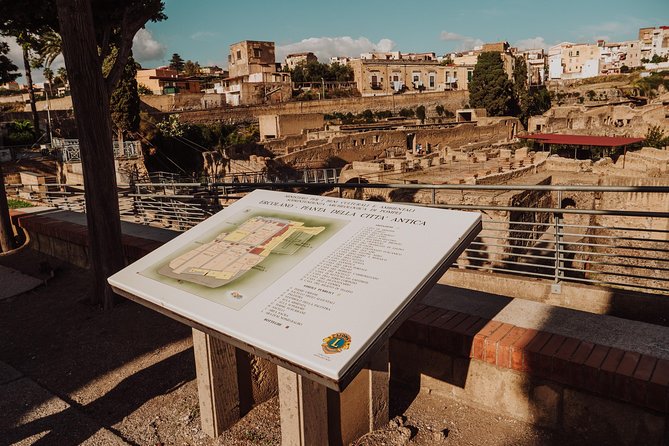
This is a highlights route with a lot to see. Even though major park time blocks are about 2 hours each, you also spend time on multiple short stops across both sites. Expect enough walking to feel it, even if your guide keeps the group moving efficiently.
Here is how I would plan for it:
- Wear shoes with good grip. Pompeii and Herculaneum surfaces can be uneven.
- Bring sunscreen and a hat. Even in shoulder seasons, you can get hit with sun.
- Carry water, since meals and drinks are not included.
- Bring a light layer if the evening cool feels sharp, but do not count on it.
COVID-era practicalities you should take seriously
Current instructions include mask use during the visit, and the use of your own mask is mentioned. There is also a note about body temperature checks for entry, and you might not be admitted if you show a temperature at or above the threshold or obvious symptoms. That is not unique to this tour, but it matters for planning your day.
Price and value: does $173.27 make sense?
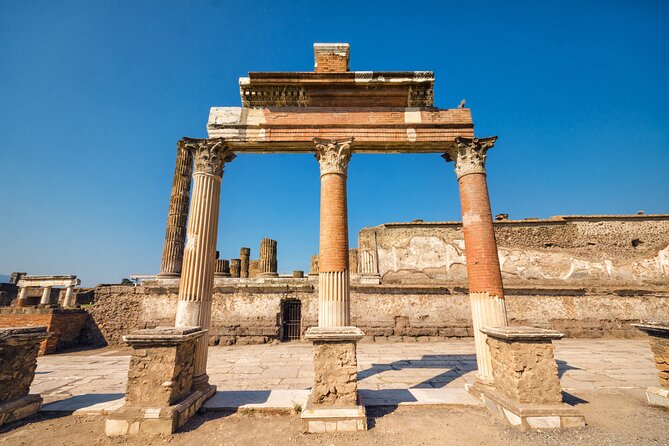
At $173.27 per person, this is not the cheapest way to see Pompeii and Herculaneum. But it does include a lot of the cost drivers that can make DIY travel frustrating here.
What you are paying for:
- Archaeologist guide at both sites, not just general narration
- Skip-the-line entry at Pompeii through the included Express-type entry approach
- Herculaneum admission tickets included, listed at €16 each
- Round-trip transport by minibus and professional driver assistance
If you tried to do both sites yourself, you would still spend money on admissions, and you would likely spend time figuring out timing and transportation between Naples and the parks. With a tour schedule designed around entry speed and guided structure, the value comes from buying back your time and turning chaos into a clear route.
The other value signal is the rating: 4.9 with 71 reviews and 96% recommended. The common themes, reflected by guides like Rafael, Gennaro, Michele Lamberti, Giulia, Diego, and Vincenzo, point to strong communication and a fun, organized flow. For a day that can otherwise feel like a long march, that matters.
Who this tour fits best, and who should reconsider
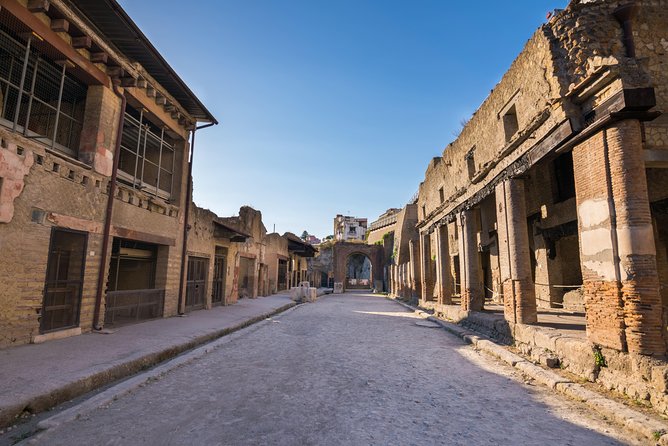
This is a strong choice if you want:
- A single day plan that covers both major archaeological sites
- Guided context so the ruins make sense beyond photos
- A route that stays structured without you needing to navigate logistics
It may be less ideal if you:
- Want long, slow time in one spot with minimal movement
- Are sensitive to walking for several hours across uneven terrain
- Prefer meals included in the price (this tour does not include food)
Should you book this Pompeii and Herculaneum small group excursion?
I think you should book it if your goal is to make your limited time in Naples count and you want an archaeologist-led explanation that connects buildings to daily life. The mix of fast-track entry, small group size up to 20, and a route that hits both Pompeii and Herculaneum key areas is exactly the kind of planning that saves you from wasting daylight in transit.
I would only skip it if you know you want a very unhurried pace and you are planning to spend your day mostly self-guided. For most people, though, this format gives you the best chance to leave with real understanding and not just a memory of big walls and street corners.
FAQ
How long is the Pompeii and Herculaneum small group excursion from Naples?
The tour is about 7 hours.
Are entrance tickets to Pompeii included?
Yes. Pompeii entry is included (Pompeii Express entry tickets).
Are entrance tickets to Herculaneum included?
Yes. Herculaneum entry tickets are included, listed as €16.00 each.
Is pickup from Naples included?
Yes. Pickup is offered, including transportation by minibus and service from Naples Central Station or the train station.
Does the tour include meals and drinks?
No. Meals and drinks are not included.
How big is the group?
The tour has a maximum group size of 20.
Is skip-the-line entry included?
Yes. Fast-track entry is included to help reduce time waiting in line.
Do I need to bring a mask?
Yes. Mask use is mandatory during the visit, and you are asked to bring your own mask.
Is free cancellation available?
Yes. You can cancel for a full refund up to 24 hours in advance. Within 24 hours, the amount paid is not refunded.
Recently reviewed around Pompeii
- Mt. Vesuvius Wine Tasting and Lunch Experience from Pompeii★ 4.5 · 20 reviews
- Pompeii Small Group with an Archaeologist and Skip The Line★ 5.0 · 121 reviews
- Pompeii from Afternoon to Sunset★ 5.0 · 108 reviews
- Private Guided Tour and VR Headsets in the Ancient Pompeii★ 5.0 · 3 reviews
- Visit Pompeii with a local expert guide★ 5.0 · 10 reviews
- Traditional Neapolitan Dinner in Pompei – Villa Franca – Family Restourant★ 5.0 · 8 reviews
- Discover Pompeii on this Guided Walking Tour of the Buried City★ 4.0 · 9 reviews
- 2 Hours Private Walking Tour in Pompeii with an Archaeologist★ 5.0 · 15 reviews
Herculaneum Tours, compared.
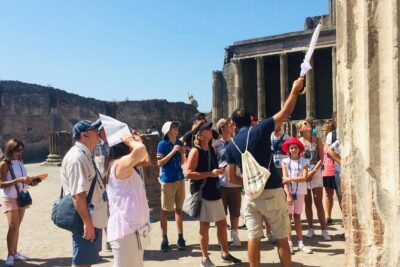
Pompeii and Herculaneum Small Group Tour with an Archaeologist
Read our review →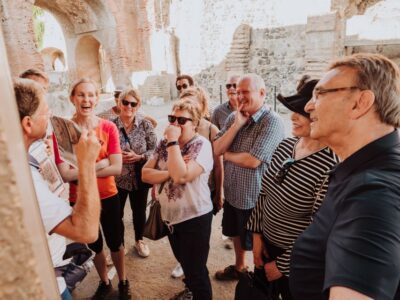
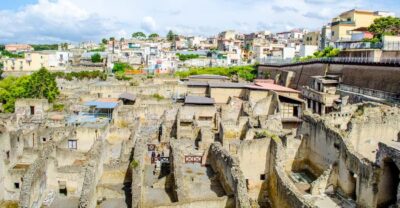
Herculaneum Entry Ticket with Optional Audio Guide
Read our review →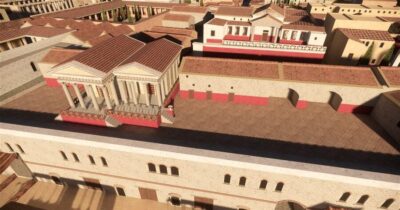
Herculaneum: 3D Walking Tour with Skip-the-Line Ticket
Read our review →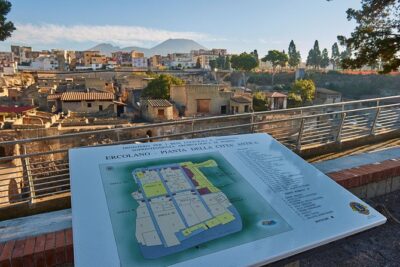
Guided Day Tour of Pompeii and Herculaneum with Light Lunch
Read our review →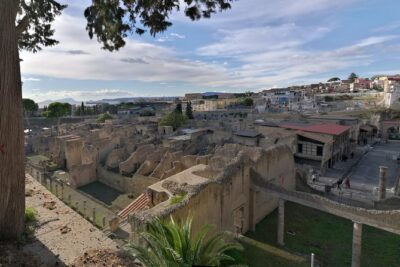
Private Day Tour to Vesuvius, Herculaneum & Pompeii with Pick Up
Read our review →

Herculaneum: Skip The Line Entrance ticket + Audioguide
Read our review →Browse the lists this tour appears in