Reviewed · POMPEII TOURS
Pompeii Small Group Guided Tour with Skip-the-line Admission
Pompeii is one of those places where the ruins do not feel dusty or distant. In just a couple of hours, you can walk through Roman public life, see the famous houses, and understand the city in a way that random wandering rarely accomplishes. This tour keeps things tight, with a small group (max 15) and a focused route through the big, must-see areas.
I like that you get guided attention on the public buildings and street level details, including the thermopolia (Roman fast-food counters) and the pistrinum (bakery). You’ll also get help reading the famous houses, plus a serious stop focused on the people affected by the eruption. One consideration: while the tour is promoted as skip-the-line, there’s some ambiguity in the provided info about whether admission is fully included, so you should double-check what you are actually paying for at checkout.
Key things to know before you go
- Max 15 people means you are less likely to lose the guide in the crowd.
- Roman daily life, not just monuments, with thermopolia and pistrinum along the main street.
- Big-name houses on the route, including the House of Menander and the House of the Faun.
- Forum plus the red-light district wall paintings, so you see more than temples and theatres.
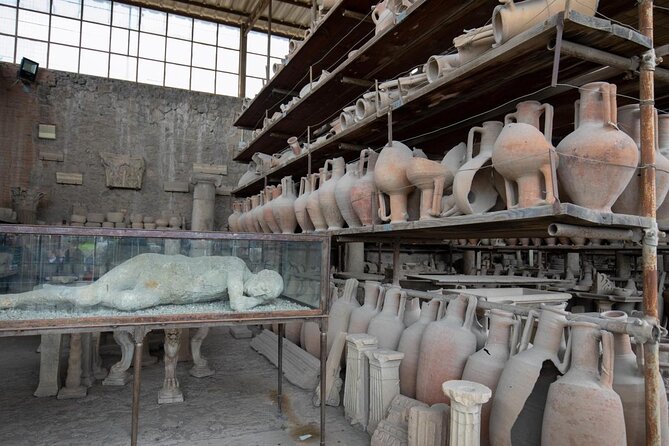
- A respectful focus on the victims of the eruption, shown as petrified bodies.
- English mobile ticket for smooth entry once you arrive.
Why guided Pompeii beats self-guided in the same time
Pompeii is huge, and the temptation is to sprint from one famous photo spot to the next. With a guided route, you trade speed for clarity. You walk the main threads of the city, and your guide helps you connect what you see, from public buildings to the way people ate, shopped, and lived.
In a tour like this, you also get time discipline. Pompeii can swallow a whole day. Here, you are aiming for about 2 hours, so you can get meaning without losing your entire vacation to walking and rechecking where you are.
And you are not just collecting sights. The tour is designed to show everyday Roman life, including the less “polished” parts of the city, like the red-light district imagery on walls, plus the more solemn moments connected to the eruption.
More Pompeii tours to compare:
- Pompeii: Entry Ticket and Guided Tour with an Archaeologist
★ 4.8 · 19,459 reviews - Pompeii: Entry Ticket with Optional Audio Guide
★ 4.2 · 12,360 reviews - Pompeii: Small Group Tour with an Archaeologist
★ 4.8 · 12,264 reviews
Skip-the-line entry and group size: what that means for your day
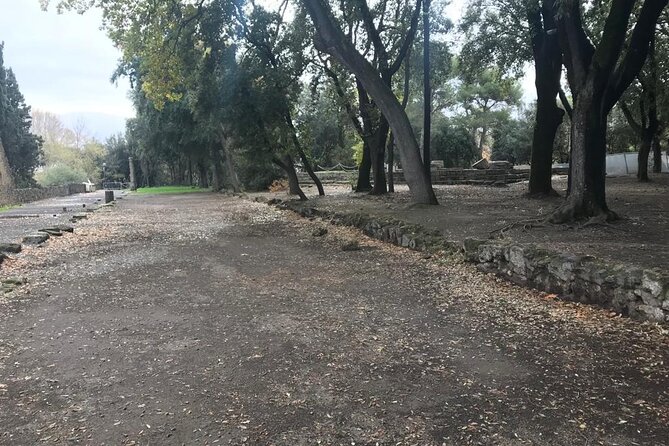
The practical win is the pairing of skip-the-line admission with a small group. In peak seasons, Pompeii lines can eat your energy. Even if you arrive early, waiting under the sun can make the ruins feel like a chore instead of an experience.
A group of up to 15 also changes how the tour feels. You are less likely to get swallowed by other visitors. You can hear explanations, and you can actually track where to look next. If you’ve ever stood in a doorway with 200 people and tried to guess what the guide is pointing at, you already know why this matters.
One more detail I appreciate: the tour offers a mobile ticket. That is one less thing to manage, especially if you are also using your phone for maps and transport.
The route in plain language: what happens in your 2 hours
The tour focuses on Pompeii Archaeological Park with an efficient loop. You start in the areas that let you understand the city’s layout and the way Romans gathered and conducted daily business.
You’ll cover:
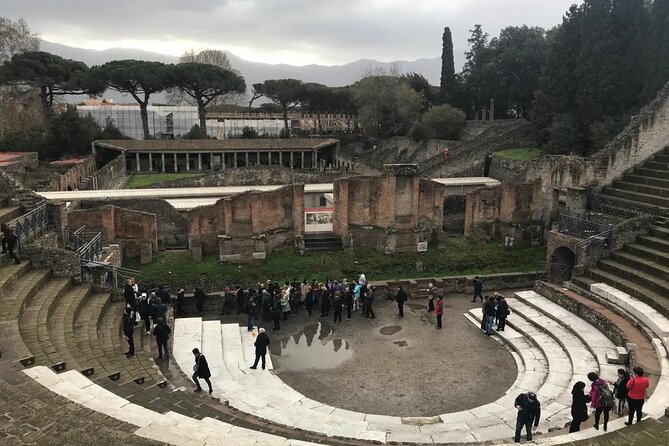
- major public spaces and buildings (theatres, temples, thermal baths, and more)
- Roman commercial spots like thermopolia and pistrinum
- a selection of the city’s best-known residences
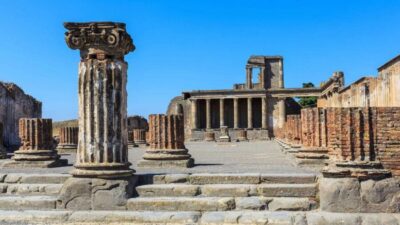
- the main street and town center, including the Forum
- a portion of the red-light district and its wall paintings
- a concentrated moment on the eruption victims, shown as petrified bodies
The big advantage is sequencing. You’re not hopping randomly. You’re moving from what a Roman city did for its people, to how it looked up close in ordinary street life, and then to the emotional weight of what happened.
Public buildings first: theatres, temples, and thermal baths
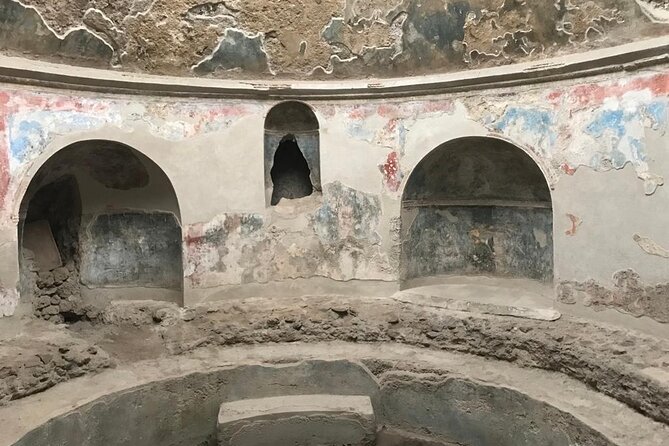
If you want to understand Pompeii quickly, start with the public buildings. This tour begins there, because theatres and temples show you how Romans spent leisure time and expressed civic and religious life. Even if you are not an expert on Roman architecture, the way these spaces function is easier to grasp when you see them in context.
Thermal baths matter too. They were not just for hygiene. Baths were social hubs, places where people talked, relaxed, and connected. When you pair baths with theatres and temples, you start to see a city made for gathering.
A possible drawback: because the tour is short, you do not get long sit-down stops. If you love slow photography or you read every plaque, you might find yourself wishing for more time. Still, for most visitors, this pace is exactly what keeps Pompeii from turning into a blur.
A few more Pompeii trips worth comparing
- Pompeii: Skip-the-Line Entrance Ticket with Audio Guide
★ 4.0 · 2,509 reviews - Pompeii: Guided Walking Tour with Entrance Ticket
★ 4.3 · 1,423 reviews - Pompeii: Skip-the-line-Ticket and Guided Tour
★ 4.6 · 1,152 reviews - Pompeii: Guided Tour with Skip-the-Line Entry
★ 4.9 · 812 reviews
Via dell’Abbondanza and the shops you can almost taste
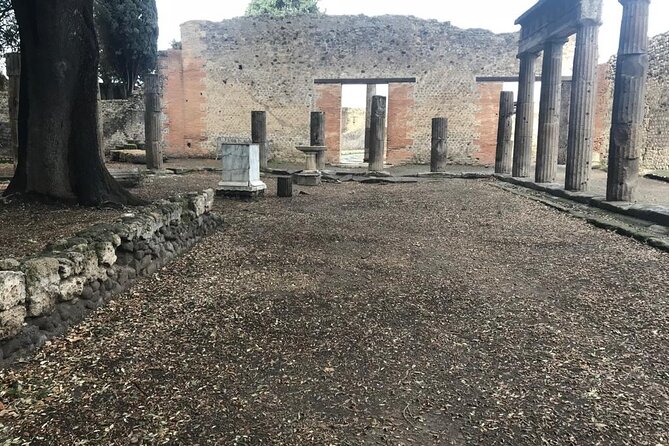
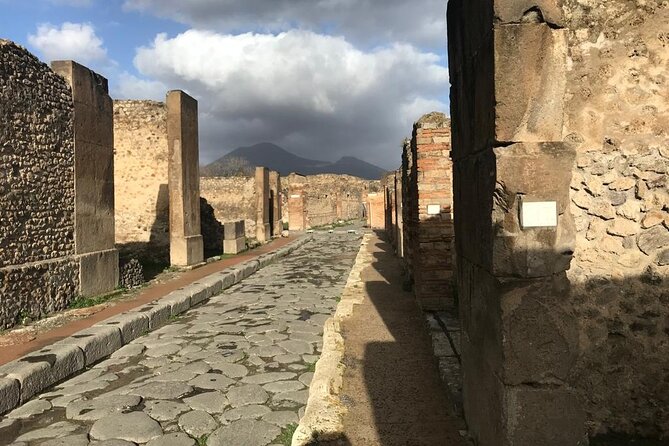
One of the most fun parts of Pompeii, in my opinion, is when you stop seeing it as ruins and start seeing it as a street where people worked. This tour specifically calls out the main street walk, Via dell’Abbondanza, and builds your understanding around the commercial life you would have smelled, heard, and used.
Two shop types get spotlighted:
- Thermopolia, the ancestor of fast food stands, where you could get hot prepared items.
- Pistrinum, the Roman bakery equivalent, where flour-based goods would be made and sold.
These are not just vocabulary words. When the guide points them out in context, you begin to imagine daily routines, not just architecture. You also get a better sense of how food, business, and social life overlapped in the city.
Practical note: street-level stops can be crowded. Wear shoes you trust and plan on a bit of jostling. The small group helps, but Pompeii is still Pompeii.
The big houses: what you learn from the House of Menander and friends
Pompeii’s residences are famous for a reason. They show status, taste, and how private life worked behind those walls. This tour hits several well-known homes, including:
- the House of Menander
- the House of the Faun
- the House of the Vettii
- the House of Caecilius Iucundus
When you move through a set like this, you start seeing patterns. Some houses are grand because they signal wealth. Others stand out because of the details that reveal how people lived day to day.
Here’s what I like about this approach: you are not being asked to memorize floor plans. Instead, you are nudged to notice what makes each place different, then you compare them mentally. That is how the homes stop being isolated photo backgrounds and start feeling like a lived-in city.
Drawback to consider: if you are expecting one house to get a deep, long walkthrough, you may feel the time limits. The tour is designed for breadth in about two hours.
The Forum and the red-light district wall paintings
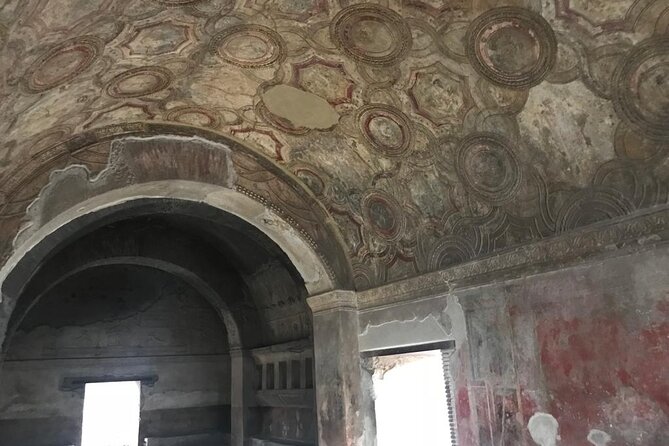
After the houses and main street experience, the route moves you toward the Forum, the town square where civic life happened. This is where the city’s public identity becomes visible. Even without a lecture, the Forum helps you understand what it meant to be part of the community.
Then comes a section many tours skim or avoid, but this one gives it attention: Pompeii’s so-called “red-light district,” including wall paintings with suggestive imagery. This is not there as shock value. It is included because it was part of real street life. Romans did not live in a sanitized museum version of their world, and Pompeii shows that bluntly.
If you’re sensitive to explicit imagery, you should know this stop is part of the tour focus. You can choose to look, or you can look away when needed, but it is better to be prepared than surprised.
The eruption victims stop: respectful focus on petrified bodies
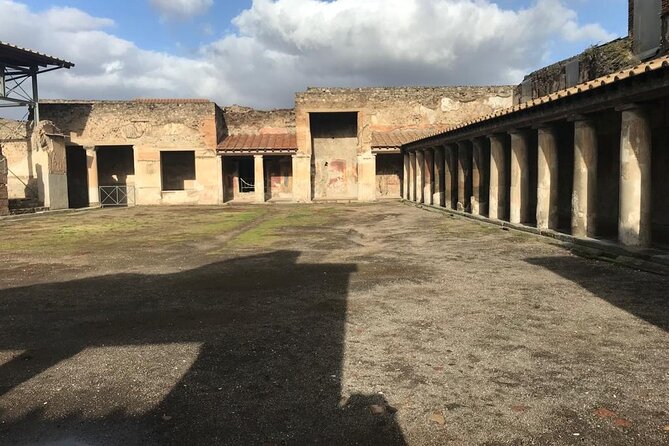
Pompeii can feel unreal in the best way, until it stops being about beauty and starts being about tragedy. This tour makes room for a special focus on the poor victims, shown as petrified bodies.
I appreciate tours that handle this with intent. You are not treated to vague “the volcano was bad” storytelling. Instead, the route includes this emotional anchor so the scale of the disaster is hard to miss.
A practical consideration: this part of the site can be difficult for some people. If you need lighter context before you get to it, you might want to pause and collect yourself, then return your attention when you are ready.
Roberta and the art of crowd control in Pompeii
You can have the best ruins on earth, and still have a mediocre experience if the guide cannot keep the group moving or interpreting what you’re seeing. One guide name that comes up in the provided feedback is Roberta, praised for making history interesting and for helping visitors avoid the densest areas while showing favorite spots.
That crowd-control piece matters more than people expect. Pompeii is not one tight venue. It spreads out. So “avoid crowds” is not a luxury, it’s a way to keep the tour readable. When you can actually see where you are going next, you get more value from the time you spent paying for a guided, skip-the-line experience.
Also, the guide being able to explain everyday details, not just big-ticket monuments, is what turns Pompeii from a collection of impressive ruins into a city you can picture.
Price and value: what $82.91 really covers
At $82.91 per person for about 2 hours, you are paying for three main things:
- a guided route that covers big areas efficiently
- skip-the-line admission (as promoted)
- small-group attention, capped at 15 people
That can be good value if you are the type of visitor who wants structure. If you love roaming and you already know what you want to see, you might choose to build your own route. But if you are trying to maximize meaning in limited time, this price can make sense.
One thing to double-check: the provided information includes both a claim that admission is included and also a note in the feedback response about entry tickets not being included. To protect yourself from surprises, confirm at booking exactly what is included in your total price. Look for a clear line on admission coverage so you do not get stuck paying more on arrival.
Who should book this Pompeii small-group tour?
This tour fits best if you:
- want to see Pompeii without spending your whole day
- prefer a structured route over self-guided decision making
- like Roman life details, especially food and street commerce
- want the famous houses and the Forum, plus the more human, emotional side
It is also a strong option if you travel with service animals, since service animals are allowed, and the tour notes it works for most travelers. Since the tour is in English and runs about two hours, it is also a practical choice if you want something focused and not too long.
If you are the kind of traveler who needs lots of quiet time in each room, you might feel the time pressure. In that case, you could consider a longer or less packed option.
Smart prep tips so you enjoy the walk
Pompeii ruins mean uneven ground and lots of walking. Bring practical footwear. Wear something breathable. And if you burn easily, plan for sun protection.
Since the tour is around two hours, you also want to manage your expectations about photos. You will see a lot, but you may not get to linger everywhere. If you care about capturing specific angles of the houses or the Forum, arrive with a short list in your head so you know what matters most.
Finally, if you are sensitive to explicit wall imagery, mentally flag that red-light district portion early so you can handle it on your terms.
Should you book it?
I think you should book this Pompeii small-group guided tour if you want the fastest path to a coherent Pompeii experience, without sacrificing the human story. The small group cap, the focus on public buildings and daily street life, plus the structured stops at major residences and the victims section make it a strong fit for most first-timers.
I would only hesitate if you hate any explicit imagery, or if you are extremely time-flexible and plan to enjoy Pompeii at a leisurely, self-guided pace. Also, before you lock it in, verify admission coverage clearly, because the provided info has conflicting hints on ticket inclusion.
If you get those boxes checked, this is the kind of Pompeii tour that helps you come away understanding the city, not just seeing it.
FAQ
Is the tour offered in English?
Yes, the tour is offered in English.
How long is the Pompeii guided tour?
It runs for about 2 hours.
What group size can I expect?
The tour has a maximum of 15 travelers.
Is a mobile ticket provided?
Yes, you receive a mobile ticket.
Is admission included, and is there skip-the-line entry?
The tour is described as offering skip-the-line admission, and the summary says an admission ticket is included. Since the provided information contains some conflicting notes about entry tickets, confirm what is included in your booking total.
Where does the tour take place?
The tour takes place at Pompeii Archaeological Park in Pompeii, Italy.
Are service animals allowed?
Yes, service animals are allowed.
Is it suitable for most travelers?
The tour notes that most travelers can participate.
What is the cancellation policy?
You can cancel for a full refund up to 24 hours in advance of the experience start time.
What happens if the tour does not meet the minimum number of travelers?
If it is canceled because the minimum is not met, you will be offered a different date/experience or a full refund.
Recently reviewed around Pompeii
- Mt. Vesuvius Wine Tasting and Lunch Experience from Pompeii★ 4.5 · 20 reviews
- Pompeii Small Group with an Archaeologist and Skip The Line★ 5.0 · 121 reviews
- Pompeii from Afternoon to Sunset★ 5.0 · 108 reviews
- Private Guided Tour and VR Headsets in the Ancient Pompeii★ 5.0 · 3 reviews
- Visit Pompeii with a local expert guide★ 5.0 · 10 reviews
- Traditional Neapolitan Dinner in Pompei – Villa Franca – Family Restourant★ 5.0 · 8 reviews
- Discover Pompeii on this Guided Walking Tour of the Buried City★ 4.0 · 9 reviews
- 2 Hours Private Walking Tour in Pompeii with an Archaeologist★ 5.0 · 15 reviews
Pompeii Tours, compared.
Entry Ticket and Guided Tour with an Archaeologist
Read our review →

Pompeii Small Group Tour with an Archaeologist
Read our review →
Skip-the-Line Entrance Ticket with Audio Guide
Read our review →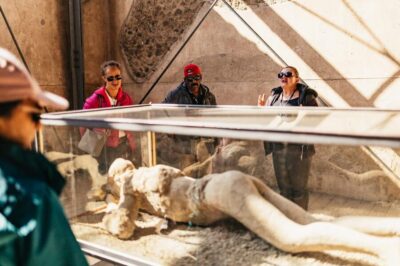
Pompeii and Mt. Vesuvius with Lunch and Wine Tasting
Read our review →
Archaeological Park Tour with Ticket on request
Read our review →