Reviewed · POMPEII TOURS
Late Afternoon Best time to visit Pompei on a private tour
Pompeii is an outdoor history lesson with a pulse, and the late-afternoon timing is what makes this private tour feel calmer and more human. I like the chance to see major highlights in softer light, plus the way a private guide keeps the focus on what you are actually looking at, not a rush-through checklist. One thing to consider: Pompeii tickets are not included, so your total cost will be higher once you add the entrance fee.
You meet at Via Villa dei Misteri, 2, and then you head in through the sea gate area around Porta Marina, with a licensed guide from Alex Tour. I also appreciate the mobile ticket approach, and the fact that the route is designed to cover a lot in about two hours while still pausing for questions and details.
Key points to know before you go
- Golden-hour feel: you time the walk for sunset light and cooler temperatures.
- Private licensed guide with Alex Tour: questions are welcome, and the pace can flex.
- AD 79 context built in: eruption background right at the start so the ruins make more sense.
- Major stops in a tight loop: Forum, Apollo, baths, theatre, domus, plus food spots.
- Plaster casts that hit hard: you visit the victim casts to understand what was lost.
- Entrance tickets handled separately: you bring the entrance ticket or buy it via the guide if requested.
Late afternoon golden light at Pompeii, and why the timing helps
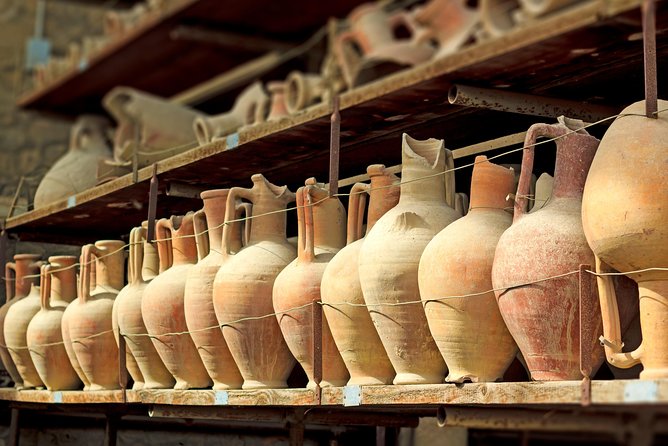
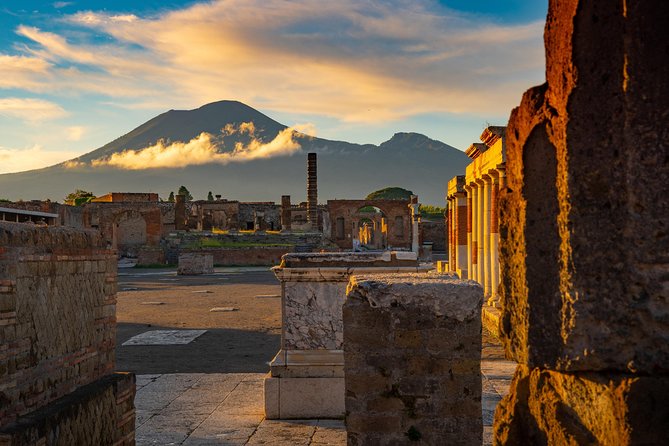
Pompeii works best when you can actually see it. In midday sun, it can feel like you are trudging through a museum in a heat wave. This tour is built for late afternoon, when the temperature drops and the light turns more forgiving, so the stone, mosaics, and wall paintings are easier to make out.
There is also a crowd reality to factor in. Even when you do everything right, Pompeii has visitor flow. A late start does not erase crowds completely, but it often changes the feel from stampede to stroll. That matters because Pompeii is not the kind of place where you want to just glance and move on.
I also like that the tour is private. With a private guide, you can ask what you want in the moment, and the guide can adjust if your group walks a little slower or wants to linger on one building longer.
More Pompeii tours to compare:
- Pompeii: Entry Ticket and Guided Tour with an Archaeologist
★ 4.8 · 19,459 reviews - Pompeii: Entry Ticket with Optional Audio Guide
★ 4.2 · 12,360 reviews - Pompeii: Small Group Tour with an Archaeologist
★ 4.8 · 12,264 reviews
Meet at Via Villa dei Misteri, then enter through the Pompeii sea gate
Your tour begins at Via Villa dei Misteri, 2, 80045 Pompei. The activity ends back at the same meeting point, so you are not left figuring out where you should head next.
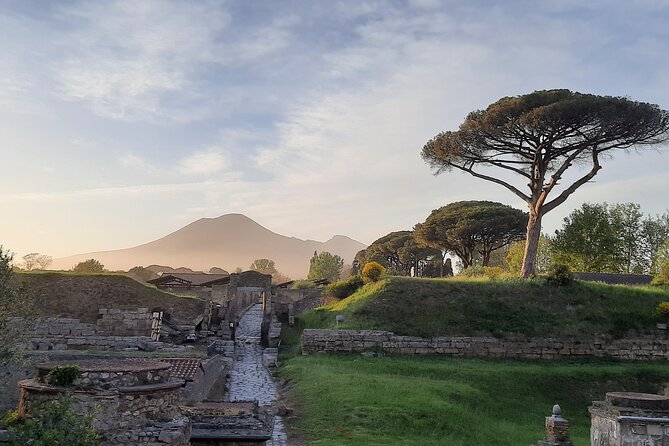
From there, the first big shift is location. You start at Porta Marina, the sea gate, and that single detail helps your brain map the ancient city. When you begin with the city’s connection to the sea, the rest of the walking route makes more sense, because Pompeii was not just a collection of buildings, it was a working place with movement, commerce, and daily routines.
Right away, your guide sets up the story of AD 79. You are not expected to memorize dates. Instead, the guide explains the eruption dynamics and gives historical context so when you later see plaster casts and collapsed spaces, you understand what you are looking at.
How two hours can fit the Forum, public baths, and theatres
This tour is structured like a highlights sampler, but it is not shallow. It is more like a guided “greatest hits” with smart stops that explain how Pompeii functioned.
Stop at the Forum, the city’s main square
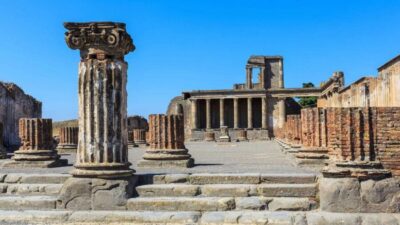
Your walk includes the Forum, the main square where political, economical, religious, and social life played out. The practical value here is orientation. The Forum is where you can connect buildings to roles: civic leadership, public gatherings, business, and belief all crammed into one central space.
When a guide points out what happened where, the Forum stops being just ruins. It becomes a scene. If you have ever wondered how people lived day to day in a city that is now buried, the Forum is the fastest way to get answers.
A few more Pompeii trips worth comparing
- Pompeii Ruins Private Tour with Optional Skip-the-Line Entry
★ 4.9 · 732 reviews - Pompeii private tour with an Official Guide
★ 5.0 · 631 reviews - Pompeii Private Tour with an Archaeologist and Skip The Line – 3 hours
★ 5.0 · 564 reviews - Visit in Pompeii – Pompeii Private Tour with Ada
★ 5.0 · 436 reviews
Public baths and Roman daily routines
You also see ancient public baths, including the Stabian Baths. Roman baths were not only for cleaning. They were part of social life, a place to talk, relax, and spend time.
If you have ever visited spa-like interiors and thought, yes, this is where people linger, you will get the same feeling from Pompeii’s bath spaces, even through ruins. Your guide can help you spot the rhythm of the complex, where different areas would have had different functions.
The theatre element: Greek theatre in an Italian setting
The route includes the Teatro Grande, the Greek theatre. Pompeii is often described as Roman, but it also reflects earlier cultural influences. A theatre is useful because it reveals another side of daily life, public entertainment and community events.
In a two hour tour, theatre stops can be brief. Here, it is still worth it, because once you understand the theatre’s place in social life, you start reading other features differently too.
AD 79 at human scale, plaster casts that change how you see the site
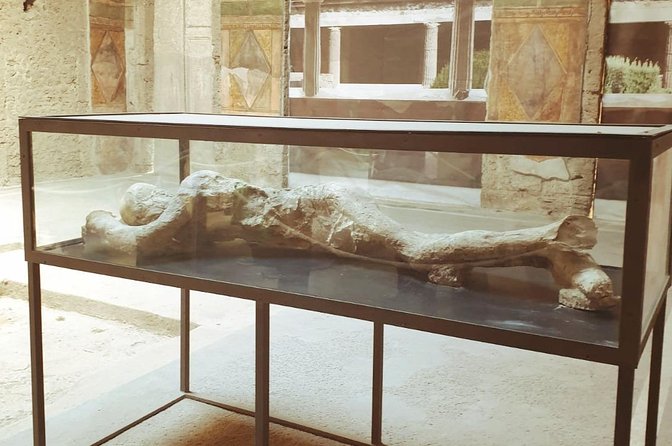
The tour includes plaster casts of victims preserved in their last moments of life. This is one of the most emotional parts of Pompeii, and it is handled with a guided explanation so you get the meaning without turning it into a horror show.
Orto dei Fuggiaschi: why this stop matters
Orto dei Fuggiaschi is where the plaster casts are. It is not just sad. It is clarifying. You learn what the eruption trapped and how people were caught. The effect is that the ruins stop feeling like “ancient architecture” and start feeling like a living community interrupted.
Here is the practical advice: let yourself slow down. In a quick tour, people sometimes rush through the casts because they feel awkward. A private guide format is better for this stop because you can take a breath, absorb the details you are seeing, and ask for clarification if you need it.
Temple of Apollo and the domus vibe: religion plus private luxury
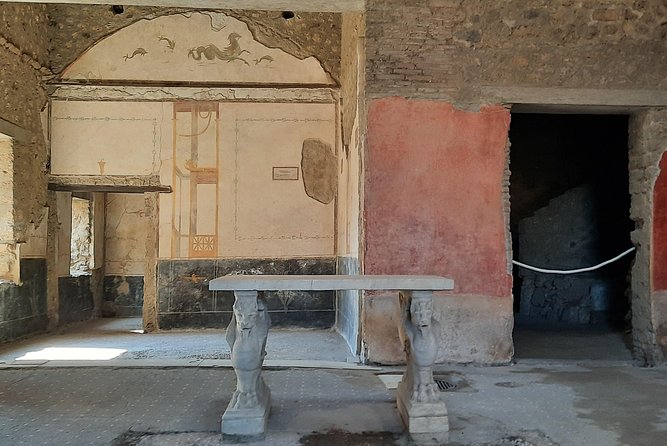
Pompeii is not only public spaces. A big part of the experience is how wealth and belief showed up on both big and small scales.
Temple of Apollo and what mythology explains
The route includes the Temple of Apollo. This is where your guide’s story helps again. Even if you do not know the myths, the guide can connect religious symbolism to what you are seeing in the site.
I like this stop because it gives you language for interpretation. Pompeii’s surfaces are scattered and fragmentary, but when you understand what a temple signified, you can see more than stone.
Casa del Menandro: mosaics, frescoes, and what wealth looked like
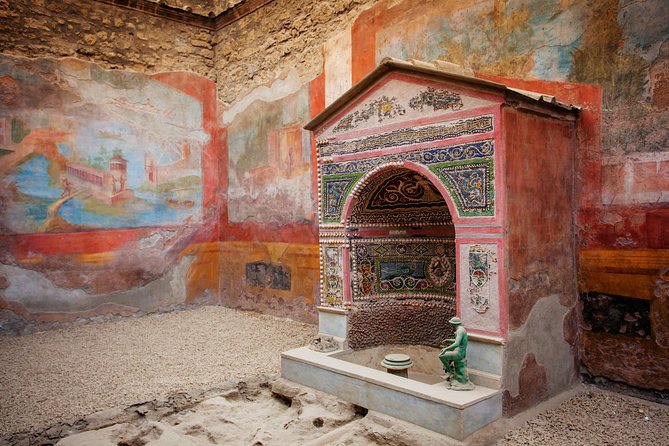
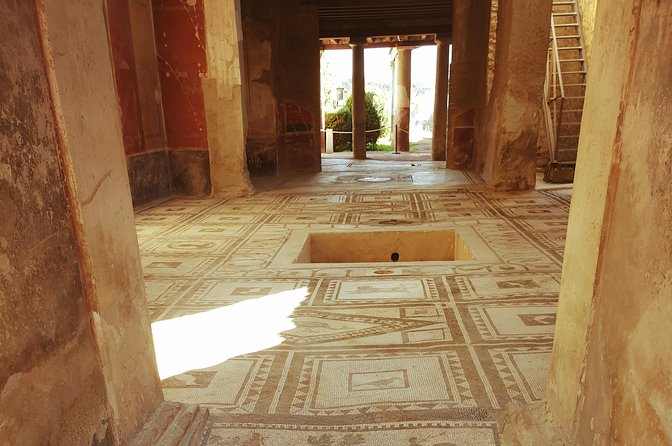
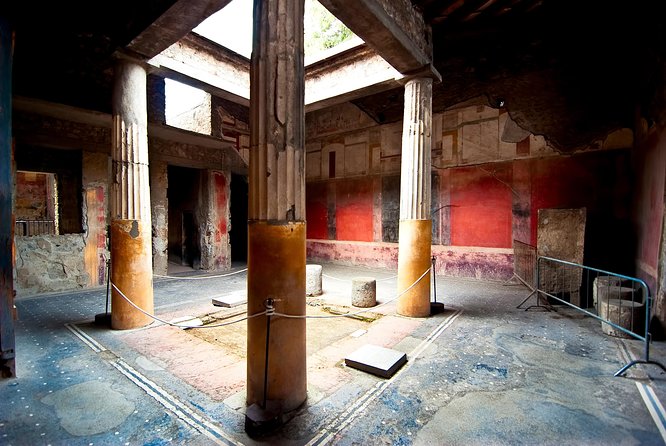
You visit Casa del Menandro, a rich Roman domus known for fresco paintings and mosaics. Domus spaces help you understand class and daily life behind the walls.
The key value in a guided visit is that you get told what to look for. Frescoes and mosaics are easy to miss when you only see them for a few seconds. With a private guide, you can get the “focus points” that make the art feel real instead of decorative.
A house choice based on crowds and rotation
The route also mentions visiting a rich house chosen according to crowd levels, opening rotation, or based on your specific request. That is a smart way to manage a site that can be unpredictable.
For you, it means the guide is trying to balance two things that do not always get along: seeing important interior spaces and not getting stuck in gridlock. If you care about interiors, this flexible approach can be a big plus.
Street-level life: bakeries and a termopolio
One of the best parts of Pompeii is how everyday life still peeks through. You do not just see fancy rooms. You also see places tied to food and work.
Panificio di Popidio Prisco: the bakery world
You visit the Panificio di Popidio Prisco, described as a bakery with an oven and mills that date back about 2,000 years. This stop is fun because it is concrete. You can almost picture the rhythm of grinding and baking, and your guide can connect that with how supply and hunger worked in a real city.
Termopolio di Vetuzio Placido: ancient street food
You also see the Termopolio di Vetuzio Placido, an ancient street food spot. Termopolia were quick-service places, and seeing one in context helps you understand that Roman Pompeii had its own version of eating out, not just home cooking.
Even if you are not an art person, these food stops can be the most memorable because they feel human. The buildings are still, but the purpose is obvious.
What to expect on the walk, pace, and how your guide likely works
The tour is around two hours. That means you will cover ground and hit major stops without turning it into an all-day marathon. The guides style matters a lot in a site like Pompeii, and this tour’s format is designed for engagement.
From what I understand about this guide’s approach, the emphasis is on storytelling and answering questions, not just reciting facts. The pacing is usually quick, but your guide pauses when something is worth slowing down for or when your group asks.
If your group includes kids or teens, this kind of guide style can make the difference between one person staring at their phone and everyone actually listening. For older travelers, it keeps you from feeling lost in the stones.
Tickets, price, and what you really pay for
Price is $249 for the private tour, lasting about two hours. Entrance ticket cost is separate: Euro 18 for adults, and free for those under 18 years old.
Here is how I’d think about value:
- You are paying for a private licensed guide time plus a tight route through the key sights.
- The tour includes several major highlights that would be harder to sequence well if you are navigating on your own.
- Because the house stop can adjust based on crowds and openings, you get some flexibility that matters at Pompeii.
One more practical note: skip-the-line tickets can be bought by the guide on request. That is useful if you want a smoother entry, especially at busy times. It is not included automatically, so ask ahead.
Logistics that make the day easier
This tour uses a mobile ticket. You confirm at booking time. Service animals are allowed. The meeting point is near public transportation, so you are not stuck with only taxis.
For you, the biggest “logistics win” is not having to wake up early. Late afternoon means you can sleep in, then enjoy Pompeii when the light turns more dramatic and the temperature is more manageable.
Still, be ready for a lot of walking on uneven surfaces. Wear shoes you trust, and bring water. Pompeii rewards people who show up physically ready to move.
Should you book this late afternoon private Pompeii tour?
Book it if you want:
- A focused route through major Pompeii highlights in about two hours
- Late day timing to avoid the harshest heat and to catch golden light
- A private guide who will explain what you are seeing and answer questions as you go
Skip or rethink it if you:
- Prefer a long, self-guided wander with minimal structure
- Need lots of time at a single site or room, with deep stops and lots of replaying the same view
If you are short on time but want Pompeii to make sense, this private format is a strong fit. You get key public spaces like the Forum, major Roman life scenes like the baths, myth and worship at the Apollo Temple, domus art at Casa del Menandro, and street life through the bakery and termopolio. It is a lot to fit in two hours, and that is exactly the point.
FAQ
What is the duration of the Pompeii private tour?
It lasts about two hours.
Where do we meet for the tour?
The meeting point is Via Villa dei Misteri, 2, 80045 Pompei NA, Italy.
Are Pompeii entrance tickets included?
No. Entrance tickets are not included. The price is Euro 18 for adults, and free for under 18.
Is this tour private?
Yes. This is a private tour, so only your group participates.
What kinds of stops are included?
The route covers major Pompeii highlights such as the Forum, the Temple of Apollo, public baths (including the Stabian Baths), the theatre, Casa del Menandro, a bakery, a termopolio, and the plaster casts of the victims.
Can skip-the-line tickets be arranged?
On request, skip-the-line tickets can be bought by the guide.
What happens if the weather is bad?
This experience requires good weather. If it is canceled due to poor weather, you will be offered a different date or a full refund.
Recently reviewed around Pompeii
- Mt. Vesuvius Wine Tasting and Lunch Experience from Pompeii★ 4.5 · 20 reviews
- Pompeii Small Group with an Archaeologist and Skip The Line★ 5.0 · 121 reviews
- Pompeii from Afternoon to Sunset★ 5.0 · 108 reviews
- Private Guided Tour and VR Headsets in the Ancient Pompeii★ 5.0 · 3 reviews
- Visit Pompeii with a local expert guide★ 5.0 · 10 reviews
- Traditional Neapolitan Dinner in Pompei – Villa Franca – Family Restourant★ 5.0 · 8 reviews
- Discover Pompeii on this Guided Walking Tour of the Buried City★ 4.0 · 9 reviews
- 2 Hours Private Walking Tour in Pompeii with an Archaeologist★ 5.0 · 15 reviews
Pompeii Tours, compared.
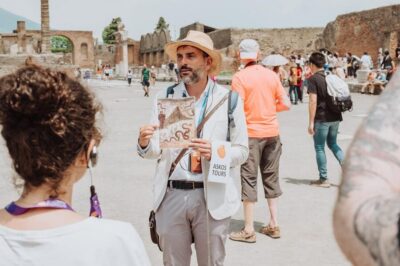
Entry Ticket and Guided Tour with an Archaeologist
Read our review →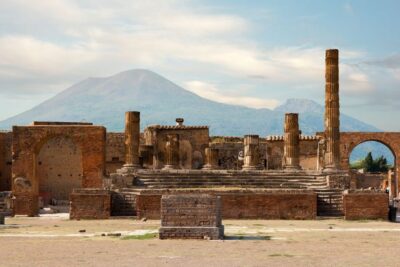
Pompeii Small Group Tour with an Archaeologist
Read our review →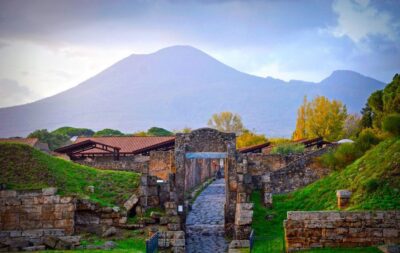
Skip-the-Line Entrance Ticket with Audio Guide
Read our review →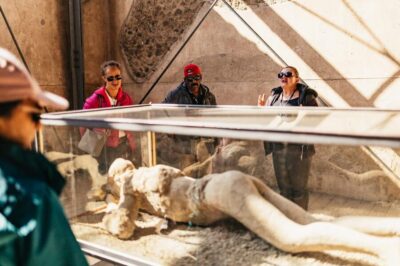
Pompeii and Mt. Vesuvius with Lunch and Wine Tasting
Read our review →
Archaeological Park Tour with Ticket on request
Read our review →