Reviewed · POMPEII TOURS
Guided Tours of Pompeii Excavations Historical and Cultural Itineraries
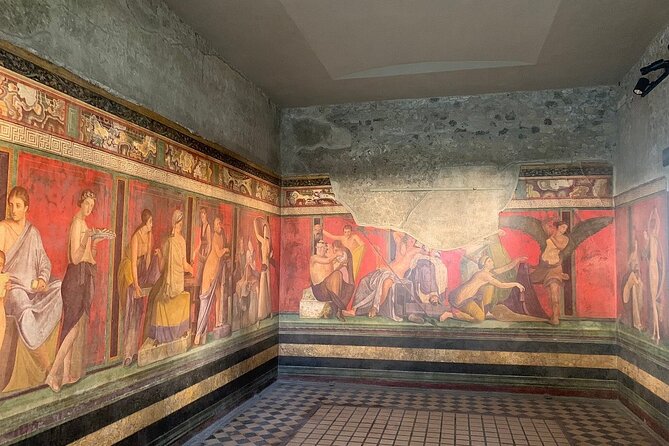
This Pompeii tour is interesting because it treats the ruins like a lived-in world, with a historiographical and cultural interpretation as you walk. You also get the standout stop of Villa dei Misteri, including the famous Dionysian fresco, explained in a way that connects art, belief, and everyday life.
I like two things right away: the small group size (max 15) and the fact the guide is specialized in archaeology, history, and philosophy. That combo matters in Pompeii, where crowd flow and attention span can easily turn a great site into a rushed checklist.
One possible drawback to plan for: the Pompeii entrance ticket is not included. You’ll want to sort your site entry timing in advance, so you are not starting your day already stressed.
Key highlights worth knowing before you go
- Villa dei Misteri fresco time: You spend a dedicated stop here, and the tour frames why the artwork is so significant for understanding belief and symbolism in Pompeii.
- A real mix of “big buildings” and private homes: Temples, forums, baths, and several domus in one 4-hour loop keeps the story balanced.
- Prof. Bruno Pisano is the star: The guiding style is repeatedly praised for clarity, competence, and connecting the ancient world to people and psychology today.
- Night-and-day comparison across spaces: You’ll see how public power and sacred life worked right next to domestic art and cult practice.
- Mystery cult clues show up in multiple stops: Dionysian themes at Villa dei Misteri and Isis symbolism in a house shrine give you more than one angle.
- Duration is just long enough: At about 4 hours 10 minutes, it’s a strong half-day without feeling like you’re trapped at the site all day.
Pompeii, but told as a Hellenistic city you can feel
Pompeii is often sold as Roman, but this tour leans into the idea that it was more specifically Hellenistic, with the city’s commercial heartbeat tied to the wider Mediterranean. You’ll hear how Pompeii functioned as a major trading and industrial center with relationships reaching toward Asia Minor, and beyond. That framing helps the ruins feel less like random stone and more like a world connected to real networks.
The tour also uses the eruption story as a cultural lens. It covers the idea that the disaster was interpreted as divine punishment, which echoes older moral-religious narratives like the “Sodom and Gomorrah” theme mentioned in the materials. Even if you do not buy every interpretation, it gives you a human reason why people understood catastrophe the way they did.
More Pompeii tours to compare:
- Pompeii: Entry Ticket and Guided Tour with an Archaeologist
★ 4.8 · 19,459 reviews - Pompeii: Entry Ticket with Optional Audio Guide
★ 4.2 · 12,360 reviews - Pompeii: Small Group Tour with an Archaeologist
★ 4.8 · 12,264 reviews
The practical plan: timing, group size, and tickets
This experience runs for about 4 hours 10 minutes, starting at 9:30 am. It operates with a maximum of 15 travelers per guide, which is a big deal at Pompeii, where larger groups often turn explanations into speed-walking.
You get a guide and assistance the whole time, plus a mobile ticket for this activity. What’s not included is your entrance ticket to the Pompeii ruins, so budget time and money for that separately. You also should plan for no snacks being provided.
The meeting point is Porta Marina audioguide official, at Via Villa dei Misteri, 2, 80045 Pompei NA, Italy, and the tour ends at the same address.
Stop by stop: what you’ll see and what to notice
Each stop is timed at roughly 25 minutes, so you’ll get enough time to look closely, but not enough to wander off and get lost.
1) Pompeii Archaeological Park: the baths-with-story beginning
You start at the Pompeii Archaeological Park with a focus on the suburban spas. The frigidarium is the highlight, including a polychrome, glazed-tile look and a nymphaeum with glass-paste effects. There’s also mention of a swimming pool frescoed with Nilotic subjects, which is a great early reminder that Pompeii’s art was not only local.
A smart way to enjoy this stop is to treat it as the warm-up for the whole day: pay attention to how Pompeians used comfort spaces like public statements. Baths were social, cultural, and status-heavy, not just “where people went to get clean.”
A few more Pompeii trips worth comparing
- Pompeii Walking Tour: The Real History of the Ruins
★ 4.5 · 16 reviews - Authentic Amalfi Lemon Tour & Tasting in the Historical Garden
★ 5.0 · 52 reviews - Amalfi Organic Lemon Tour & Tasting in the Historical Garden
★ 4.9 · 46 reviews
2) Tempio di Venere: sailors, terraces, and public power
Next is the Tempio di Venere, presented as tied to the imperial cult and the goddess of sailors. You’ll be on a terrace where the temple dominates the surrounding view, which helps you understand why sacred buildings often got built to visually command attention.
Look for the bronze statue connection to Daedalus by Igor Mitoraj. Even though it’s not ancient material, it gives you a modern entry point into the theme of myth and craftsmanship, and it anchors the conversation when the tour shifts from architecture to belief.
3) Basilica of Pompeii: the tribunal that hints at later Christian space
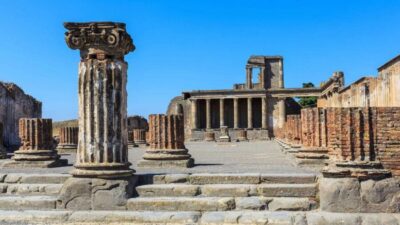
Then you move to the Basilica of Pompeii, the major tribunal setting. The tour frames it as having three naves and anticipating the typology of a Christian basilica, so you get a long view of architectural evolution.
This is the kind of stop where your brain should switch modes. Instead of “pretty wall,” think “public courtroom and authority.” Pompeii’s biggest public buildings were built to impress, and this one signals that people came here to witness decisions, not just rumors.
4) Temple of Apollo: prophecy and sculpted presence
The Temple of Apollo brings you into Greek-designed space and worship tied to ethical and prophetic life. The architectural and plastic configuration is described as stupendous, and the tour highlights the dominance of two bronze statues representing Apollo and Diana.
What I’d do here, practically, is use the statues as your compass. Stand so you can see how the composition guides your eye, then connect it to the idea of prophecy. In Pompeii, art often tells you what the building wants you to feel.
5) Forum of Pompeii: where commerce, administration, and religion overlapped
Now comes the civic engine: the Forum of Pompeii. It’s described as the city’s commercial, administrative, and religious center, with majestic grandeur and a dominant Temple of Jupiter, Juno, and Minerva.
This is one of the best stops for understanding how Pompeii worked day to day. Even if you do not read every inscription, you can see the zoning logic: public decisions, economic movement, and religious life all in one urban core.
6) Terme del Foro: ancient wellness, with details you can actually spot
Next is Terme del Foro, the community’s wellness center and spa. The tepidarium’s stuccoes from the Neronian school get called out, and there’s also a grandiose alabaster labrum in the calidarium described as of Egyptian origin.
If you like “show me the detail” travel, this is your moment. Try to identify the different heat-room identities as you walk. Baths were not one-size-fits-all, and the materials and decoration helped signal what kind of experience you were entering.
7) Casa del Fauno: the Hellenistic palace house and its famous mosaic
At Casa del Fauno, you step into the largest palace house from the Hellenistic era. The big draw is the copy of the Battle of Issus mosaic, dated to 333 BC, showing Alexander the Great against Darius III of Persia.
This stop helps you understand why Pompeii’s domestic art mattered. It’s not just decoration, it’s political theater. A battle scene inside a home tells you who the owners wanted to be, and which stories they wanted to claim as identity.
8) Casa dei Vettii: fourth Pompeian style and cult-adjacent humor
The Casa dei Vettii focuses on splendid frescoes of the fourth Pompeian style. You’ll see the famous Priapus figure tied to the Neronian school, and the grand hall with Cupids doing working activities. Mythological paintings include Daedalus and the Minotaur.
This stop is perfect for people who worry Pompeii will be grim. Yes, the city is tragic. But domestic art is often playful, erotic, and clever, and this house reflects that. When you look at Priapus or the Cupids, notice how humor and fertility themes were part of daily culture.
9) Casa degli Amorini Dorati: Rhodian peristyle, Isis, and Trojan War paintings
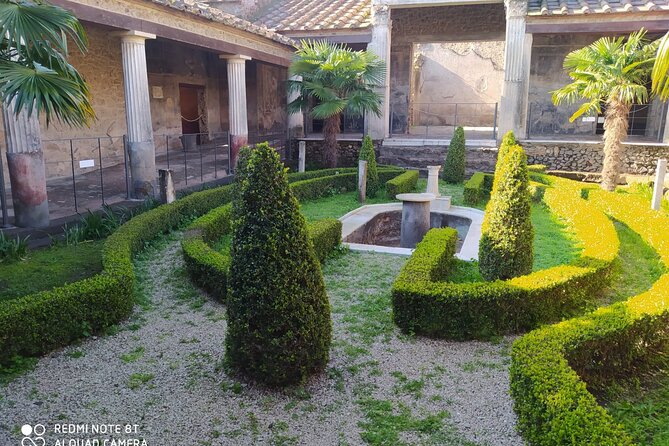
In the Casa degli Amorini Dorati, you get a perfectly preserved domus with a Rhodian peristyle. The tour points out obsidian mirrors, plus a shrine dedicated to Isis and a lararium that honored the protector gods of the house. You’ll also encounter frescoes dedicated to the Trojan War.
This is where the tour’s “mystery cult” thread becomes clearer. The Isis shrine is not a side note, it’s a window into belief practiced at home, not only in temples. If you enjoy the intersection of religion and interior life, this stop will click fast.
10) Villa dei Misteri: the Dionysian fresco that people remember for years
Finally, you reach Villa dei Misteri, with the famous Dionysian fresco from the first century BC. The tour emphasizes its exceptional conservation, and this is your big emotional and visual payoff.
At this point, I’d stop treating it like a last stop. Instead, let it be the key that explains the earlier rooms. The public temples, the civic forum, and the domestic cult clues all point toward how belief was woven into art and ritual.
Why the guide’s style changes the experience
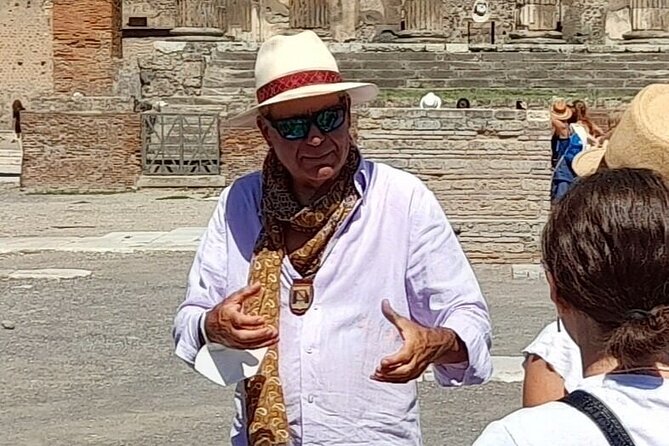
A lot of Pompeii tours talk like a textbook. This one, led by Prof. Bruno Pisano, is described as mixing history with the present, including touches of modern psychology, and connecting daily life with ancient culture. That matters because it helps you move from “facts about ruins” to “why people lived like this.”
The guide also gets praise for competence and professional presentation, and the group is kept small. When someone can explain architecture while also making mythology and daily routines feel understandable, the site stops being overwhelming.
If you’re traveling with kids or teens, the “made relatable” approach can be a real advantage. Pompeii is a long day if you do not have a way to keep attention, and this format is built to hold it.
What this tour is best for, and who might want something else
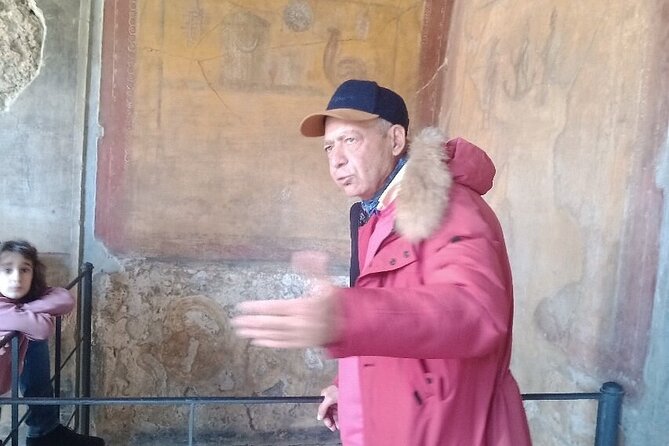
This works very well if you want a strong Pompeii overview in a half-day and you care about interpretation, not just speed and selfies. It’s also a solid choice if you like seeing both public monuments and private art, because the route deliberately alternates.
You might want a different plan if you already know Pompeii well and want deeper time in only one or two houses. This tour is structured, so you cannot treat it like a wandering museum. Also, because the entrance ticket is not included, make sure you’re ready to handle that piece of logistics before the walk begins.
Value check: is $57.62 worth it?
At $57.62 per person, the value depends on two things: what you get included, and how much you rely on an expert guide.
You do get a guide plus assistance for the full duration, and you get a small group capped at 15. In Pompeii, that kind of structure can be worth real money because it helps you manage pacing, interpretation, and crowded areas. You also get a specific itinerary that hits major “story beats” like baths, temples, forum power, and several domus, ending at Villa dei Misteri.
The main value drawback is that the ruins entrance ticket is separate. If you already plan to buy entry anyway, this tour feels like a guide-led upgrade. If you were hoping for one flat price, you’ll need to add the park admission.
Should you book this Pompeii guided tour?
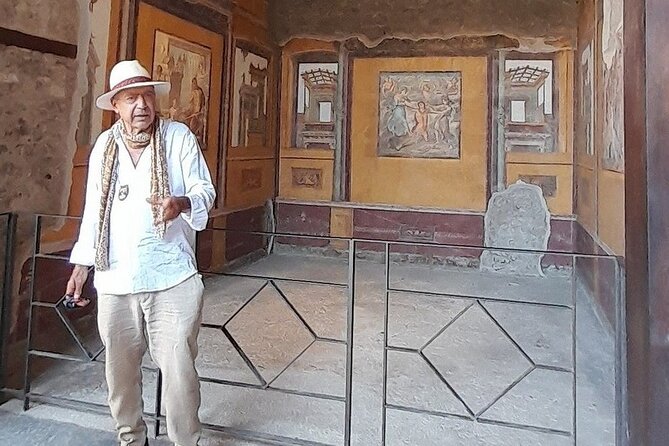
Book it if you want a guided route that feels like a coherent story, with Villa dei Misteri as a highlight and multiple domestic and public spaces in one morning. The small group setup, plus the reputation of Prof. Bruno Pisano for clarity and connection to human life, is exactly what turns Pompeii from “impressive” into “memorable.”
Skip it or consider a different format if you want total freedom to linger, or if you’re trying to keep the whole day strictly unplanned. With Pompeii, the ruins deserve attention, but this tour does not pretend to be unlimited time. It’s a smart half-day if you show up ready to focus, and you sort your entrance ticket early.
FAQ
What is the tour duration?
The guided tour lasts about 4 hours 10 minutes.
What time does the tour start?
The start time is 9:30 am.
Where does the tour begin and end?
It begins and ends at Porta Marina audioguide official, Via Villa dei Misteri, 2, 80045 Pompei NA, Italy.
Is the Pompeii entrance ticket included?
No. The entrance ticket to the Pompeii ruins is not included.
How much does the tour cost?
The price is $57.62 per person.
How big is the group?
The tour has a maximum of 15 travelers per guide.
What is included in the price?
You get a guide and assistance for the entire duration, and the tour uses a mobile ticket.
Are snacks included?
No. Snacks are not included.
How soon will I get confirmation after booking?
Confirmation is received within 48 hours of booking, subject to availability.
Is free cancellation available?
Yes. You can cancel for a full refund if you cancel at least 24 hours before the experience’s start time. Changes within 24 hours are not accepted.
Are service animals allowed?
Yes, service animals are allowed.
Recently reviewed around Pompeii
- Mt. Vesuvius Wine Tasting and Lunch Experience from Pompeii★ 4.5 · 20 reviews
- Pompeii Small Group with an Archaeologist and Skip The Line★ 5.0 · 121 reviews
- Pompeii from Afternoon to Sunset★ 5.0 · 108 reviews
- Private Guided Tour and VR Headsets in the Ancient Pompeii★ 5.0 · 3 reviews
- Visit Pompeii with a local expert guide★ 5.0 · 10 reviews
- Traditional Neapolitan Dinner in Pompei – Villa Franca – Family Restourant★ 5.0 · 8 reviews
- Discover Pompeii on this Guided Walking Tour of the Buried City★ 4.0 · 9 reviews
- 2 Hours Private Walking Tour in Pompeii with an Archaeologist★ 5.0 · 15 reviews
Pompeii Tours, compared.
Entry Ticket and Guided Tour with an Archaeologist
Read our review →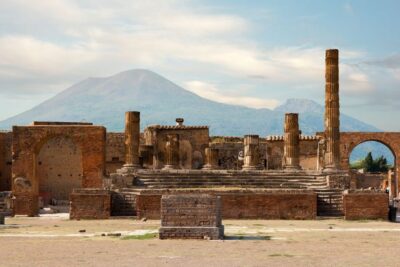
Pompeii Small Group Tour with an Archaeologist
Read our review →
Skip-the-Line Entrance Ticket with Audio Guide
Read our review →
Pompeii and Mt. Vesuvius with Lunch and Wine Tasting
Read our review →
Archaeological Park Tour with Ticket on request
Read our review →