Reviewed · POMPEII TOURS
Pompeii: Tour with Archaeologist Guide & Skip-the-Line Entry
Pompeii is one of those rare places where history feels physical, not distant. In just 2 hours, you walk a smart route through the city’s big public spaces and private rooms, with skip-the-line entry handled for you so you spend more time inside the ruins and less time waiting. I especially like the way the route links daily life to the disaster of 79 AD, and the chance to see vivid frescoes and everyday objects you can almost picture in use. One drawback: it is a fast overview, so if you want a slower, deeper study of every neighborhood, you may feel rushed.
The pacing is also built for getting your bearings fast at the start, since you meet near Piazza Esedra and begin around the Teatro Grande area. I like that the group is capped at 25 people, which helps the guide keep things moving while still answering questions. Just keep in mind you need a moderate walking level, and you’ll be on your feet on uneven ancient stone.
Key highlights you’ll care about
- Archaeologist-led, short route: big sites covered in about 2 hours without the usual “half-day fatigue.”
- Skip-the-line entry made easier: your guide purchases tickets so you can start seeing Pompeii sooner.
- Teatro Grande to the heart of town: amphitheatre, forum spaces, and central streets in one logical walk.
- Daily life details, not just monuments: Roman houses, baths, and the lupanare all show how people actually lived.
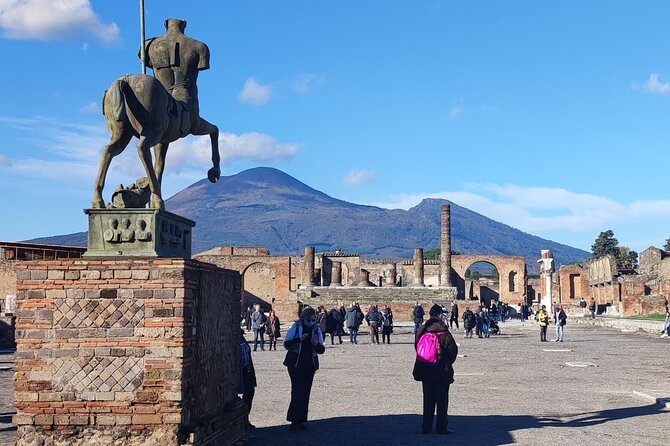
- Via dell’Abbondanza focus: one of Pompeii’s famous main streets, so you get a clear sense of the city’s layout.
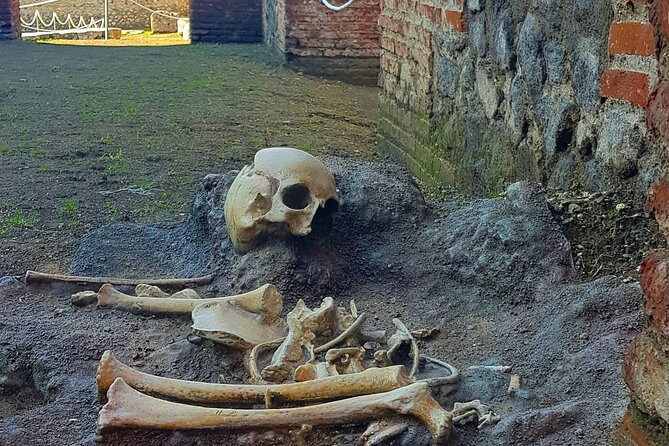
- 1863 casts with Arch. Giuseppe Fiorelli: early casting work lets you engage with the human side of the eruption.
Pompeii in 2 hours: why this experience works
If you’ve ever visited a “big” ruin and felt like you were just ticking boxes, this tour approach is different. You still see the headline landmarks, but you’re doing it as a guided story. The eruption of Vesuvius in 79 AD is not treated like a vague tragedy. It becomes a timeline that helps you understand why Pompeii looks the way it does, and why so many everyday details survived.
I like that the guide’s focus lands on the stuff your brain needs to anchor the whole place: the public stage of the Amphitheater, the city’s central street life on Via dell’Abbondanza, and the communal rhythms of bath life and forum life. Then you also get the darker, human shock of the lupanare (ancient brothels) and the famous preserved evidence people often remember most.
The short duration is the trade-off. You’ll see a lot, but not everything. Think of it as the best possible “first visit” walk, not a replacement for a full day exploring on your own.
More Pompeii tours to compare:
- Pompeii: Entry Ticket and Guided Tour with an Archaeologist
★ 4.8 · 19,459 reviews - Pompeii: Entry Ticket with Optional Audio Guide
★ 4.2 · 12,360 reviews - Pompeii: Small Group Tour with an Archaeologist
★ 4.8 · 12,264 reviews
Meeting at Travelcampania and getting on the ruins fast
Your day starts at the Travelcampania office at Via Plinio 107, Pompei. From there, you’re directed to the pickup point area at Piazza Esedra, specifically near the Coffee Shop Vittoria bar. The tour then leads into the archaeological area with a big practical advantage: your archaeologist guide handles the ticket purchase thanks to the skip-the-line service.
This matters because Pompeii can be a time-sink at the entrance. If lines stretch, your day can feel like you paid for waiting. Here, the plan is to reduce that friction so the walk begins while you still feel fresh.
You finish at Foro di Pompei, near Via Villa dei Misteri 2. The listing notes that if you want, you can stay inside the park after the tour. That’s a useful option because you can use this guided route to map where you want to spend extra time later.
Teatro Grande to the Amphitheatre: seeing spectacle the Roman way
Even though the tour runs for about 2 hours, it kicks off in the Teatro Grande area and quickly orients you to the city’s entertainment and crowd energy. This is where Pompeii stops being “stones in a field” and starts becoming a place with routines.
You’ll admire the Amphitheater, and it’s worth paying attention to how it relates to the surrounding streets and buildings. Roman amphitheaters were designed for crowds, sound, and visibility. A good guide can help you picture the audience movement, and that’s exactly what you want early in the visit.
What I like most here is that you’re not just looking at an object. You’re learning how it fit into Pompeii’s daily life, then you get to compare that with other parts of town you’ll see soon after. The result is that the ruins start connecting into a coherent city.
Private Roman houses and frescoes: what people actually decorated
One of Pompeii’s biggest strengths is the way it preserves interior life. This tour includes private houses of ancient Romans, including rooms with frescoes. That’s the part many people underestimate before they arrive. A lot of history tours show you walls and streets. Pompeii shows you personal taste, household routines, and what people chose to paint on plaster.
You’ll also walk through a key stretch tied to urban life, including Via dell’Abbondanza, a famous street where you can sense the flow of commerce and everyday movement. Frescoes and street access together are powerful because they give you two scales at once: the human scale inside homes and the human scale on the street.
A practical note: frescoes and small details can be tiring to spot if you’re craning your neck or if your group is moving fast. The upside is that the guide can point out the right places, and that turns “I saw art” into “I understood what I was looking at.”
A few more Pompeii trips worth comparing
- Pompeii: Skip-the-Line Entrance Ticket with Audio Guide
★ 4.0 · 2,509 reviews - Pompeii: Guided Walking Tour with Entrance Ticket
★ 4.3 · 1,423 reviews - Pompeii: Skip-the-line-Ticket and Guided Tour
★ 4.6 · 1,152 reviews - Pompeii: Guided Tour with Skip-the-Line Entry
★ 4.9 · 812 reviews
Stabian Baths: the social engine of Pompeii
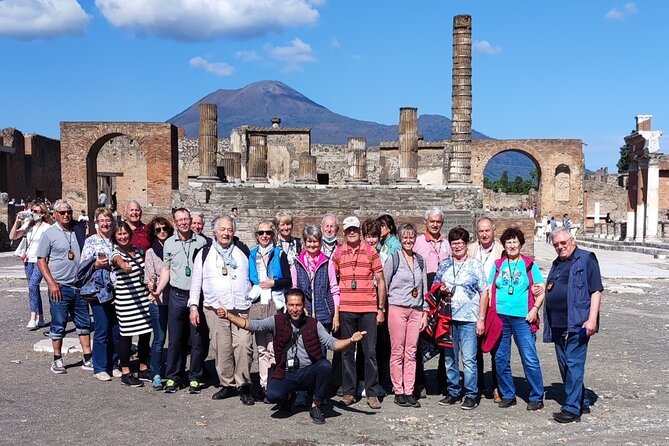
Next up are the Baths, including the Stabian baths. Bathrooms might not sound like the highlight reel, but in Roman cities, bathing was social infrastructure. People met, talked, exercised, and passed time there. So when you visit bath spaces in Pompeii, you’re not just seeing architecture, you’re seeing a daily schedule.
What I like about including the baths in a short tour is that it breaks the pattern of only seeing big outdoor monuments. Baths add texture. They also help you understand why Pompeii felt livable right up until the eruption.
In a quick tour format, baths are also a great “checkpoint.” After amphitheatre spectacle and house art, baths make the city feel like a working place again.
The lupanare: uncomfortable history handled with context

The tour also includes the lupanare, ancient brothels. This is not everyone’s favorite topic, and it can feel awkward if you show up expecting romance or mystery. But it’s also one of the most direct reminders that Pompeii held all the normal realities of city life, including the parts people often prefer to avoid.
The key value here is context. When a guide frames the lupanare within how Roman society worked, you stop treating it like shock entertainment and start treating it like evidence. That shift is what makes the visit meaningful rather than just sensational.
One consideration: if this topic makes you uncomfortable, you might want to mentally prepare before you reach it. The tour is about 2 hours, so you don’t have long to sit with it, but you will cover it.
Forum and Basilica: where the city made decisions
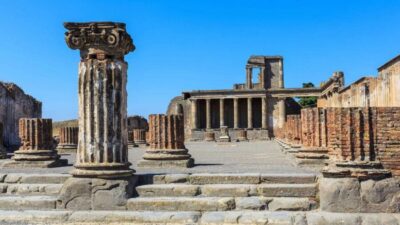
Then you move into the Forum and Basilica areas. This is the civic spine of Pompeii. If homes show private life and streets show commerce, the forum shows authority, law, gatherings, and public decision-making.
Seeing forum spaces after you’ve already walked through entertainments, baths, and commercial street zones makes the civic pieces click. You begin to sense how people moved through different “modes” in their day. It’s not just one building type. It’s a system.
The Basilica is especially useful as a stop because it helps you understand how Romans used public buildings for business and gathering. In a fast walk, it’s one of the best places to learn what mattered politically and socially.
The 1863 casts by Arch. Giuseppe Fiorelli: the human punch
Finally, the route includes the first casts made in 1863 by Arch. Giuseppe Fiorelli. This stop tends to linger in people’s minds, and not because it’s graphic. It’s because it turns tragedy into something you can stand close to.
I like how this moment brings you back to the reason the tour is arranged the way it is. The description explicitly links the experience to the last moments of the city under the eruption of Vesuvius in 79 AD. When you see the casts, you don’t just hear about the eruption. You feel how Pompeii became an evidentiary time capsule.
If you’re visiting Pompeii for the first time, this is a strong capstone. You leave remembering both the city as it was and the sudden end of it.
Price and value: is $57.84 worth it?
At about $57.84 per person for a roughly 2-hour guided walk, this tour is positioned as a “high value first pass” rather than a bargain bucket-list hack. The money buys you three things that add up in practice:
- Guide time from an archaeologist, focused on key sites and connections between them
- Skip-the-line entry support, where the guide handles ticket purchase so you start seeing sooner
- A route designed to hit Pompeii’s biggest categories quickly: entertainment, homes, street life, baths, civic space, and the eruption-linked evidence
If you enjoy history when it’s explained with good pacing, this price makes sense. If you prefer reading at your own rhythm and don’t want a structured route, you might feel you could do it on your own for less. But most people who do Pompeii for the first time benefit from a guide that points out the right details in a limited window.
Also, Pompeii is popular. The experience is typically booked about 34 days in advance on average, which suggests you should not wait until the last minute if your dates are fixed.
Group size, walking, and comfort tips that matter
This tour has a maximum group size of 25 travelers, which is a practical sweet spot. Small enough that the guide can manage attention, big enough that the day still feels social and efficient.
You’re also told the tour is for people with moderate physical fitness. Pompeii’s surfaces can be uneven, and the ruins encourage plenty of standing and short bursts of walking. To make the most of the 2-hour format, plan on:
- Comfortable shoes with good grip
- Sun protection if you’re visiting in warmer months
- A quick water plan for after the tour, since the session is relatively short
Service animals are allowed, and the meeting area is near public transportation, so you have some flexibility if you’re not driving.
Who should book this Pompeii tour (and who might want something else)
This is a strong fit for you if you want:
- A first visit to Pompeii with a clear route and interpretation
- An archaeologist guide to help you connect scenes like frescoes, baths, and the forum
- A time-efficient tour that still covers major categories of life and death in Pompeii
It might not be the best match if:
- You want to spend hours on one building or one street
- You hate structured routes and prefer wandering without a plan
- You’re uncomfortable with the lupanare stop and would rather skip it
Should you book this Pompeii tour?
Yes, if you want a well-paced, guide-led overview that makes Pompeii feel like a real city, not a scrapbook of ruins. The price is reasonable for what you get in a short window, especially because the guide handles skip-the-line entry, and the route hits the sights most people come for: amphitheatre, houses and frescoes, Via dell’Abbondanza, Stabian baths, the lupanare, the forum and Basilica, plus the Fiorelli casts from 1863.
If you’re the type who learns best with someone walking beside you and pointing out what to notice, book it. If you’d rather explore slowly and read everything yourself, you might prefer a longer self-guided plan.
FAQ
How long is the Pompeii tour?
The tour lasts about 2 hours.
What does the skip-the-line service do?
Your archaeologist guide purchases the entrance tickets for the archaeological site, which helps you enter without waiting in line.
What sites are included in the walk?
You’ll see the Amphitheater, private Roman houses with frescoes, the Baths (including the Stabian baths), the lupanare, the Forum, the Basilica, and the first casts of 1863 made by Arch. Giuseppe Fiorelli. You’ll also visit Via dell’Abbondanza.
Where does the tour start and where does it end?
You meet near Coffee Shop Vittoria bar in Piazza Esedra. The tour ends at Foro di Pompei, Via Villa dei Misteri, 2.
Is the entrance ticket included?
Yes, admission ticket is included as part of the experience.
How large are the groups?
The tour has a maximum of 25 travelers.
Is the tour suitable for people with mobility limitations?
It’s described as requiring moderate physical fitness.
Are service animals allowed?
Yes, service animals are allowed.
What is the cancellation policy?
You can cancel for a full refund if you cancel at least 24 hours in advance. If you cancel less than 24 hours before the start time, the amount paid is not refunded.
If you tell me your travel dates and whether you’re driving or taking transit, I can help you plan the best time of day to start this so you spend less time on lines and more time in the ruins.
Recently reviewed around Pompeii
- Mt. Vesuvius Wine Tasting and Lunch Experience from Pompeii★ 4.5 · 20 reviews
- Pompeii Small Group with an Archaeologist and Skip The Line★ 5.0 · 121 reviews
- Pompeii from Afternoon to Sunset★ 5.0 · 108 reviews
- Private Guided Tour and VR Headsets in the Ancient Pompeii★ 5.0 · 3 reviews
- Visit Pompeii with a local expert guide★ 5.0 · 10 reviews
- Traditional Neapolitan Dinner in Pompei – Villa Franca – Family Restourant★ 5.0 · 8 reviews
- Discover Pompeii on this Guided Walking Tour of the Buried City★ 4.0 · 9 reviews
- 2 Hours Private Walking Tour in Pompeii with an Archaeologist★ 5.0 · 15 reviews
Pompeii Tours, compared.
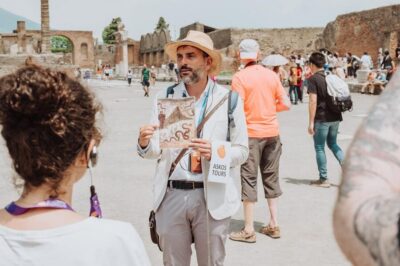
Entry Ticket and Guided Tour with an Archaeologist
Read our review →

Pompeii Small Group Tour with an Archaeologist
Read our review →
Skip-the-Line Entrance Ticket with Audio Guide
Read our review →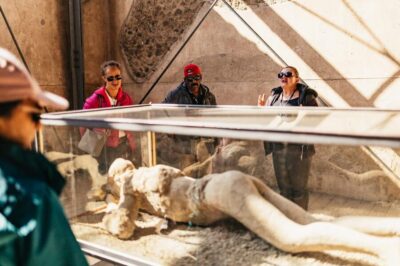
Pompeii and Mt. Vesuvius with Lunch and Wine Tasting
Read our review →
Archaeological Park Tour with Ticket on request
Read our review →