
Reviewed · HERCULANEUM TOURS
Pompeii & Herculaneum Family Adventure | Guide+Transport+Tickets
This Pompeii & Herculaneum Family Adventure is interesting because it hits two sides of the same 79 AD disaster in one day. You start in Herculaneum, the smaller town where you can still picture daily life, then move on to Pompeii for the big civic and street scenes.
I especially like that it is private with a Blue Badge guide, so families get pacing plus kid-friendly prompts without feeling rushed. I also like the Herculaneum and Pompeii Express skip-the-line plan, which helps you spend more time walking and less time stuck at entrances.
The possible drawback is the price at $738.31 per person for about 8 hours. It makes the most sense if you really want guided, family-friendly structure and the time savings of express tickets.
Key highlights at a glance
- Herculaneum’s preservation keeps streets and objects readable, down to carbonized wood and painted details
- Boat Pavilion + port story, so the town feels like a working harbor, not just a ruin
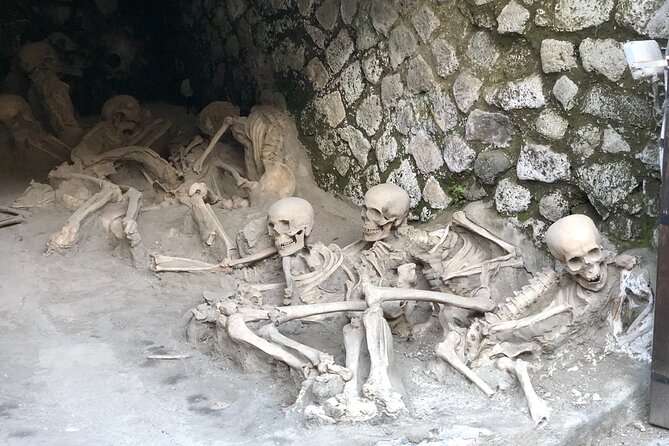
- Ancient shoreline stop tied to the recovery of over 300 skeletons in the boathouses, handled with family pacing
- Private vehicle transport plus Blue Badge guide, with skip-the-line entry for both sites
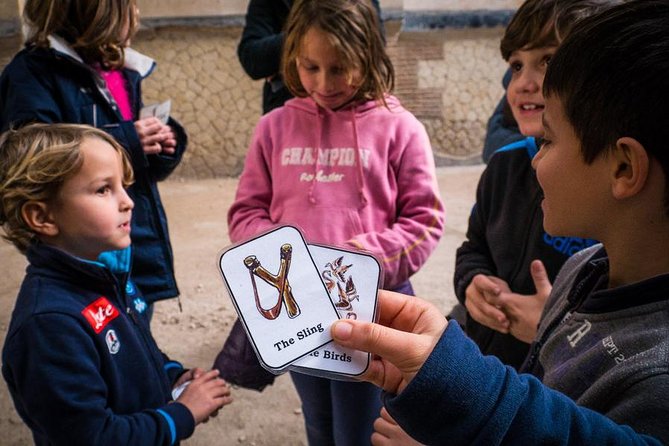
- Pompeii route built for kids, including map and booklet-style activities alongside the main monuments
- Vesuvius photo views from the bottom, no drive to the summit road
A Family-Friendly Way to Do Pompeii and Herculaneum in One Long Day
If you only have one day on the Amalfi Coast or around Naples, this is a smart way to see Pompeii without feeling like you have to do it twice. The itinerary starts in Herculaneum, then transitions to Pompeii, with a guide controlling the flow so kids do not melt into sidewalk negotiations.
The big idea here is emotional and practical at the same time. Herculaneum is smaller and far more intact, so it is easier for families to wrap their heads around how people lived. Pompeii is wider, more fragmented, and more crowded on many days. By doing Herculaneum first, you build understanding before you face the scale.
You will also get great photo angles toward Vesuvius from the bottom, without driving up to the top. That matters. The top road is a time trap if you are traveling with kids, and for this day trip the focus stays on the archaeology, not the summit.
Duration is listed as about 8 hours, with about 2 hours 30 minutes in each main park. That is long enough to see real highlights, but not so long that you are constantly in transit. Still, it is a full-day plan with walking, sun, and a lot of visual input.
More Herculaneum tours to compare:
- Pompeii and Herculaneum Small Group Tour with an Archaeologist
★ 5.0 · 1,350 reviews - Pompeii: Small-Group Tour of Pompeii and Herculaneum
★ 4.8 · 867 reviews - Guided Day Tour of Pompeii and Herculaneum with Light Lunch
★ 4.5 · 311 reviews
Private Transport and Blue Badge Guidance That Actually Saves Time
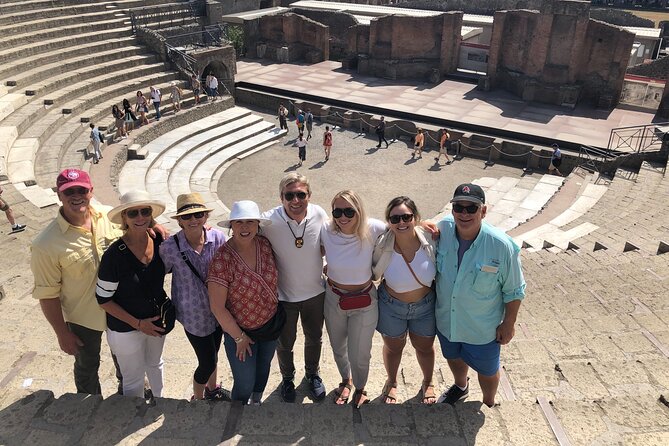
This is a private tour, meaning it is only your group. That changes the vibe fast. With kids, you want someone to steer you around bottle-necks and help you keep moving when interest goes up and down.
A few practical items make a real difference:
- Private vehicle transport between sites
- A Blue Badge private guide in both Herculaneum and Pompeii
- Herculaneum and Pompeii Express skip-the-line tickets
- Mobile ticket access
- Family-friendly support with a booklet and map
In plain terms, the guide helps you avoid the common failure mode of Pompeii trips: wandering without context, then arriving at the best parts too late in the day. Here, the day is structured so you hit the major anchors, but you also get stops that explain daily life instead of only big monuments.
Pickup is flexible. You can arrange collection from places like Naples, Sorrento, Pompeii, hotels, vacation rentals, the train station, airport, or a cruise terminal/port. You just have to specify where you will be when you book.
Language is English, and the guide leads both historical storytelling and family activities. The tour also mentions that service animals are allowed, which is useful for families planning around special needs.
Stop 1 in Herculaneum: The Better-Preserved City at the Foot of Vesuvius
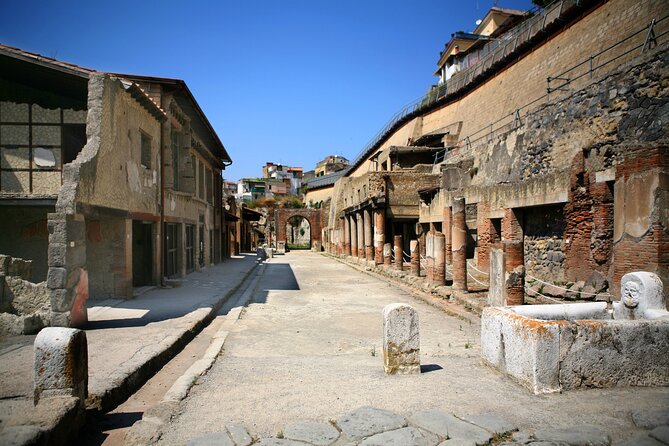
Herculaneum is the emotional heart of the day for a lot of people, and I get it. Where Pompeii was buried under ash and pumice, Herculaneum was overtaken by a superheated volcanic surge. That process carbonized wood, helped seal upper floors, and protected streets enough that you can still imagine rooms, doors, beams, and everyday objects where you would normally see only stone outlines.
Your day begins at Parco Acheologico di Ercolano with a private guide walking your family through town blocks, arcades, and homes. The guide’s job is not just facts. It is making the space feel usable. That is especially important with kids, because you want them to picture people moving through these areas 2,000 years ago, not just stand and stare.
A port town story: Boat Pavilion and maritime trade
One of the more memorable stops is the Boat Pavilion, where a Roman vessel and maritime equipment were discovered. Kids often latch onto this because it looks like something you can almost bring to life. Adults get the connection to trade and sea travel, which helps you understand Herculaneum as a working port community rather than a museum piece.
More Pompeii tours to compare:
- Pompeii: Entry Ticket and Guided Tour with an Archaeologist
★ 4.8 · 19,459 reviews - Pompeii: Entry Ticket with Optional Audio Guide
★ 4.2 · 12,360 reviews - Pompeii: Small Group Tour with an Archaeologist
★ 4.8 · 12,264 reviews - Pompeii Small Group Tour with an Archaeologist
★ 5.0 · 6,593 reviews
Antiquarium: carbonized wood that looks impossible
Inside the Antiquarium, the guide highlights objects that survived the eruption in unusually good condition, including pieces of carbonized wood from furniture, doors, beams, and shelves.
This is a strong educational moment because it shows how preservation can happen under the right conditions. It also gives you a clearer mental model for what you are seeing outside. When you understand why wood lasted here, Herculaneum stops being only stone and starts being a whole lived environment.
The shoreline and the human story: boathouses and skeletons
Next comes the guide-led walk down to the ancient shoreline. You get help picturing the sea-level changes and how boats and goods moved in and out.
A key detail here is that, in 1980, archaeologists found over 300 skeletons in boathouses in this area. This is the stop where the tone matters. The tour states the guide handles the section sensitively so families can absorb the human story at their own pace.
If you have very young children, it is worth going in expecting this part may feel heavy. A good guide can help you step back, ask questions, and move on when your group needs a break.
House of the Deer: luxury with a dramatic garden scene
The House of the Deer is next on the Herculaneum side. It is known for its marble sculptures of deer attacked by dogs. Kids tend to enjoy the drama, while adults connect it to Roman luxury, sea views, and leisure culture.
Even if you do not care about Roman art, the point of this stop is to show how wealthy families blended decoration and daily life into one experience.
Education and public life at the exercise courtyard
Then you move into the exercise courtyard, once used for athletic training and social life. The guide explains that it was not only about sports. It also tied into rhetoric, discipline, and training future elites.
This stop works well for families because it turns a ruin into a routine you can recognize: kids training, teachers watching, public events on special days. It also helps you understand how strongly Roman culture invested in youth.
A restored residence with rooms across multiple levels
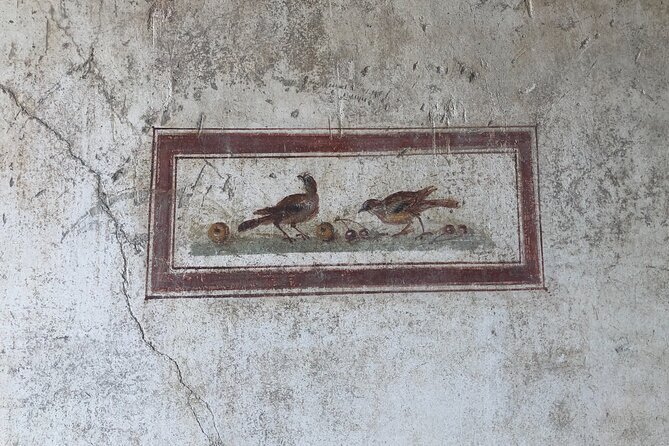
The tour includes a celebrated residence reopened after decades of restoration. You will see preserved wall paintings, wooden shutters, and structures that reveal what domestic life looked like across levels.
For families, this is often where the day clicks. You can better imagine how a family functioned in different spaces, with private rooms, upstairs areas, and daily routines shaped by the architecture.
An ancient shop with terracotta jars
You will also enter an ancient shop recognizable by rows of terracotta jars (cucumae) set into a marble counter. The guide points out storage and shelving that survived the eruption.
This is one of those stops that makes Herculaneum feel practical. It is not just villas and temples. It is buying food and drinks, storing goods, and running small business spaces that feel oddly familiar.
House of Neptune and Amphitrite: a mosaic panel still shining
Another highlight is an elegant home famous for a mosaic panel of Neptune and Amphitrite. The tour description emphasizes deep blues and golden glass tesserae, which is exactly the kind of detail that grabs kids’ attention and rewards adults who like visual punch.
The guide also helps connect that art to daily rooms where guests might dine and social life played out through décor and design.
Women’s baths: hygiene plus social time
The tour includes the women’s section of the public baths. You will see benches, painted walls, and wooden shelving that survived. The guide explains how baths served as both hygiene and social space.
It is structured to feel like you walk through changing rooms and then into warm and hot rooms where steam once filled the air. The point is not only bathing history. It is how everyday life in Roman cities had built-in gathering places.
Cult of the Emperor hall: frescoes and social hierarchy
Finally, Herculaneum wraps with a richly decorated hall dedicated to the cult of the Emperor, featuring frescoes and an explanation of the Augustales, a prestigious local group of freedmen.
This helps families understand that Roman life was not only jobs and family. There were also systems of status, civic roles, and religious ties that shaped public identity.
Vesuvius Photo Views From Below, Then a Shift to Pompeii
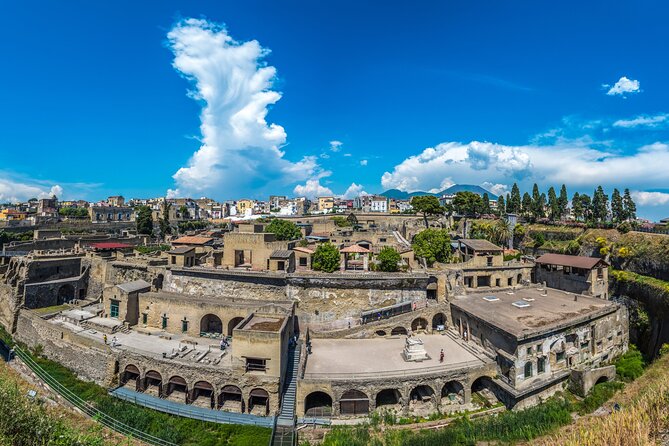
After Herculaneum, you move on to Pompeii, and you get a chance to frame the volcano in photos from the lower areas. The tour’s plan is explicit: you are not going up the mountain road.
That matters for families because it keeps energy for the ruins. It also helps you avoid the common trap of spending most of the day chasing a view that is quick to photograph and slow to access.
Your guide may suggest a time-based strategy for Pompeii depending on day and season, including visiting in the afternoon when the site can be less crowded. The itinerary is described as flexible, which is one of the quiet benefits of a private setup.
Stop 2 in Pompeii: Porta Marina, the Forum, and the Big Public Rooms
Pompeii is the famous one for a reason. It is bigger, louder, and more spread out. You need a guide who knows how to connect locations into a story you can follow in real time.
Your route starts at Porta Marina, one of the main gateways. The guide helps you picture merchants and sailors entering from the port. That starting point is smart. It reminds you that Pompeii was not isolated. It was connected, busy, and trading.
Next comes the Basilica, the city’s most important civic building, where legal disputes and contracts took shape. Even without its roof, the building’s surviving columns show how authority and architecture worked together.
Temple of Apollo and a direct sight line to Vesuvius
You will then visit the Temple of Apollo. Kids can spot the statues of Apollo and Diana and imagine ceremonies. Adults can connect religion to identity and politics in Roman society.
One practical bonus: from the temple terrace you can see toward Mount Vesuvius. It is a history moment and a landscape moment at the same time, without requiring a strenuous climb.
The Forum: politics, markets, and daily noise
Your guide brings you through the Forum, Pompeii’s civic center. This is where you see how the city organized business, public debate, and ceremonies around monumental buildings.
The kids are invited to imagine the motion: vendors, priests, citizens moving between spaces. Adults get a clearer understanding of how Roman urban planning was basically a stage for daily life.
Macellum marketplace and Forum Baths for real routine
Next is the Macellum, Pompeii’s marketplace, where people shopped for meat, fish, fruit, and imported items. The guide points out counters and storage vessels so you can picture how trade fed the city.
Then you get the Forum Baths, a preserved bathing complex where Romans washed, relaxed, and socialized. Kids can compare it to a modern spa or sports club. Adults get a clearer sense of why bathing was part hygiene, part exercise, and part community.
Big aristocratic homes: Alexander the Great and the dancing faun
One of the tour’s stop choices focuses on a grand aristocratic home with an impressive mix of garden space and mosaic art. Kids often enjoy spotting a small bronze statue of the dancing faun. Adults tend to appreciate the mosaic floor depicting Alexander the Great in battle.
If you only visit one rich house in Pompeii, you want one like this because it combines recognizable Roman luxury with visual detail that makes the home feel lived-in.
The House of the Vettii: frescoes and a refined garden courtyard
The itinerary includes the House of the Vettii, known for vivid frescoes and a garden courtyard. Kids can see mythological scenes like a storybook panel. Adults learn how the Vettii brothers rose in wealth and used art to express culture and status.
A lively street with stepping stones and everyday storefront life
Your guide then moves along Pompeii’s liveliest ancient street lined with bakeries, bars, and storefronts. Kids can hop across stepping stones while adults learn what people bought and ate as part of daily routines.
You also get help noticing street fountains, shop counters, and signage that make Pompeii feel less like a city frozen in time and more like an active place people ran errands in.
Bird’s-eye view: the dollhouse effect over a block
A standout moment is a raised platform bird’s-eye view into an entire Pompeian city block. Kids often call it the dollhouse effect because you can see rooms without roofs and imagine movement between kitchens, workshops, and dining areas.
Adults get a useful lesson in interpretation: archaeologists reconstruct daily life from layouts. Seeing density and how homes, shops, and courtyards fit together behind the street façades makes Pompeii easier to understand.
Main theater: acoustics you can test
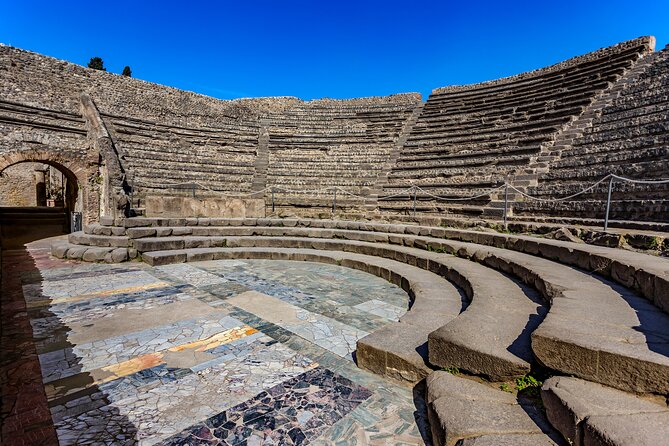
Next is the main theater, built into the hillside so sound carried. Kids can test acoustics from the stage. It is one of those stops where ancient and modern habits overlap, because humans still love the idea of being heard.
Antiquarium: artifacts plus human stories through casts
The day ends at Pompeii’s Antiquarium, where you see artifacts recovered from excavations, including jewelry, coins, tools, and household objects. Kids can connect items back to what they saw in the ruins.
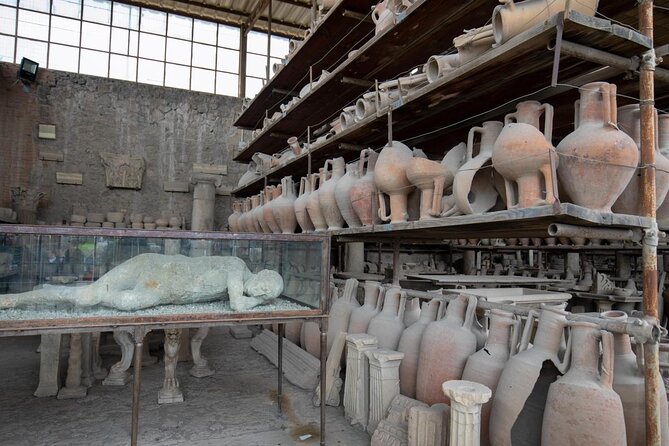
There are plaster casts of eruption victims introduced sensitively, giving families a way to understand the human story behind the architecture and objects without turning the experience into shock.
Food, Timing, and What to Pack for a Comfortable Day
This tour is listed as including meals only if the Pizza Lunch option has been selected. Otherwise, plan around food timing yourself.
Also, bottled water is not included. Since you will be outdoors in Pompeii and Herculaneum, I recommend you plan to bring water or buy it as needed once you are there.
Comfort matters here. The tour recommends comfortable walking shoes and sun block. The physical requirement is described as moderate fitness, so you should expect steady walking, uneven surfaces, and time spent standing to look at details.
A simple strategy for families: pack snacks for the gaps between big stops, and ask the guide for a short break if kids lose focus. The private format makes that easier.
Price and Value: When This $738.31 Per Person Day Trips Actually Pay Off
At $738.31 per person for about 8 hours, this is not a budget activity. So the question is not only what is included, it is what you are buying.
You are paying for:
- Private transport
- Blue Badge guide time in both sites
- Skip-the-line express tickets for Herculaneum and Pompeii
- Family-friendly activities with booklet and map
For families, the real value is the guidance plus time savings. Pompeii is a place where you can easily burn hours trying to figure out what you are looking at. Here, the route is designed to connect major civic and domestic themes, and it includes kid-friendly prompts that keep attention moving.
If your family enjoys structure and storytelling, and you want to avoid long lines and guesswork, the price can feel reasonable for what you get. If you prefer to wander freely without a guide, you may find a DIY plan costs less, but you will likely miss the explanation that makes Herculaneum click.
The Human Touch: What Makes the Guiding Part Work
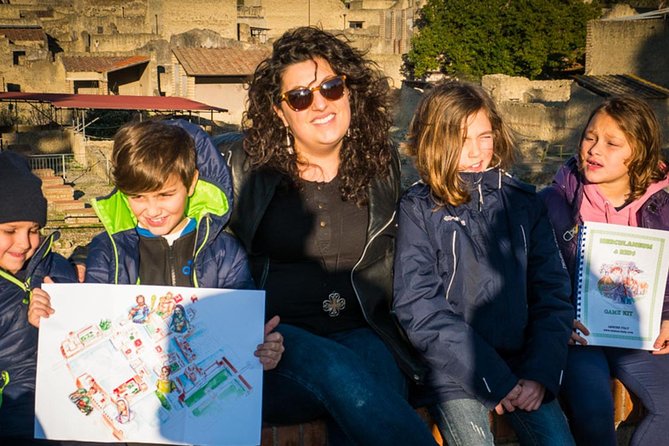
The strongest signal from the best feedback is how well the guide fits the family, not just how many facts are shared. One named guide, Giuseppe D’Angelo, is highlighted as kind and thoughtful, and people appreciated the care in how the day unfolded.
That kind of guiding matters most at the stops with human weight, like the shoreline story and the eruption victim casts. A good guide does not only deliver information. They help you choose the right pace, answer questions without steamrolling, and keep the day from tipping into stress.
This tour is rated 5 out of 5 with 15 reviews, and it is recommended by 100% of those reviewers. That kind of consistency usually points to fewer operational headaches and better guide quality.
Should You Book This Pompeii and Herculaneum Family Adventure?
Book it if:
- You want a guided, family-friendly structure that covers the biggest hits in both sites
- You care about time efficiency, especially with skip-the-line access
- You like explanations that connect objects and buildings to everyday life, including the port, baths, shops, and homes
- Your family would benefit from a private guide adapting the pace for kids
Skip it or look for another option if:
- Your group hates walking and standing for long stretches, since this is an all-day plan across two large archaeological areas
- You are very sensitive to human stories tied to the eruption, even when handled carefully by the guide
- You want maximum independence and do not value guided routing and activities
If you fit the first list, this is one of the best ways to see both places in a single trip without turning Pompeii into a chaotic endurance test.
FAQ
How long is the Pompeii and Herculaneum Family Adventure?
The duration is listed as approximately 8 hours.
What is included in the tour price?
The tour includes transport by private vehicle, a Blue Badge private guide in Pompeii and Herculaneum, Herculaneum and Pompeii Express skip-the-line tickets, and family-friendly activities with a booklet and map. Meals are included only if the Pizza Lunch option is selected.
Are skip-the-line tickets included?
Yes. The tour includes Herculaneum and Pompeii Express skip-the-line tickets.
Do you pick up from hotels and other locations?
Yes. Pickup is offered from hotels, vacation rentals, train station, airport, and cruise terminal or port, and also areas like Naples, Sorrento, and Pompeii. You specify your pickup place when booking.
Is this a private tour?
Yes. It is private, and only your group participates.
What language is the guide?
The guide offers the tour in English.
Do we visit the top of Vesuvius?
No. The plan is to see the volcano from the bottom for photos, and you are not going to drive to the top.
Is bottled water provided?
No. Bottled water is not included.
What kind of fitness level do I need?
The tour is described as requiring moderate physical fitness.
Is free cancellation available?
Yes. You can cancel for a full refund up to 24 hours in advance.
Recently reviewed around Pompeii
- Mt. Vesuvius Wine Tasting and Lunch Experience from Pompeii★ 4.5 · 20 reviews
- Pompeii Small Group with an Archaeologist and Skip The Line★ 5.0 · 121 reviews
- Pompeii from Afternoon to Sunset★ 5.0 · 108 reviews
- Private Guided Tour and VR Headsets in the Ancient Pompeii★ 5.0 · 3 reviews
- Visit Pompeii with a local expert guide★ 5.0 · 10 reviews
- Traditional Neapolitan Dinner in Pompei – Villa Franca – Family Restourant★ 5.0 · 8 reviews
- Discover Pompeii on this Guided Walking Tour of the Buried City★ 4.0 · 9 reviews
- 2 Hours Private Walking Tour in Pompeii with an Archaeologist★ 5.0 · 15 reviews
Herculaneum Tours, compared.
Pompeii and Herculaneum Small Group Tour with an Archaeologist
Read our review →
Herculaneum Entry Ticket with Optional Audio Guide
Read our review →
Herculaneum: 3D Walking Tour with Skip-the-Line Ticket
Read our review →
Guided Day Tour of Pompeii and Herculaneum with Light Lunch
Read our review →
Private Day Tour to Vesuvius, Herculaneum & Pompeii with Pick Up
Read our review →
Herculaneum: Skip The Line Entrance ticket + Audioguide
Read our review →Browse the lists this tour appears in