
Reviewed · POMPEII TOURS
2 Hours Pompeii Group Tour with Archaeologist Guide and Skip the Line
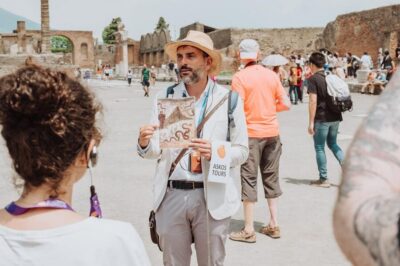
Pompeii is one of those places where the ruins feel specific, not just ancient. This 2-hour skip-the-line group tour is interesting because it helps you move fast through the biggest areas without getting stuck at the ticket desk, and then your guide puts the scenes you see into human context. I especially like the focused route (so you are not wandering) and the archaeologist-led storytelling that connects sites to daily life, not just dates.
You get a small group, up to 15 people, and that matters in Pompeii because the site is large and walking adds up quickly. In reviews, guides like Mariagrazia, Eliana, and Luisa are praised for keeping the pace moving while still making time for questions, and even for handling kids well when it gets hot. One possible drawback: since it is only about two hours, each stop is brief, so if you want to linger for photos in every nook, you may feel a bit rushed.
Key highlights
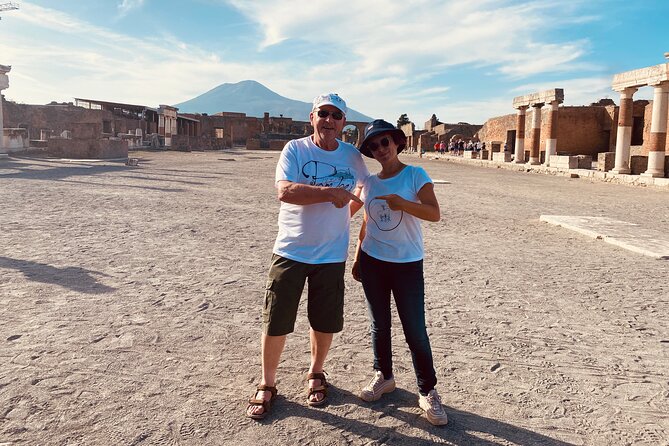
- Skip-the-line access so you spend less time queuing at the ticket office
- Archaeologist guide who explains what you are looking at, from baths to brothels
- Small groups (max 15) that help you keep your place on the route
- Big-name Pompeii sites in a short walk: theaters, temples, a luxury house, and the baths
- A mix of daily life and taboo details like the Lupanar frescoes
- Pompeii 3D to help you picture the city beyond what is left
Skip the Line at Pompeii: Ristorante Suisse Meeting Point and a Smart Two-Hour Plan
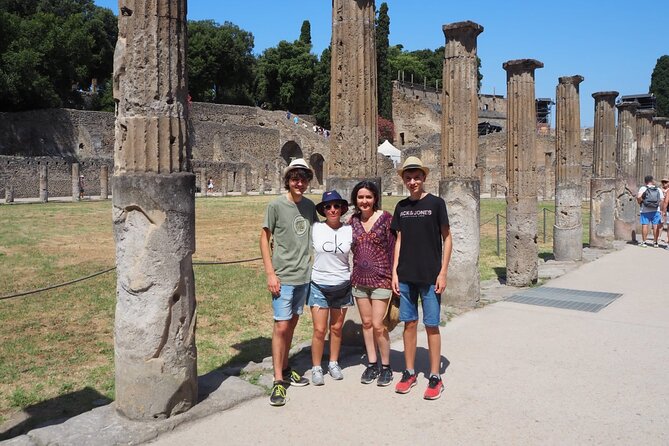
Your day starts at Ristorante Suisse in Piazza Esedra, at 10/13, back by the main entrance area. The tour ends where it starts, which is handy when you are trying to keep the rest of your schedule simple.
The big practical win here is the skip-the-line component. You still need the Pompeii entrance ticket (18 euros for adults, free for minors), but the skip-the-line part is designed to save time at the ticket office so you do not bleed your short visit waiting around. Since the tour runs about two hours, time is the real currency.
This is also a mobile ticket style experience, and it is offered in English. With a maximum of 15 people, you are not getting swallowed by a giant crowd, which helps because Pompeii can feel chaotic without a plan. One more detail that can help you decide: the tour is listed as requiring good weather, so if the forecast looks rough, expect the operator to offer a different date or a refund.
More Pompeii tours to compare:
- Pompeii: Entry Ticket and Guided Tour with an Archaeologist
★ 4.8 · 19,459 reviews - Pompeii: Entry Ticket with Optional Audio Guide
★ 4.2 · 12,360 reviews - Pompeii: Small Group Tour with an Archaeologist
★ 4.8 · 12,264 reviews
Vicolo di Gladiatori and Fullonica di Stephanus: Where Pompeians Worked, Trained, and Washed
A lot of Pompeii tours sprint straight to the big monuments. This route starts in a way that makes the city feel lived-in: jobs, training, and everyday needs.
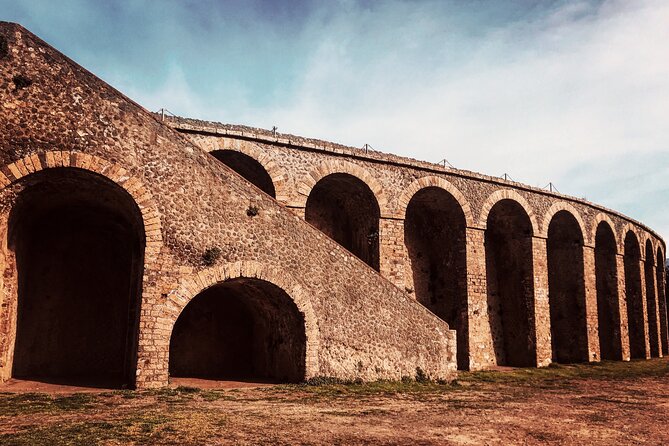
Vicolo di Gladiatori and the gladiators’ barracks
You pass through Vicolo di Gladiatori, with a focus on the gladiators’ barracks. This is a great early stop because it sets a tone. Gladiators were entertainers, athletes, and public figures, and this area helps you picture the training rhythm in a city that liked spectacle. The time is short, about 10 minutes, but it is the kind of place where a good guide makes small details click.
Practical note: this section is still outdoors, so wear shoes that can handle uneven stone and watch your footing. It is Pompeii, not a museum floor.
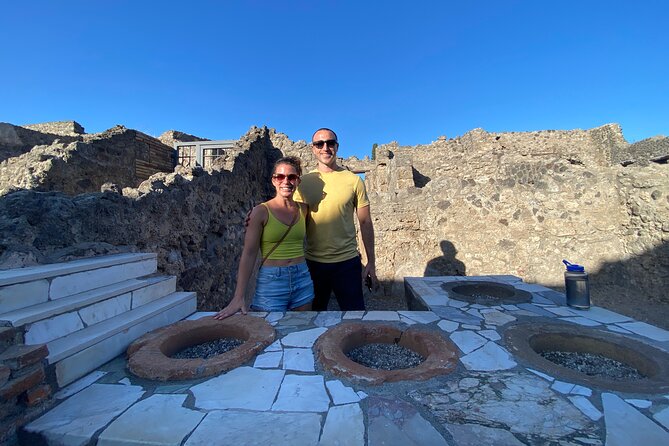
Fullonica di Stephanus, Pompeii’s laundry works
Next is Fullonica di Stephanus, often called the most famous laundry in Pompeii. This stop is one of my favorites on this itinerary because it turns something dull-sounding into something visual: Romans washing clothes and roughing fabrics. You get a peek at how materials worked and what a laundry operation involved, which is a nice contrast to the drama of the gladiators.
If you like understanding systems, not just statues, this is where the tour starts to feel worth paying for. A short explanation can transform a building into a process you can almost smell and hear.
A few more Pompeii trips worth comparing
- Pompeii: Skip-the-Line Entrance Ticket with Audio Guide
★ 4.0 · 2,509 reviews - Pompeii: Guided Walking Tour with Entrance Ticket
★ 4.3 · 1,423 reviews - Pompeii: Skip-the-line-Ticket and Guided Tour
★ 4.6 · 1,152 reviews - Pompeii: Guided Tour with Skip-the-Line Entry
★ 4.9 · 812 reviews
Tempio di Giove Capitolino to Odeon: Pompeii’s Forum and the City’s Soundtrack
After you get the workday basics, the route shifts to religion and public life. That transition matters because Pompeii’s big forum areas were not one-purpose spaces. They were civic stages.
Tempio di Giove Capitolino in the large forum
You visit Tempio di Giove Capitolino, the temple associated with the cult practices and located in the large forum area. This is where morning activities blended mercantile and religious routines. Even with limited time, this helps you understand Pompeii as a place where business and worship sat side-by-side.
A drawback to keep in mind: because the tour is compact, you will not get a long sit-down look. If you are the type who wants to read every carved detail slowly, you might wish you had an extra hour. That said, for most first-time visitors, this is enough to orient you.
Odeon and Teatro Piccolo, the theater for musical events
The tour continues to the Odeon, also called Teatro Piccolo, tied to musical events. One neat detail you get here is that musical instruments have been found connected to this kind of space, and some are referenced as being displayed in the Antiquarium. The practical value is that it tells you this theater was not only about drama. Pompeii had sound and performance built into its public culture.
Even if you are not a theater person, you will likely enjoy this stop because the Roman approach to entertainment was broader than many people expect.
Teatro Grande and Casa del Menandro: Big Drama and a Luxury House in One Stretch
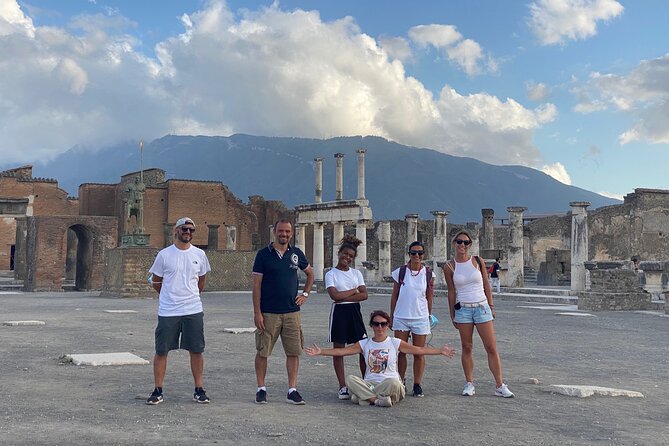
Pompeii’s theaters are the closest thing the ruins have to Hollywood scale, and the tour hits that feeling in two steps.
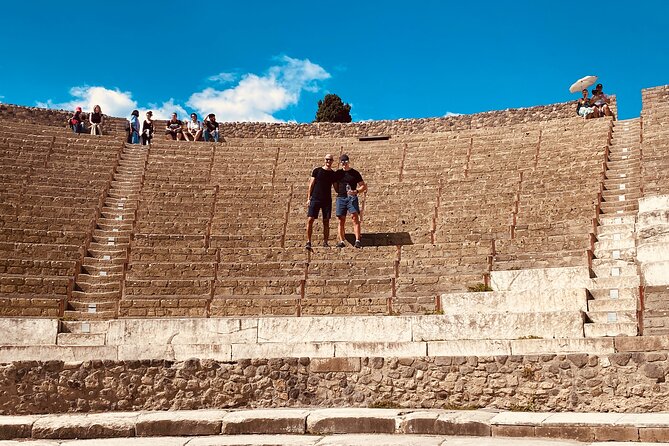
Teatro Grande, dramas and comedies
Teatro Grande is the large one, the main drama and comedy venue. You also learn that it was renovated thanks to grants from the Gens Holconia. That gives you a useful lens: even inside ruins, you are seeing how Pompeii invested in its public life over time.
This is also a stop where photos usually work well, because you can stand back and get a sense of the space. The time is only around 10 minutes, so if photography is a priority, plan to shoot first and listen second, then your guide can help you aim your attention.
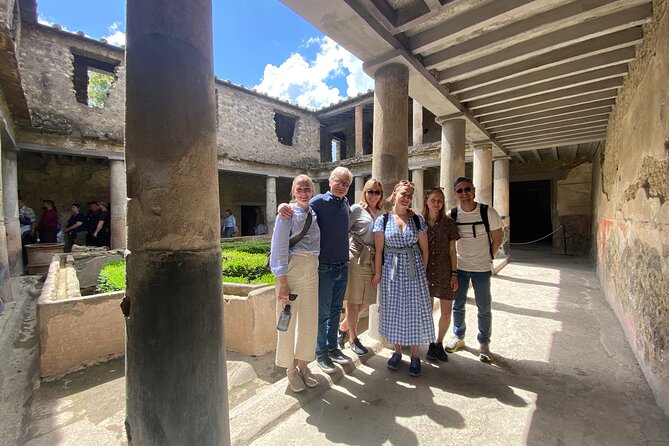
Casa del Menandro, frescoes, decoration, and luxury
Then the route turns to Casa del Menandro, a luxury home known for frescoes, decorations, and sculptures. This is the kind of stop that can make you rethink the city. Pompeii is not only about public buildings and crowds. It also shows private wealth and taste.
The tour gives you around 15 minutes here, which is a good length for an overview. You will likely spot the decorative surfaces and get the general layout idea, but you will not go room-by-room like a specialist tour.
Lupanar and the Temple of Venus: A Tour That Does Not Shy Away From Human Complexity
Some Pompeii tours avoid the darker or more adult themes. This one includes them, which is part of why people rate it so highly for real understanding.
Lupanar, brothel life and original frescoes
You visit the Lupanar, one of the best-known brothel sites in the world. The standout point for many people is that you can see original frescoes with scenes linked to kamasutra. Whether you find that detail fascinating or uncomfortable, it does something important: it proves Pompeii was not just a clean, idealized Roman city.
From a travel perspective, I like that the guide does not treat this as shock value. A thoughtful explanation turns it into cultural context, and that makes the site easier to process.
Time here is about 15 minutes. You can take that as a warning too. If you are sensitive to adult content, this stop might not be your favorite.
Temple of Venus, damage and survival
The tour also references the Temple of Venus, which was partly destroyed during the Second World War. This is a reminder that the eruption is not the only event that shaped what you see today. Even when you are not staring at history, the building’s survival tells part of the story.
Basilica, Shops, Market, and the Street Culture That Made Pompeii Move
After luxury and taboo, you shift back to civic order and commerce. This section helps you picture the city as a system, not just a set of famous stones.
Pompeii’s Basilica, justice near the main square
You visit Pompei La Basilica, where justice was administered near the main square. This makes the city feel organized and purposeful. People came here for decisions, not just entertainment. In a short tour, a stop like this gives your brain a framework for what went on where.
Street full of shops, Pompeii’s main shopping spine
Then you walk through the street full of shops, described as the main street of the archaeological site. This is where Pompeii can feel most like a city you have walked before. Even if the storefronts are empty, the street layout tells you how movement worked.
You also stop near the city market, located near the large forum. Markets were big buying hubs where goods were purchased and then resold in shops. If you like the nitty gritty of how money moved, this is a satisfying piece of the puzzle.
Temple of Apollo
The route also includes the Temple of Apollo, identified as one of the most popular in Pompeii. That is another useful anchor because it ties religion to everyday foot traffic. Temples were not remote. They sat in active parts of the city.
Stabian Baths and Pompeii 3D: The Tour’s Best Ending for Understanding What You Can Still See
Most short Pompeii tours end quickly. This one tries to close with two tools that help you understand what remains and what is missing.
Stabian Baths (Terme Stabiane), early baths with preserved details
You visit the Stabian Baths, described as the first baths built in Pompeii, with casts and frescoes still present. Baths are great because they show social life and routine. You are not just looking at a monument, you are thinking about schedules, bathing rituals, and public conversation.
The time on this stop is around 15 minutes. That is long enough for the guide to explain the function of spaces and help you read the surviving parts.
Pompeii 3D, Bodies of Pompeii
Then there is Pompei 3D (Bodies of Pompeii). Even if you already know the eruption story, this can be a powerful way to visualize the scale and the human impact, because it translates what is hard to imagine from ruins into something your brain can grasp faster.
It is a short visit, about 5 minutes, but it is an efficient way to end the tour with a clearer picture.
Who This Tour Fits Best (And Who Might Want More Time)
This works best if you want a strong overview and you have limited time. It is also ideal if you do not want to plan your own route through Pompeii’s major zones.
Great match for
- First-time visitors who want the main attractions in about two hours
- People who like history with stories tied to daily life, not only big architecture
- Families, including groups with kids. In the guide feedback I saw, Luisa is praised for being patient with young children and for adapting when it got hot.
- Anyone who wants an expert archaeologist guide in a small group setting (max 15)
You might want a different format if
- You want long photo time in every site, since each stop here is brief
- You prefer quiet and self-paced exploring without the group pace
Price and Value: Why $132.03 Can Make Sense for a Short Pompeii Visit
At $132.03 per person, this is not the cheapest way to see Pompeii. But it can be good value because you are paying for time savings and expert interpretation.
Here is how the math usually works out for a traveler:
- The tour fee covers the archaeologist guide, group management (small group max 15), and the skip-the-line entry process.
- The entrance ticket is separate, at 18 euros per adult (minors free with identity card).
So you should think of the 132 dollars as buying back the two things that cost you most in Pompeii: frustration and confusion. Skip the line is especially valuable when your visit is only two hours. Without it, you can lose a large chunk of your time at the ticket office.
If you are traveling with others, a group size that stays small also gives you more chance to ask questions and get specific answers. That is part of why guides like Mariagrazia and Eliana show up in feedback again and again, with people praising how guides manage crowds while still seeing the essentials.
Should You Book This Pompeii Tour?
If you want a structured, archaeology-focused Pompeii visit that hits the biggest sites in about two hours, I think you should book it. It is especially smart if you hate lining up, you are short on time, or you want a guide to connect buildings to real Roman life.
Book it with a realistic mindset: you will get a lot of stops, but you will not go deep at every single one. For most people, that is exactly the point. You leave with a clear “map” of Pompeii and a better understanding of what you just walked through, plus a practical start and finish point at Ristorante Suisse.
FAQ
What is the duration of the tour?
The tour lasts about two hours.
Does this tour include skip the line entry?
Yes. It includes skip the line to purchase tickets on site, helping you avoid the long queue at the ticket office.
How much is the Pompeii entrance ticket?
The entrance ticket costs 18 euros per person for adults. Minors are free, and they must bring an identity card.
Where do we meet and where does the tour end?
You meet at the main entrance of Ristorante Suisse in Piazza Esedra (10/13, 80045 Pompei). The tour ends back at the same meeting point.
How large are the groups?
The group tour has a maximum of 15 people.
What language is the tour offered in?
The tour is offered in English.
Do I need to bring anything for minors?
Minors need an identity card.
What happens if the weather is bad?
This experience requires good weather. If it is canceled due to poor weather, you will be offered a different date or a full refund.
Are service animals allowed?
Yes, service animals are allowed.
Recently reviewed around Pompeii
- Mt. Vesuvius Wine Tasting and Lunch Experience from Pompeii★ 4.5 · 20 reviews
- Pompeii Small Group with an Archaeologist and Skip The Line★ 5.0 · 121 reviews
- Pompeii from Afternoon to Sunset★ 5.0 · 108 reviews
- Private Guided Tour and VR Headsets in the Ancient Pompeii★ 5.0 · 3 reviews
- Visit Pompeii with a local expert guide★ 5.0 · 10 reviews
- Traditional Neapolitan Dinner in Pompei – Villa Franca – Family Restourant★ 5.0 · 8 reviews
- Discover Pompeii on this Guided Walking Tour of the Buried City★ 4.0 · 9 reviews
- 2 Hours Private Walking Tour in Pompeii with an Archaeologist★ 5.0 · 15 reviews
Pompeii Tours, compared.
Entry Ticket and Guided Tour with an Archaeologist
Read our review →
Pompeii Small Group Tour with an Archaeologist
Read our review →
Skip-the-Line Entrance Ticket with Audio Guide
Read our review →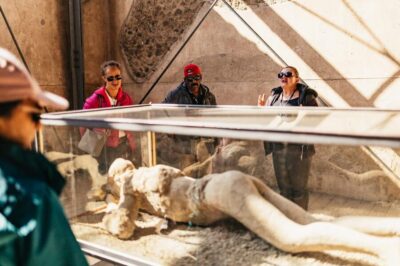
Pompeii and Mt. Vesuvius with Lunch and Wine Tasting
Read our review →
Archaeological Park Tour with Ticket on request
Read our review →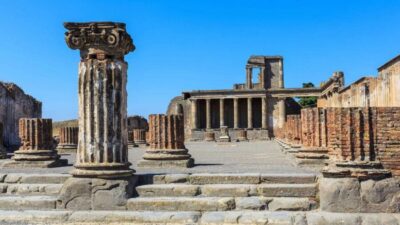
Browse the lists this tour appears in