
Reviewed · POMPEII TOURS
2 Hours Private Tour of Pompeii for Journey Through Time
What makes this Pompeii experience so appealing is the mix of big set pieces and everyday street life, all packed into a tight, private 2-hour walk. I like that you get full attention from a guide, not a headset shuffle, and you also cover major Pompeii landmarks in one smooth route. The only real drawback is the schedule is fast, so if you want to linger slowly through every corner of Pompeii, this one will feel a bit like a focused sprint.
I also love the human touch behind the tour. Guides such as Annarosa and Carla are praised for sharp communication ahead of time and for adding local recommendations you can actually use after the ruins. Just keep in mind that you’ll pay Pompeii site entry separately, and the amphitheatre stop does not include its admission.
Key highlights to look forward to
- A private Pompeii guide for up to 8 people, so your questions stay front and center
- Amphitheatre of Pompeii for a gladiator-era view of public spectacle
- Via dell’Abbondanza, the street that shows how different classes lived side by side
- Stabian Baths (Terme Stabiane), including stops through the cold, warm, and hot bathing rooms
- Vesuvius and AD 79 context tied to what you’re seeing, not tacked on at random
- Strong guide communication, with real pre-tour messaging and practical local tips
Why a 2-hour private Pompeii walk really makes sense
Pompeii is one of those places where you can easily spend a whole day and still feel like you barely scratched the surface. This tour is smart because it treats Pompeii like a story with chapters, not a checklist. In about two hours, you hit three high-value stops that cover entertainment, daily life on a main street, and Roman bathing culture.
You’ll also enjoy the pacing. Because it’s a private tour for your group, the guide can slow down when something needs explaining, then speed up when you just want to look. That matters in Pompeii, where the ground and layout can make self-guided navigation feel slow and confusing.
For me, the best part is that you’re not stuck in only the “wow” monuments. You get the amphitheatre for spectacle, then the straight shot of Via dell’Abbondanza, where houses, businesses, and workspaces once lined the road. That blend helps you understand Pompeii as a living city, not a theme park.
The main consideration: two hours is not long. If Pompeii is your one and only stop and you’re hoping to see everything from major villas to the biggest forums, you may want a longer option. But if you want a focused, guided taste, this format is a strong value.
More Pompeii tours to compare:
- Pompeii: Entry Ticket and Guided Tour with an Archaeologist
★ 4.8 · 19,459 reviews - Pompeii: Entry Ticket with Optional Audio Guide
★ 4.2 · 12,360 reviews - Pompeii: Small Group Tour with an Archaeologist
★ 4.8 · 12,264 reviews
Meeting point at Piazza Immacolata and a clean route to the ruins
The tour starts at Piazza Immacolata, 2, 80045 Pompei NA, Italy. It ends at Ruins of Pompeii Via Villa dei Misteri, 2, 80045 Pompei NA, Italy.
Why this matters in practice: you’ll save energy by getting dropped into the right area instead of trying to figure out where your guide will be while you’re already dealing with crowds and signage. The start is also listed as near public transportation, which is helpful if you’re coming by train or bus and don’t want to fight parking.
One more detail that helps your day go smoother: because this is private, you’re only coordinating with your own group. That usually means fewer delays from waiting on other participants, which is a big deal when you have a limited time window.
Stop 1: Amphitheatre Romano and the culture of gladiator spectacle
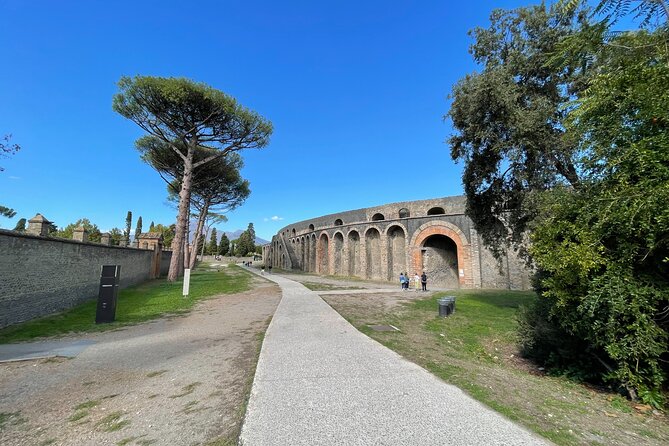
Your first stop is the Anfiteatro Romano, Pompeii’s amphitheatre. It’s one of the oldest surviving Roman amphitheatres, and it’s exactly the kind of place where the scale gives you instant perspective. You’re not just looking at ruins, you’re stepping into the kind of venue where public life centered on events.
This stop is built around gladiators and crowd culture. Your guide will bring it to life with the idea of gladiator contests, and how things like slogans and nicknames worked like the sports-world posters and celebrity banners you’d see today. That comparison is useful because it helps you picture how people would have talked about performers, rivalries, and matches.
What to do while you’re there:
- Take a minute to orient yourself within the amphitheatre first, then listen for how the space was used.
- Look for views across the seating areas and imagine the rhythm of an event day.
- Keep an eye on anything your guide points out about how crowds would have moved and gathered.
Also, a practical heads-up: amphitheatre admission is not included. So plan on either paying the ticket at the site or factoring it into your budget. (The overall Pompeii entrance fee is listed separately as €18 per person.)
Time is about 30 minutes at this stop, which is perfect for getting the meaning quickly without turning it into a half-day photo shoot.
Stop 2: Via dell’Abbondanza, Pompeii’s street for real people
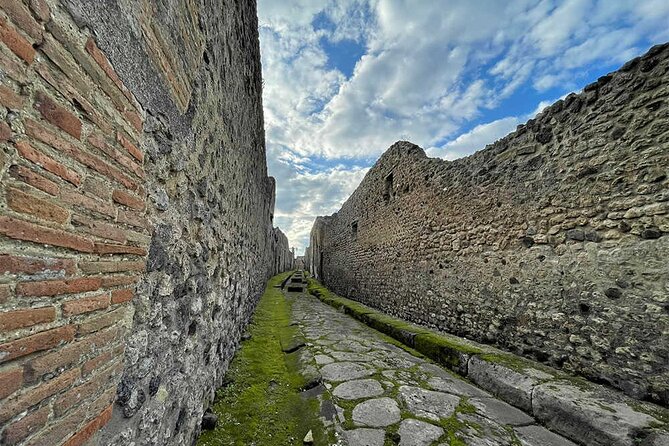
Next you’ll walk along Via dell’Abbondanza, one of Pompeii’s most telling streets. This is where the ruins start to feel personal, because it’s not just temples and big civic buildings. This road had houses, apartments, businesses, and workspaces for people across social classes.
That mixed-use idea is powerful. You can stand on one street and see that Pompeii wasn’t only for the rich or only for the official elite. The road was the commercial and social spine of daily life, and it also included grand public buildings and shrines. In a few blocks, your guide can help you connect where you’re standing with what people were doing there.
Why this stop is worth your time:
- It helps you picture Pompeii as a working city with storefronts and routines.
- It gives context for how neighborhoods, status, and jobs could exist side by side.
- You get a sense of scale that you cannot get from a single courtyard or monument.
Your tour time here is about 45 minutes, and ticket access is included for this part of the experience. That means you can focus on walking and listening instead of managing extra entry moments.
If you like history that feels concrete, this is one of the best stops. It’s easier to imagine a weekday on Via dell’Abbondanza than it is to imagine the same kind of detail inside an empty ruin.
A few more Pompeii trips worth comparing
- Pompeii Ruins Private Tour with Optional Skip-the-Line Entry
★ 4.9 · 732 reviews - Pompeii private tour with an Official Guide
★ 5.0 · 631 reviews - Pompeii Private Tour with an Archaeologist and Skip The Line – 3 hours
★ 5.0 · 564 reviews - Visit in Pompeii – Pompeii Private Tour with Ada
★ 5.0 · 436 reviews
Stop 3: Stabian Baths (Terme Stabiane) and how Roman bathing worked
The final major stop is the Stabian Baths (Terme Stabiane). This is one of the oldest Roman bath complexes we know, with parts dating back to the 2nd century BC. Baths might sound like a niche topic until you see how complete the spaces are and how the route through the rooms teaches you the logic of daily life.
Your tour includes walking through the bath sequence, including:
- the apodyterium (dressing room)
- the frigidarium (cold bath)
- the tepidarium (medium temperature)
- and the caldarium (hot bath)
That order is the key. The Roman bathing routine wasn’t random. It was a progression, and moving from one room to the next helps you understand how people cooled down, warmed up, and used the bathing area as more than just a place to wash.
What I think you’ll appreciate here is that the baths tell a story about comfort, health, and community. Even if you’re not a bathing-culture fan, the architecture makes the routine easy to grasp.
Time is about 45 minutes, and admission for this stop is included. That can make budgeting simpler, but still watch for the separate Pompeii site entry fee, which is listed as €18 per person.
Wear comfortable shoes for this part. Stone floors in ancient sites can be uneven, and you’re going to be walking steadily.
Mt. Vesuvius and AD 79: how the tragedy fits the places you see
The tour doesn’t just point at ruins. It ties your walk to the larger story of Mount Vesuvius and the eruption of AD 79. That matters because Pompeii is not simply old buildings. It’s a city whose sudden end froze everyday scenes in place.
The most effective way to experience that context is to listen for how your guide connects what you’re seeing to what a city would have looked like before the eruption. When you’re standing in a bath complex, it’s easier to imagine people preparing for their daily routine. When you’re on Via dell’Abbondanza, it’s easier to picture regular customers, shopkeepers, and workers moving along the same road.
I’d treat this part like a mental map. Don’t worry about memorizing every detail. Instead, keep one simple thought in mind: Pompeii was a complete city with public entertainment, social streets, and everyday habits, and the eruption ended it abruptly. Your stops give you the three anchors that make that reality feel real.
Price and tickets: what $216.27 per group really means
The price is $216.27 per group for up to 8 people, and the tour lasts about 2 hours. That private-group setup changes the value equation a lot.
If you’re traveling solo, it can feel pricey compared to a public group tour. But split between even a couple of people, it starts to make more sense, because you’re paying for guidance and pace control, not just entry into a few rooms. If you’re a family or a small group, this is where it often looks best.
What’s included:
- Private guide
What’s not included:
- Pompeii archaeological site entrance fee is €18 per person
- Amphitheatre admission is not included (you’ll need to plan for that)
Also, the tour indicates that Via dell’Abbondanza and the Stabian Baths are included in terms of access/tickets. So the “extra cost” is mainly about the main site entrance and any amphitheatre ticket handling.
Practical advice: before you go, do a quick math check using your group size and the €18 per person site fee. Then add any amphitheatre admission you expect you’ll need to pay. You’ll feel better once you know the total.
Who should book this Pompeii private tour, and who may want more time
This tour is a great match if:
- It’s your first time in Pompeii and you want the essentials without wandering aimlessly
- You care about context, not just photos
- You’re traveling with up to 8 people and want everyone to move together
- You want a guide who can answer questions while you walk between sites
It may be less ideal if:
- You want to spend half-days exploring a wide range of Pompeii highlights beyond these three focus areas
- You tend to take very slow breaks, because two hours goes by quickly
Because it includes both entertainment and daily life, it also suits a broad mix of interests. If you’re into Roman culture, the bath sequence is a standout. If you’re into social history, Via dell’Abbondanza pulls its weight.
Tips to make the most of your 2 hours in Pompeii
Two hours means you should show up ready to work your time. Here’s how to get more out of every minute:
- Arrive a few minutes early at Piazza Immacolata, 2 so you start smoothly.
- Wear sturdy, grippy shoes. Ancient stone paths can be slick or uneven.
- Bring a light layer if the weather flips, and a small bottle of water if you’re visiting in hotter months.
- Ask your guide one good question early, then let them steer you. Private tours get best when you participate.
- On Via dell’Abbondanza, try to notice the idea of mixed spaces, homes and shops together. That’s the whole point of the street.
Also, keep your expectations realistic. This isn’t a whole-day Pompeii deep dive. It’s a focused route that helps you understand the city through three powerful lenses.
Should you book this private Pompeii tour?
Yes, I’d book it if you want a tight 2-hour Pompeii experience with a private English guide and a route that covers entertainment, street life, and bathing culture in a single morning or afternoon window. The value is strongest for small groups up to 8, and the pacing suits first-timers who feel overwhelmed by the scale of Pompeii.
I’d think twice only if you know you want to linger for hours, or if your top priorities are Pompeii’s biggest “must-see” sites beyond this specific three-stop focus. For many people, though, this is the kind of guided visit that gives you the clearest picture fast, while still feeling personal.
If you want, tell me how many people are in your group and what time of day you’re thinking of going, and I’ll help you figure out whether the amphitheatre ticket part is worth budgeting in right away.
Recently reviewed around Pompeii
- Mt. Vesuvius Wine Tasting and Lunch Experience from Pompeii★ 4.5 · 20 reviews
- Pompeii Small Group with an Archaeologist and Skip The Line★ 5.0 · 121 reviews
- Pompeii from Afternoon to Sunset★ 5.0 · 108 reviews
- Private Guided Tour and VR Headsets in the Ancient Pompeii★ 5.0 · 3 reviews
- Visit Pompeii with a local expert guide★ 5.0 · 10 reviews
- Traditional Neapolitan Dinner in Pompei – Villa Franca – Family Restourant★ 5.0 · 8 reviews
- Discover Pompeii on this Guided Walking Tour of the Buried City★ 4.0 · 9 reviews
- 2 Hours Private Walking Tour in Pompeii with an Archaeologist★ 5.0 · 15 reviews
Pompeii Tours, compared.
Entry Ticket and Guided Tour with an Archaeologist
Read our review →

Pompeii Small Group Tour with an Archaeologist
Read our review →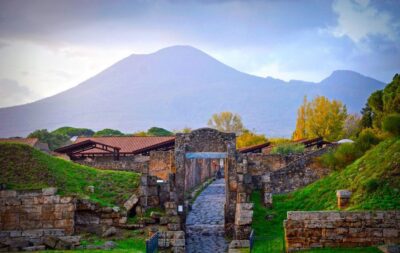
Skip-the-Line Entrance Ticket with Audio Guide
Read our review →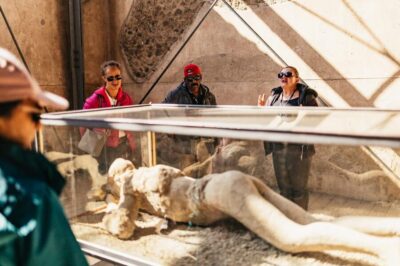
Pompeii and Mt. Vesuvius with Lunch and Wine Tasting
Read our review →
Archaeological Park Tour with Ticket on request
Read our review →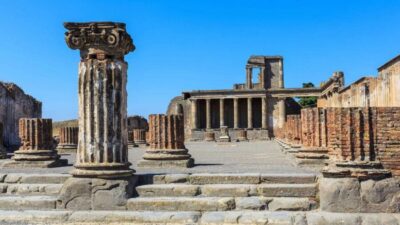
Browse the lists this tour appears in