Reviewed · POMPEII TOURS
Pompeii tour with archaeologist
Pompeii can feel like a giant outdoor puzzle. This tour helps you solve it fast, with an archaeologist guiding you through the city’s major story beats from the Forum to the darker corners like the Lupanar. I like that it is structured, not random, so you stop long enough to understand what you are seeing and then move on.
Two things I love: you get an archaeologist-style narrative (not just plaque reading), and the group stays small, with a maximum of 15 travelers. One thing to consider is that entrance fees are listed as not included, even though many stops are marked as free in the schedule, so it is smart to double check what you personally need when you arrive.
Key highlights you will actually feel
- Archaeologist-led route that links buildings to real daily life and the 79 AD eruption story
- Small group size (15 max), so questions do not vanish into the crowd
- Forum first, Lupanar last approach, which makes Pompeii’s social system easier to grasp
- Well-paced stop lengths (often 5 to 15 minutes) that fit a 2.5 hour visit without rushing
- End in the Pompeii Forum area, so you can keep exploring on your own if energy allows
- Language options including English, plus a mobile ticket you can keep on your phone
Pompeii, organized: why this 2.5-hour archaeologist walk makes sense
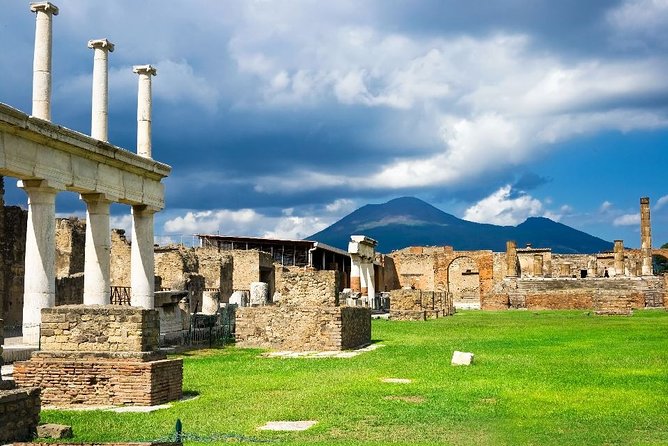
If you have only a short time in Pompeii, you need a plan. Pompeii is big, and the streets look similar until someone points out the logic. This tour does that work for you, with a sequence that starts at the civic core and steadily works through religion, commerce, homes, baths, and entertainment.
You also get the right kind of context. The guide is there to explain why buildings existed, who used them, and what people believed. That matters because Pompeii is not just ruins. It is a snapshot of a living city, frozen in time by the eruption of 79 AD. When your guide connects details like inscriptions, altars, and room layouts to human behavior, the site becomes easier to remember.
More Pompeii tours to compare:
- Pompeii: Entry Ticket and Guided Tour with an Archaeologist
★ 4.8 · 19,459 reviews - Pompeii: Entry Ticket with Optional Audio Guide
★ 4.2 · 12,360 reviews - Pompeii: Small Group Tour with an Archaeologist
★ 4.8 · 12,264 reviews
Price and value: $42.01 for 14 stops is not just a “cheap tour”
At $42.01 per person for about 2 hours 30 minutes, this is aimed at value: you are paying for interpretation and time-saving structure. You are not paying for a long day. You are paying for someone to help you see what you would otherwise miss or misunderstand.
The big value question is always the same: does the guide make the site clearer? The review notes about Pina Esposito are consistent on one point: her explanations put buildings into context and help people understand how ideas about Pompeii have evolved. That is exactly what you want for Pompeii, because new research changes the way certain sites get explained.
One more practical value point: the tour is limited to 15 travelers, which usually means fewer people to filter your questions through. If you like asking “why” questions, this size helps.
Just keep in mind the tour does not list an included entrance fee. Also, while many stops are marked as free admission in the schedule, you should still verify what you personally need at the gate.
Meeting point at Villa dei Misteri, ending at the Forum: logistics that save energy
The tour starts at Pompei Scavi Villa Dei Misteri, 80045 Pompei, and it ends at the Foro di Pompei, so you can stay inside the excavations afterward if you want. That end point is useful because the Forum area is one of the easiest places to continue exploring without mentally rebooting your route.
Hours are listed as 9:00 AM to 7:30 PM for the operating window shown. The tour also requires good weather, so plan your day with flexibility. Bad weather in Pompeii means wet stone paths and slower walking, and you do not want your visit chopped up by discomfort.
Also, you will be near public transportation. That matters if you are bouncing between Naples and Pompeii and trying to keep the day efficient.
Stop by stop: the Pompeii Forum storyline that sets everything up
This tour starts at the civic heart, and that is a smart move. When you understand how Pompeians organized public life, later stops like baths and theaters start to make more sense.
Same stretch of coast, a completely different day out:
- Pompeii Small Group Tour with an Archaeologist
★ 5.0 · 6,593 reviews - Pompeii: Skip-the-Line Entrance Ticket with Audio Guide
★ 4.0 · 2,509 reviews - Naples: Pompeii and Mt. Vesuvius with Lunch and Wine Tasting
★ 4.5 · 2,454 reviews - Pompeii: Archaeological Park Tour with Ticket on request
★ 4.5 · 2,283 reviews
Foro di Pompei
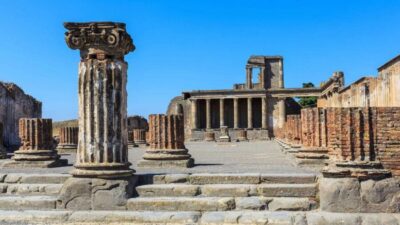
You begin at the Foro di Pompei, where the guide connects Pompeii’s origins to the dramatic moment of 79 AD. This is not just “look at columns.” It is about how the Forum functioned as a power and community center. Even if you have seen other ancient forums, Pompeii’s layout makes the theme feel different, because it is so closely tied to everyday Roman city life.
Best part: it is where the big story begins, and you can orient your brain before walking deeper into the city.
Possible drawback: if you already feel confident with Roman civic architecture, the first part may feel a bit introductory. Still, it pays off later.
Granai del Foro
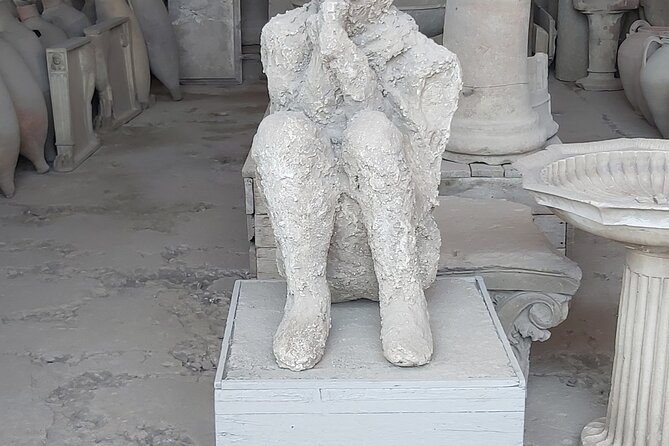
Next are the Granaries of the Forum, where the guide explains what was stored and why it mattered. This is a good stop because it takes you from “big politics” to “food logistics.” The highlight here is how finds connect to the eruption aftermath, including plaster casts of victims. That adds a sobering human scale to what could otherwise stay abstract.
Pompei La Basilica
At the Basilica, the guide explains why it existed and what activities it hosted. In Roman cities, basilicas often served civic and commercial roles, and Pompeii’s is one of the most monumental buildings you will see in this stretch. When your guide points out functions, you notice architectural details that are easy to miss on your own.
Temple of Apollo
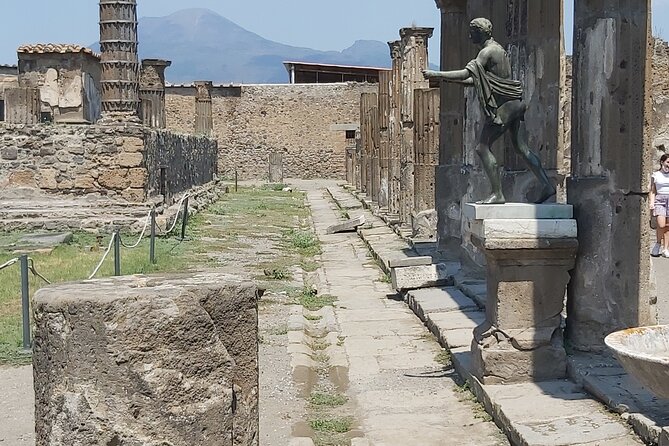
The Temple of Apollo is where you get a taste of ancient religious design, not just a pretty façade. Expect an emphasis on original finds and details tied to worship: sculptures, altar elements, inscriptions, columns, a fountain, and even a Roman sundial. If you like religion-as-architecture, this is one of the more rewarding stops in the itinerary.
Hotel Vittoria
Then you move to the Hotel Vittoria, described as an ancient gateway to the city and the surrounding area. Think of it as a “threshold” moment. The city starts to feel like it has entrances, movement, and zones rather than being one flat ruin.
From mosaics to real homes: Cave Canem and the House of the Faun
After the Forum core, the tour pivots into more personal Pompeii. This is where you start noticing taste, wealth, humor, and how people advertised identity.
Pompei Il Mosaico Cave Canem
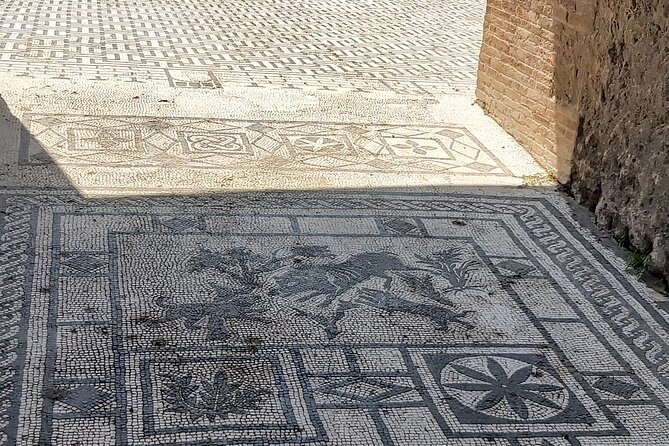
The Cave Canem mosaic sits at the entrance of the House of the Tragic Poet. Yes, it is famous for a reason. But the best way to view it is as a cultural clue: a warning sign, a joke, a statement. A guide helps you see it as part of daily life, not just a museum object.
Casa del Fauno
Next is the House of the Faun, the largest house in Pompeii on this route. The guide highlights the history of the house and then zeroes in on what was found there, including the bronze sculpture of the dancing Faun. This stop also features the massive Mosaic of the Battle of Alexander, made of more than a million tiny colored tiles.
If you remember one thing from this part: this is how Roman wealth showed itself. Not only through size, but through art that broadcast taste and status.
Daily life in a hurry: Thermopolium and what people ate
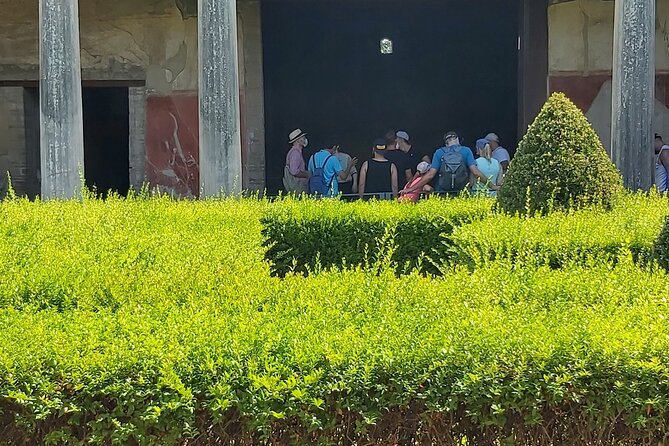
One stop that makes Pompeii feel practical is the Thermopolium (Regio VI, Insula VIII, 8). A thermopolium was an ancient fast-food spot, and this guide explains how that setting connects to social life and nutrition.
Even in 10 minutes, the value is big. A lot of Pompeii tours skip the food and go straight to temples and rich villas. This one keeps pulling you back to daily routines.
Imperial messaging: Temple of Vespasian and Roman power culture
Temple of Vespasian (also called temple of Genius Augusti)
At the Temple of Vespasian, the guide explains the imperial cult, basically how Roman emperors and the imperial system were honored through religion. That can sound like a lecture topic, but in Pompeii it becomes concrete because you are standing next to the physical places where those messages were displayed.
If you have ever wondered how “politics” and “belief” mixed in everyday life, this stop answers that question.
Via dell’Abbondanza and the road logic of Pompeii
Via dell’Abbondanza
The Via dell’Abbondanza stop focuses on streets and urban planning. You learn how the road network shaped movement and how the city layout worked. This is not flashy, but it is useful. Once you understand the grid, Pompeii becomes less like random walls and more like a functioning city with patterns.
Theater district highlights: Teatro Grande and the entertainment zone
Teatro Grande
The tour enters the Theater District area, with a focus on the Teatro Grande and nearby theater structures. The guide also points you toward the Teatro Piccolo and the Quadriportico dei Teatri. These spaces show that entertainment was a serious civic function, not optional downtime.
If you like architecture or you enjoy watching how cities shaped public behavior, the theater stops are a strong pairing with the imperial cult stop earlier. Together, they show how Romans organized both worship and leisure.
Oldest temple remains and Roman city layers: Doric Temple and the Triangular Forum
Doric Temple
The Doric Temple is presented as the oldest temple in Pompeii, with a short stop that still helps you feel the layers of the city. You also get the Triangular Forum called out in this area.
This is one of those “quick hits” that rewards you if you like comparing old versus new urban planning. If you prefer deep, unbroken stories, you might want longer time here, but the overall tour timing keeps the momentum.
The Stabian Baths: where Pompeii shows its social rhythm
Stabian Baths (Terme Stabiane)
Next is the Stabian Baths, highlighted as an extraordinary ancient thermal building. Baths were more than hygiene. They were gossip hubs, social spaces, and part of daily routine.
When the guide explains the building’s role, you start noticing how space design encourages movement and interaction. Ten minutes might sound short, but baths tend to leave strong visual impressions because the layout is so functional.
The Lupanar: why this stop feels intense
Lupanar
The final major stop is the Lupanar, described as Pompeii’s most spectacular example of an ancient brothel, famous for its conservation of bedrooms and erotic frescoes depicting sexual positions.
This stop can be emotionally heavy, even if you are not squeamish. I like that the tour does not pretend this topic is cozy. It is there because Pompeii shows real life, including the commerce of sex and the architecture built to support it.
Practical note: if you prefer your ancient history cleaner and more comfortable, this is the stop to think about most. You will see it, but the guide’s framing matters.
Pace, questions, and comfort in the real world
A 2.5 hour tour with 14 stops means you are moving and you are not overthinking each moment. The typical stop lengths range from about 5 to 15 minutes, so you get attention without getting stuck.
One detail that shows up in the reviews about archaeologist-style guiding is responsiveness. Pina Esposito is described as answering questions and being attentive to personal needs like water and bathroom breaks, plus mentions of small comforts such as coffee and ice cream. That does not mean you should assume anything will be handed to you, but it does suggest the guide is not running a robotic script.
What you should do:
- Wear shoes you can walk in on uneven stone.
- Bring water even if you can access it nearby.
- If you have mobility constraints, plan around the fact that Pompeii is outdoors and ground surfaces are irregular.
Should you book this Pompeii archaeologist tour?
Yes, if you want a fast, structured Pompeii visit that helps you understand what you are looking at, this is a strong fit. The best reason to book is the combination of archaeologist-led interpretation and a small group. In a short time, you see major anchors like the Forum, Temple of Apollo, Casa del Fauno, Stabian Baths, and the Lupanar, and you get a narrative that connects them.
I would think twice if you want a slow, wandering museum experience with zero uncomfortable topics. This route is built to cover a lot, and it includes adult subject matter.
If your day in Naples is busy and you want Pompeii to feel clear rather than chaotic, book it. Then, once the tour ends at the Forum, stay a bit longer if you want to put your new context to work.
Recently reviewed around Pompeii
- Mt. Vesuvius Wine Tasting and Lunch Experience from Pompeii★ 4.5 · 20 reviews
- Pompeii Small Group with an Archaeologist and Skip The Line★ 5.0 · 121 reviews
- Pompeii from Afternoon to Sunset★ 5.0 · 108 reviews
- Private Guided Tour and VR Headsets in the Ancient Pompeii★ 5.0 · 3 reviews
- Visit Pompeii with a local expert guide★ 5.0 · 10 reviews
- Traditional Neapolitan Dinner in Pompei – Villa Franca – Family Restourant★ 5.0 · 8 reviews
- Discover Pompeii on this Guided Walking Tour of the Buried City★ 4.0 · 9 reviews
- 2 Hours Private Walking Tour in Pompeii with an Archaeologist★ 5.0 · 15 reviews
Pompeii Tours, compared.
Entry Ticket and Guided Tour with an Archaeologist
Read our review →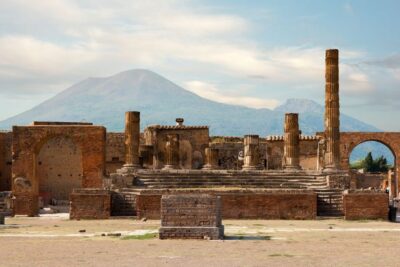
Pompeii Small Group Tour with an Archaeologist
Read our review →
Skip-the-Line Entrance Ticket with Audio Guide
Read our review →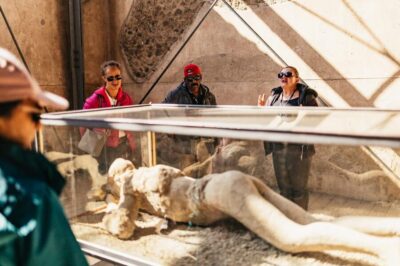
Pompeii and Mt. Vesuvius with Lunch and Wine Tasting
Read our review →
Archaeological Park Tour with Ticket on request
Read our review →