
Reviewed · POMPEII TOURS
Pompeii: Guided Tour & Skip the Line Ticket
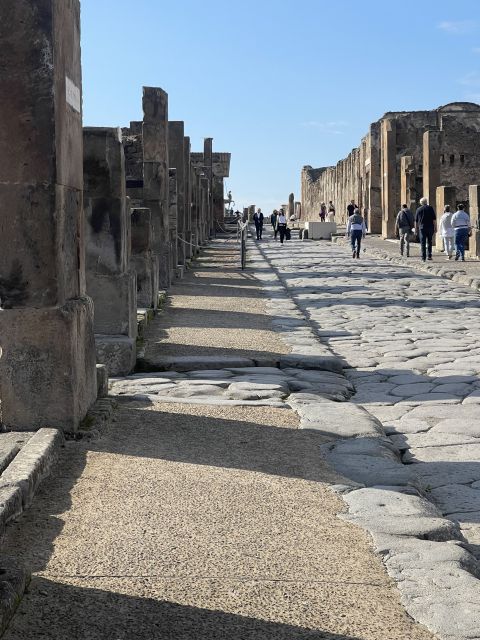
Pompeii is the kind of place that makes time feel fake. One moment you are walking along Roman streets, and the next you understand how a single day in 79 AD preserved whole neighborhoods under volcanic ash.
What I really like is the combination of a guided walk and skip-the-line entry. With guides such as Giulia, Gennaro, and Sasà, you get clear explanations of daily life, plus the myths and beliefs Romans brought into their public spaces and homes. The other big win is how smoothly you enter, since you are using a separate entrance instead of waiting in the most frustrating line.
One possible drawback to consider: Pompeii requires steady walking on uneven, historic surfaces for about a 2 hour visit. It is not a good fit if you use a wheelchair, have motion sickness, or have pre-existing medical conditions.
Key things to know before you go
- Skip-the-line entrance means less waiting and more time inside Pompeii
- A guided 2-hour walk helps you connect streets, buildings, and everyday Roman life
- Forum + major houses + baths give you a strong mix of public and private Pompeii
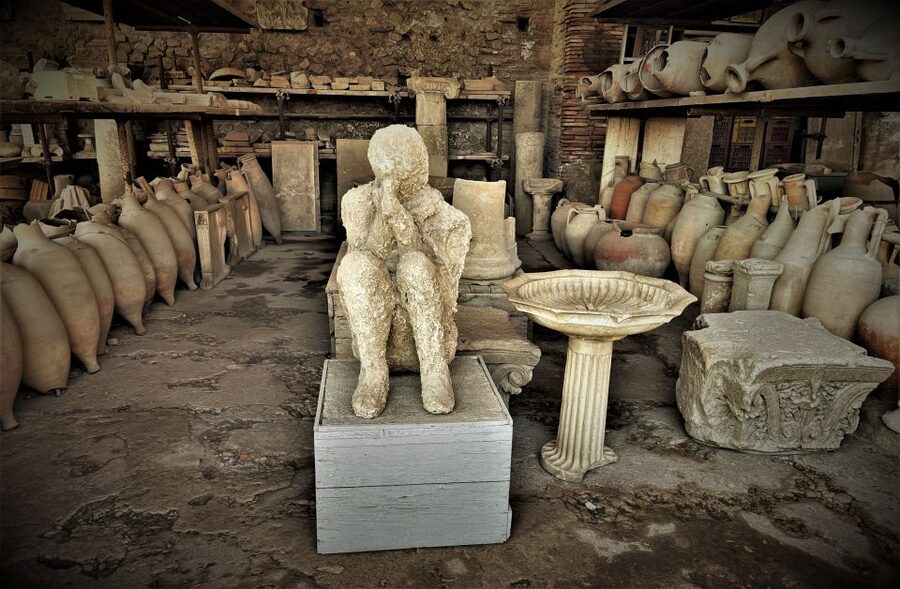
- Vesuvius day explained so you understand why Pompeii looks the way it does today
- Small group options help the experience feel personal and question-friendly
Pompeii’s freeze-frame effect, and why a guided entry changes everything
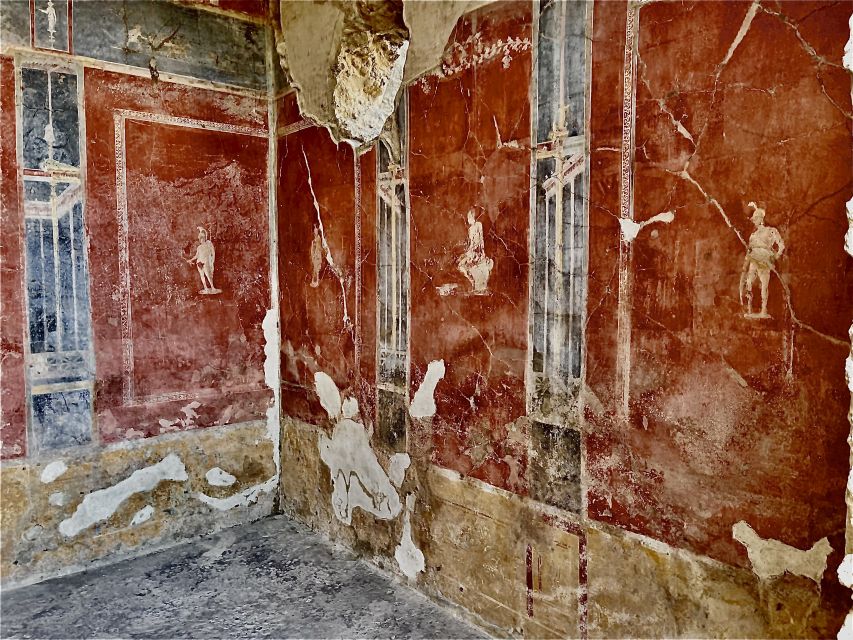
Pompeii works on you fast. The city layout is still legible, from the street grid to the way people moved between public life and home life. Without context, you can see ruins and still feel like you are looking at random stones. With a guide, the same stones become a story you can follow.
This tour is built for that exact moment when Pompeii clicks. You are not just passively reading signs. You are walking the ancient streets while someone connects what you are seeing to what was happening in Roman society, including how the eruption of Mount Vesuvius preserved the city under volcanic ash.
The skip-the-line part matters more than it sounds. Pompeii is popular, and lines can turn your day into a waiting game. Here, you use a separate entrance, so you start your visit with momentum rather than frustration.
More Pompeii tours to compare:
- Pompeii: Entry Ticket and Guided Tour with an Archaeologist
★ 4.8 · 19,459 reviews - Pompeii: Small Group Tour with an Archaeologist
★ 4.8 · 12,264 reviews - Pompeii: Skip-the-Line Entrance Ticket with Audio Guide
★ 4.0 · 2,509 reviews
Meeting at Ristorante Bar Sgambati and getting to the action
You meet at Ristorante Bar Sgambati before entering the Pompeii Archaeological Site. It is a practical setup, especially if you are arriving by train, since getting oriented to the meeting point tends to be straightforward.
I also like how the start is handled. Guides aim to begin as soon as everyone is ready, and you should expect punctual timing once the group is assembled. If you get delayed or have trouble locating the group, there are examples of guides calling or messaging to help you catch up. That kind of flexibility reduces the typical stress of a tight meeting time.
Once you’re in, your time stays protected. A 2 hour visit is not enough to wander randomly and still feel satisfied, so the tour format helps you spend your limited hours on the most meaningful stops.
The core experience: streets, Roman daily life, and what happened on Vesuvius day
The walking portion is where the tour becomes more than a list of attractions. You move along the ancient streets and the guide frames what you see in terms of daily routines. That includes how Romans used spaces that were public, semi-public, and private.
Early on, you will get the story of the eruption that changed everything. The city was buried under volcanic ash after the catastrophic eruption of Mount Vesuvius in 79 AD. As you walk, you are basically learning a timeline in physical form: the layout of the city, then the stillness that followed, then the present-day remains.
What makes this section valuable is how it turns guesswork into understanding. For example, you might notice an architectural feature and wonder what it was for. On a guided walk, you get explanations tied to how Romans lived, believed, and gathered. It is the difference between looking at Pompeii and actually reading it.
The Forum stop: Pompeii’s public heartbeat
The Forum is often the best place to start understanding the city as a functioning urban center. It was a gathering point, where people came together for public business and community life.
On this tour, the Forum is not treated like a quick photo stop. You get context for why this space mattered, how public religion and public life mixed, and what the layout suggests about movement and social priorities. If you only visit ruins by yourself, you may miss how these civic spaces created a shared rhythm for everyone living there.
Potential drawback to keep in mind: the Forum is also a busy focal point within the site, so you will want to pay attention to what your guide is explaining rather than drifting toward wide open views. The best payoff comes when you listen for how the place connected to Roman identity, not just when you look at the stones.
A few more Pompei Campania trips worth comparing
- Pompeii: Skip-the-line-Ticket and Guided Tour
★ 4.6 · 1,152 reviews - Pompeii: Skip-the-Line Entry Ticket with Digital Guide App
★ 4.1 · 770 reviews - Pompeii: Afternoon to Sunset Guided Tour with Ticket
★ 4.9 · 484 reviews - Pompeii: Skip-the-Line Ticket with Audio Guide and Map
★ 4.0 · 117 reviews
House of the Tragic Poet: domestic life with a personal lens
Homes in Pompeii can feel like museums until you understand what you are seeing. The House of the Tragic Poet helps with that shift because it is tied to how Romans structured private life around their households.
During your visit, you will move through areas that help explain how daily activities unfolded inside a Roman home. The guide’s job here is important. Pompeii is visually impressive, but it can also be confusing, especially with rooms that feel similar at first glance. A good guide points out what to notice, how spaces were likely used, and what details suggest about household culture.
If you are traveling with family, this is also a strong stop. The dramatic name grabs attention, and the guide can make the explanations stick without turning it into a lecture. Kids tend to enjoy it when the story connects to people, not just architecture.
House of the Golden Cupids: art, taste, and what households valued
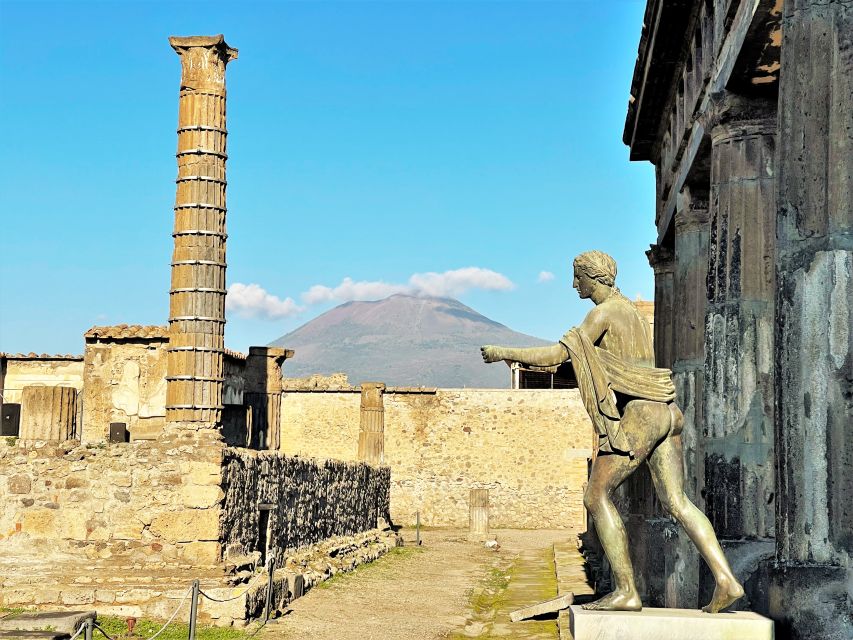
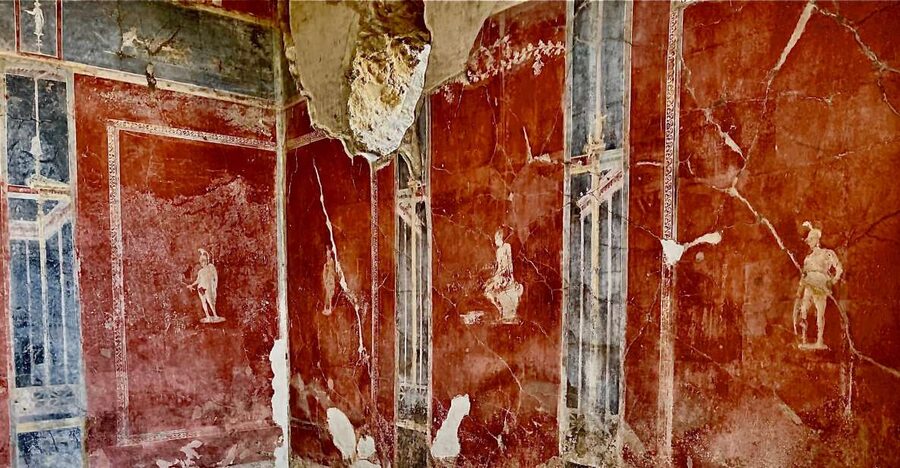
Another highlight is the House of the Golden Cupids, one of the famous Pompeian homes tied to distinctive decoration. Here, the tour becomes a look at personal taste in the Roman world.
What I like about including a decorated house on a short, 2 hour tour is that it balances the civic story with the intimate one. The Forum shows you how Romans presented themselves in public. A richly detailed home stop helps you understand what they valued in private, including how art and symbolism could express beliefs and status.
This is also a section where you might find yourself slowing down, because it is easier to spot why certain spaces were designed the way they were. Still, try not to get stuck in long sightseeing loops. The homes are part of a sequence, so follow your guide’s flow to avoid missing other key buildings.
Stabian Bath: the practical side of Pompeii
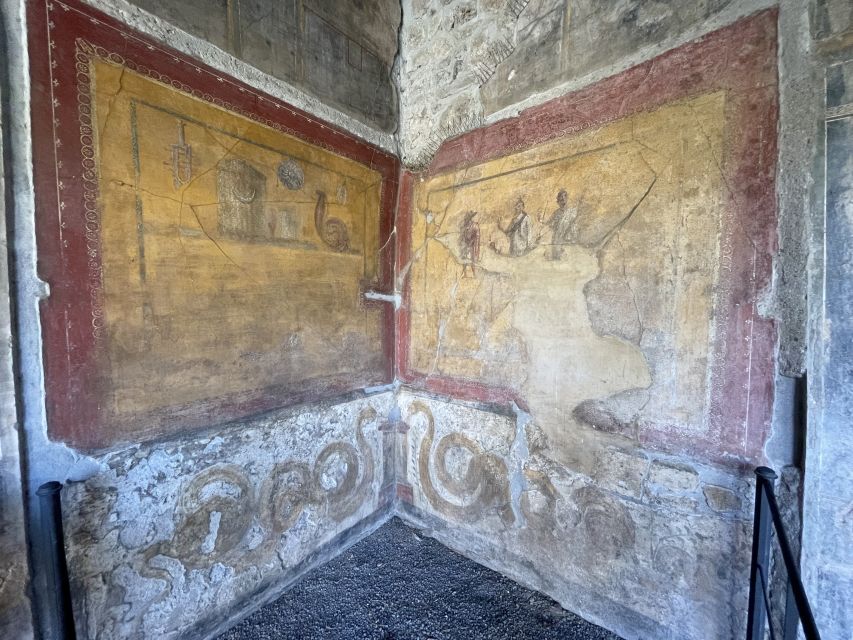
The Stabian Bath adds another dimension to the day. It is not a house, and it is not the Forum. It is part of Pompeii’s public service world, tied to hygiene, leisure, and social time.
Including a bath stop is smart because it shifts Pompeii from storybook to real-life routine. A Roman bath was a place where people spent time, interacted, and maintained their sense of normal daily life. When you see bath-related architecture in context, you start to grasp how structured the city’s social habits really were.
One note for your planning: bath areas can be visually busy, with many architectural elements close together. If you try to process it all alone, you might miss the main idea. Let your guide do the sorting while you keep your eyes open for the big features they point out.
How the guide keeps the tour feeling smooth, even when the site is big
Pompeii is large. Even with skip-the-line entry, you are still dealing with a famous archaeological site that takes time to understand. That is why this tour leans on a guided structure and a small group approach.
A few details that stand out from how guides run these tours:
- Starting quickly once the group is ready, sometimes a little early
- Keeping a steady pace so you finish punctually
- Answering questions thoroughly, not with vague one-liners
- Helping you get your bearings so you do not feel lost
One fun extra that can be surprisingly useful: some guides also take care to point out photo-friendly spots, including places that work well for quick social shots. It is not the main purpose of the tour, but it is a nice bonus when you want a few solid pictures without wandering off course.
Timing, comfort, and who this 2 hour format fits best
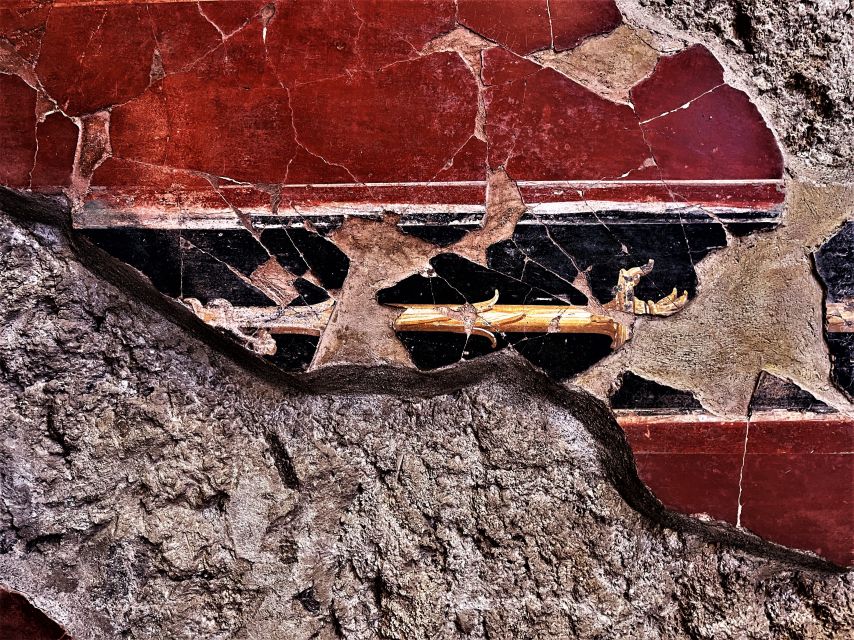
This experience is 2 hours with a guided component and a walk through the archaeological site. The short duration is a feature, not a flaw, as long as you plan for it. You are choosing a curated overview rather than an all-day self-paced marathon.
This tour is a good match if you:
- Want to see the big highlights without getting stuck in logistics
- Prefer learning through conversation and context while you walk
- Appreciate a mix of public spaces and home spaces
It may be a poor match if you:
- Need wheelchair accessibility (this tour is not suitable for wheelchair users)
- Have motion sickness concerns (it is not suitable for people with motion sickness)
- Have pre-existing medical conditions that affect mobility or stamina
Comfort is practical here. Wear comfortable shoes and clothes you can walk in for the duration. Pompeii surfaces can be uneven, and you will be doing enough walking that feeling prepared matters.
Price and value: is $60 worth it?
At $60 per person, this tour sits in the middle ground for Pompeii experiences, but the real question is value. You are paying for two things that save you stress and time: skip-the-line entry and a 2-hour guided tour.
If you tried to do Pompeii on your own, you would still need to plan timing, choose what to see, and figure out how to connect buildings into a coherent story. Even if you can read signs, the value of a guide is that you save mental energy. Instead of guessing, you follow someone who can point out what matters and why.
Then there is the time piece. A guided, skip-the-line format helps you protect your schedule. If your day in the Campania region is tight, getting into the site efficiently can be the difference between enjoying Pompeii and feeling rushed.
What to bring for Pompeii so nothing distracts you
You will have a much better time if you show up ready to move. Bring:
- Comfortable shoes
- Comfortable clothes
- Weather-appropriate layers
For identification, a passport or ID card is required, and a copy is accepted. I also recommend carrying a small bottle of water and a snack if that works for your comfort, even if the tour does not include food or drinks.
And one more practical tip: set expectations for the experience. This tour is designed for highlights and context. If you want to read every wall carving and spend extra time in each room, you will likely want an additional self-paced visit after the tour.
Should you book this Pompeii skip-the-line guided tour?
Book it if you want a smart, time-efficient way to understand Pompeii’s layout and daily life. The mix of the Forum, major homes like the House of the Tragic Poet and House of the Golden Cupids, plus the Stabian Bath, gives you a balanced picture of public and private Roman experience. Add in guides like Giulia, Gennaro, and Sasà, and you are likely to leave with a clearer sense of how Romans lived before the eruption.
Skip it (or think twice) if you are limited in mobility, deal with motion sickness, or want an unstructured, slow day. Pompeii is a walking place, and this format is optimized for a guided highlight route.
FAQ
How long is the Pompeii guided tour?
The guided tour is listed as 2 hours.
Do you get skip-the-line entry?
Yes. You get a skip-the-line entry ticket and enter through a separate entrance.
Where is the meeting point?
The meeting point is Ristorante Bar Sgambati.
What languages are available for the live guide?
The live tour guide is available in English and Italian.
Is this tour suitable for wheelchair users or people with motion sickness?
No. It is not suitable for wheelchair users, and it is not suitable for people with motion sickness. It is also not suitable for people with pre-existing medical conditions.
What do I need to bring?
You should bring comfortable shoes and weather-appropriate clothes, plus a passport or ID card (a copy is accepted).
Recently reviewed around Pompei Campania
- From Sorrento: Pompeii with an Archaeological Guide & Ticket★ 4.6 · 19 reviews
- From Positano: Pompeii Ruins Small Group Guided Tour★ 4.8 · 82 reviews
- Pompeii Positano Amalfi Day Trip from Rome by Car, No Bus!★ 5.0 · 5 reviews
- Pompeii VIP 3h Tour: Skip-the-line with your Archaeologist★ 4.9 · 13 reviews
- Pompeii & Virtual Museum Private 2-in-1 Kid’s Tour★ 4.9 · 9 reviews
- Pompeii & Vesuvius★ 4.3 · 12 reviews
- From Naples: Pompeii Wheelchair-accessible with a Guide★ 5.0 · 8 reviews
- Pompeii Tour_Skip the line ticket + audioguide★ 4.7 · 17 reviews
Pompeii Tours, compared.

Entry Ticket and Guided Tour with an Archaeologist
Read our review →

Pompeii Small Group Tour with an Archaeologist
Read our review →
Skip-the-Line Entrance Ticket with Audio Guide
Read our review →
Pompeii and Mt. Vesuvius with Lunch and Wine Tasting
Read our review →
Archaeological Park Tour with Ticket on request
Read our review →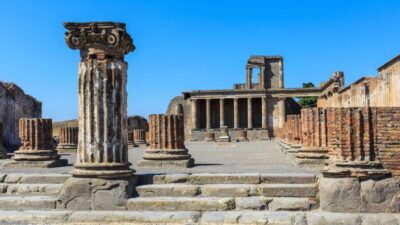
Browse the lists this tour appears in