Reviewed · POMPEII TOURS
Pompeii Archaeological Small-Group tour for 15 people
Pompeii is one of those places where you do not just look at ruins, you start reading the city like a map. This 2-hour, max 15-person route keeps the walking manageable while still hitting the big visual moments, with licensed archaeological guidance from people like Mario Celebtano and Antonella.
I love that you get a clear highlight loop instead of wandering. I also like the mix of spaces, from the Forum square to the Stabian Baths and the Lupanar, so you leave knowing how Pompeii worked day to day.
One consideration: Pompeii can get packed, especially on holiday crowd days, and then your timing can feel brisk. The good news is the guide can adjust the flow to keep things moving, but you should still plan for tight quarters.
Key Things I’d Book This for
- Max 15 people, which keeps the guide close and your questions possible
- Headsets for groups of 10 or more, so you do not strain to hear in crowds
- Pompei Express entrance ticket included, helping you avoid hassle for key entry areas
- A focused 2-hour circuit that ends inside the ruins, so you can keep exploring after
- Real Pompeii variety: streets, Forum spaces, homes, baths, a brothel, and the main theater
A 2-Hour Pompeii Plan That Feels Like a City, Not a Checklist
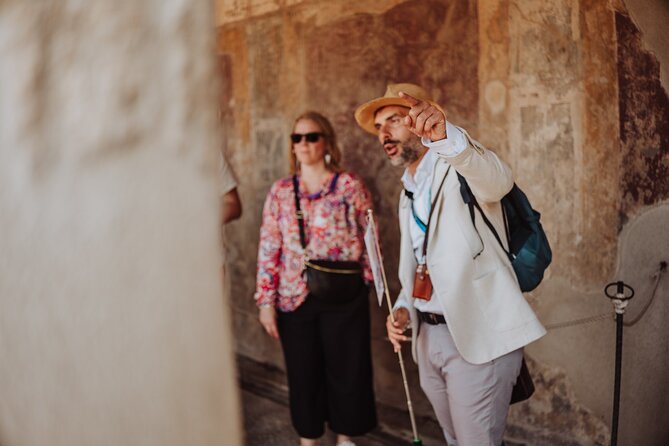
This tour is built for people who want the essentials without spending your whole day in logistics. You cover the central spine of Pompeii, then hit a sequence of buildings that show different layers of life, from civic space to private homes to public entertainment.
At about 2 hours, the pace is intense in a good way. You get enough time to absorb details, but you are not locked into a full-day program where your brain turns to soup. When the tour ends inside the ruins, you can continue on your own with a better sense of where everything is.
The small-group size matters here. With a maximum of 15, you are less likely to get swept along like a human aquarium filter. It also makes stop-and-explain moments work better.
More Pompeii tours to compare:
- Pompeii: Entry Ticket and Guided Tour with an Archaeologist
★ 4.8 · 19,459 reviews - Pompeii: Entry Ticket with Optional Audio Guide
★ 4.2 · 12,360 reviews - Pompeii: Small Group Tour with an Archaeologist
★ 4.8 · 12,264 reviews
Meeting at Via Villa dei Misteri, 2, Then Going Straight to Porta Marina
Your day begins at Via Villa dei Misteri, 2, 80045 Pompei. From there you are set up to meet the guide at the main entrance area called Porta Marina Superiore, in front of Hortus Bar & Restaurant.
The first stop is Piazza Porta Marina, where the guide handles the orientation piece fast. You start with the setting and the logic of where you are standing, and that makes everything that follows easier to place.
This is not just a scenic opener. The guide starts you thinking like an archaeologist: what is this structure for, who uses it, and what does it tell us about the city’s rhythm.
If you are coming in with questions, this is the time to ask them. Early in the route, your group is still fresh and the guide can tailor explanations to what you care about.
Vicolo delle Terme, 2: The Streets Are Part of the Story
Next you move to Vicolo delle Terme, 2, a spot tied to an open portico space. The idea here is to show how merchants and everyday activity used sheltered zones.
This matters because Pompeii is not only temples and theaters. A huge part of the lived experience happens along thresholds: arcades, porticos, street corners, and the places where people pause.
You should expect this stop to be quick, but that is the point. It gives you context for later stops, especially once you start seeing how the city funnels people through major routes.
Foro de Pompeya: Pompeii’s Main Square, in Human Scale
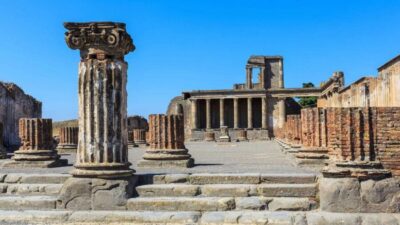
Then comes the Foro de Pompeya, Pompeii’s main square. This is the civic heart, and the guide’s job is to help you see it in terms of movement and community life.
In a guide-led format, this is one of the most efficient “big wow” stops. You get a sense of why the Forum is where power, commerce, and public events cluster.
If you like getting your bearings fast, you’ll appreciate this. Once you understand the Forum, the rest of the buildings start making more sense spatially, like you finally found the North Star on a maze map.
Same stretch of coast, a completely different day out:
- Pompeii Small Group Tour with an Archaeologist
★ 5.0 · 6,593 reviews - Pompeii: Skip-the-Line Entrance Ticket with Audio Guide
★ 4.0 · 2,509 reviews - Naples: Pompeii and Mt. Vesuvius with Lunch and Wine Tasting
★ 4.5 · 2,454 reviews - Pompeii: Archaeological Park Tour with Ticket on request
★ 4.5 · 2,283 reviews
Granaries of the Forum: Marble Tables, Fountain Details, and Casts
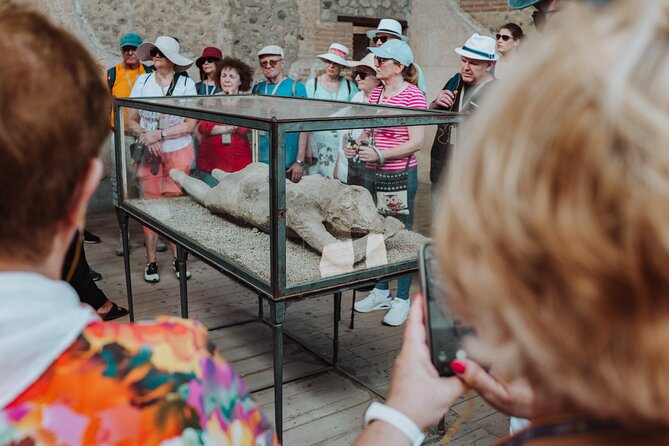
The route then shifts into the Granaries of the Forum. This stop is packed with visual clues, including marble tables and baths used for fountains that adorned entrances to houses.
It also includes casts of victims of the eruption, plus a dog and even a tree. That combination can hit hard. I like that the guide handles it with care and context, because it turns an emotional moment into something you can actually process.
A quick practical note: casts and these kinds of exhibits can make the crowd feel closer. If you are the type who prefers space, lean into the guide’s timing and avoid trying to stand in everyone’s way for photos.
Walking the Main Street: Where You Start Feeling the City’s Logic
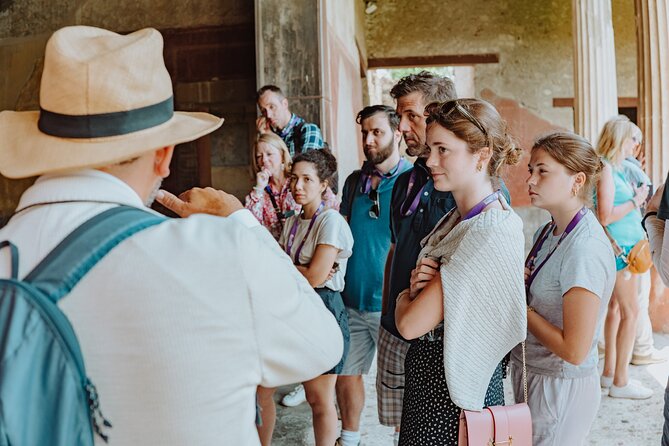
After the Forum-area stops, you walk through the main street of Pompeii. This is where the tour stops being “architecture viewing” and becomes “city walking.”
You will likely notice how streets connect key areas and how you move from public spaces toward residences and entertainment venues. Even if you are not a planner type, you come away with a mental route you can follow later.
This part is also useful if you want to tack on additional ruins after the tour. Once you understand the backbone streets, you can navigate without feeling like you are guessing.
House of Menander: Fine Decoration and the Mind of a Wealthy Roman
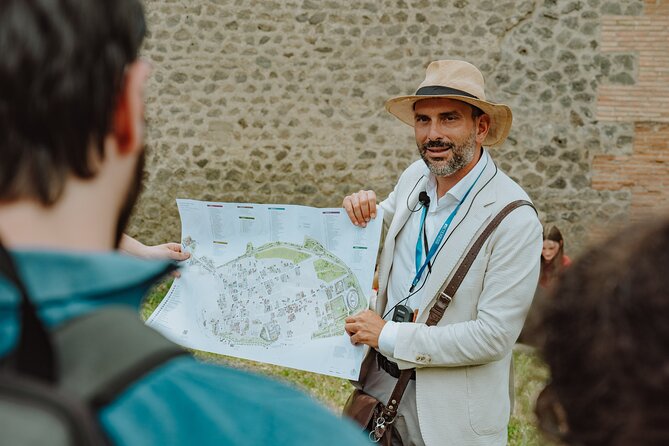
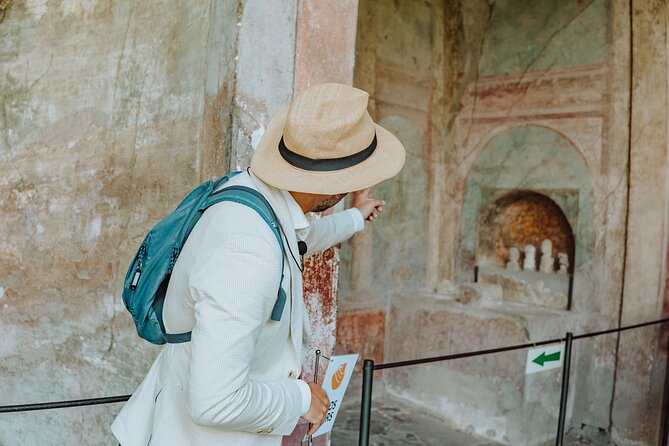
The House of Menander is one of Pompeii’s richest residences, known for architecture, decoration, and the contents that help tell the story. If you love details, this is a high-value stop.
What I like about doing a house on a guided route is that you do not just see rooms. You get help reading what the choices mean, like how decoration signals status and how space supports daily living.
This stop is about 15 minutes, so you are not stuck in slow-moving museum mode. You see the major features and you learn what to look for when you wander later.
If you travel with teenagers or older kids, this is often the moment they start saying, okay, this place was real.
Stabian Baths (Terme Stabiane): The Oldest Thermal Complex You Can Walk Through
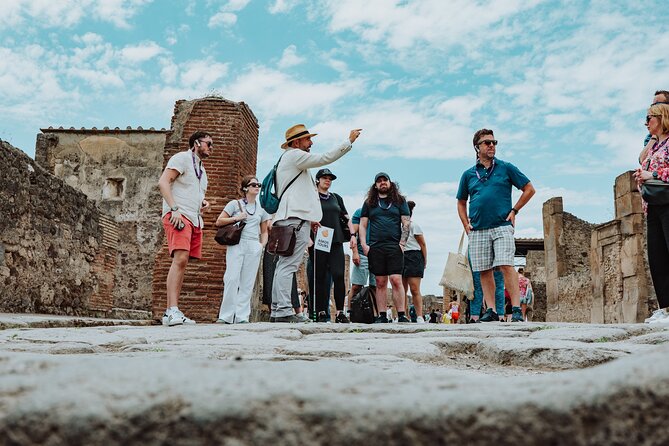
The Stabian Baths cover a huge area and are described as the oldest thermal complex in the city. Even if you are not a “bath person,” you’ll understand why Romans treated bathing as social time, not only hygiene.
You get about 15 minutes here, which means you’ll see key zones without the tour taking over your whole afternoon. Expect the guide to point out the scale and the logic of the bathing experience based on how the spaces connect.
One small reality check: baths are easy places to overheat and tire out in Pompeii’s open air. Bring water and be ready to pause mentally as you move through the rooms.
The Lupanar: Famous Pompeii Brothel, Handled as History, Not Gossip
The Lupanar stop is brief, about 10 minutes, but it is memorable because it is one of the most famous brothel sites in Pompeii. You will see what survives and learn how the space worked.
I appreciate that a licensed, archaeological-background guide keeps this grounded. This prevents the moment from turning into crude entertainment. You come away with a better sense of the city’s social edges and how different people lived their lives.
If you feel uncomfortable with the subject, it still helps to go through quickly with the guide’s framing. You are not left alone to guess what you are looking at.
House of the Faun: Big Pompeii Energy in Private Residence Form
Next is the House of the Faun, described as one of the largest and most impressive private residences in Pompeii. This is the kind of house that makes you stop and look twice, because you can feel the wealth in scale and layout.
This is also a good counterpoint to the House of Menander. Menander shows refined richness, while the House of the Faun pushes size and grandeur harder.
At about 15 minutes, you get enough time to notice standout features and to understand how a residence organized space for living, hosting, and displaying status.
Teatro Grande: The Main Theater, Built for Big Voices
The last major stop is Teatro Grande, the most important theater in Pompeii. This is where the tour gives you public entertainment in a form that people can recognize across time.
Even in ruins, theaters tell you how crowds gathered and how performances worked. You’ll likely get a sense of scale, sightlines, and the reason this space mattered to city identity.
It’s only about 10 minutes here, but it’s a strong way to end the guided portion. You finish with something dramatic and memorable, then you can continue wandering with a fresh sense of how the city staged its communal life.
Group Size, Headsets, and How to Survive Crowds
This is a small group up to 15, and for groups of 10 or more you get headsets. That matters a lot in Pompeii, where stone and crowds can turn sound into a muddled echo.
The headsets mean you can walk and listen without constantly turning your head. You also get more out of the guide’s explanations, especially at the stops where the architecture is visually complex.
If you are on a busy day, the route may feel more compressed. I’ve seen guides handle heavy crowds by changing pacing and moving the tour forward when needed. Plan to stay flexible and to trust the guide’s rhythm.
What You Pay for, and Why the Value Is More Than the Price
The cost is $77.06 per person for roughly 2 hours. For Pompeii, this is in the category of “reasonable if you care about interpretation,” not “cheap and cheerful.”
You are paying for three key things:
- A licensed guide with archaeological background, meaning you are not just hearing trivia.
- The Pompei Express entrance ticket, included, which is one less headache and usually helps time.
- Small-group handling, plus headsets when the group is larger.
Food and drinks are not included, so you should plan to purchase what you need on site. Private transportation is also not included, so factor in getting yourself to the meeting point and then to Pompeii that day.
In plain terms, this is good value if you want Pompeii to make sense. If you only want photos and minimal explanation, you might feel it is more guided than you need.
Who This Tour Fits Best
This tour is a strong match for:
- Adults who want a guided overview with real context
- Families with teens, since the sequence moves fast but stays educational
- Anyone who struggles to navigate ruins without a route
It can be a bit demanding if you want a slow, stop-everywhere pace. The stops are short and the walking is continuous. You get structure, not leisurely wandering during the guided segment.
Also, if you want Pompeii’s variety in one hit, this route does it: Forum life, residential wealth, thermal culture, and entertainment spaces.
Tips That Make the Whole Experience Smoother
Bring comfortable shoes. Pompeii is uneven, and the tour is designed to keep you moving.
Plan to dress for sun. Several of the most interesting stops are in open-air areas and courtyards.
If you want to keep exploring after the tour, stay mentally ready. The guided portion ends inside the ruins, and you’ll have a better sense of where you are when you head out on your own.
If you hit a crowded day, let the guide’s pace work for you. Trying to match the front of the group for every photo usually backfires. Watch first, photograph second.
Should You Book This Pompeii Archaeological Small-Group Tour?
I’d book it if you want the highlights without turning your day into a logistics project. The max 15 size, headsets, and included Pompei Express entrance ticket add up to a smoother experience than many “big group” options.
Skip it if you prefer a free-form, wander-only visit with minimal guidance. This tour is structured, and the short stops mean you do not get to linger in every corner.
If you are deciding, ask yourself this: do I want Pompeii explained as a working city, or do I only want ruins as photo backdrops? If you want the first, this is a very solid choice.
FAQ
How long is the Pompeii Archaeological Small-Group tour?
It runs for about 2 hours.
What is the group size?
The tour is a small group with a maximum of 15 travelers.
Is the tour offered in English?
Yes, it is offered in English.
Does the tour include an entrance ticket?
Yes. You receive the Pompei Express entrance ticket.
Are headsets provided?
Headsets are provided for groups of 10 or more.
Where do I meet the guide?
The meeting start is at Via Villa dei Misteri, 2, 80045 Pompei NA, Italy.
Where does the tour end?
The tour ends inside the ruins, in Piazza Esedra, 80045 Pompei NA, Italy. After the tour you are free to keep wandering.
What is included in the tour price?
Included are guidance for the entire duration, the Pompei Express entrance ticket, small group size (max 15), headsets when applicable, and a licensed guide with archaeological background.
Is food and drink included?
No. Food and drinks are not included.
Can I cancel for a refund?
Yes. You can cancel up to 24 hours in advance for a full refund.
Recently reviewed around Pompeii
- Mt. Vesuvius Wine Tasting and Lunch Experience from Pompeii★ 4.5 · 20 reviews
- Pompeii from Afternoon to Sunset★ 5.0 · 108 reviews
- Pompeii Small Group with an Archaeologist and Skip The Line★ 5.0 · 121 reviews
- Private Guided Tour and VR Headsets in the Ancient Pompeii★ 5.0 · 3 reviews
- Visit Pompeii with a local expert guide★ 5.0 · 10 reviews
- Traditional Neapolitan Dinner in Pompei – Villa Franca – Family Restourant★ 5.0 · 8 reviews
- Discover Pompeii on this Guided Walking Tour of the Buried City★ 4.0 · 9 reviews
- 2 Hours Private Walking Tour in Pompeii with an Archaeologist★ 5.0 · 15 reviews
Pompeii Tours, compared.
Entry Ticket and Guided Tour with an Archaeologist
Read our review →

Pompeii Small Group Tour with an Archaeologist
Read our review →
Skip-the-Line Entrance Ticket with Audio Guide
Read our review →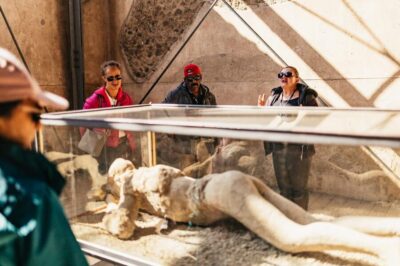
Pompeii and Mt. Vesuvius with Lunch and Wine Tasting
Read our review →
Archaeological Park Tour with Ticket on request
Read our review →