
Reviewed · POMPEII TOURS
Pompeii 2h Small-Group Tour with Expert Archaeologist
Pompeii is one of those places that feels bigger than the time you have. This 2-hour small-group tour is interesting because it turns a huge archaeological site into a focused highlights walk, without leaving you stuck staring at stone walls. I like that you get a guided route that helps you read what you’re seeing, not just pass by it. I also love that the plan concentrates on the big visual stops, the theaters, the baths, and the main square, so your visit feels efficient even if you’re pressed.
You’ll also see why guides like Luca and Roberta get such high marks from families, and why people rave about patience in the heat. The experience is family-friendly, with guides described as adapting the pace and stopping for shade when needed. One possible drawback is that two hours means some places get a shorter look than they deserve, and if your guide’s style is not your thing, you may want a longer, deeper follow-up afterward.
If you’re planning your Pompeii day from scratch, this is a practical way to get your bearings fast, then roam on your own. If you want purely technical excavation talk, you might find this is more about storytelling and key sights than full archaeology detail.
Key things I’d plan around before you go
- A 2-hour “best of” route that helps you prioritize when Pompeii feels overwhelming
- Admission included for the stops on the walk, so you’re not juggling tickets in the heat
- Theater-to-bath-and-forum sequence that shows how daily life, entertainment, and commerce fit together
- A guide-driven experience with strong praise for pacing, humor, and keeping kids engaged
- Up to 30 people max, so pick a departure that feels right for how you like to move
- Mobile ticket and a clear meeting point at Ristorante Suisse near Piazza Esedra
Why this 2-hour Pompeii format works
Pompeii can chew up a full day, no problem. But if your schedule is tight, you still want more than a random walk and a few photos. This tour is built for that middle ground: enough time to connect the dots, not so long that you melt.
The best part is the way the route tells a story in chunks. You start with the archaeological park context, then you move into public life through theaters, the main square, and the porticoed area. After that, you pivot into private life with major houses. Then you round out with the Stabian Baths and the Lupanar, which are the stops that make Pompeii feel startlingly real.
And yes, it’s a walking tour. Pompeii is uneven underfoot in places, so you’ll want moderate physical fitness and sturdy shoes. But the duration is short enough that you can take it without turning your day into a slog.
More Pompeii tours to compare:
- Pompeii: Entry Ticket and Guided Tour with an Archaeologist
★ 4.8 · 19,459 reviews - Pompeii: Entry Ticket with Optional Audio Guide
★ 4.2 · 12,360 reviews - Pompeii: Small Group Tour with an Archaeologist
★ 4.8 · 12,264 reviews
Meeting at Ristorante Suisse near Piazza Esedra
Your tour starts at Ristorante Suisse, Piazza Esedra, 10/13, 80045 Pompei NA, Italy and ends back at the same place. That matters more than it sounds. In Pompeii, having a single, fixed reference point helps a lot if you’re catching local transit or arriving with a little timing stress.
The meeting point is also described as being near public transportation, which is a relief if you’re coming in from Naples. Expect to arrive a bit early. In hot months, you’ll be glad you did, because you’ll have time to get oriented and not rush through the first steps.
The route: from Pompeii’s essentials to everyday life
In about two hours, you’ll hit a concentrated mix of the places most visitors recognize, plus a couple that are memorable for different reasons. Here’s the flow and what it’s doing for you.
Stop 1: Archaeological Park of Pompeii
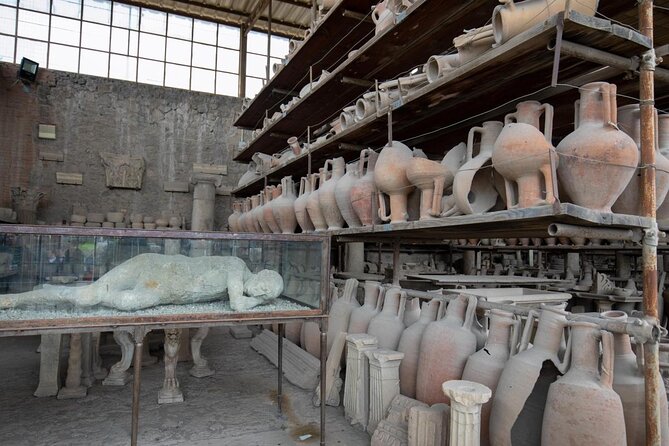
You begin in the Archaeological Park of Pompeii. The big idea here is setting the stage for what comes next. Pompeii was a Roman city preserved by the eruption of Mount Vesuvius in 79 AD, and this opening sets your brain on the right channel.
Even with a short stop, this is where you’ll get the foundation: why the preservation is so special, and what you’re about to see in the rest of the walk. Admission is included for this part of the visit, which keeps things simple.
Same stretch of coast, a completely different day out:
- Pompeii Small Group Tour with an Archaeologist
★ 5.0 · 6,593 reviews - Pompeii: Skip-the-Line Entrance Ticket with Audio Guide
★ 4.0 · 2,509 reviews - Naples: Pompeii and Mt. Vesuvius with Lunch and Wine Tasting
★ 4.5 · 2,454 reviews - Pompeii: Archaeological Park Tour with Ticket on request
★ 4.5 · 2,283 reviews
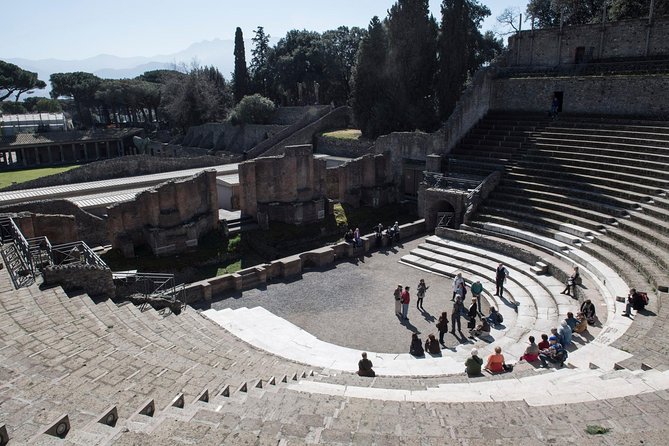
Stop 2: Odeon, also called Teatro Piccolo
Next you’ll look at the so-called Teatro Piccolo. This smaller theater helps you understand that Pompeii had entertainment for more than one kind of crowd. The architecture here is less about big-scale spectacle and more about performance and audience space.
It’s also a good pace-break. You’ll get to look at how the seating and structure work, without committing to a massive climb or a long scramble. For many people, this stop is a quiet “aha,” because it’s easy to miss the smaller theaters when you’re rushing.
Stop 3: Teatro Grande, the major theater
Then it’s on to Teatro Grande, the most important theater in Pompeii. This is the stop that most strongly connects architecture to social life. A theater is where the city showed off, where gatherings happened, and where entertainment became part of civic identity.
A short guided explanation makes the difference. Standing in front of a theater with no context is like looking at a stage without knowing what usually happened there. With a guide, you start to see Pompeii as a functioning city, not a museum of ruins.
Stop 4: House of Menander
After the public spaces, you move into wealth and domestic design with the House of Menander. This is one of the richest houses in Pompeii, known for its architecture, decoration, and contents.
This stop is where the tour’s “highlights” approach shines. You won’t have time to wander every room, but you will get pointed toward what makes this house special. You’ll likely notice how display and daily comfort were blended into one system. Pompeii’s houses were not just homes, they were statements.
Stop 5: Stabian Baths, Terme Stabiane
Next up are the Stabian Baths (Terme Stabiane). These occupy a vast area and are described as the oldest thermal complex in the city. That gives the stop instant weight. Baths were a major part of Roman life, and Pompeii’s version shows how routine and community overlapped.
This is also a stop where heat matters. Reviews mention guides stopping in shaded areas when the weather got rough. So if you’re visiting in summer, this is where you’ll feel the benefit of a guide who watches the group instead of marching forward no matter what.
Stop 6: Lupanar, the famous brothel
Then comes the Lupanar, the most famous brothel in Pompeii. This is one of those stops that feels both uncomfortable and fascinating. It’s also exactly the kind of thing that makes Pompeii stand out from other ancient sites.
A good guide keeps it grounded. You’re not there for shock value. You’re there to understand how that space fit into the city’s economy and daily reality. If you’re bringing kids, use your judgment here. The tour is described as family-friendly overall, but this is still an adult-themed location.
Stop 6b: Via dell’Abbondanza
You’ll also walk along Via dell’Abbondanza, Pompeii’s main street. This stretch is more important than it sounds because it helps you visualize movement through the city. It’s the spine that connects the big public areas.
Even if you don’t stop for long, it’s a chance to understand the scale of Pompeii street life. You start to see how people flowed through markets, entertainment zones, and residential areas.
Stop 7: House of the Faun
Next is the House of the Faun, described as one of the largest and most impressive private residences in Pompeii. This stop continues the “how wealth lived” theme, but with a different personality than Menander.
This is also where you’ll appreciate what a guide does with a short time window. You won’t see every corner, but you can still learn what to look for in the structure and decoration. It’s the kind of place where, without help, you might just see big stone spaces. With help, you start seeing purpose.
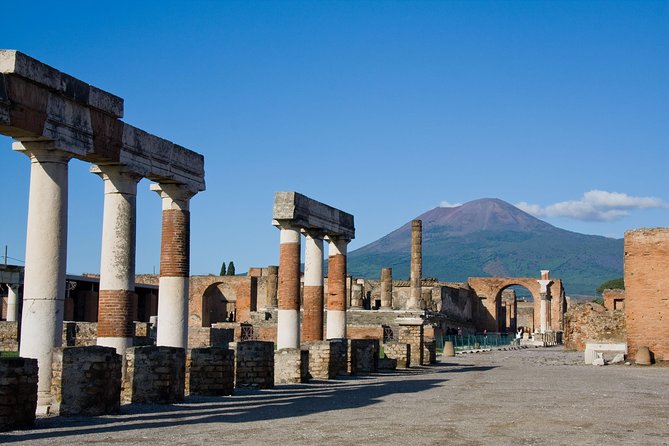
Stop 8: Foro di Pompei, the main square
Then you reach the Foro di Pompei, the ancient main square. This is civic life in stone. The forum is where commerce, gatherings, and the pulse of the city met.
With a guide, you can understand what the forum meant in a Roman town. Without context, it can feel like another open area. This stop helps you bring everything together, especially since earlier stops showed entertainment, bathing, and elite homes.
Stop 9: Basilica, the open portico
Finally, you see the Basilica, described as an open portico that gave shelter to merchants and other activities. This is practical architecture. It’s designed for business and movement, protected from weather.
The basilica stop gives your brain a last useful hook: how people traded, met, and worked in spaces shaped by daily needs, not just by aesthetics.
What you’ll notice most once the guide starts talking
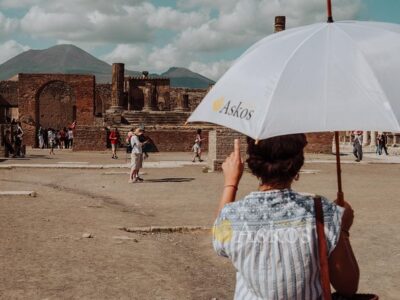
A theme in the strongest feedback is how guides made Pompeii feel alive using clarity, humor, and pacing. Names that show up again and again include Luca, Roberta, Manuela, Patrizia, Clare, and Enzo. People especially liked guides who could slow down for older visitors and stay upbeat during tough weather.
Here’s what that usually means on the ground:
- You get interpretation instead of a list of dates.
- You’re guided between areas so you don’t waste time guessing where to look next.
- You have a person to answer questions when something catches your eye.
Still, be realistic. One review flagged that the tour felt underwhelming and basic for their expectations, and another complained about how a guide handled bringing kids. That’s a reminder that the guide experience can vary by departure and group mix. If archaeology detail is your top priority, consider pairing this tour with an additional longer visit later.
Family-friendly, but plan for real topics
The tour is described as family-friendly, and many families praised it for keeping kids engaged. Specific examples included guides being patient with children around ages 6 to 13, and guides who made explanations easy for young ears.
But there are two practical considerations. First, the tour is still Pompeii. That means you will see adult-themed spaces like the Lupanar. Second, this is a walking tour in ancient streets and buildings, so you’ll want to bring snacks, water, and a realistic attitude about attention span.
If your kids are the kind who love stories and asking questions, this format can work really well because the stops are varied. If your kids are sensitive to adult subjects or boredom with long explanations, you might want to talk with the provider ahead of time about the tone and whether you can skip or adjust any stops.
Price and value: why $32.67 can be a good deal
At $32.67 per person for about two hours, the value comes from three things: the guide, the time saved, and the included admission for the stops on the route.
Going solo can be cheaper on paper, but it has two costs. First, Pompeii is large and confusing. Second, you may miss what makes each stop meaningful. This tour is designed to solve both of those problems fast.
Small-group access matters too. Even though the maximum is 30 travelers, many tours can run much smaller on certain days, which makes it easier to hear the guide and ask questions. That’s when the tour feels most like a conversation instead of a lecture.
One more nuance: Pompeii entrance ticket rules include free entry on the first Sunday of each month and free entry for people under 18 with valid ID. Your tour includes admission tickets for the stops listed, so you might not notice savings during the walk. But it can still help you plan if you add extra time before or after your tour.
Who this Pompeii tour suits best
I’d point you to this tour if:
- You have only a short window in Pompeii and want a guided path to anchor it
- You want to hit the big recognizable sites without figuring out your own route
- You’re traveling as a family and prefer a structured stop-by-stop format
- You like the idea of seeing public life and private life in one short sweep
I’d think twice if:
- You want deep, technical archaeology for every stop, with time to study details in depth
- Your party strongly dislikes adult-themed sites like the Lupanar
- You tend to feel frustrated when tours feel too fast and brief
If you fall into the second group, you might still do this tour first to get oriented, then follow up on a day you can linger.
Should you book this Pompeii highlight tour?
Yes, if you want fast clarity and a smart route through Pompeii’s top sights in just two hours. The best departures sound like a real win: guides who keep energy up, adapt to heat, and explain what you’re looking at in a way that sticks.
Book with confidence if you like structured tours and you want to return later to explore on your own with better context. Think carefully if you want ultra-technical archaeology or if your group is sensitive to adult topics, because this route includes both.
If you do book, wear comfortable shoes, bring water, and treat it as your Pompeii orientation. Then spend the rest of your time roaming with a new map in your head.
FAQ
How long is the Pompeii tour?
The tour runs about 2 hours.
What sites are included in the guided route?
The tour covers stops such as the Archaeological Park of Pompeii, Teatro Piccolo (Odeon), Teatro Grande, the House of Menander, the Stabian Baths, the Lupanar, Via dell’Abbondanza, the House of the Faun, the Foro, and the Basilica.
Is admission included?
Yes. Admission tickets are included for the stops listed on the tour.
Is it a small group tour, and how many people can be in the group?
It is a small-group format with a maximum of 30 travelers. A minimum number of 6 people is required for the tour to run.
Is the tour suitable for families and kids?
The tour is described as family-friendly. It should be a good fit for kids who can handle a short walking visit, though the route includes adult-themed sites such as the Lupanar.
Where do we meet the guide?
The meeting point is Ristorante Suisse, Piazza Esedra, 10/13, 80045 Pompei NA, Italy.
What about free entry rules for tickets?
Pompeii entrance ticket rules include free entry on the first Sunday of each month and free entry for people under 18 with valid ID or passport. Your tour includes admission tickets for the listed stops, but these rules can still help for additional visits outside the tour.
Can I cancel for a refund?
Yes. You can cancel up to 24 hours in advance for a full refund.
Recently reviewed around Pompeii
- Sorrento: Pompeii and Vesuvius Day Trip with Entry and Lunch★ 4.4 · 11 reviews
- From Sorrento: Pompeii with an Archaeological Guide & Ticket★ 4.6 · 19 reviews
- Sorrento: Pompeii & Herculaneum Day Trip Entry and Lunch★ 4.6 · 27 reviews
- Pompeii: Skip-the-Line Guided Archaeological Discovery Tour★ 4.2 · 13 reviews
- 2-Hour Private Walking Tour of Pompeii★ 4.7 · 22 reviews
- From Positano: Pompeii Ruins Small Group Guided Tour★ 4.8 · 82 reviews
- Pompeii Positano Amalfi Day Trip from Rome by Car, No Bus!★ 5.0 · 5 reviews
- Pompeii VIP 3h Tour: Skip-the-line with your Archaeologist★ 4.9 · 13 reviews
Pompeii Tours, compared.
Entry Ticket and Guided Tour with an Archaeologist
Read our review →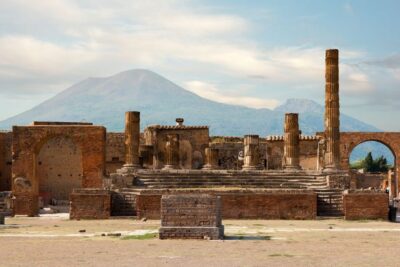
Pompeii Small Group Tour with an Archaeologist
Read our review →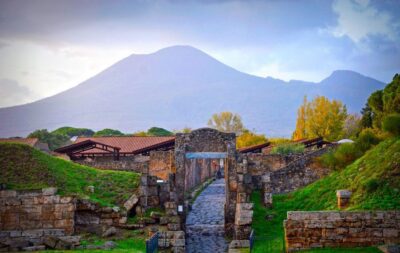
Skip-the-Line Entrance Ticket with Audio Guide
Read our review →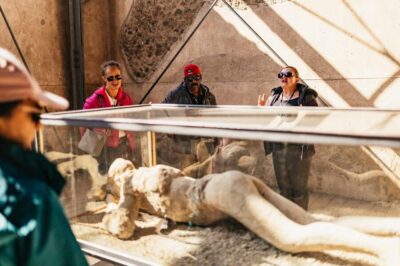
Pompeii and Mt. Vesuvius with Lunch and Wine Tasting
Read our review →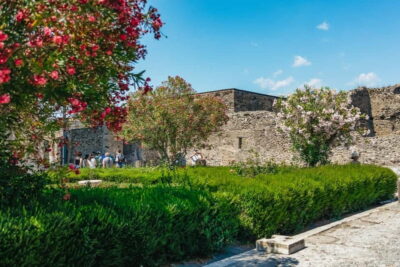
Archaeological Park Tour with Ticket on request
Read our review →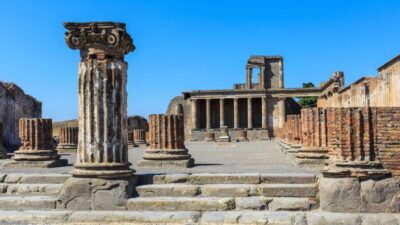
Browse the lists this tour appears in