
Reviewed · POMPEII TOURS
Pompeii Skip the Line Ticket + Guide Book with itineraries
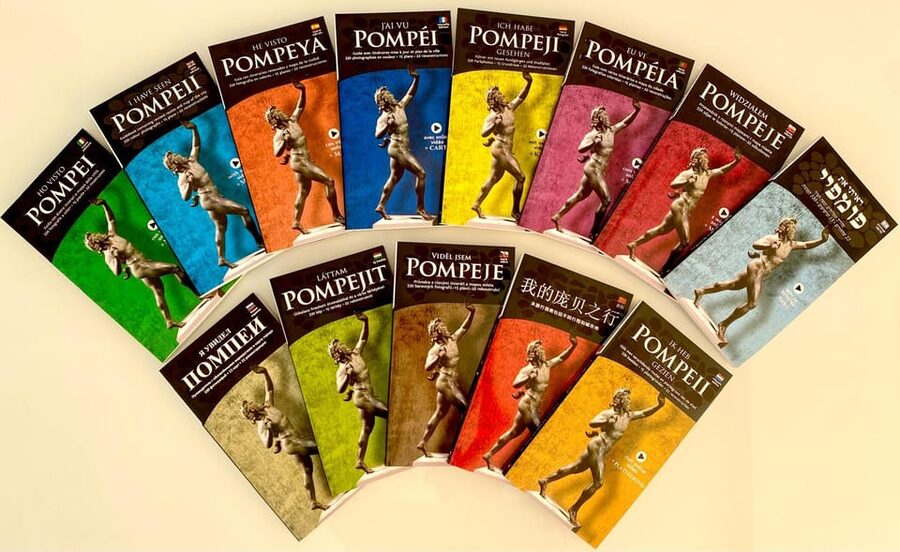
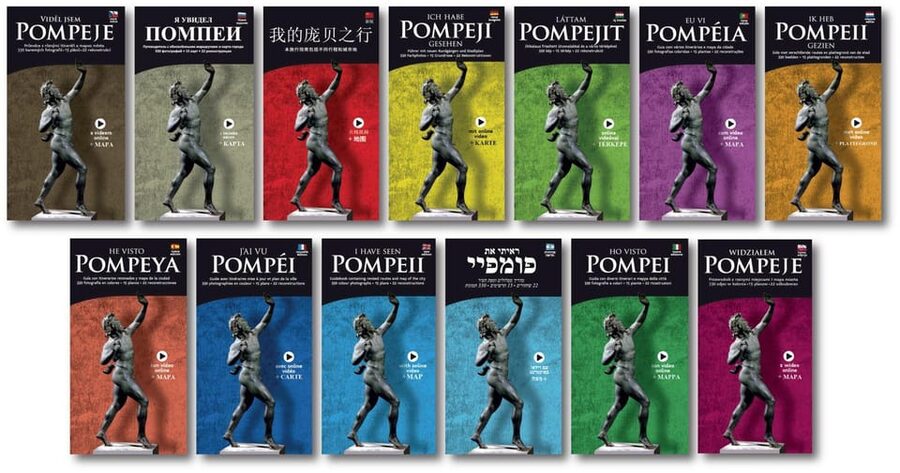
Pompeii is the kind of place where you can lose an entire day, but you still want to get in fast and make sense of what you’re seeing. This skip-the-line Pompeii ticket pairs with a 13-language guidebook that gives you simple 2, 4, or 6-hour plans so you can explore at your own pace.
Two things I really like about this setup are the ease of getting into the site quickly and the fact that the guidebook stays with you as a souvenir, not a one-and-done audio download. The one drawback to keep in mind: it’s self-guided (no separate on-site guide included), so you’ll get the most value if you enjoy reading and moving through Pompeii independently.
You can enter from 9:00 am to 5:00 pm, and the ticket is designed for a low-stress day even if you’re not trying to “crush” every square meter. Just wear comfortable shoes, bring water, and plan for sun and walking.
Key things to know before you go
- Piazza Anfiteatro entrance is your entry, with help at the info point on Via Roma 123
- Skip-the-line access reduces the slow part of the day, especially at busy hours
- 2, 4, or 6-hour itineraries help you match Pompeii to your schedule
- A guidebook in 13 languages plus an updated map, one book per two participants
- The must-sees are clearly defined: frescoed houses, baths, temples, theaters, brothels, Thermopolium, amphitheater, and victim casts
Pompeii skip-the-line plus a guidebook that actually helps
If you’ve ever visited Pompeii, you already know the problem: the site is huge, signage can be uneven, and it’s easy to walk right past the good stuff. This ticket solves the “get in and get oriented” part by combining reserved entrance with a printed guidebook and map. That matters because Pompeii is not just about big ruins. It’s about understanding everyday life that was frozen in time.
You’re not locked into a rigid group tour either. You enter during the open hours, then explore on your schedule. That works well if you want to linger at a fresco, double back for a different viewpoint, or pause for photos without checking with a guide every few minutes.
The guidebook approach is practical. It’s not only descriptions. It gives you itineraries of two, four, or six hours, so you can choose how much Pompeii you want to absorb in a day.
More Pompeii tours to compare:
- Pompeii: Entry Ticket and Guided Tour with an Archaeologist
★ 4.8 · 19,459 reviews - Pompeii: Small Group Tour with an Archaeologist
★ 4.8 · 12,264 reviews - Pompeii: Skip-the-Line Entrance Ticket with Audio Guide
★ 4.0 · 2,509 reviews
Getting in through Piazza Anfiteatro without hunting around
Your entry point is the Piazza Anfiteatro entrance. When you arrive, meet the operator at the information point at Via Roma 123, Pompeii. Show your voucher there, then you’ll be routed into the archaeological park.
This matters because Pompeii has multiple points people try to use, and wandering around the wrong entrance wastes energy you’ll need for walking and shade hunting. With the Piazza Anfiteatro access, you start your visit in the right place and can move straight into your chosen route.
You should also plan to arrive with a little buffer. Even with skip-the-line entry, you still need a calm moment to confirm your reservation and orient yourself with the map.
How the 2, 4, or 6-hour itineraries change your visit
The guidebook gives you time-based options. The key is to think of them like “reading levels” for Pompeii, not like strict timetables.
The 2-hour option: pick Pompeii’s highlights
A short itinerary is best if you want the emotional and visual anchors fast. With only two hours, you’ll want to prioritize the stops that help you understand the big picture, then add just one or two “wow” details.
From the sights this guidebook points you toward, you can build a tight, high-impact route around:
- the Roman amphitheater (one of Pompeii’s best-preserved)
- the victims’ casts, which are among the most powerful parts of the site
- a quick hit at street life, like the atmosphere of the main lanes and nearby buildings
Reality check: in two hours, you’ll be moving. That’s not a problem. It’s actually a good way to decide if Pompeii deserves a longer return visit.
A few more Pompei Campania trips worth comparing
- Pompeii: Skip-the-line-Ticket and Guided Tour
★ 4.6 · 1,152 reviews - Pompeii: Skip-the-Line Entry Ticket with Digital Guide App
★ 4.1 · 770 reviews - Pompeii: Afternoon to Sunset Guided Tour with Ticket
★ 4.9 · 484 reviews - Pompeii: Skip-the-Line Ticket with Audio Guide and Map
★ 4.0 · 117 reviews
The 4-hour option: add everyday Pompeii
At four hours, you can slow down enough to feel the city as a lived-in place, not just a collection of walls. You can add:
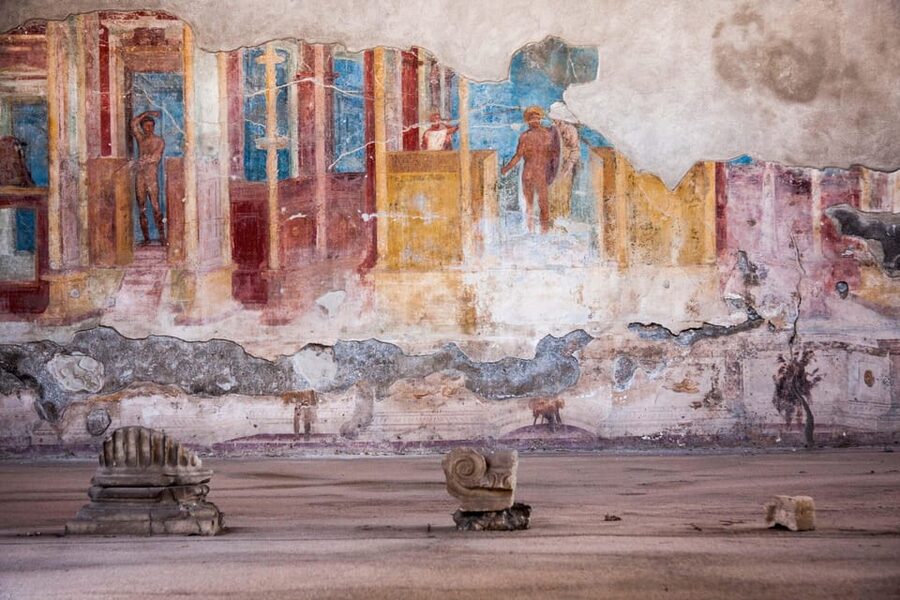
- frescoed houses that show how people decorated and used space
- spas and baths, which help you understand social life and routines
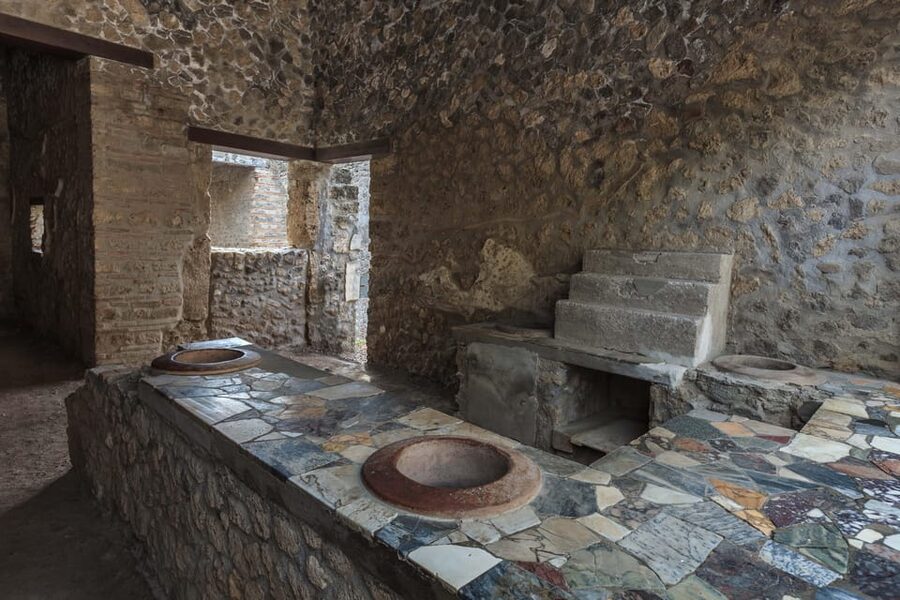
- a Thermopolium, basically the ancient version of a quick stop for hot drinks and fast food
This is also where the guidebook’s map helps you most. Pompeii can be a visual maze, and the updated layout gives you a way to navigate without second-guessing every turn.
The 6-hour option: go deeper without feeling lost
Six hours is the sweet spot if you like details and you don’t mind walking. It’s also the best choice if you want to connect multiple “types” of buildings into a bigger story, like religion plus entertainment plus commerce.
In a longer plan, you can expand into:
- more homes and interior-style details (especially frescoes)
- additional public sites like temples or entertainment areas
- theaters and the more adult side of Pompeii’s social world, including brothel locations
- additional street-level discoveries such as shops and commercial areas
Six hours still isn’t infinite, though. Pompeii is expansive. A six-hour itinerary is you choosing what matters most to you, not you seeing everything.
The amphitheater: why this stop is worth centering your day
One of the best-preserved Roman amphitheaters in Pompeii is included in the sights you’ll be able to plan for. Even if you’re not a history super-nerd, you’ll feel why this is a centerpiece. It’s a structure designed for crowds, voices, and performance, and it gives you a sense of how public life moved.
When you’re there, don’t just snap a photo and move on. Pause and look around. Pompeii ruins can look flat until you stand where an audience would have sat. That simple change turns the amphitheater from a monument into an experience.
If your legs are feeling it later in the day, an amphitheater-focused stop early can also help. You get one of the signature “sets” before fatigue reduces your enthusiasm for smaller details.
Victims’ casts: the most emotional moment on the route
The guidebook itineraries highlight the casts of the victims of the eruption. This is where Pompeii stops being a travel photo and becomes a human story.
These casts show what happened during the eruption in a way that’s hard to replicate anywhere else. You don’t need an “extra” guide to understand the meaning. The power is built into the scene, and the guidebook helps you connect that scene to the broader context of the city.
Practical tip: give yourself time here. If you rush through, you’ll miss the emotional weight. If you linger, you might feel that odd mix of sadness and respect that can be a bit jarring, especially if the rest of the day is light on your schedule.
Frescoed houses and the millenary streets that make Pompeii feel real
Pompeii’s frescoed houses are a big reason people keep coming back. They show decoration, household priorities, and a level of everyday life that’s easy to forget when you see only stone.
The guidebook also pushes you to walk the millenary streets, and that’s important. Pompeii is not only about individual buildings. It’s about layout. Streets shape how you experience neighborhoods. They also control your flow, and your pace changes what you notice.
In a practical sense, this is where an updated map matters. If you have to keep re-reading signs, your attention shifts from what the buildings meant to what direction you’re going. A guidebook itinerary helps you avoid that mental tax.
Baths, temples, and the Thermopolium for real-life rhythms
Pompeiian life wasn’t all tragedies and amphitheaters. Your route can include:
- spas and baths, which connect to daily routines and social hanging out
- temples, which help you understand public religion and civic identity
- Thermopolium, the fast-food of the time, often for quick meals and hot drinks
The Thermopolium stop is a great “wow, people were people” moment. You’ll see how commerce worked and how food was served. It also helps break up the emotional heaviness of the cast area with something more ordinary and relatable.
If you’re choosing between itineraries, consider this: baths and food-related sites add texture. A short visit gives you the outline. These stops help you experience the city’s daily rhythm.
Entertainment, theaters, and brothel locations
Pompeii doesn’t shy away from human behavior, and the sights you’ll plan for can include theaters and brothels. These are useful because they show how public space and social life overlapped.
For theaters, the same idea as the amphitheater applies. Stop and think about sound, crowd placement, and why people gathered. You’ll get more than a pile of seats if you watch how the space frames views.
For brothel locations, approach it like a study of society rather than a sensational stop. The value is in understanding that Pompeii included commerce and services, just like any city. A guidebook itinerary usually gives you enough context to keep it grounded.
What it feels like to do Pompeii independently
This ticket is built for independence. You’re not following a group schedule, and that changes the whole experience.
You can:
- spend extra time where your interests pull you
- skip ahead if a section doesn’t catch your attention
- pause for photos or rest without guilt
The downside is you carry the responsibility. Pompeii rewards curiosity, but it also punishes drift. If you wander with no plan, you might end up covering the wrong areas first and then rushing later to hit the biggest sights.
That’s why the printed itineraries help. Even if you don’t follow them minute by minute, they steer your day into a logical shape.
Timing and walking comfort: plan for a long day on your feet
Even with skip-the-line entry, Pompeii is still Pompeii. The ruins require steady walking and time in the sun.
Come prepared:
- wear comfortable shoes
- bring a sun hat and water
- plan comfortable clothes that work for warm hours
Also think about order. Starting with the amphitheater and headline areas early can help, because later on you’ll have less patience for long detours. If you’re doing the longer 6-hour approach, you’ll probably want breaks even if you don’t call them breaks.
Price and value: is $41 a good deal for Pompeii?
At about $41 per person, the value here comes from what’s bundled and what’s not.
Included:
- Pompeii ruins entrance
- skip-the-line access
- a guidebook in 13 languages plus an updated map
- itineraries for two, four, and six hours
- your guidebook stays with you as a souvenir
Not included:
- transfer
- food and beverages
So is it worth it? For most people, yes, because you’re paying for three things that usually cost you time and effort: reserved entry, a structured route, and translation help. If you’re trying to visit Pompeii independently but still want direction, that guidebook piece is the practical value.
One caution that can change the math: if you or someone in your group qualifies for free or discounted admission based on age or eligibility, you should compare costs carefully. When entry itself is heavily discounted, a package price can feel less fair. The skip-the-line benefit and included guidebook might still be worth it, but do the comparison before you buy.
Who this self-guided Pompeii ticket is best for
This option shines for people who want control. It’s especially good if:
- you don’t want to commit to a timed group tour
- you like exploring at your own pace but want a plan
- you’d like translation support in a 13-language guidebook
- you’re short on time and need an efficient route (2-hour or 4-hour)
It might not be the best fit if you strongly prefer a live guide who explains everything in real time, because a separate guide is not included. If you want that style, you’ll likely feel the difference.
Also note the guidebook sharing: one book is available for every two participants. If you’re traveling as a couple or small group, that’s usually fine. If you’re a solo reader who wants full control of the pages, it’s worth considering.
Quick FAQ about Pompeii entry and the guidebook
FAQ
What is included in the Pompeii skip-the-line ticket package?
You get the Pompeii ruins entrance, a guidebook in 13 languages with an updated map, and itineraries for two, four, or six hours.
How long can I visit Pompeii with this ticket?
It’s valid for one day, and the site entrance is open from 9:00 am to 5:00 pm.
Do I need a separate guide during the visit?
No. This experience is self-guided using the guidebook and map. A transfer and a guide are not included.
Where do I enter Pompeii and where do I meet the operator?
You access the archaeological park through the Piazza Anfiteatro entrance. Meet the operator at the information point at Via Roma 123, Pompeii, then show your voucher for easy access.
What languages are available for the guidebook and support?
The guidebook is in 13 languages, and support is listed in English, Italian, Spanish, and French.
Is there a skip-the-line benefit?
Yes. The ticket is described as skip-the-line.
What should I bring for the visit?
Bring your passport or ID card, comfortable shoes, a sun hat, and water, plus comfortable clothes.
Can I cancel and get a refund?
Yes, free cancellation is available up to 24 hours in advance for a full refund.
Should you book this Pompeii skip-the-line ticket with guidebook?
If your priority is a smooth start and an organized route without paying for a full guided tour, I’d book it. The skip-the-line entry plus the 13-language guidebook and map is a strong match for independent travelers who still want direction. The fact that the guidebook offers 2, 4, or 6-hour plans makes it easy to tailor your day, whether you’re doing Pompeii as a main stop or as part of a bigger itinerary in Campania.
If you’re expecting a live guide to do the explaining, or you hate reading while walking, look for a fully guided option instead. And if your group includes anyone who might qualify for special admission discounts due to age or eligibility, compare total costs before you commit. For most people though, this is a practical, low-stress way to experience Pompeii’s biggest emotions and best-preserved sights.
Recently reviewed around Pompei Campania
- From Sorrento: Pompeii with an Archaeological Guide & Ticket★ 4.6 · 19 reviews
- From Positano: Pompeii Ruins Small Group Guided Tour★ 4.8 · 82 reviews
- Pompeii Positano Amalfi Day Trip from Rome by Car, No Bus!★ 5.0 · 5 reviews
- Pompeii VIP 3h Tour: Skip-the-line with your Archaeologist★ 4.9 · 13 reviews
- Pompeii & Virtual Museum Private 2-in-1 Kid’s Tour★ 4.9 · 9 reviews
- From Naples: Pompeii Wheelchair-accessible with a Guide★ 5.0 · 8 reviews
- Pompeii & Vesuvius★ 4.3 · 12 reviews
- Pompeii Tour_Skip the line ticket + audioguide★ 4.7 · 17 reviews
Pompeii Tours, compared.

Entry Ticket and Guided Tour with an Archaeologist
Read our review →

Pompeii Small Group Tour with an Archaeologist
Read our review →
Skip-the-Line Entrance Ticket with Audio Guide
Read our review →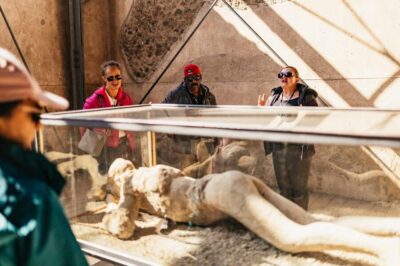
Pompeii and Mt. Vesuvius with Lunch and Wine Tasting
Read our review →
Archaeological Park Tour with Ticket on request
Read our review →
Browse the lists this tour appears in