
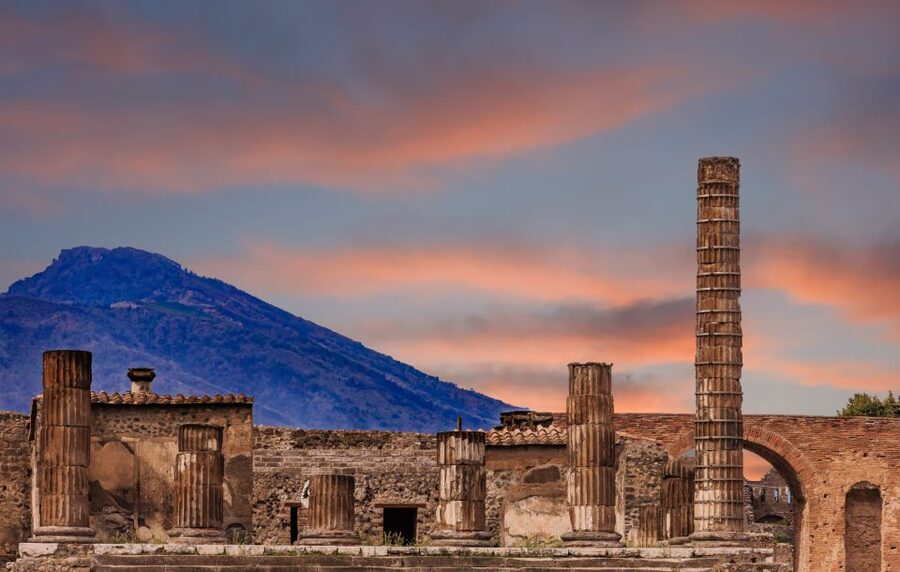
Reviewed · POMPEII TOURS
Pompeii: Virtual Museum ticket
Pompeii Virtual Museum is interesting because it gives you the city as it was, before the ash froze everything in place. You are not just looking at ruins, you are seeing reconstructed buildings and street life, then watching the eruption that changed Pompeii forever.
I love how much it focuses on daily life moments, like banquets and the mood of key neighborhoods, not just big monuments. I also like the 3D and animated reconstructions from above, which make it easier to picture what you will stand in front of later at the archaeological site.
One thing to consider: it is a virtual experience. If you expected a full, guided, on-foot tour with lots of live commentary, you may find it less satisfying than a traditional Pompeii guide, especially at the $14 price point.
Key things that make this ticket worth your time
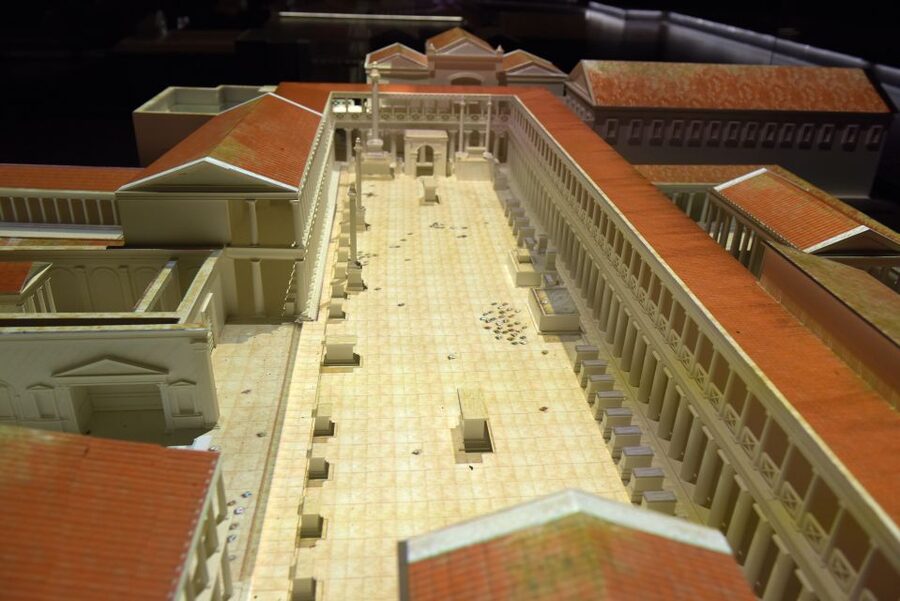
- Animated, 3D reconstructions of major spaces like the Forum, baths, and amphitheater help you connect ruins to the real scale
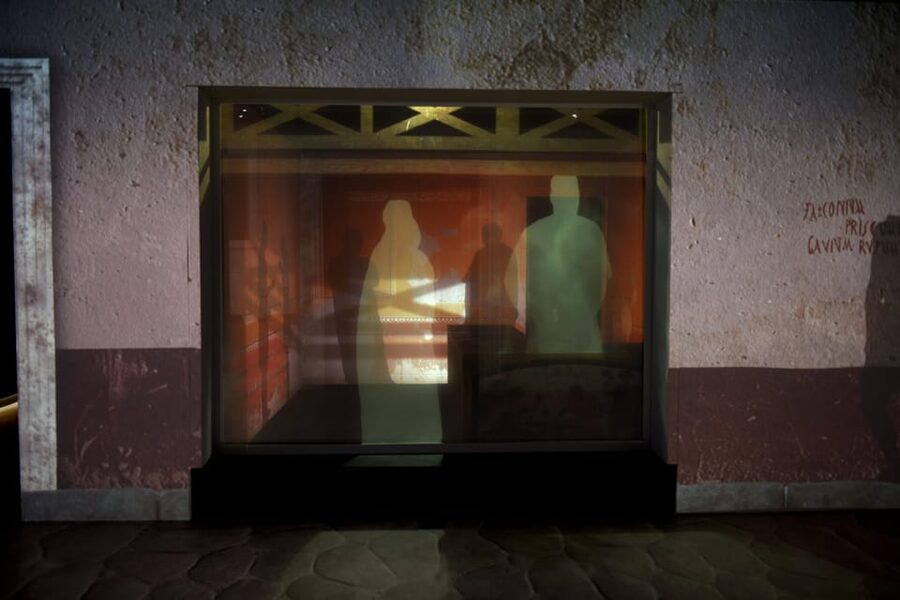
- Street-level moments (banquets, the Lupanar area, and more) make the ancient city feel lived-in
- Vesuvius gets the spotlight at the end, so the timeline from normal life to disaster clicks fast
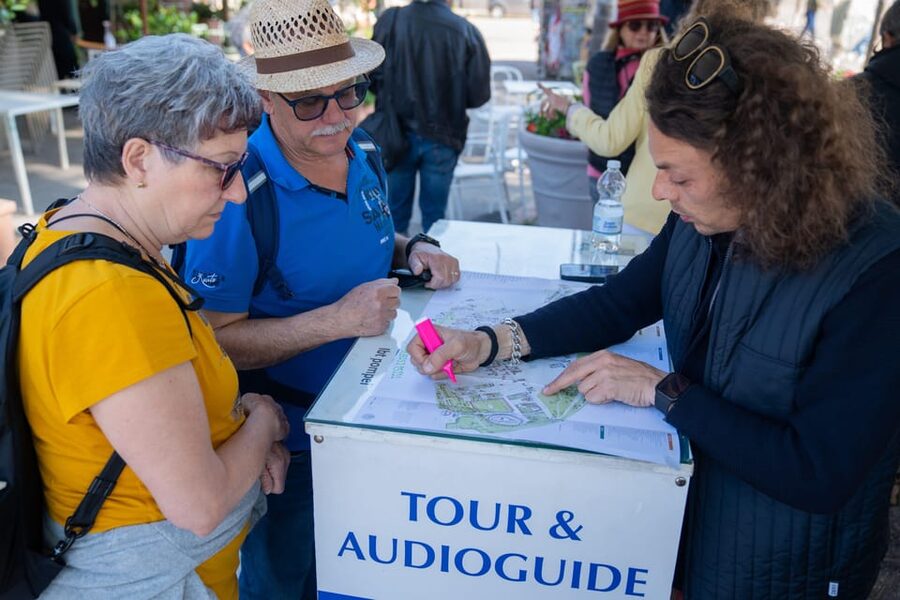
- A paper city map is included, which is useful if you add the archaeological site ticket
- Skip-the-line Pompeii entry is included only when you select the optional archaeological add-on
- French guidance showed up in top reviews, with a mediator helping people understand what they are seeing before they go to the ruins
First, where this starts: IBT Center and the virtual entry mindset
This experience begins at the Office IBT Center/Touristation, next to Chalet Donna Lucia. Arrive with enough time to find the office, get oriented, and settle in. Once you start, the experience is all about turning flat stone and ruined walls into a city you can mentally walk through.
That matters because Pompeii is not hard to access, it is hard to understand quickly. Without context, you can spend a day pointing at walls and thinking, I hope this used to be something. With this ticket, you get a clearer sense of what those spaces were doing in daily life.
You do not need to carry the day’s extra weight either. You are not allowed pets, food and drinks, or luggage or large bags. Also, photography inside is not allowed. So pack light and treat it like a short museum visit, not a roaming photo session.
More Pompeii tours to compare:
- Pompeii: Entry Ticket and Guided Tour with an Archaeologist
★ 4.8 · 19,459 reviews - Pompeii: Small Group Tour with an Archaeologist
★ 4.8 · 12,264 reviews - Pompeii: Skip-the-Line Entrance Ticket with Audio Guide
★ 4.0 · 2,509 reviews
What you actually do inside the Pompeii Virtual Museum
The core experience is a reconstructed slice of Pompeii around the time of the eruption of 79 AD. You are guided through what life looked like before the city was erased, then you transition to the end, the eruption spectacle of Vesuvius that ended Pompeii but made it immortal over the centuries.
The run of the experience, from normal life to the finale
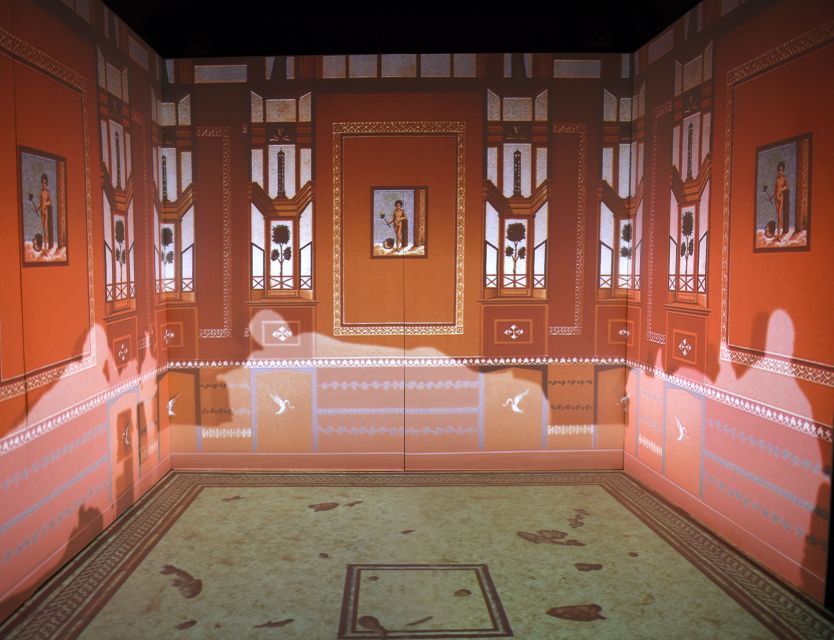
You start by exploring what it felt like to live there. Instead of only big public buildings, you see life as a sequence of spaces: streets, homes, public routines, and leisure. The experience is designed so you become a kind of protagonist in the story, moving through reconstructions and seeing famous locations made understandable again.
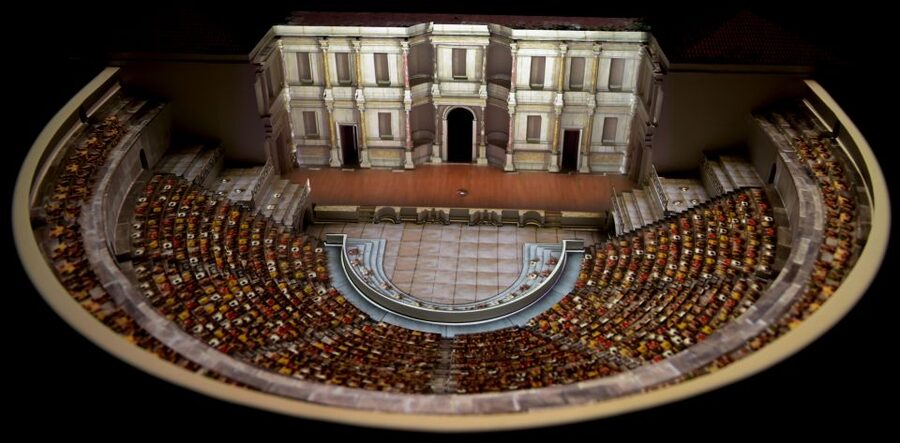
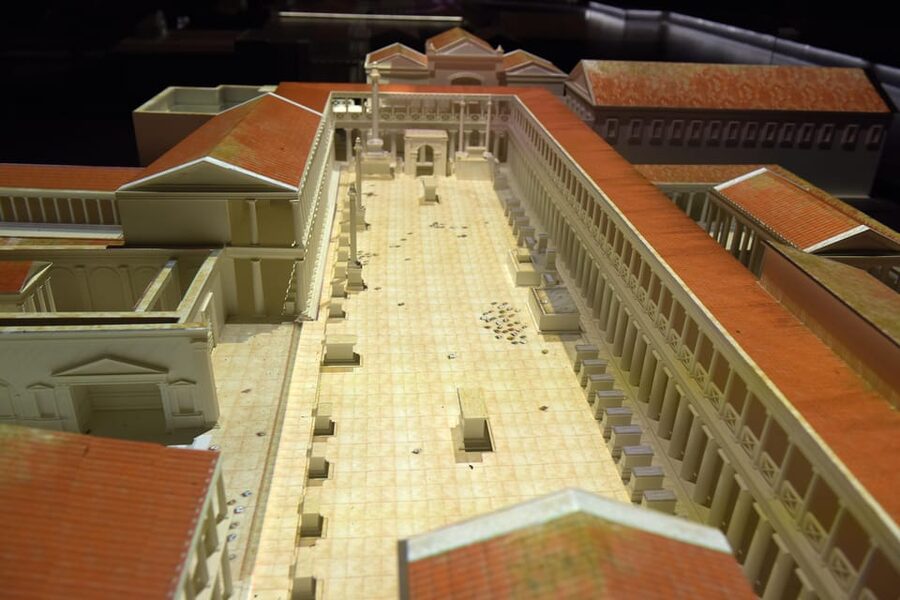
Then you shift into the animated reconstructions. The Forum, baths, and amphitheater are shown in a way that helps your brain learn the layout and scale. You get views that feel like you are looking down from above, which can be very helpful because Pompeii at ground level can make distances feel confusing.
Finally, it ends with the Vesuvius eruption spectacle. It is the moment that turns architecture into history you can feel in your bones. Even if you already know the headline facts, seeing the timeline laid out visually makes it land in a different way.
The “what will I notice later” benefit
If you are planning to visit the real ruins, this is the best reason to do the virtual museum first. When you later walk Pompeii’s streets, you will recognize patterns faster: where major civic life happened, how public bathing spaces functioned, and why crowds gathered at entertainment sites.
And if you skip the ruins, you still get something valuable. You get a structured mental picture of what got buried, why it mattered, and how the city worked day to day.
A few more Pompei Campania trips worth comparing
- Pompeii & Virtual Museum Private 2-in-1 Kid’s Tour
★ 4.9 · 9 reviews - Pompeii Pass: Skip-the-Line, Guided Tour & Museum Access
★ 4.8 · 5 reviews - Amalfi: Vertical Lemon Farm Tour, Tastings, and Rural Museum
★ 4.8 · 196 reviews - Pompeii: Skip-the-Line Ticket and Virtual Museum
★ 4.5 · 66 reviews
The 3D and animated reconstructions: why they help more than you think
The standout promise here is 3D and animated reconstructions of important Pompeii buildings. The Forum, the baths, and the amphitheater are called out specifically, and that is smart. Those are the spaces that people usually try to find in the ruins.
From a practical point of view, reconstructions do two jobs:
1) They explain how things fit together when walls are missing.
2) They give your brain a reference point, so you stop guessing.
In particular, animated reconstructions seen from above are a big deal. Pompeii is not a simple grid, and the ruins are scattered. A “top-down” sense helps you connect what you see today to what used to be there.
In a couple of the strongest reviews, people praised a mediator who helped them understand these reconstructions through both virtual models and physical model-style explanations. That is the ideal combo: you see the digital city, then you learn what to look for later in the real excavation.
Daily life moments: banquets, the Lupanar, and street-scale context
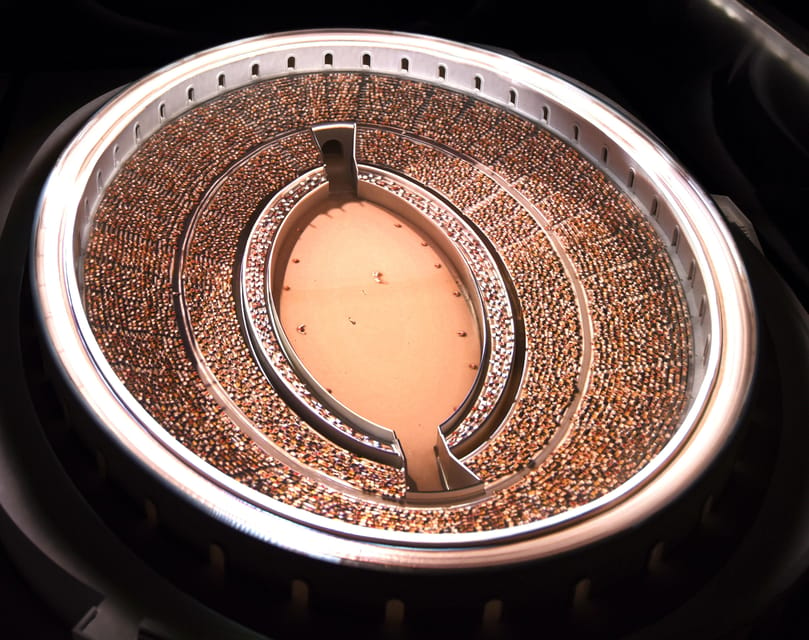
One of the most useful parts for many visitors is the focus on daily life. You are not stuck in a purely academic museum tone. You see life as people lived it: moments of social ritual, local entertainment, and the texture of neighborhoods.
The experience includes scenes like a Roman banquet and the debauchery of the Lupanar. Even if those specific activities are not something you want to dwell on for hours, they matter for your understanding. Pompeii is not only temples and columns. It is also commerce, leisure, and the messy, human side of a Roman city.
This is exactly why a virtual museum can be better than you expect. It teaches you what the ruins were for. Later, you can stand in front of surviving rooms and think, okay, this is where that type of life happened.
Ending with Vesuvius: the emotional timeline that makes ruins click
The final segment is the eruption of Vesuvius, the moment that ended the city and created the archaeological legacy. This is not just a dramatic finish. It is a learning tool.
Once you see that final catastrophe, you tend to look at the ruins differently. You start to pay attention to how quickly things can change, why certain structures were preserved, and why Pompeii feels both ordinary and shocking at the same time.
This is also where language support can matter. In French-language experiences reported in top reviews, the mediator helped visitors grasp what they were seeing as the eruption unfolded, and that made the experience feel more complete. If you speak French and want extra help connecting visuals to meaning, that is worth considering.
How long should you plan? A flexible ticket, not a fixed half-day
Your visit time can range from 30 minutes to 4 hours depending on availability. That wide window is real. It means you should plan based on how you like to travel.
If you want the key reconstructions and a clean mental map, you can probably keep it closer to the shorter end. If you prefer to slow down, read details, and take in explanations, budget more time.
This timing flexibility is also a reason to think about your overall Pompeii plan. If you have a day that also includes the archaeological site, squeezing everything too tightly can make the virtual portion feel rushed, and that defeats the main value of doing it beforehand.
Optional add-on: Pompeii archaeological area and skip-the-line entry
The ticket is sold with an optional add-on entry ticket to the Pompeii archaeological area. If you choose it, you also get a skip-the-line ticket for the archaeological site.
That is a strong practical perk. Pompeii is famous and popular. Even with good planning, lines can steal hours. Skip-the-line helps you start your ruin time sooner, which matters because you are there to see a lot in limited daylight.
Important caveat: the archaeological add-on is not automatic. It is only included when you select the option. If you only buy the virtual museum portion, you will not have entrance to the ruins.
Also note a specific thing that is not included: entrance to Villa dei Misteri is not part of this experience. So if that is on your must-see list, plan for it separately.
What is included, what is not included, and how that affects expectations
Here is the clean breakdown of what you do get.
Included with your ticket
- Reserved ticket for the Pompeii Virtual Museum
- Paper city map
- Assistance at the Touristation Office
- Free Wi-Fi
- Skip-the-line ticket for Pompeii archaeological area only if you select the add-on
Not included
- Ticket for the Pompeii archaeological area unless you select the add-on
- Guided tour
- Audio guide
- Entrance to Villa dei Misteri
- Food and drinks
- Transportation
This matters because the experience is essentially a museum-style reconstructor, not a full guided day. If you love museum pacing, it can work well. If you want someone to walk beside you and answer every question at the ruins, you will need additional help elsewhere.
And about the negative review signal: if you expect a guide-like explanation for every step, or you think you are buying a substitute for a long archaeological visit, the value can feel off. In contrast, reviews that praise the mediator and language support suggest that the right kind of explanation can turn it from interesting to genuinely useful.
Who should buy this ticket
This is a great fit for you if:
- You want a clearer sense of Pompeii’s layout before you go to the real site
- You like reconstructions and want a visual bridge between ruins and city life
- You want a shorter, structured experience on a busy travel day
It might be less ideal if:
- You mainly want outdoor walking time and long, guided narration
- You expect the experience to replace a full Pompeii ticket and day on-site
- You are looking for an audio guide style visit
If you are a first-time Pompeii visitor, this ticket is especially helpful. It helps you get your bearings faster once you step into the archaeological area.
Practical tips so you get the most from the virtual museum
- Do the virtual museum before the ruins if you can. The paper map plus the reconstructions make the real streets easier to follow.
- Plan for light luggage. Large bags and luggage are not allowed.
- Don’t rely on photos. Photography inside is prohibited, so pay attention in the moment.
- Use the map. The paper city map is included, and it is your friend once you start moving around outside.
- Match your language needs. The strongest positive feedback mentions French support from a mediator. If you want that, look for French sessions when possible.
Price and value: how $14 makes sense for some people, not for others
At $14 per person, this ticket is priced like a museum experience, not like a full-day guided tour. That is fine if you treat it as orientation, context, and a visual story of the eruption timeline.
Where the value can drop is when you expect more than what is included. This is not an audio guide. It is not a guided tour. So if you need constant human narration, you may feel under-served compared with other paid options.
But if you want to understand Pompeii faster, the math shifts. You are buying time saved on confusion. You are also buying a structured explanation of key spaces like the Forum, baths, and amphitheater, plus scenes of everyday life, and an eruption finale that makes the ruins emotionally legible.
Is this Pompeii Virtual Museum ticket worth booking?
I think this is worth booking if you want a smarter first look at Pompeii, especially before the archaeological site. The combination of 3D and animated reconstructions plus a clear ending with Vesuvius helps you connect the ruins to real life quickly, and the paper map plus optional skip-the-line entry makes it practical.
Skip it if you are expecting a fully guided Pompeii day with an audio guide and lots of on-site narration, because those pieces are not included. Also, if your idea of value is mostly about walking outdoors and taking your time with ruins for hours, you might prefer putting your budget into the archaeological visit itself.
FAQ
How long is the Pompeii Virtual Museum experience?
Duration can range from 30 minutes up to 4 hours, depending on starting times and availability.
What is the meeting point for the ticket?
Meet at the Office IBT Center/Touristation next to Chalet Donna Lucia.
Is the Pompeii archaeological area ticket included?
It is not included by default. The archaeological entry ticket is included only if you select the optional add-on.
Is there skip-the-line entry to Pompeii?
Yes, skip-the-line is included only if you choose the archaeological area add-on.
Is a guided tour or audio guide included?
No. A guided tour and an audio guide are not included.
Can I take photos inside the Pompeii Virtual Museum?
Photography inside is not allowed.
Are pets, food, or large bags allowed?
Pets are not allowed. Food and drinks are not allowed. Luggage or large bags are also not allowed.
Recently reviewed around Pompei Campania
- From Sorrento: Pompeii with an Archaeological Guide & Ticket★ 4.6 · 19 reviews
- From Positano: Pompeii Ruins Small Group Guided Tour★ 4.8 · 82 reviews
- Pompeii Positano Amalfi Day Trip from Rome by Car, No Bus!★ 5.0 · 5 reviews
- Pompeii VIP 3h Tour: Skip-the-line with your Archaeologist★ 4.9 · 13 reviews
- Pompeii & Virtual Museum Private 2-in-1 Kid’s Tour★ 4.9 · 9 reviews
- Pompeii & Vesuvius★ 4.3 · 12 reviews
- From Naples: Pompeii Wheelchair-accessible with a Guide★ 5.0 · 8 reviews
- Pompeii Tour_Skip the line ticket + audioguide★ 4.7 · 17 reviews
Pompeii Tours, compared.

Entry Ticket and Guided Tour with an Archaeologist
Read our review →

Pompeii Small Group Tour with an Archaeologist
Read our review →
Skip-the-Line Entrance Ticket with Audio Guide
Read our review →
Pompeii and Mt. Vesuvius with Lunch and Wine Tasting
Read our review →
Archaeological Park Tour with Ticket on request
Read our review →
Browse the lists this tour appears in