
Reviewed · POMPEII TOURS
Pompeii: Guided Tour and Skip-the-Line Ticket
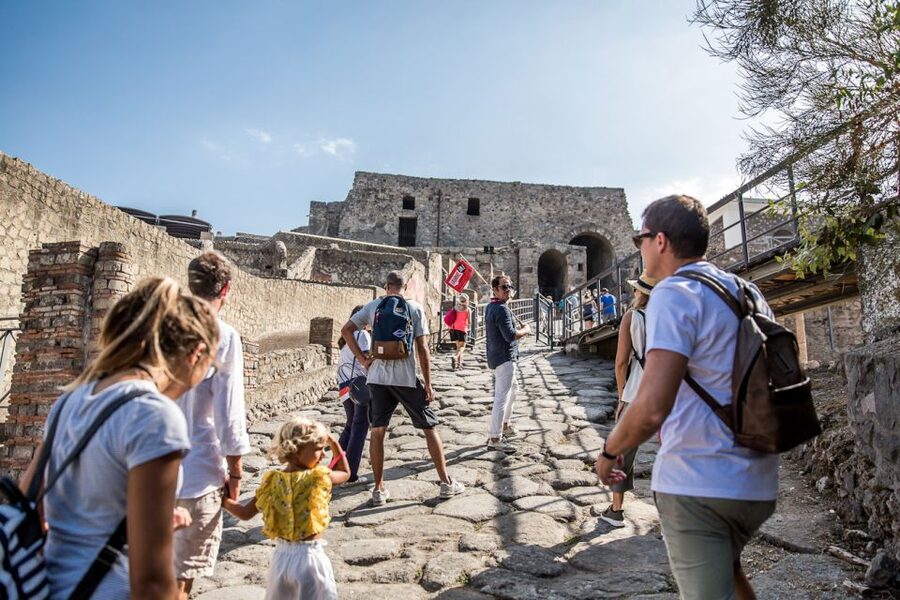
Pompeii has always been fascinating, but what makes this experience click is the way priority access and a real local guide help you see the site as a living city, not just ruins. When I picture it, I think of guides like Melania and Annarita who know how to point out what matters and why it mattered. You get a fast start and a clear path through a huge place.
Two things I like a lot: the route is built around Pompeii’s core spaces, from public power to daily life, and you get audio headsets (for groups of 8+), which keeps explanations easy to follow even when you are walking. The other standout is how the tour brings you to the House of the Faun and its Alexander Mosaic, then moves on to the plaster casts of the victims so the story lands.
One consideration: you walk a fair amount in sun and uneven ground, and the tour is not suitable for wheelchair users. Also, at 2 to 2.5 hours, you will not see every single corner of Pompeii, so this is a best-of visit with strong guidance.
Key points that matter before you go
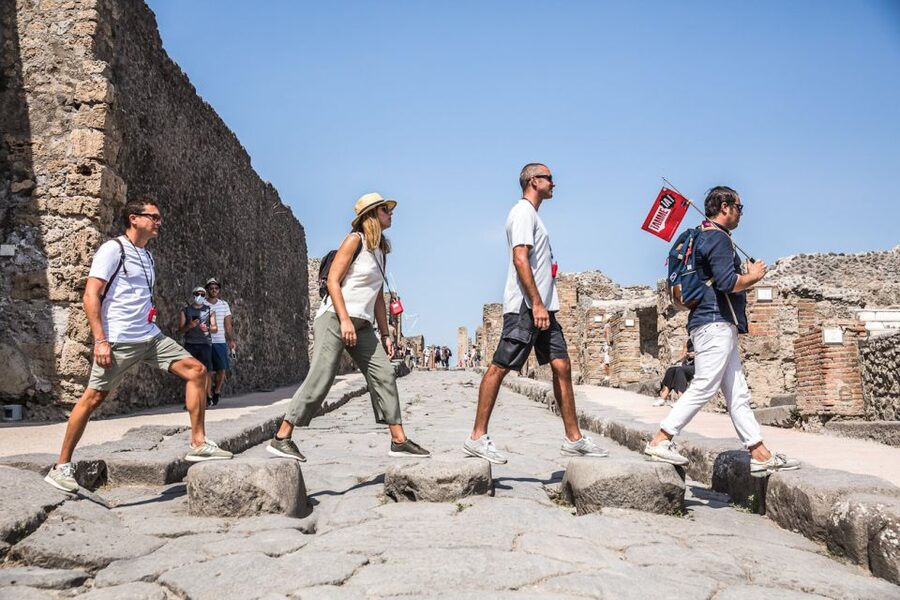
- Priority access helps you start fast so your short time in Pompeii goes to the good parts.
- Licensed local guides turn buildings into daily life with practical, place-based explanations.
- Audio headsets for 8+ keep the group together and make listening much easier.
- You hit the full range of Pompeii: forums, theaters, baths, street food, homes, and the victims’ casts.
- The House of the Faun is a centerpiece with the Alexander Mosaic as a main stop.
- Your guide may adjust timing (for example, skipping the Lupanare if lines are long) to protect your visit flow.
Priority entry at Pompeii, and why 2.5 hours is the magic limit
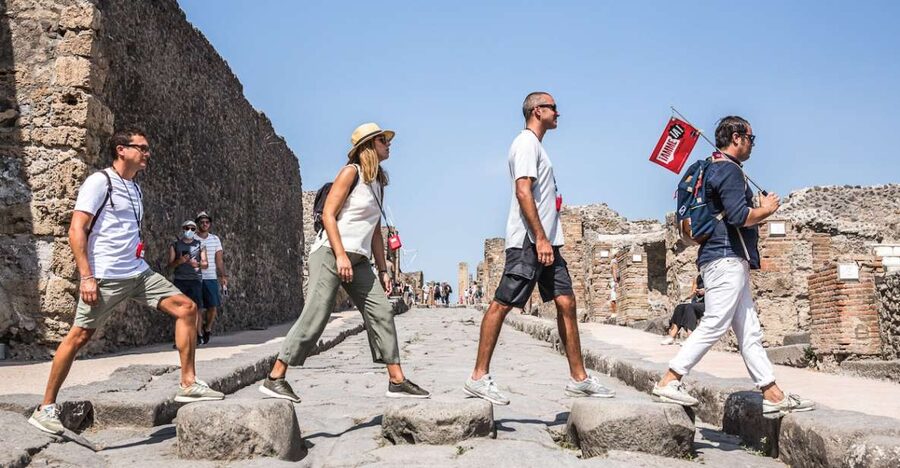
Pompeii is big, and self-guided visits can turn into a loop of trying to guess what you are looking at. With priority entry, you waste less time standing around and more time understanding the place. That matters because this tour is built for a tight, human-scale visit, about 2 to 2.5 hours.
At $43 per person, it is not the cheapest way into Pompeii, but the math gets more favorable once you factor in what you are really buying: a licensed guide, priority access, and audio headsets for larger groups. You also buy yourself a smoother start at the entrance, plus a structured route that keeps you moving. For many people, that structure is the difference between seeing Pompeii and getting Pompeii.
The other big reason this tour works is focus. You do not try to swallow the whole site. Instead, you get a curated cross-section that shows public life, domestic life, and the tragedy in a way that makes sense in sequence.
More Pompeii tours to compare:
- Pompeii: Entry Ticket and Guided Tour with an Archaeologist
★ 4.8 · 19,459 reviews - Pompeii: Small Group Tour with an Archaeologist
★ 4.8 · 12,264 reviews - Pompeii: Skip-the-Line Entrance Ticket with Audio Guide
★ 4.0 · 2,509 reviews
Finding Porta Marina fast, and what the first minutes do for you
Your day begins right at the entrance area with a guide, and the tour starts at Porta Marina, one of Pompeii’s original gates. That early orientation sounds small, but it has an outsized payoff: once you know where you are and what direction you are heading, the rest of Pompeii stops feeling like a maze.
From the start, your guide frames what you will see. Mount Vesuvius looms over the city, and you keep the eruption in mind as you move from one space to another. That running context helps everything click, because you see the buildings as functioning rooms for real people, not just labeled exhibits.
If you are nervous about meeting up, take comfort in what you may experience on the ground: guides are often easy to spot at the meeting point, and some have used clear signage with names. Still, since the official meeting point can vary by the option booked, plan to arrive early and check what your instructions say that day.
Foro Civile and Basilica, where politics and business happened
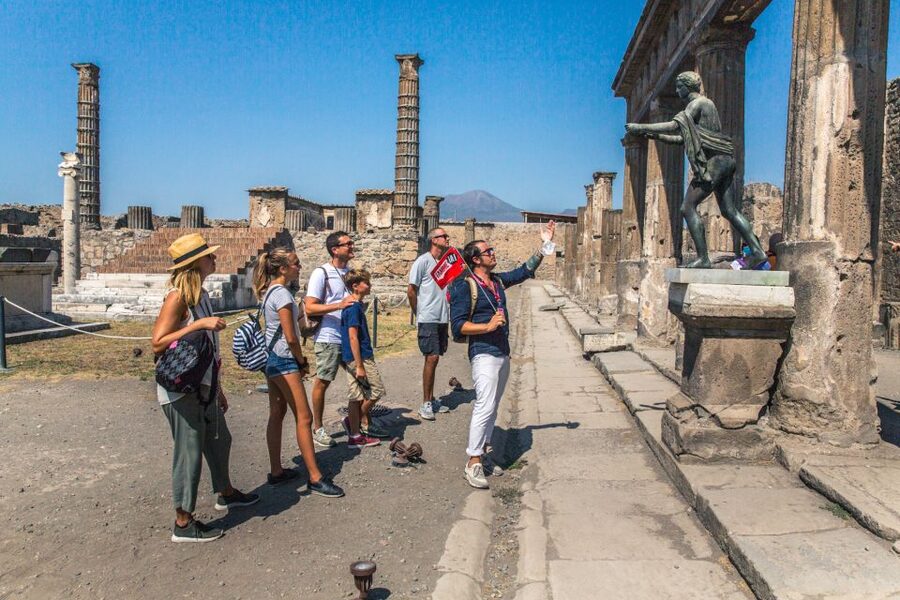
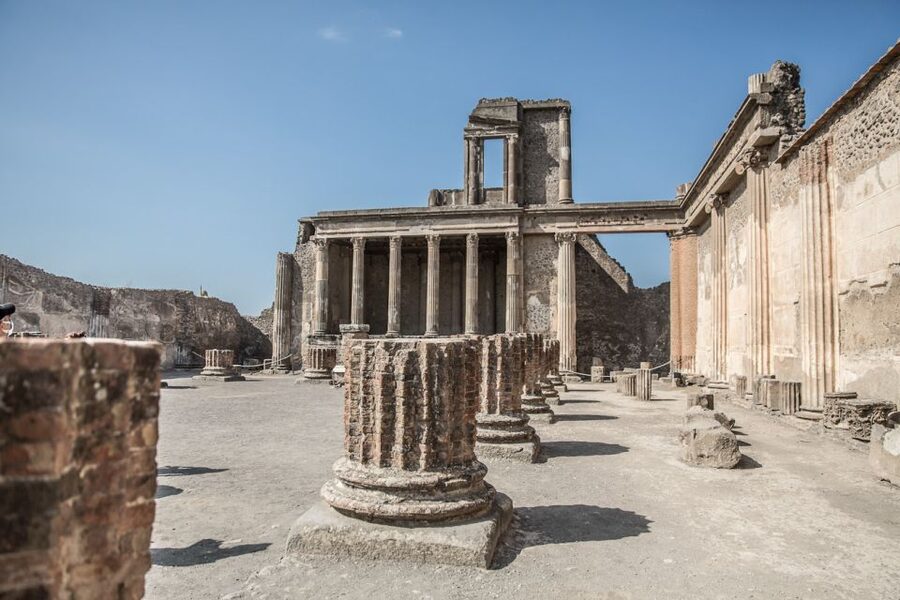
One of the smartest parts of this tour is how it starts with the civic center: the Civil Forum. This is Pompeii’s political, religious, and commercial hub, and your guide will point out the temples and public buildings that shaped daily decisions.
Right in this zone is the Basilica, a structure used for legal affairs and business dealings. Standing in the right spot and hearing what it was for changes how you look at architecture. You start thinking about crowds gathering, transactions taking place, and arguments being settled in an official setting.
You also get that constant geographic reminder: Vesuvius is part of the story from minute one. Even though the mountain is not doing the talking, the scale of it makes the city’s sudden end easier to understand.
Via dell’Abbondanza and the street-level details you might miss
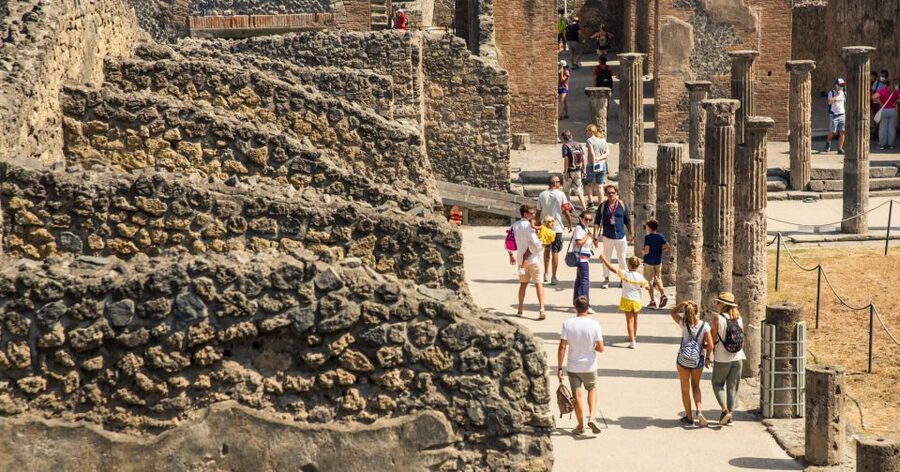
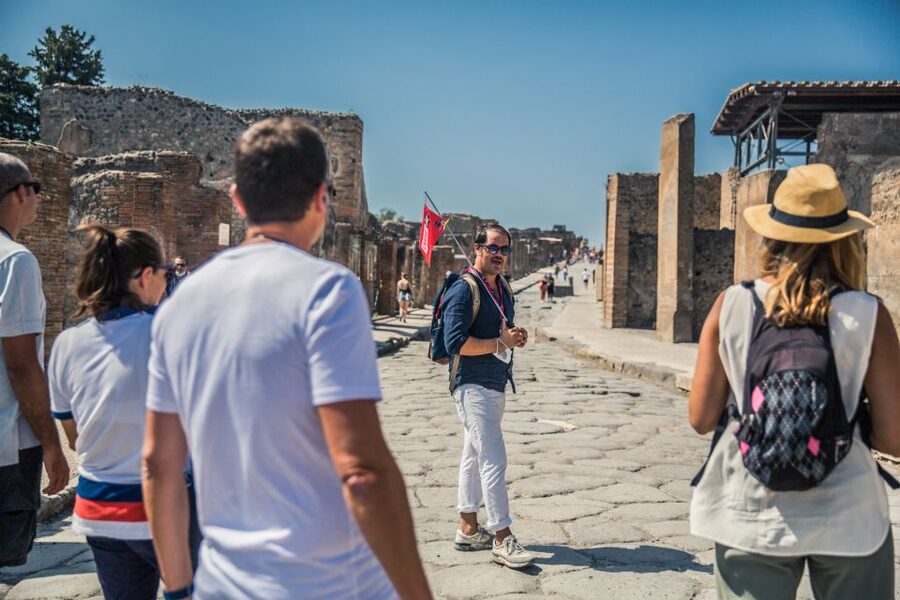
After the civic center, you move along Via dell’Abbondanza, Pompeii’s main street. This is where your guide shifts the emphasis from grand buildings to the gritty, everyday stuff.
The key detail here is visual, not verbal: deep chariot grooves in the stone. Once you notice them, you start imagining the repeated weight and motion that wore the road down over time. It is a simple thing, but it is one of those clues that makes the city feel mechanical, real, and used.
You also see how shops and houses line up close to the street, which is important because it explains Pompeii’s social layout. People did not live far from commerce. They were close to it.
A few more Pompei Campania trips worth comparing
- Pompeii: Skip-the-line-Ticket and Guided Tour
★ 4.6 · 1,152 reviews - Pompeii: Skip-the-Line Entry Ticket with Digital Guide App
★ 4.1 · 770 reviews - Pompeii: Afternoon to Sunset Guided Tour with Ticket
★ 4.9 · 484 reviews - Pompeii: Skip-the-Line Ticket with Audio Guide and Map
★ 4.0 · 117 reviews
The Theater District, and why Roman leisure matters
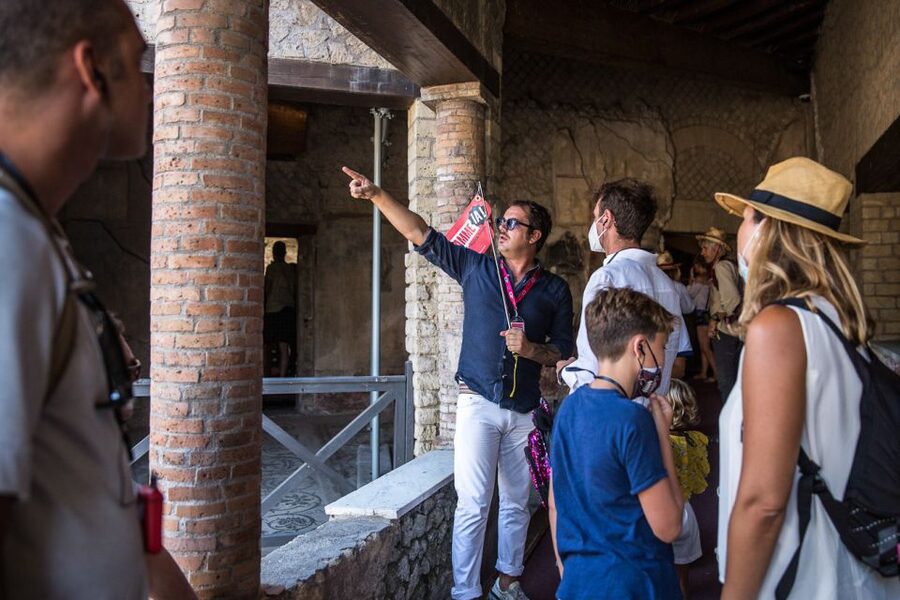
Next up is the Theater District, the cultural and social area of Pompeii. You will see the Large Theater, an open-air venue used for performances like comedies, dramas, and musical acts.
This stop is not just about admiring ruins. It is about understanding how public life worked. A theater is a place where stories and status mingle, where news travels faster because people are gathering, and where entertainment doubles as community glue.
Roman leisure also shows up again later through the bath complex. Together, these two themes help you see Pompeii as a full society, not just a museum of tragedy.
Baths, relaxation, and Roman wellness you can still read in stone
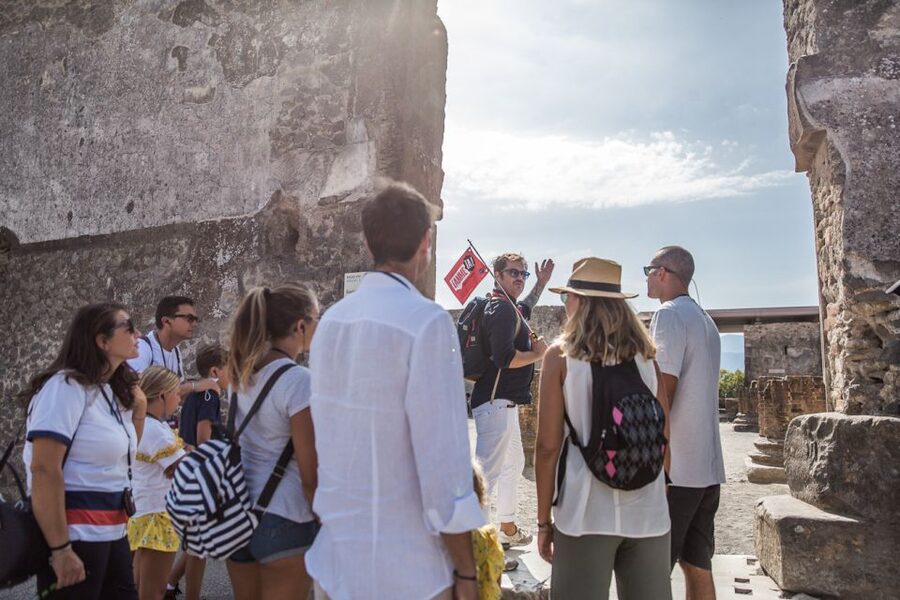
In Pompeii, bath areas are one of the best ways to understand daily comfort. You visit the Forum Baths and your guide highlights what people did there and how the layout supported routine.
The value of this stop is that it adds texture. You stop thinking only about politics and performances, and you start thinking about time spent washing, chatting, and relaxing. It is a helpful reminder that people living in Pompeii were also dealing with ordinary needs and habits.
Even if you have seen baths before in other places, hearing how this specific complex functioned in Pompeii makes the ruins feel lived in.
Thermopolium and pistrinum, street food and the business of hunger
Food is a surprisingly effective way to make Pompeii feel human, and this tour uses that. You will visit ancient street food spots like a Thermopolium, plus a Pistrinum (a bakery) where you can see elements like millstones, ovens, and counters.
A thermopolium is basically the fast lane of Roman eating, with prepared items for people on the go. The pistrinum gives you the production side, showing how grain became heat, and heat became meals. When you connect those ideas, you understand that food was a system, not just a snack.
If you are the kind of traveler who likes to understand how everyday jobs worked, these stops will feel like small wins.
Lupanare brothel murals, and handling queues without losing your whole day
One of the tour’s most arresting stops is the Lupanare, Pompeii’s ancient brothel, known for its compact rooms and frescoes. It is not a casual visit, and your guide can help you see it in context, as part of how the city’s economy and personal life intersected.
There is one practical wrinkle. The Lupanare can have long lines, and a guide might adjust the visit so you can protect time for other highlights. If you show up and the queue is heavy, do not panic. That kind of schedule flexibility is part of how guided visits stay workable.
House of the Faun, Alexander Mosaic, and what wealth looked like
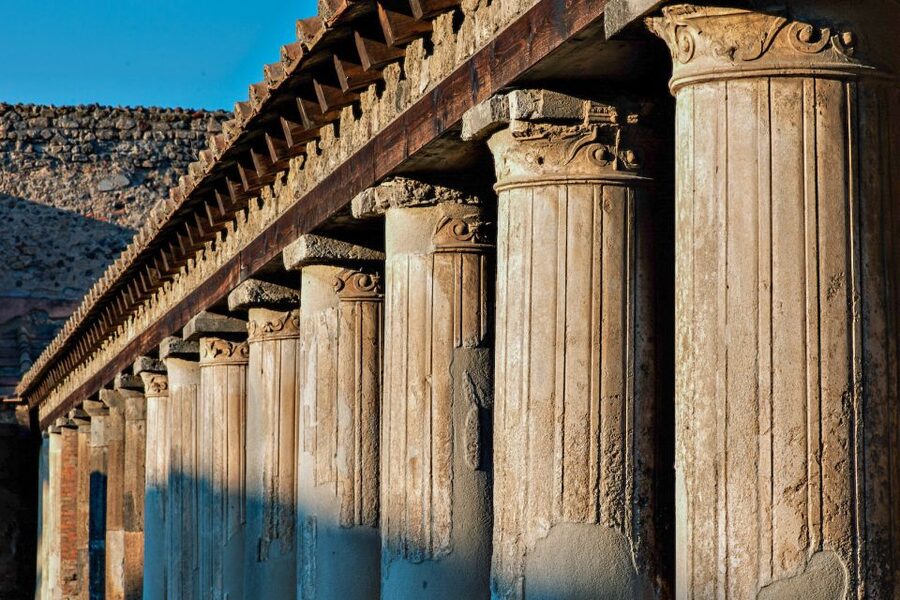
The House of the Faun is where the tour shifts to the private world. This grand Roman villa is famous for its mosaics, including the striking Alexander Mosaic. Your guide will likely explain why this particular mosaic became such a reference point, because it is not just decoration. It communicates taste, learning, and power.
The big value for you here is how the home reads as a social statement. You can see how elite life was organized around space, display, and comfort. It is the opposite of the street food stops, and the contrast makes Pompeii feel complete.
This is also the stop where the tour is most visual. If you are planning photos, give yourself a moment to slow down and look before you keep moving. A quick shot is fine, but mosaics reward patient staring.
Macellum and the plaster casts, from everyday trade to sudden loss
Pompeii ends up two different stories depending on where you stand. The Macellum (the food market) brings back the noise and movement side of the city. You see a lively setting for everyday trade, and your guide ties it back to how people bought and sold goods as regular routine.
Then comes one of the tour’s most emotional moments: the plaster casts of Pompeii’s victims. These are human reminders of life interrupted, and your guide’s job is to keep the focus on people, not shock for shock’s sake.
This is where a guided visit really earns its cost. Without context, the casts can feel like a grim photo stop. With explanation, they become part of the city’s full narrative, including what Pompeii looked like just before it stopped.
The guide experience, languages, and how to get more out of your walk
The tour is led by a licensed local guide and runs in English, Spanish, French, or German. If you care about listening quality, audio headsets are a big deal for groups of 8+ because it keeps the commentary clear while you move.
I also like the way this tour handles questions. In smaller groups, guides have been known to keep conversations going and even offer extra help on how to navigate afterward, including exits and transport directions. If you are traveling with friends or family and you can choose private or small groups, it often makes sense because it turns Pompeii into a shared learning moment instead of a follow-the-crowd exercise.
One more practical note from real-world experience: you will hear accents and speak-speed differences across guides. That is not a reason to skip it, just a reason to arrive with patience and good walking focus.
Timing, heat, and what to wear so Pompeii feels enjoyable
This is a 2 to 2.5 hour walk-through, so you want shoes that handle uneven ground. Comfortable shoes are not optional here. Bring sunscreen, and think about shade. Pompeii has a lot of exposed areas, and an umbrella can help for brief breaks when the sun gets intense.
Also, pace yourself. You do not want to race to every stop and miss what your guide is pointing out. The best strategy is to walk at a steady tempo and stop when your guide stops. That is how you catch the details like road grooves and the logic behind each building’s purpose.
Price and value: what $43 really buys you at Pompeii
The headline price is $43 per person, and on paper you might wonder if it is worth it versus a cheaper ticket and a phone app.
Here is the value case, in practical terms. You are paying for:
- Priority access, which saves time when lines are long
- A live local guide, which turns stone labels into functional understanding
- Audio headsets for many group sizes, keeping the experience clear
- A focused route that hits high-impact areas in a limited time window
If you already love Pompeii and you want to spend a half day wandering without structure, you may not need this. But if you want Pompeii to make sense quickly, especially on a tight Italy schedule, this is one of those spend-smart choices.
Who should book this tour, and who might want a different plan
This tour is ideal if you want a guided best-of visit and you care about understanding the story arc from the forum centers to daily life and the tragedy. It is also a solid pick if you are traveling with teens or older kids, since the pacing and clear highlights tend to keep people engaged.
It may not fit if you have limited mobility, because it is not suitable for wheelchair users. If you need a slower, fully accessible option, you will want to plan differently.
Also, if you are the type who wants to see every single building, remember: Pompeii is huge. This is a strong sampler with guidance, not a total site conquest.
Should you book this Pompeii guided priority visit?
If you want a fast, guided, high-signal introduction to Pompeii, I think this is a smart booking. Priority access saves time, and the guide-led route helps you understand major spaces without getting lost in the weeds. The stops hit the themes that matter most, public life, daily commerce, private wealth, and the emotional weight of the victims’ casts.
Book it if you have about half a day and you want your time to count. Skip it only if you already have a deep background and you plan to spend much longer exploring on your own, or if mobility limits make walking difficult.
FAQ
How long is the Pompeii guided tour with priority access?
The duration is about 2 to 2.5 hours.
What does the priority access include?
You get priority access to the Pompeii Archaeological Site, plus a skip-the-line start at the entrance.
Where do I meet my guide?
The meeting point may vary depending on the option you booked. You meet your expert guide right at the entrance area of the archaeological site, and there are starting location options listed as Pompei Parking Zeus.
Is transportation to Pompeii included?
No. Transportation to and from Pompeii is not included.
Are audio headsets included?
Yes. Audio headsets are included for groups of 8+.
Is the tour wheelchair accessible?
No. It is not suitable for wheelchair users.
What should I bring for the tour?
Wear comfortable shoes and bring sunscreen.
Is it okay to bring children?
Unaccompanied minors are not allowed.
On the first Sunday of the month, will priority entrance always work?
Priority Entrance may not be available on the first Sunday of each month, and it depends on crowd levels at the Pompeii ruins ticket office.
Recently reviewed around Pompei Campania
- From Sorrento: Pompeii with an Archaeological Guide & Ticket★ 4.6 · 19 reviews
- From Positano: Pompeii Ruins Small Group Guided Tour★ 4.8 · 82 reviews
- Pompeii Positano Amalfi Day Trip from Rome by Car, No Bus!★ 5.0 · 5 reviews
- Pompeii VIP 3h Tour: Skip-the-line with your Archaeologist★ 4.9 · 13 reviews
- Pompeii & Virtual Museum Private 2-in-1 Kid’s Tour★ 4.9 · 9 reviews
- Pompeii & Vesuvius★ 4.3 · 12 reviews
- From Naples: Pompeii Wheelchair-accessible with a Guide★ 5.0 · 8 reviews
- Pompeii Tour_Skip the line ticket + audioguide★ 4.7 · 17 reviews
Pompeii Tours, compared.
Entry Ticket and Guided Tour with an Archaeologist
Read our review →
Pompeii Small Group Tour with an Archaeologist
Read our review →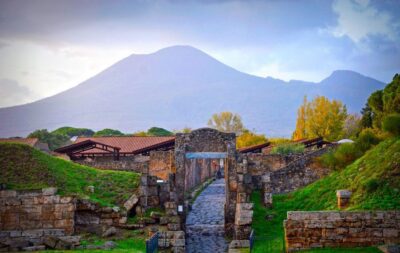
Skip-the-Line Entrance Ticket with Audio Guide
Read our review →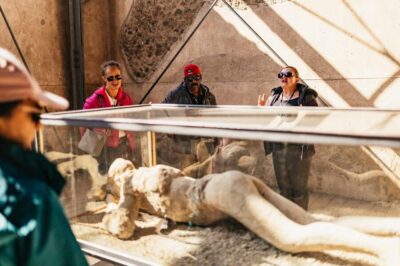
Pompeii and Mt. Vesuvius with Lunch and Wine Tasting
Read our review →
Archaeological Park Tour with Ticket on request
Read our review →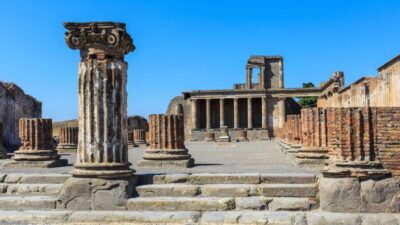
Browse the lists this tour appears in