
Reviewed · HERCULANEUM TOURS
Herculaneum – Small Group Tour (admission included)
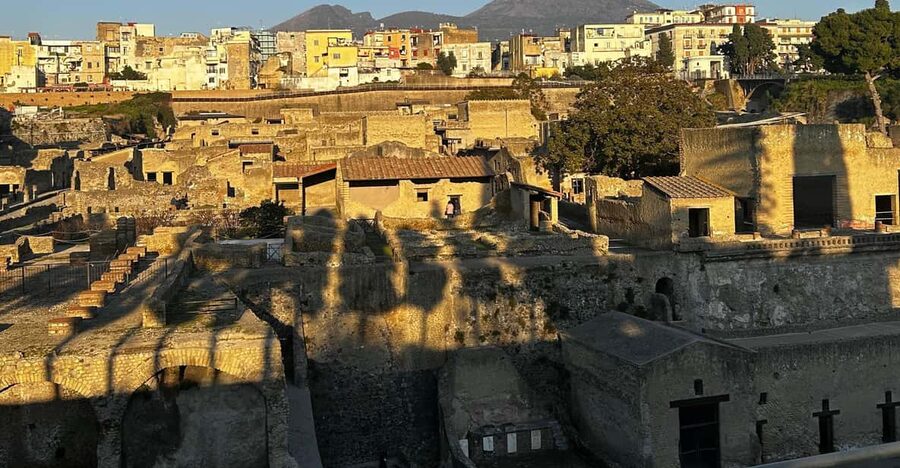
Herculaneum is interesting because it shows a Roman town that was destroyed and preserved at the same time, so you get a more intimate look at daily life than you do at nearby Pompeii. I love how this tour puts the story of the Vesuvius eruption first, then connects it to what you can actually see on the ground. I also like that you get a licensed guide plus skip-the-line admission, so you spend your time walking and learning instead of waiting.
One thing to consider: it is a focused 2-hour visit. That is perfect for getting the big picture and plenty of highlights, but if you want to linger for long photo stops or read every wall label, you may feel slightly rushed.
Key Highlights You Should Know
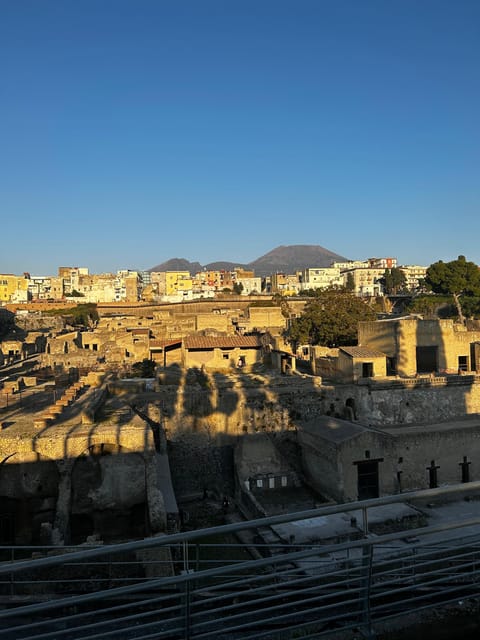
- A clearer Vesuvius 79 A.D. timeline, explained in a way that matches what you see at the site
- Why Herculaneum looks different from Pompeii, even though both were buried in the same disaster
- Preservation explained, including how the layers protected buildings and decorations
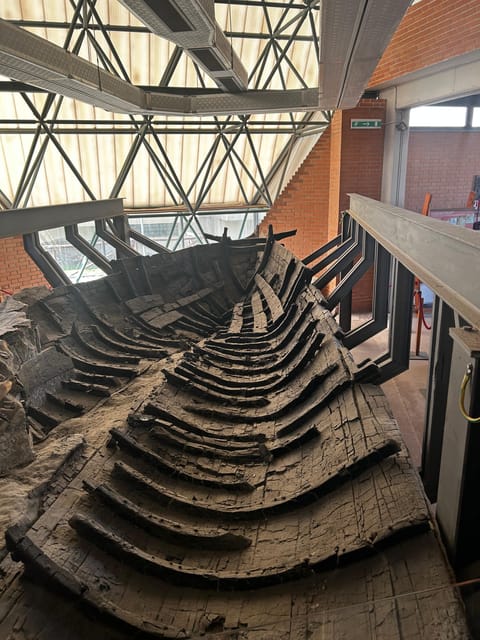
- A boat museum visit, built into the flow of the ruins so the finds make sense
- Small group format, with enough room for real questions, not just a lecture
- Guides who stay responsive, including past guides like Roberta, Marzia, and Gabriella
Herculaneum, Not Pompeii, Is the One That Feels Closer
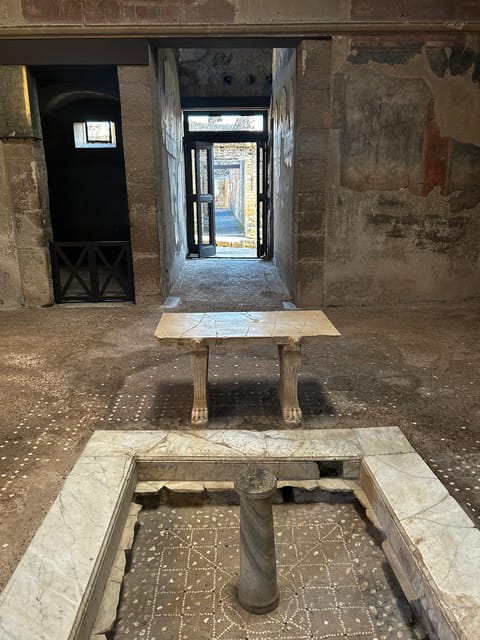
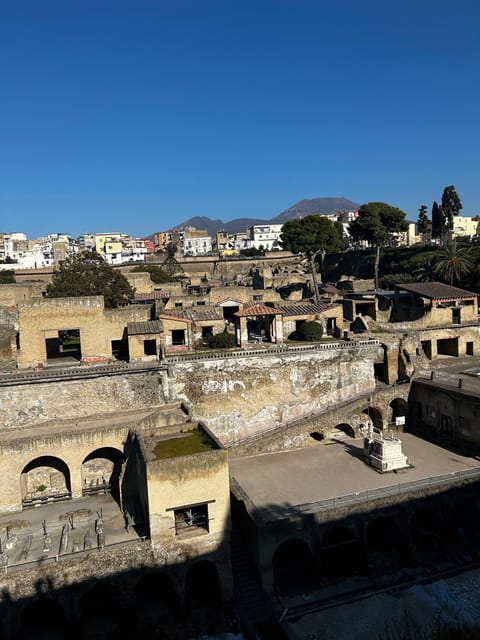
If you have already done Pompeii, Herculaneum hits differently. Pompeii is famous, and it is huge, but Herculaneum is smaller and tuned for a more personal feel. This tour leans into that. You start with the eruption, then you quickly get grounded in the way this city functioned as a Roman neighborhood.
Here’s the key idea I want you to carry with you as you walk: Herculaneum was buried by pyroclastic flows, under what’s described as about 60 feet of scalding ashes. That depth and speed matter because it explains why you can still see traces of the town’s original style and elegant details in private homes. It is the difference between looking at ruins that hint at a city and walking through a place where the layout and decoration still do work for you.
And because it was a residential area for wealthy Romans, you see a “richer” flavor here than in places that feel more public or commercial. You will get to focus on the kind of daily life that depended on well-kept homes, thoughtful design, and a sense of status.
More Herculaneum tours to compare:
- Ercolano: Herculaneum Entry Ticket with Optional Audio Guide
★ 4.1 · 581 reviews - Herculaneum: Skip The Line Entrance ticket + Audioguide
★ 4.3 · 266 reviews - Naples: Pompeii and Herculaneum Tour with Tickets and Lunch
★ 4.4 · 136 reviews
Where You Meet (and Why Skip-the-Line Helps So Much)
You meet at Corso Resina, 187, just outside the Herculaneum ticket office. That sounds simple, but in practice meeting points can make or break the first 10 minutes. The good news is that the tour is set up for straightforward arrivals and a smooth entry.
The other win is the skip-the-line admission ticket being included. At major archaeological sites in Italy, lines can eat your time even when you do everything right. Here, your guide gets you into the site with less friction, so your 2 hours stay focused on seeing and understanding, not waiting.
This is also where the small group angle matters. A small group means the tour is more controlled, and you can actually hear the guide without constantly competing with the crowd.
The Vesuvius Eruption Part: The Lesson That Makes the Ruins Click
The opening of this tour is not random. The guide starts by focusing on the eruption and the nature of the city, and that matters because Herculaneum can look confusing until you understand what happened to it.
The tour frames it this way: the same volcano disaster affected multiple places. Pompeii and Herculaneum were both destroyed, but the effects were not alike. Once you get that baseline, every next stop is easier to interpret. A preserved wall becomes more than a wall. It becomes evidence for how the city was buried and how conditions helped preserve structures.
You also learn how to think about the disaster beyond drama. Instead of only hearing about the catastrophe, you connect it to why certain surfaces and spaces endured better than you might expect. That is what turns a “ruins visit” into something that feels grounded and real.
Preserving the City: What Makes Herculaneum Different
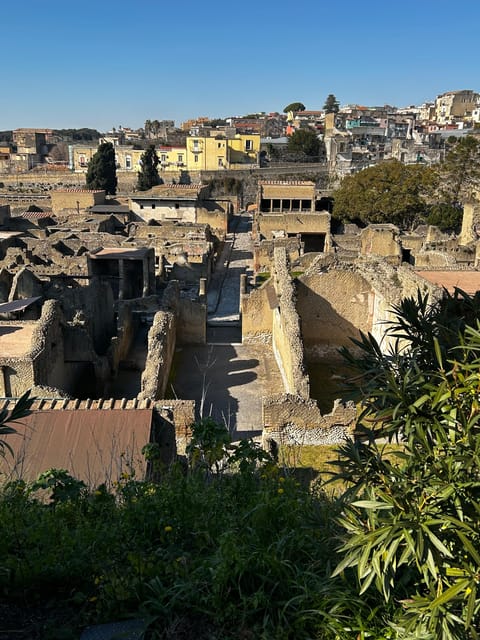
The tour’s big theme is preservation, and it does this in two steps: first the reason, then the evidence.
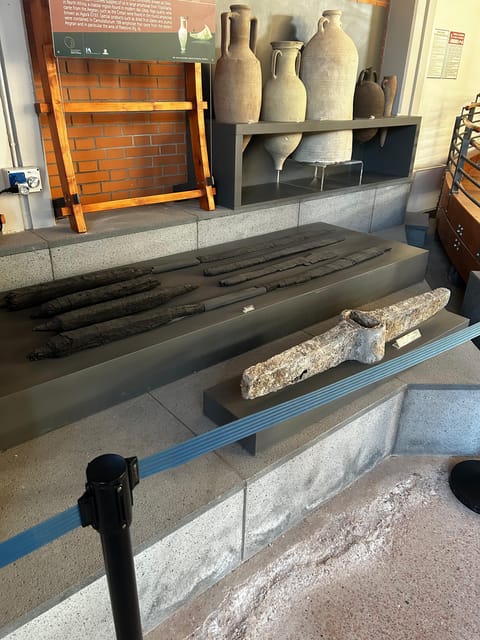
You get an explanation of the peculiar state of preservation, then you visit the boat museum as part of the same narrative. The museum stop is not just a side quest. It supports the larger point that what you are seeing is not only architectural, it is also about what archaeologists have been able to recover and study.
What you should expect to feel during this part is clarity. The tour is designed to stop you from treating Herculaneum like a bunch of interesting buildings. It pushes you to ask the right question: why do these things remain so visible today?
And because this city was smaller and richer, the preserved details can feel extra meaningful. Elegant decorations in private houses are not just decorative. They give you a window into what wealth looked like in everyday Roman life.
Same stretch of coast, a completely different day out:
- Herculaneum Archaeological Park smart Audio Tour
★ 3.8 · 70 reviews - Herculaneum: Private Walking Tour with Archeologist Guide
★ 5.0 · 59 reviews - From Naples_ Vesuvius transfer+ticket and digital audioguide
★ 3.7 · 58 reviews - Herculaneum: 2hour Shared Guided Tour + entry tickets
★ 4.3 · 38 reviews
Walking Through Typical Roman Life, Not Just Dead Stones
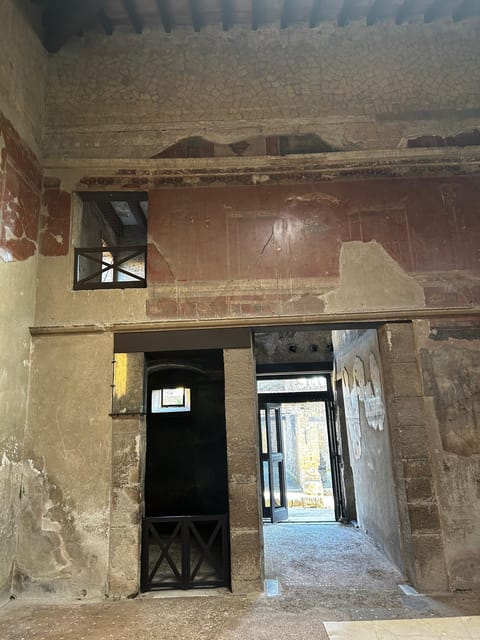
Once the preservation story is set, the tour shifts into the way people actually lived. This is where the experience becomes less about the disaster and more about the city itself.
You’ll focus on typical life in an ancient Roman center and tour the ruins with that lens. The guide helps you connect spaces to habits: how homes were organized, how decoration signaled status, and how the urban layout supported daily routines.
This is also where Herculaneum can feel more satisfying than Pompeii for some visitors. In Herculaneum, the city’s residential character is a strong guide. The tour uses that to keep you anchored in the human scale. You are not just looking at large public areas, you are looking at places that would have felt like someone’s lived-in life.
If you like archaeology that connects to people, you will probably enjoy this section a lot. It turns the site into a place you can picture, not only a place you can photograph.
The Boat Museum Stop: A Smart Bridge Between Ruins and Finds
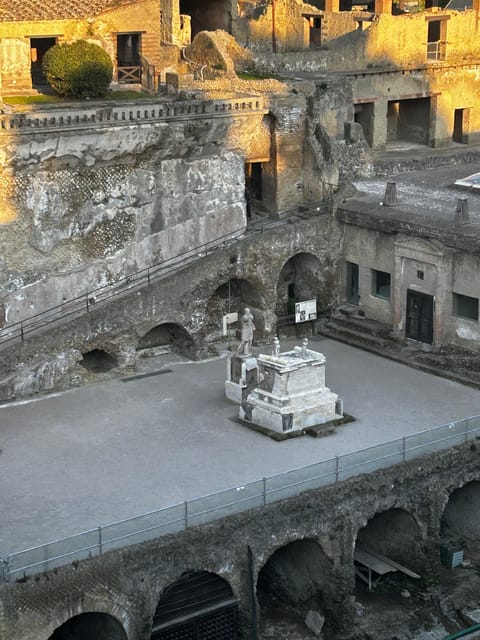
The tour specifically includes a stop at the boat museum, and I like this because it bridges two kinds of learning.
On the ruins side, you deal with buildings, street layouts, and preserved surfaces. On the museum side, you get a chance to understand the disaster through what survived and what was recovered. Even if you are not a hardcore museum person, having this integrated into the route helps the information stick.
The tour’s structure makes this feel logical: you learn how preservation happened, then you see related material, then you go back to the ruins with better context. That pacing is one reason the 2-hour format works. It does not feel like you are running from one stop to the next. It feels like a storyline.
Guides, Questions, and the Small Group Advantage
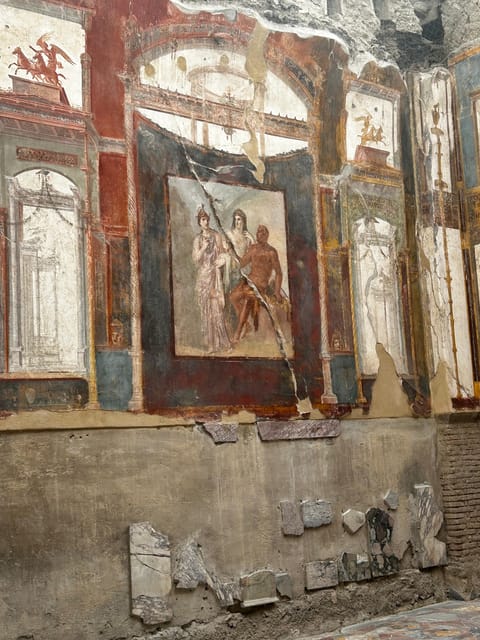
This is a small group tour, and you feel it in two ways: pacing and questions.
In one example, the group of four had time to ask questions and talk through how people lived and what the eruption meant for the inhabitants. That is a big difference from the tours where you barely get your bearings before the group keeps moving.
Guide quality also shows up in the way the explanation is delivered. Roberta has been praised as superb for clear information delivered at the right speed. Marzia is noted for going into great detail and answering group questions. Gabriella is praised for engaging children by adjusting explanations to what they cared about, which tells me the tour style can flex depending on who is in front of the guide.
Also, this tour is led by a licensed guide by the Regione Campania. That licensing detail matters because it signals local oversight and professional standards, not just a casual walk-through.
What You Get for $75, and When It Feels Like a Good Deal
At $75 per person for a 2-hour guided visit with admission included, this is priced for people who want interpretation, not just entry.
Here’s how I think about value:
- You are paying for a licensed guide and a planned route, not only a ticket.
- The skip-the-line admission is a real convenience, especially when you factor in how quickly time disappears at popular sites.
- The tour includes the ruins and a museum component, so you are not stuck choosing between “site” and “museum.”
If you are the type of traveler who enjoys asking why something was preserved, or how to connect what you see to the 79 A.D. eruption, the price starts to make sense fast. If you prefer to wander at your own pace with a phone app and zero structure, you might decide differently. But for most visitors, the guided format is the point.
Who This Tour Fits Best
This is a strong match if you:
- Want a guided introduction that explains the eruption first, then the preservation
- Like Roman domestic life, decoration, and the feel of wealth in everyday spaces
- Care about learning how Herculaneum differs from Pompeii without getting overwhelmed
- Appreciate a small group where questions are welcome
It may be less ideal if you want long, quiet time in the ruins or you plan to spend hours reading every panel. The format is tuned for a 2-hour highlights experience with context.
Should You Book This Herculaneum Tour?
I’d book it if you want the most sense out of your time. This tour does the hard part for you: it gives you the eruption story, explains why preservation is unusual here, then shows you how Roman life played out in a residential city. The small group setup and skip-the-line entry help you protect your schedule and keep the experience focused.
If you are unsure, ask yourself one question: do you want Herculaneum to feel like a place with explanations behind it, or just a place you pass through? For me, the structure here leans clearly toward understanding. And if you care about that connection between disaster, preservation, and daily life, this is a smart way to do it.
FAQ
How long is the Herculaneum small group tour?
It lasts 2 hours.
Is admission included, and do I need to buy a ticket?
Yes. Skip-the-line admission is included as part of the tour.
Where does the tour meet?
The meeting point is just outside the Herculaneum ticket office, at Corso Resina, 187.
What languages are the guides available in?
The live guide is available in German, Italian, and English.
What group size should I expect?
It is a small group tour.
Is free cancellation available?
Yes. You can cancel up to 24 hours in advance for a full refund.
Can I reserve now and pay later?
Yes. You can reserve now & pay later.
Recently reviewed around Ercolano
- Herculaneum with an Archaelogical Guide & Ticket★ 4.8 · 11 reviews
- Herculaneum Archaeological Park smart Audio Tour★ 3.8 · 70 reviews
- Herculaneum: Private Tour with Driver from Naples★ 4.6 · 15 reviews
- Herculaneum: Skip-The-Line Entrance Tickets + Audioguide★ 4.7 · 3 reviews
- Herculaneum: Private Walking Tour with Archeologist Guide★ 5.0 · 59 reviews
- Herculaneum: Entrance tickets + audioguide★ 2.7 · 4 reviews
- Herculaneum: 2hour Shared Guided Tour + entry tickets★ 4.3 · 38 reviews
- Herculaneum Guided Walking Tour with Entry Ticket★ 3.7 · 21 reviews
Herculaneum Tours, compared.
Pompeii and Herculaneum Small Group Tour with an Archaeologist
Read our review →
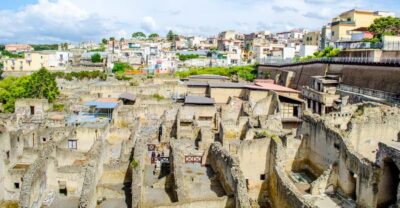
Herculaneum Entry Ticket with Optional Audio Guide
Read our review →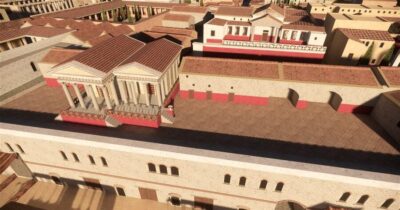
Herculaneum: 3D Walking Tour with Skip-the-Line Ticket
Read our review →
Guided Day Tour of Pompeii and Herculaneum with Light Lunch
Read our review →
Private Day Tour to Vesuvius, Herculaneum & Pompeii with Pick Up
Read our review →

Herculaneum: Skip The Line Entrance ticket + Audioguide
Read our review →Browse the lists this tour appears in