

Reviewed · HERCULANEUM TOURS
Ercolano: Herculaneum Entry Ticket with Optional Audio Guide
Herculaneum is interesting because it is a time capsule. The town was buried after Vesuvius erupted in 79 AD, yet so much of it survived that you can picture daily life in a way that feels personal and unsettling. I love the level of preservation you get here, roofs, beds, doors, and even the remains of people. I also like the self-paced setup, because you can slow down for frescoes or keep moving through the streets without herding.
The main drawback to plan for is the audio guide experience. It can be useful, but app navigation and signage around specific spots may feel a bit tricky, and in hot months you will want comfortable gear and shade strategy.
Key things to know before you go
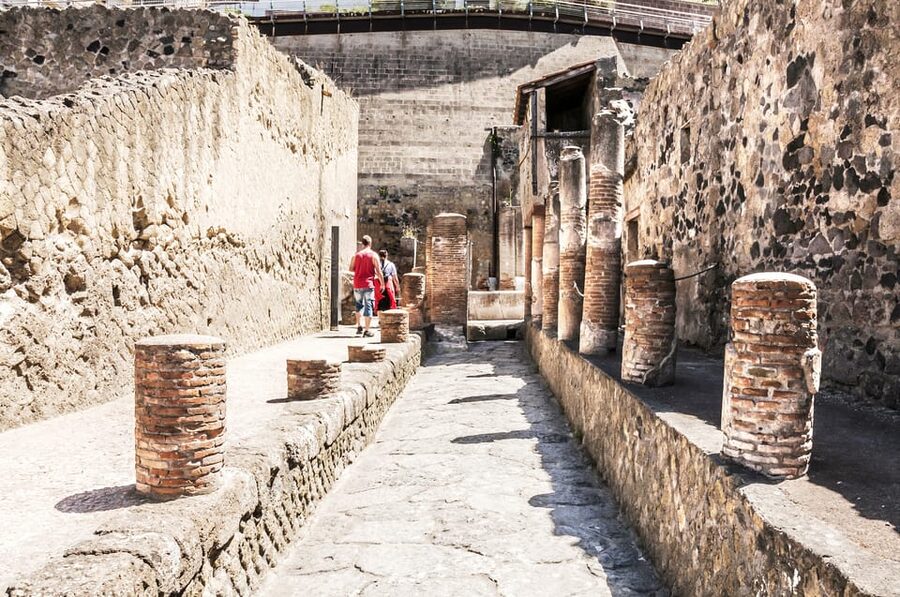
- Buried town, eerily preserved: roofs, beds, doors, food, and around 300 skeletons help you imagine what happened.
- Less intense than Pompeii: it is smaller and often easier to see without feeling overwhelmed.
- Two audio options: a downloadable smartphone app or a physical device, in multiple languages.
- Timing matters: last admission is set by season, and you must leave the archaeological area by the close time.
- Download smart: the app can be data-hungry, and phone coverage on site may be limited.
Herculaneum entry vs the Pompeii effect
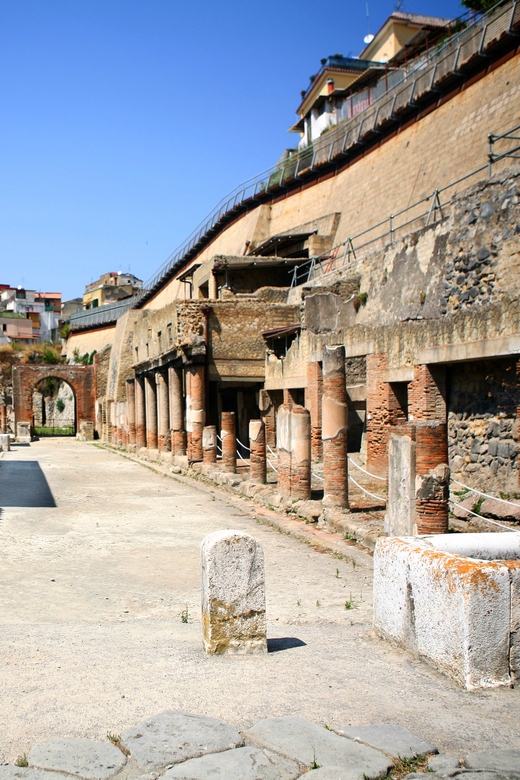
Most people peg Naples trips to Pompeii. That makes sense, Pompeii is huge and famous. But Herculaneum is the one you go to when you want the quieter, more intimate feeling of daily Roman life.
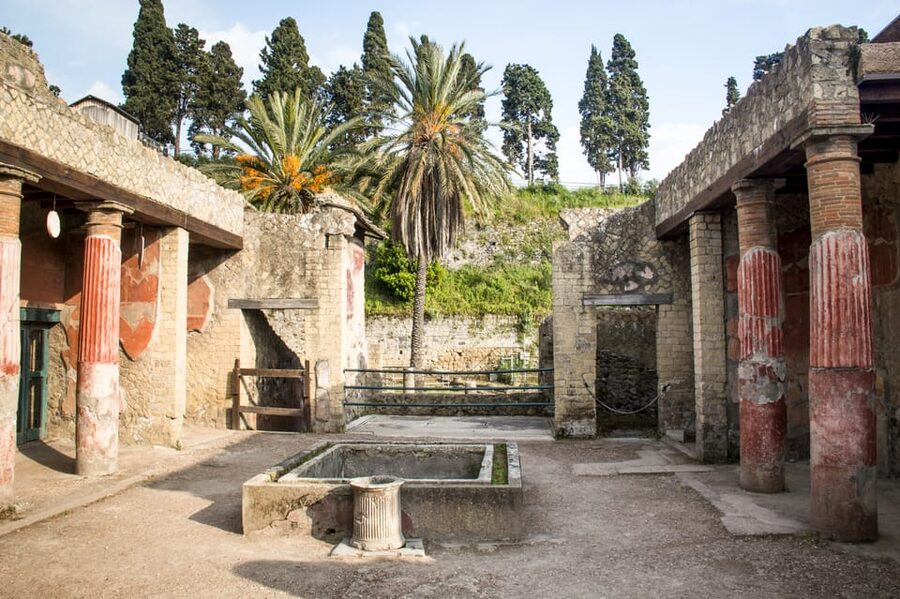
Here, the ground cover did something rare. The eruption covered the town in ash, and that helped preserve many architectural details that typically vanish after 2,000 years. When you walk along cobbled streets and look into structures, you are not just viewing walls. You are seeing rooms that once functioned as real homes, shops, and public spaces.
You also benefit from the scale. Herculaneum feels compact compared with Pompeii, so you can get a strong visit without spending your whole day fighting crowds or rushing between far-flung zones. If you want a history stop that still feels human-sized, this is a good bet.
More Herculaneum tours to compare:
- Herculaneum: Skip The Line Entrance ticket + Audioguide
★ 4.3 · 266 reviews - Naples: Pompeii and Herculaneum Tour with Tickets and Lunch
★ 4.4 · 136 reviews - Herculaneum Archaeological Park smart Audio Tour
★ 3.8 · 70 reviews
Price and what you actually get for your $21
The entry ticket is listed at $21 per person, and that buys you direct access to the archaeological site. That is the core value. You are not paying for a timed group experience, you are buying time in a UNESCO World Heritage site at your pace.
The optional audio guide adds value if you like context. With the digital app option, you can download and listen in English, French, German, Italian, and Spanish. The guide is designed to help you connect the visible ruins to how people lived, ate, worked, and used public spaces.
If you dislike audio, you can still have a great visit. Even without it, you can follow the physical layout and focus on what the site offers: preserved structures, frescoes, and the emotional weight of the ash-buried remains. The trick is knowing where to focus, because there is not an endless supply of labeled room-by-room signage.
Opening hours and the best way to plan your time

This is a one-day visit, but it is not a free-for-all across the entire day. The site follows seasonal hours with specific last admission and closing rules.
From March 16 to October 14, opening hours run 9:30 AM to 7:30 PM, with last admission at 6:00 PM, and you must leave by 7:00 PM.
From October 15 to March 15, it is 8:30 AM to 5:00 PM, with last admission at 3:30 PM, and you must leave by 4:40 PM.
How long should you budget? Many people can finish in around three hours if they move steadily and listen lightly. But I recommend planning 3 to 4 hours if you actually want to look at details like frescoes and the layout of rooms. In the heat, you will also want extra time for shade breaks.
Redeeming your ticket and getting into the site smoothly

Your ticket is redeemed by showing your mobile voucher at the online ticket desk on site. That part is straightforward, but it is worth keeping your phone charged and your confirmation email handy.
Once you are in, the biggest time saver is getting oriented right away. Some areas can feel like you are moving through different “chapters” of a town rather than one straight walking loop. If you want your visit to feel coherent, start with a simple plan: follow the main pathways first, then circle back to any house fronts, frescoed rooms, or public building clusters that catch your eye.
Also, don’t assume you will instantly understand every room from labels alone. I would treat the audio guide as a helper, not as a replacement for paying attention to the physical scene in front of you.
A few more Ercolano trips worth comparing
- From Naples_ Vesuvius transfer+ticket and digital audioguide
★ 3.7 · 58 reviews - Herculaneum: 2hour Shared Guided Tour + entry tickets
★ 4.3 · 38 reviews - Herculaneum Guided Walking Tour with Entry Ticket
★ 3.7 · 21 reviews - Herculaneum with an Archaelogical Guide & Ticket
★ 4.8 · 11 reviews
Walking the ancient streets: what you’ll notice first
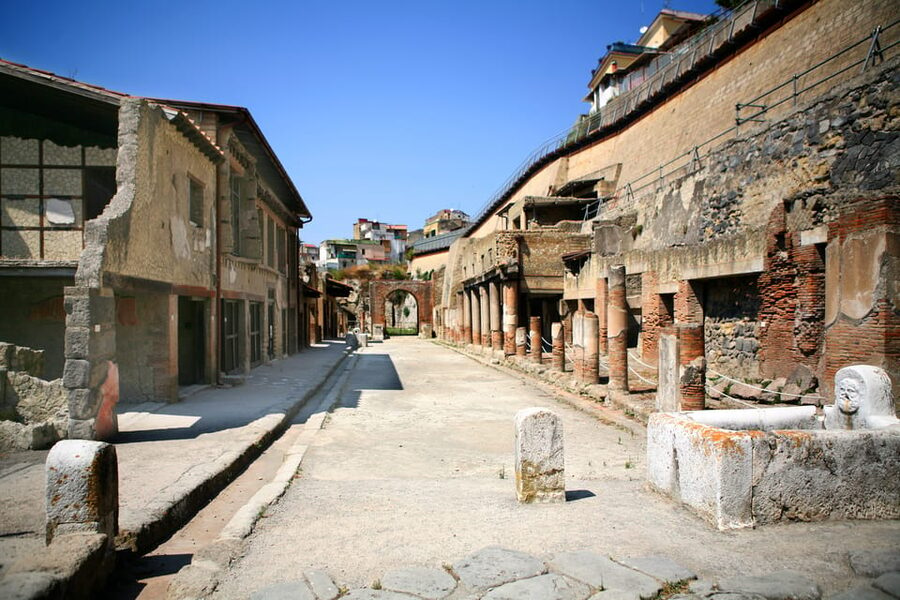
The first thing you notice is the street itself. Cobblestones set the rhythm. When you see a narrow street with building fronts still standing, it stops being “ruins” and starts being a lived-in neighborhood.
Then your eyes start grabbing details that make the place feel unusually real for an archaeological site. You will encounter preserved architectural elements like doorways and internal layouts that help you understand where daily movement happened, where people gathered, and where activities were organized.
This is where going at a calm pace pays off. If you rush, you skim over the clues. If you slow down, you start connecting the dots between street, room, and function, like how a shop frontage differs from a domestic entrance, or how public spaces are arranged for more than just one family.
Houses and frescoes: the self-guided part that feels most personal

Herculaneum is famous for preservation. The most powerful moments tend to happen in houses and rooms where you can see everyday traces. You are not only looking at big public monuments. You are looking at spaces that once held beds, household storage, and household routines.
Frescoes often become your “pause points.” If the app works smoothly for you, it can point out why certain decorative choices mattered. If the app feels confusing, you can still treat each frescoed room like a mini museum. Look at color, framing, and where the room sits in the building. Over time, you start to see patterns in how rooms were meant to function.
One practical tip: bring your attention skills. This is the kind of place where you get the best payoff when you stop asking, “What is this?” and start asking, “What did people do here?”
Public life you can still picture: gymnasium and baths
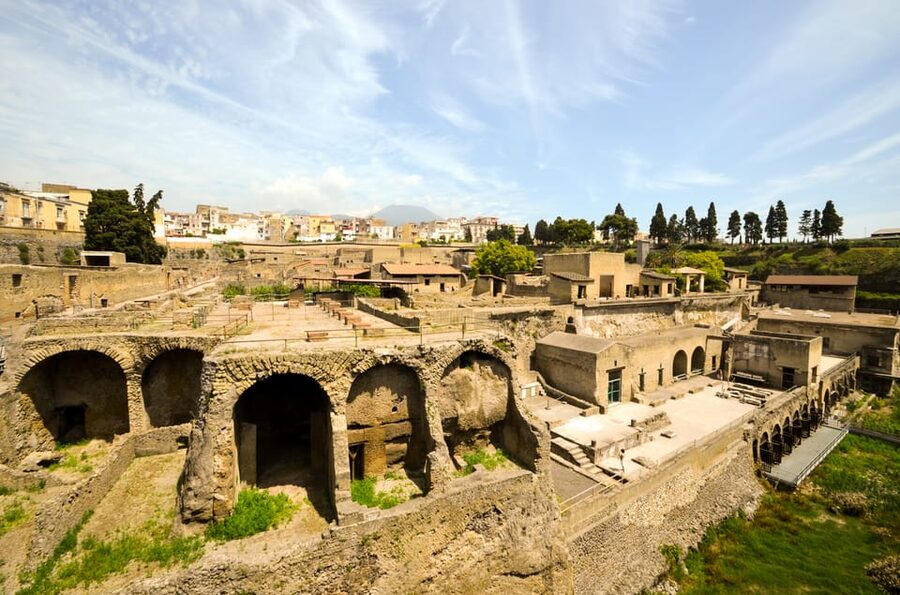
A big part of Roman life was public. Herculaneum gives you that side of the story in ways that feel more grounded than a list of names.
You can see public spaces including a public gymnasium and public swimming baths. Even without an expert guide, these areas help you imagine what people did outside the home. In a gym or bath setting, you are looking at a social rhythm. People went, interacted, and did routine activities that were central to community life.
The value here is that the ruins are not only “pretty surfaces.” They connect to habits, movement, and routines. That is why the site can feel haunting. You are seeing the machinery of normal days, then confronting the eruption that ended it.
The eruption’s human weight: ash and the buried remains
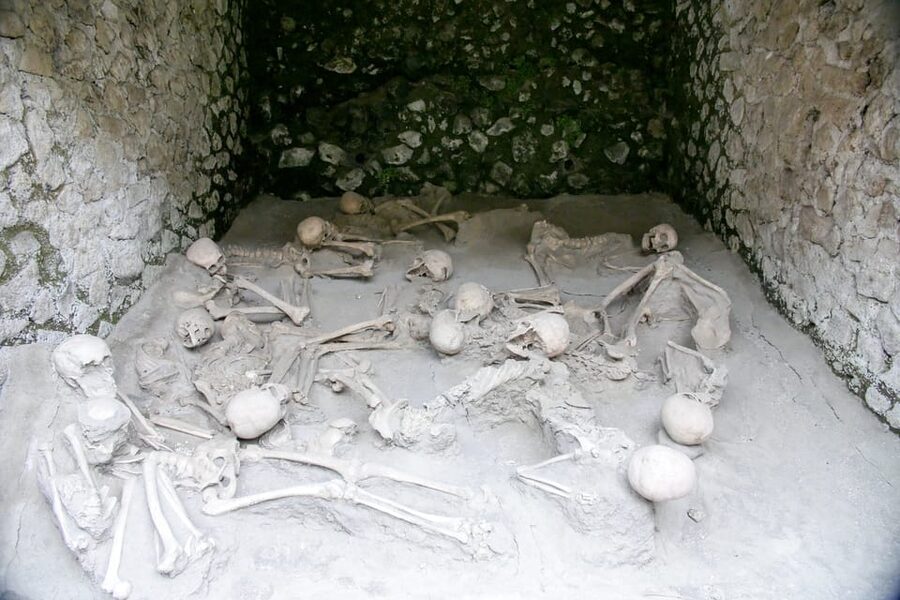
What makes Herculaneum emotionally heavy is what the ash preserved. The town was buried after Vesuvius erupted, and unlike nearby Pompeii, much of the town remained intact in a way that brings you closer to the people.
You can see evidence related to the remains of people, with around 300 skeletons referenced in descriptions of what was preserved. Even when you are not reading every detail, the context changes your gaze. You stop treating it like a sightseeing route and start treating it like a memorial.
If you want your visit to land well, build in a few quiet minutes. Choose one space where you feel the story in your body, not just in your head. Then move on. That rhythm works better than trying to carry the full emotional weight all the way through the day.
Audio guide tips: make it work before you enter
The audio guide is optional, but if you choose it, treat preparation as part of the experience.
For the smartphone app: download instructions before you arrive, and plan to use headphones. The app can be data-hungry, and phone coverage at the site may not be reliable. If you arrive without downloading, you risk losing the whole point of the guide.
Navigation can also be a real issue. Some people find it hard to match the dialogue to exactly where they are standing, especially if signage is limited or if the audio tracks do not feel clearly indexed to specific rooms. If that happens, do not stubbornly force it. Shut it off and switch to pure observation for a while.
Also check what you are actually getting. On some occasions, the narration quality or platform can vary, with some audio packages using third-party storytelling rather than a strict official museum script. If you care a lot about narration style, start the first audio track right at the beginning, while you can still turn around quickly.
If you opt for the physical audio guide device, you should expect a more “plug in and go” flow. That said, it still won’t magically solve the human challenge of matching audio to room geometry. It helps, but your eyes still matter.
Heat and comfort: how to enjoy it without rushing
In summer, Herculaneum can be hot. The good news is that shade exists. You may find cool pockets under roofs and within the structure shadows as you move between buildings. That helps you keep your energy for the more detailed rooms.
Bring practical comfort items:
- Comfortable shoes, since you will walk on cobblestones.
- Sun protection, especially in the warmer months.
- An umbrella can help for shade during pauses outdoors.
If you hate carrying gear, still bring the umbrella or a light cap. It sounds small until you feel the midday sun on a cobblestone street.
A note on signage, maps, and wayfinding
This site is not set up like a theme park with perfectly spaced room IDs. You may find it easier to navigate if you use the audio guide’s cues, and you may also benefit from any map materials available on site.
Some people want more signage and room-by-room guidance. So if you prefer clear labels, go in expecting that you will do more “reading with your eyes” than “reading with big plaques.”
That is not a deal breaker. It just means your visit style should be visual and curious, not checklist-driven.
Do you need a live guide?
You do not need a guided tour to enjoy Herculaneum. The entry ticket gives you access, and the site layout is readable enough that careful walking delivers a strong experience.
That said, if you love deep interpretation, a real guide can help you connect the dots faster. The audio guide can provide lots of information about houses and daily life, but if you find it confusing in specific locations, a live guide solves that instantly through on-the-ground explanations.
My practical advice: if your goal is architecture detail only, an in-person guide might be worth the extra cost. If your goal is feeling and context, the audio guide plus observation can be enough.
Who this is best for
This is a strong match for you if:
- You want a Pompeii-adjacent experience without the overwhelm.
- You like preserved interiors, not only big ruins.
- You want to think about daily life and what changed after the eruption.
It is also a good fit if you want flexibility. You can stop, walk slowly, and come back to rooms that grab you. That freedom is part of the ticket’s value.
If you know you dislike audio guides, you can still enjoy it. Focus on frescoes, street layout, and preserved structures. In a place this intact, your attention does a lot of the guiding.
Should you book the Ercolano entry ticket with audio guide?
If you want the best value, book the entry ticket and plan to spend at least a few hours. Then decide on audio based on your style. If you like guided explanations and want context tied to rooms, the optional audio guide can make the visit feel fuller.
If you know you struggle with apps, or you strongly prefer clear on-site interpretation, consider skipping the app and doing more quiet looking instead. And whichever option you choose, arrive ready to walk: comfortable shoes, water or shade planning, and a calm pace so you do not miss the preserved details that make Herculaneum different from the headline sites.
FAQ
What does the ticket include?
Your ticket includes entry to the Herculaneum archaeological site. It may also include an optional digital audio guide app on your smartphone, or a physical audio guide device if you selected that option.
How much does it cost?
The entry ticket price is listed at $21 per person.
How long can I visit Herculaneum?
The ticket is valid for 1 day. The site has seasonal opening hours and specific last admission times, and the archaeological area must be left by the closing deadline for your season.
What are the opening hours?
From March 16 to October 14, it is 9:30 AM to 7:30 PM, with last admission at 6:00 PM and the area must be left by 7:00 PM. From October 15 to March 15, it is 8:30 AM to 5:00 PM, with last admission at 3:30 PM and the area must be left by 4:40 PM.
What languages are available for the audio guide?
The audio guide is available in English, French, German, Italian, and Spanish.
Where do I redeem my ticket?
Redeem your ticket on site by showing your mobile voucher at the online ticket desk.
Recently reviewed around Ercolano
- Herculaneum with an Archaelogical Guide & Ticket★ 4.8 · 11 reviews
- Herculaneum Archaeological Park smart Audio Tour★ 3.8 · 70 reviews
- Herculaneum – Small Group Tour (admission included)★ 5.0 · 14 reviews
- Herculaneum: Private Tour with Driver from Naples★ 4.6 · 15 reviews
- Herculaneum: Skip-The-Line Entrance Tickets + Audioguide★ 4.7 · 3 reviews
- Herculaneum: Private Walking Tour with Archeologist Guide★ 5.0 · 59 reviews
- Herculaneum: Entrance tickets + audioguide★ 2.7 · 4 reviews
- Herculaneum: 2hour Shared Guided Tour + entry tickets★ 4.3 · 38 reviews
Herculaneum Tours, compared.
Pompeii and Herculaneum Small Group Tour with an Archaeologist
Read our review →

Herculaneum: 3D Walking Tour with Skip-the-Line Ticket
Read our review →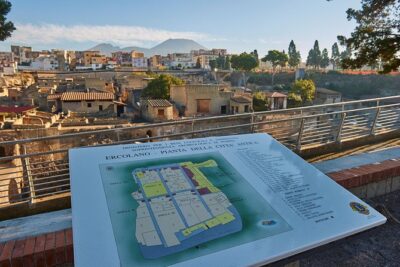
Guided Day Tour of Pompeii and Herculaneum with Light Lunch
Read our review →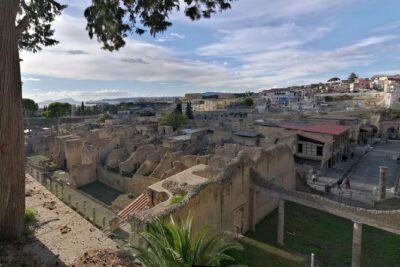
Private Day Tour to Vesuvius, Herculaneum & Pompeii with Pick Up
Read our review →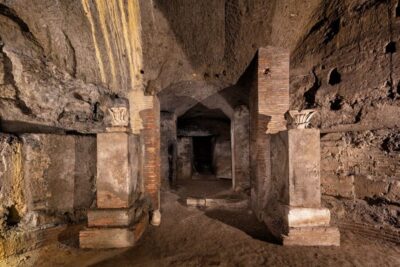

Herculaneum: Skip The Line Entrance ticket + Audioguide
Read our review →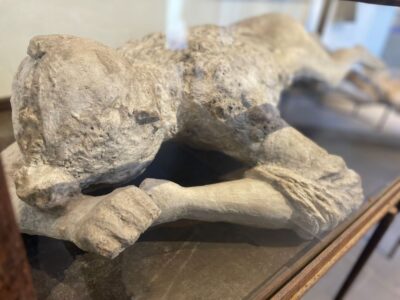
Pompeii and Herculaneum: Guided Tour with an Archaeologist
Read our review →Browse the lists this tour appears in