Reviewed · POMPEII TOURS
Private Tour with Official Guide through the wonders of Pompeii.
Pompeii is the kind of place where a great guide can turn a confusing pile of stone into a real city you can read. This private tour is interesting because it keeps you on a smart route through the most meaningful parts of the site, with an official guide handling the big-picture context.
I especially like the focus on the “why” behind what you’re seeing, not just the “what.” One name that comes up in glowing feedback is Paolo, who brings humor and small, memorable details that help you notice more than you would on your own. The main drawback to consider is the time window, about 2 to 3 hours, so you have to accept a paced route rather than lingering forever in every single doorway.
Key Highlights You’ll Care About
- Private group, your pace: Only your group participates, which helps when you want questions answered or extra moments for photos.
- Teatro Grande plus Odeon: You get both big public performance spaces and the smaller music theater symbol.
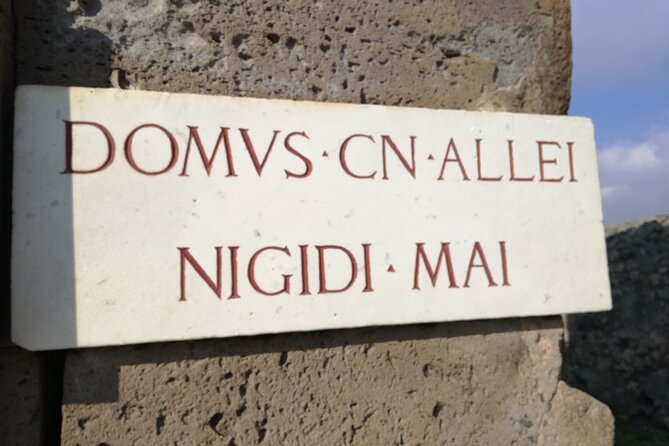
- Villas that show daily life: Casas such as Casa dei Vettii and Casa degli Amorini Dorati emphasize art, layout, and status.
- Baths beyond the stereotypes: Suburban Baths and the huge Stabian Baths show how social and routine life worked.
- Forum and main street in one flow: You connect the city center to the street where commerce played out.
- Street food stop, Thermopolium: You get a practical taste of what people ate, not just temples and theaters.
How This Private Pompeii Route Fits Together in 2 to 3 Hours
This tour works because it respects your attention span. Pompeii is enormous, and if you try to “wing it” without a plan, you can end up hopping between random rooms and streets without understanding the city’s rhythm. Here, you follow a logical thread from public entertainment, to elite homes, to everyday civic spaces, and then to places tied to hygiene and food.
The pacing is also realistic. You’re looking at about 2 to 3 hours total, which means you will see a lot, but not everything in the same deep, slow way. If you want hours and hours in one house, bring that energy for another visit. If you want the essentials and a clear story you can remember later, this route hits a sweet spot.
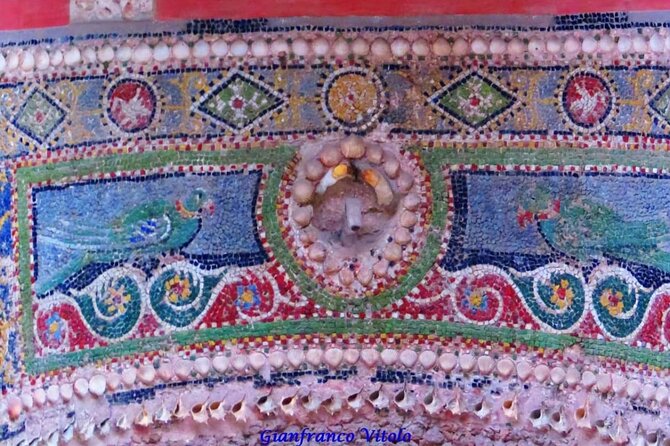
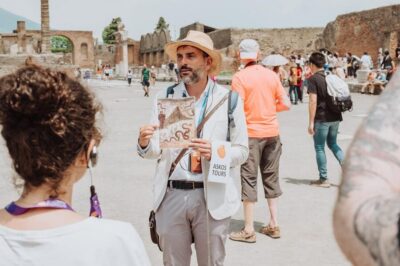
The tour is private, so the experience stays tight. Your guide can answer your questions on the spot and adjust when you want extra time at a specific stop. That matters at Pompeii, because the most interesting details are often the smallest ones, like a mosaic panel you might miss at a glance.
Finally, it’s in English, which is huge for getting the context right away. When the guide can explain what you’re looking at while you’re standing in front of it, the site clicks faster.
More Pompeii tours to compare:
- Pompeii: Entry Ticket and Guided Tour with an Archaeologist
★ 4.8 · 19,459 reviews - Pompeii: Entry Ticket with Optional Audio Guide
★ 4.2 · 12,360 reviews - Pompeii: Small Group Tour with an Archaeologist
★ 4.8 · 12,264 reviews
Starting at Via Villa dei Misteri: Where Your Tour Actually Begins
Your meeting point is Via Villa dei Misteri, 1, 80045 Pompei NA, Italy, and the tour starts at 12:30 pm. You’ll also return to the same meeting point at the end. That simple “start and finish here” setup is practical because it reduces stress when you’re trying to manage a midday schedule.
This start location also matters for timing. A 12:30 pm departure means you’re visiting in the hours when you’re likely already in motion around Naples and the coast area. If your plan includes train or bus transfers, this start time gives you enough daylight for a full ruin visit without forcing an early-morning scramble.
You’ll get a map of the Archaeological Park Pompeii and bottled water as part of the experience. Those two items sound small, but they really help. The map gives you something to anchor your route, and the water keeps you comfortable as you move between high-visibility monuments and smaller architectural details.
The tour is offered with a mobile ticket, so you should expect less paper hassle on the day. And because it’s private and your guide is with you throughout, you do not have to hunt for meeting points inside the park.
Teatro Grande and the Performance Spaces of Pompeii
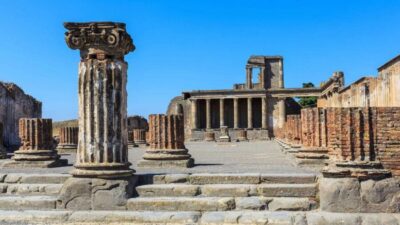
Pompeii was not only a city of homes and shopping. It was a city that gathered people into public spaces for performance and music. The tour starts at Teatro Grande, the majestic theater used for Greek Roman tragedies and comedies. When you stand in and around a theater like this, you can start to grasp the scale of entertainment in daily Roman life.
What makes this stop valuable on a guided route is how the guide can connect structure to feeling. You get a sense of how a theater shaped crowds, movement, and even the sound experience of the space. If you only look at the stone, you might miss how the theater functioned as a social machine, pulling the city together for stories, jokes, and spectacle.
Next comes another performance setting: the Odeon, also called Teatro Piccolo. This smaller theater is tied to singing and the tradition of music. It’s the kind of stop that can feel less important at first, but in practice it’s a great contrast to Teatro Grande. Together, they show you that entertainment in Pompeii wasn’t a one-off event. It was a built-in part of civic culture.
Also, timing helps here. Two theater stops give you a clear thematic segment early, and that’s when it’s easiest to remember what you learned. By the time you transition to villas and baths later, the city starts to feel organized instead of random.
Casa dei Vettii, Casa del Fauno, and Casa degli Amorini Dorati
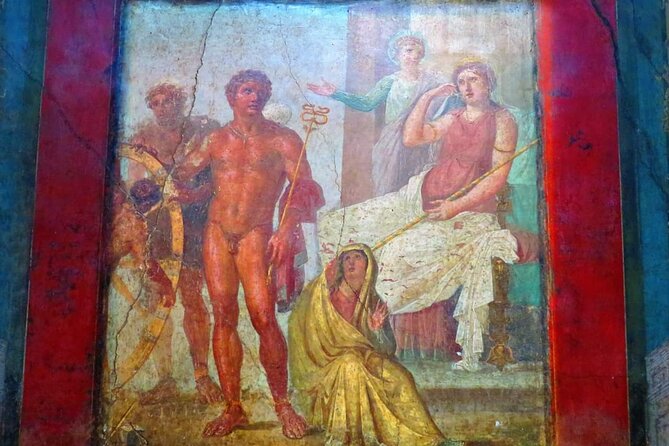
The tour’s villa portion is where Pompeii can feel most human. Houses in Pompeii are not just ruins, they are statements. Families showed wealth, taste, and identity through frescoes, mosaics, and the way rooms were arranged.
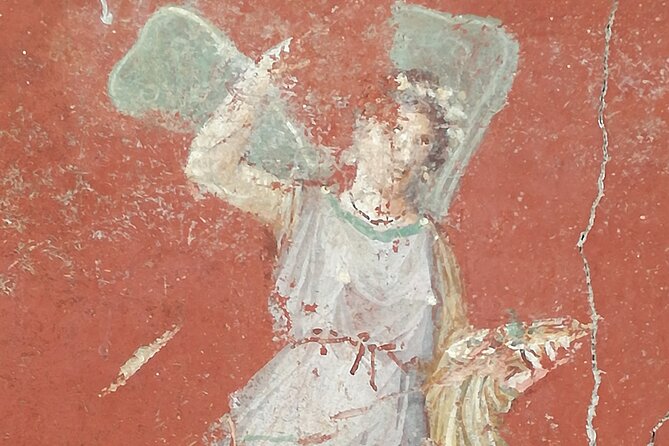
First up is Casa dei Vettii, where you’ll focus on architecture plus frescoes and mosaics. This is the sort of stop where a guide can point out why specific decorative choices matter. A fresco is not just pretty paint on a wall. It can signal style, education, connections, and how someone wanted visitors to see them.
Then you move to Casa del Fauno, described as one of the oldest villas in Pompeii. Even with limited time, an early villa gives you a sense of how the city developed and how household design changed across years. This is one of those stops that helps you avoid the common mistake of treating Pompeii like a single moment in time. The city had layers.
The emotional highlight for many people is Casa degli Amorini Dorati. It’s described as breathtaking, and the name alone points to what draws attention: those golden little figures tied to love imagery. This is the kind of place where you might initially think, yes, it’s beautiful, and then realize the details are what make it unforgettable. On a guided route, you won’t just see the big decoration. You’ll learn to look for the logic of layout and the role of art in everyday life.
Each villa stop is brief, but that’s why the official guide helps. You get a guided “first read” that makes the site easier to revisit later on your own.
A few more Pompeii trips worth comparing
- Pompeii Ruins Private Tour with Optional Skip-the-Line Entry
★ 4.9 · 732 reviews - Pompeii private tour with an Official Guide
★ 5.0 · 631 reviews - Pompeii Private Tour with an Archaeologist and Skip The Line – 3 hours
★ 5.0 · 564 reviews - Visit in Pompeii – Pompeii Private Tour with Ada
★ 5.0 · 436 reviews
Suburban Baths and Stabian Baths: Pompeii’s Everyday Wellness Culture
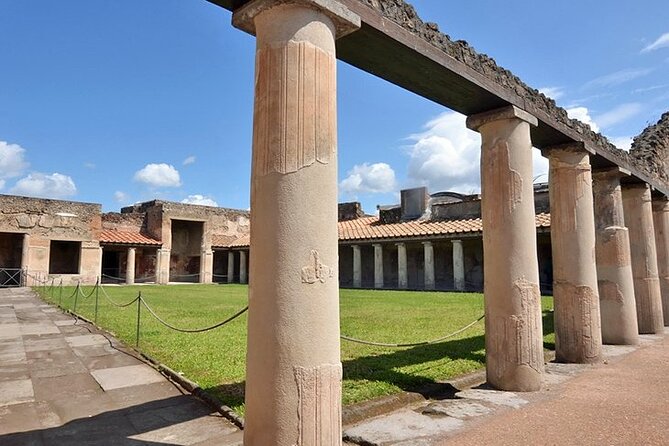
If theaters and villas feel like big social signals, the baths make Pompeii feel practical. The tour includes the Suburban Baths, built near the walls and described as an extraordinary spa. It’s a different angle on what people valued. This is where you can start thinking beyond monuments and ask what routine looked like.
Next comes the Stabian Baths (Terme Stabiane), described as the largest baths of Pompeii. This is not a small stop, so it’s worth treating it as a key chapter. Baths in Roman life were about hygiene, yes, but also about conversation, relaxation, and social contact. Even with a short visit, a guide can help you map the space mentally, so it doesn’t feel like random rooms.
What I like about including both suburban and Stabian baths is that it shows variety. One bath complex near the walls feels tied to the city’s edges and movements. The larger Stabian Baths feels like a major hub. When you understand both, you get a better sense of how widely these habits were shared.
This segment can also reframe what you think Pompeii is. It’s easy to go in expecting only dramatic houses and famous murals. Baths pull you back to the repeatable side of life.
Odeon to the Forum: Temples and the City’s Center
After the baths, the tour returns you to the civic heartbeat. The next major stop is the Forum (Foro de Pompeya), described as the main square. If you’re trying to understand how power and daily life blended, this is a critical stop. A forum is where announcements happen, people meet, and the city’s identity shows itself.
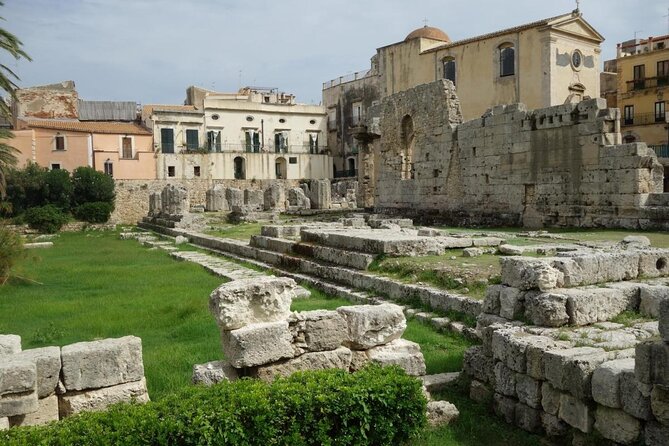
The tour then adds two temple stops that help you see the religious side of public life. First, Tempio di Giove Capitolino, described as the Temple of the temples. Then Temple of Apollo, tied to Apollo, god of the sun and son of Zeus. Even if you already know classical mythology, a guide’s explanations can make these names feel specific to place, not just as random Roman labels.
Here’s the practical value: temples and the forum give you a mental map of where people looked for meaning. Later, when you move down the main street, you can connect civic space to commerce and movement. Without that connection, you might see monuments as separate highlights rather than a functioning city system.
The route also includes Casa del Poeta Tragico, briefly described as the home of the famous mosaic. If you catch this stop at the right moment, it becomes a bridge between public life and private art. It’s a reminder that even small details in homes link back to the same cultural world you see in temples and the forum.
Via dell’Abbondanza and the Street Food Reality of Thermopolium
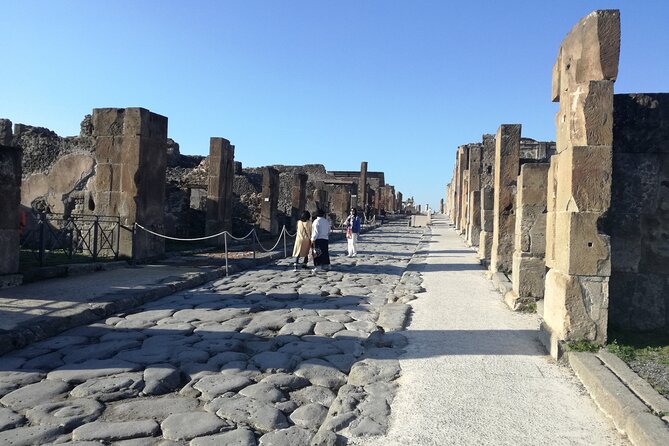
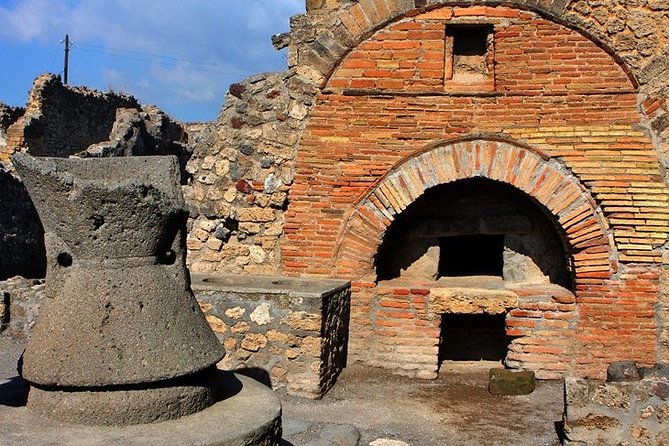
A city is not only its big monuments. It’s the streets where people walked, traded, and grabbed meals. That’s why the tour includes Via dell’Abbondanza, the main street. You’ll get a short look at the route that carried everyday movement. Even a brief street stop is helpful because it gives you scale and orientation.
Then you finish with a very human, very practical look at food and service: Thermopolium Regio VI, Insula VIII, 8. This is described as one of the restaurants of the time. A thermopolium is essentially a counter-based place where people could eat quickly, and it shifts Pompeii from “historic set” to “real daily life.”
This ending choice is smart. After temples and baths, you might expect the tour to feel heavy. Instead, the thermopolium brings you back to the basics. You end with the kind of location you can imagine easily, because everyone understands grabbing food while moving through a neighborhood.
Price and Value: What You’re Really Paying For
The price is $102.35 per person, and the duration is 2 to 3 hours. That can sound steep if you compare it to a self-guided ticket day. But Pompeii is one of those places where an official guide can change what you take away.
You are paying for three real things:
- Official interpretation while you’re standing in front of the site, which makes the ruins easier to understand right away.
- Time savings in sense-making, since your guide helps you avoid wandering without direction.
- Included extras like bottled water and a map of the archaeological park.
Also, it’s private, so the value can rise if you’re traveling with friends or family and want flexibility. Private tours often cost more per person than group tours, but you also gain control. If you want questions answered, extra photo time, or a gentler pace on a specific stop, you can usually make that happen more easily in a private setting.
Group discounts are mentioned, which suggests pricing can work better depending on your group size. If you’re traveling as a small group, this is a strong option for getting a high-quality experience without the friction of a big crowded tour.
Who This Pompeii Tour Suits Best
This tour is a good match if you:
- Want the key Pompeii highlights in a managed route instead of guessing.
- Prefer English explanations rather than relying only on signs.
- Like art and architecture, since you’ll see multiple houses known for frescoes and mosaics.
- Want public life and everyday life in the same day, with theaters, forum, baths, main street, and a thermopolium.
It may be less ideal if you:
- Want to spend long hours inside one house, studying every wall and mosaic slowly.
- Plan to add multiple stops at Pompeii and expect this tour to feel like a flexible, all-day pass. This one is clearly designed as a shorter focused experience.
Because service animals are allowed and most travelers can participate, it generally works for a wide range of visitors. And it’s near public transportation, which helps if you are coordinating legs from the coast or Naples area.
Should You Book This Pompeii Official Guide Tour?
If you’re visiting Pompeii for the first time, I’d strongly consider booking this private official guide tour. It gives you a concentrated overview that helps you understand the site as a city, not just a set of famous rooms. The route connects performance spaces, elite homes, baths, the forum, temples, the main street, and street-level food, so you get a fuller picture without needing an expert brain.
Also, the best-rated part of this experience is the guide approach. The name Paolo shows up repeatedly in high praise, and the themes are clear: strong storytelling, good humor, and attention to details most people would miss. In other words, you’re not just buying access. You’re buying a better way to see.
One last note: because the Archaeological Park Pompeii ticket is not included, plan to handle that separately. If you do that ahead of time, the day itself stays simple.
FAQ
How long is the Pompeii private tour?
The tour lasts about 2 to 3 hours.
What language is the tour offered in?
It is offered in English.
Is this tour private or shared with other groups?
It is a private tour, so only your group participates.
Where does the tour start, and what time does it begin?
The meeting point is Via Villa dei Misteri, 1, 80045 Pompei NA, Italy, and the start time is 12:30 pm.
What is included in the price?
Included features are a tourist guide, a map of the Archaeological Park Pompeii, and bottled water.
Do I need to buy the Pompeii ticket separately?
Yes. The Archaeological Park Pompeii Ticket is not included.
Is the tour ticket mobile-friendly?
Yes, it uses a mobile ticket.
Is cancellation free?
Yes, there is free cancellation if you cancel at least 24 hours before the experience’s start time.
Are service animals allowed and is it easy to reach?
Service animals are allowed, and the meeting area is near public transportation. The tour says most travelers can participate.
Recently reviewed around Pompeii
- Mt. Vesuvius Wine Tasting and Lunch Experience from Pompeii★ 4.5 · 20 reviews
- Pompeii Small Group with an Archaeologist and Skip The Line★ 5.0 · 121 reviews
- Pompeii from Afternoon to Sunset★ 5.0 · 108 reviews
- Private Guided Tour and VR Headsets in the Ancient Pompeii★ 5.0 · 3 reviews
- Visit Pompeii with a local expert guide★ 5.0 · 10 reviews
- Traditional Neapolitan Dinner in Pompei – Villa Franca – Family Restourant★ 5.0 · 8 reviews
- Discover Pompeii on this Guided Walking Tour of the Buried City★ 4.0 · 9 reviews
- Transfer from Pompeii to Naples or viceversa★ 5.0 · 3 reviews
Pompeii Tours, compared.
Entry Ticket and Guided Tour with an Archaeologist
Read our review →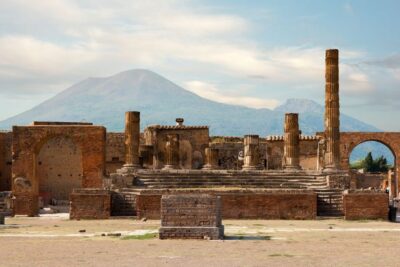
Pompeii Small Group Tour with an Archaeologist
Read our review →
Skip-the-Line Entrance Ticket with Audio Guide
Read our review →
Pompeii and Mt. Vesuvius with Lunch and Wine Tasting
Read our review →
Archaeological Park Tour with Ticket on request
Read our review →