Reviewed · POMPEII TOURS
Pompeii with an archaeologist, the original!!!
Pompeii can feel like a jumble of stones unless someone teaches you how to read it. This private tour is interesting because you get a real archaeologist guiding your walk, the kind of person who has worked on research and excavations at the site.
Two things I like a lot: first, the explanations are built around daily Roman life, so you are not just seeing famous ruins, you are understanding how people lived. Second, the visit is planned for the afternoon to reduce heat and crowds, with the light at day’s end making the experience feel extra clear and human.
One possible drawback to weigh: the entrance ticket is not included in the tour price, so you will need to budget the Pompeii ticket on top.
Key things to know before you go
- A private visit led by a practicing archaeologist (not an agency script)
- Focus on daily life, with stops that connect buildings to routines
- Afternoon timing designed to reduce heat and heavy crowds
- Small groups, up to 8 people, so questions are actually possible
- Archaeologist plus a local government guide for strong on-the-ground context
- Clear, friendly communication has been a highlight when guide Valeria is leading
Why a real archaeologist changes how you read Pompeii
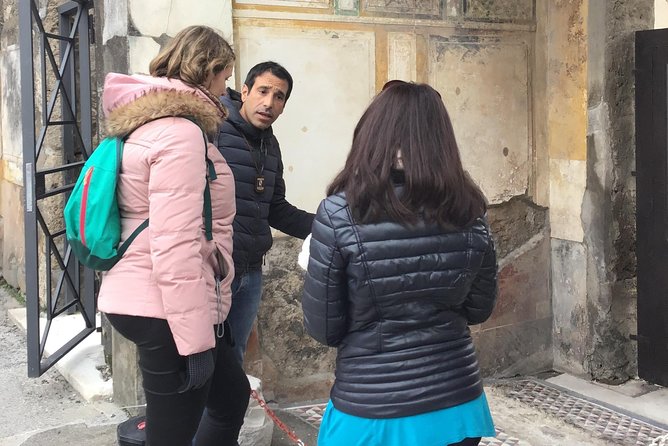
Most Pompeii tours do the same thing: point, name, photo, move on. This one is different in the best way. You are walking with an archaeologist who has studied and researched Pompeii for real, so the story is grounded in evidence, not vague tourism talk.
You will still see the headline sights, but the key is how you see them. When an archaeologist explains what you are looking at, you start noticing the small choices ancient people made. Why a room was used a certain way. What decoration meant socially. How a public building fit into a community’s rhythm. That is what turns Pompeii from a big open-air museum into something you can actually picture.
And yes, the English matters. When guide Valeria is in the lead, the vibe is both smart and easy to follow, with great communication and a fun tone. Even if you are not a “Roman history person,” you will likely find yourself asking questions, because the answers sound like they come from actual work.
More Pompeii tours to compare:
- Pompeii: Entry Ticket and Guided Tour with an Archaeologist
★ 4.8 · 19,459 reviews - Pompeii: Entry Ticket with Optional Audio Guide
★ 4.2 · 12,360 reviews - Pompeii: Small Group Tour with an Archaeologist
★ 4.8 · 12,264 reviews
Meeting at Ristorante Suisse in Piazza Esedra, then heading into the park
Your meeting point is Ristorante Suisse, Piazza Esedra, 10/13, 80045 Pompei NA. The good news is that it is a straightforward start, and the activity ends back at the same meeting place.
You will go in with a mobile ticket, which keeps things simple if you are traveling light. Since this is a private tour, the pacing is set for your group, not for a giant bus crowd. That matters at Pompeii, where the distance between highlights can feel longer once you are managing stairs, shadows, and the sheer scale.
Also, keep your expectations realistic: this is about 2 hours. That is plenty of time for a smart route through major areas, but it is not an all-day “every street corner” plan. Think of it as the highest-value introduction, guided by someone who can explain what you are seeing as you walk.
Pompeii Archaeological Park in 2 hours: the route that actually teaches
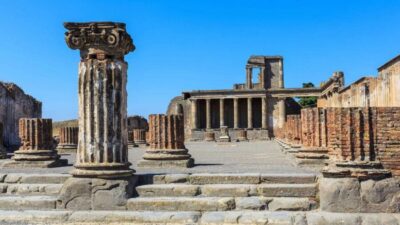
The tour stop is Pompeii Archaeological Park, covering the ancient city spread across 66 hectares. Pompeii was buried by the eruption of Vesuvius in 79 AD, and that catastrophe is exactly why the ruins can teach us so much. Even a roofless wall can tell you about materials, layout, and everyday behavior.
In a tight 2-hour window, the itinerary is built to hit major building types that represent different parts of life. You will see the classic residential world, business and street-level details, and public spaces where citizens gathered.
Homes and decorations: learning what people prized
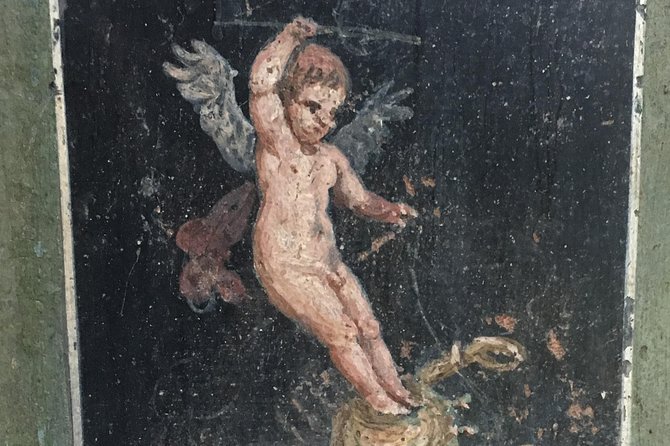
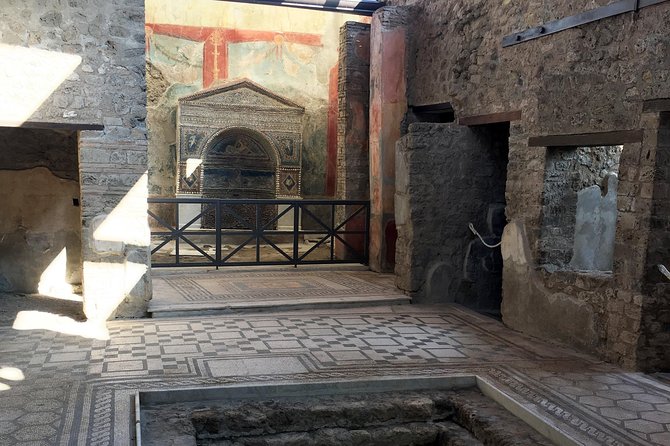
You start with the domestic side of Pompeii, including the typical house with its decorations. These houses are not just “pretty ruins.” They show how Romans organized space, displayed wealth or taste, and structured daily routines.
When you look with an archaeologist, you start connecting design to function. A decorated area might signal status. A layout might reflect how families moved through the home. Even if you cannot name every room, you can still understand the logic behind the architecture.
Same stretch of coast, a completely different day out:
- Pompeii Small Group Tour with an Archaeologist
★ 5.0 · 6,593 reviews - Pompeii: Skip-the-Line Entrance Ticket with Audio Guide
★ 4.0 · 2,509 reviews - Naples: Pompeii and Mt. Vesuvius with Lunch and Wine Tasting
★ 4.5 · 2,454 reviews - Pompeii: Archaeological Park Tour with Ticket on request
★ 4.5 · 2,283 reviews
Shops and street life: the city as a workplace
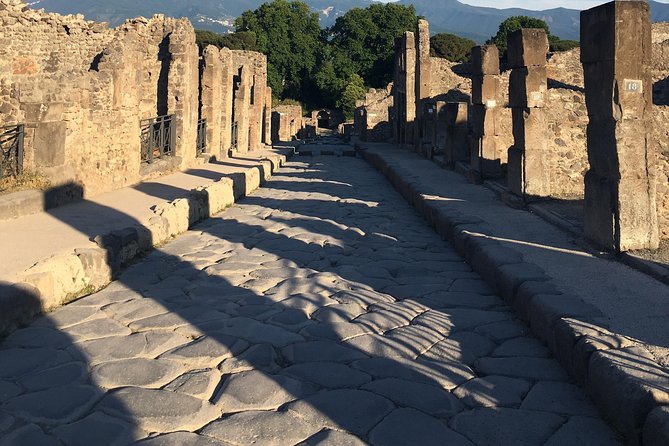
Next, you will move into the shop-and-commerce world, since Pompeii was a real city with people trading, selling, and working. The value here is that you get away from the idea that Pompeii is only about tragedy. It is also about work, buying, and community routines.
This is where the explanations about daily life and habits become practical. You will see how storefront spaces connect to the street, and how architecture shaped economic activity.
Thermal baths: public routine, private comfort
Pompeii’s thermal baths are one of the most compelling Roman features because bathing was both hygiene and social time. On this tour, you will see the baths as part of a broader pattern of how Romans handled health, leisure, and community interaction.
Even if you have seen bath models elsewhere, Pompeii gives you the physical reality. You can stand where people likely moved through hot and cold spaces, and you can understand how the layout supported the routine.
Theater and public entertainment: where the city gathered
The theater stop connects Pompeii to the Roman love of public events. This is where you learn how entertainment worked as a social glue.
With an archaeologist explaining what you see, you are more likely to notice the scale, the design choices, and why this kind of space mattered in civic life. It is not just a place for shows. It was a stage for identity and community.
The lupanary: a blunt window into real behavior
You will also visit the lupanary. It is not comfortable, and that is exactly the point. Pompeii preserves the messy, human side of the ancient world, not only the dignified pieces.
On a tour like this, the discussion tends to stay grounded in what the building tells you, and that can be eye-opening in a more honest way. It also helps you understand why archaeologists pay attention to even the most uncomfortable spaces.
Moving molds: the preserved imprint of moments
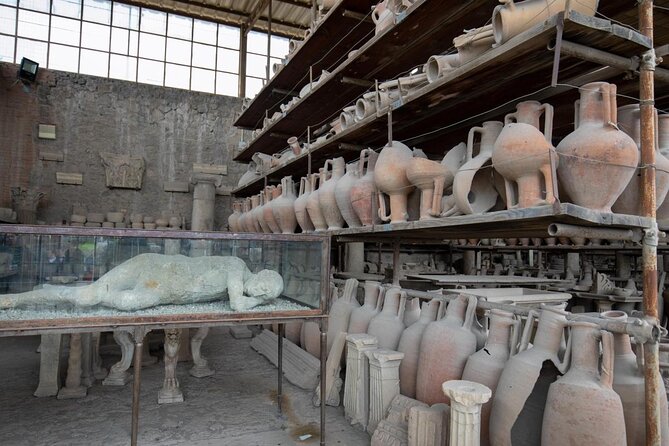
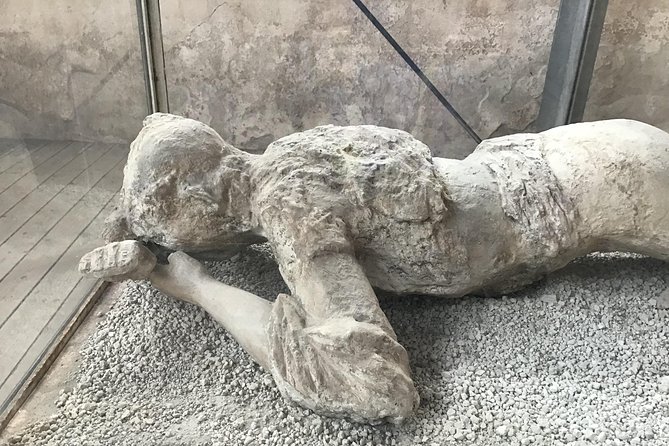
The itinerary references moving molds, which points to the ways Pompeii is used to interpret what happened during the eruption. This kind of material tells a story about bodies and spaces that you cannot get from bones alone.
What you will take away is a stronger sense of Pompeii as a time capsule. Not magic, just careful preservation and interpretation. You will likely leave with the feeling that the evidence is specific, not symbolic.
Avoiding heat and crowd pressure with an afternoon plan
One line in the overview matters a lot: the afternoon tour is designed and calibrated to avoid the heat and the crowds. At Pompeii, that is not just convenience. It changes what you can enjoy.
Cooler temperatures make the walking feel more manageable, especially when you are moving between major areas. Fewer crowds mean you can actually hear explanations and look closely, instead of being squeezed into a slow shuffle.
And then there is the light. The description notes the charm of the light at the end of the day. That is not a throwaway marketing line. At Pompeii, shadows and warm daylight help surfaces look more readable. You can see details in walls and openings that are hard to spot under harsh overhead sun.
Price and value: what $226.89 really buys you
The price is $226.89 per group, up to 8 people, for about 2 hours. If you fill the group cap, that is about $28 per person for the guide portion. If you come with fewer people, the cost per person goes up, but you still get a private setting instead of a large join-in tour.
The big value lever here is not the price tag. It is the type of guide. You are paying for an archaeologist-led visit that includes a local government guide. In practice, that means you spend your time on the most meaningful stops instead of wandering and hoping you get lucky with a good storyline.
What is not included is the Pompeii entrance fee. Adults are 19€, EU youth aged 18 to 24 are 3€, and minors are free. Plan on adding that ticket cost per person. This is important for budgeting. The tour is priced as a private professional service, not as an all-in package.
So, the value math is pretty simple:
- If you want the best possible Pompeii orientation in 2 hours, this is strong value.
- If you want to roam independently for much longer, a cheaper self-guided ticket might fit better.
What this tour does well for real people, not just history buffs
This is a private experience, meaning only your group participates. That is great for families, couples, or friends who want conversation and questions without waiting for a crowd to catch up.
Most travelers can participate, but you should still consider that Pompeii involves walking outdoors on uneven ground. The tour is about 2 hours, so it is a good length if you want a structured visit without committing to a full day.
If you like learning while you walk, you will probably enjoy this format. The archaeologist approach is also a win if you are tired of generic labels. You want context, and you want it tied to what you are looking at right now.
And if English clarity is a priority for you, guide Valeria has been praised for perfect English, fun delivery, and strong communication. Even if your exact lead differs, the tour is designed for real explanation, not just reciting names.
Practical tips to make your 2-hour Pompeii walk easier
Here are a few practical things that help you get the most from a short, high-impact tour:
- Wear comfortable shoes you trust on uneven stone. Pompeii punishes bad footwear.
- Bring water, especially if you book an afternoon slot, and plan for some sun exposure.
- Use sunscreen and a hat if you are sensitive to heat.
- Bring your phone for the mobile ticket, and keep a screenshot or saved access offline as a backup.
- If you want photos, be ready for quick moments. A guided route focuses on learning, and the best light does not last forever.
- Arrive a few minutes early at Ristorante Suisse so you start smoothly.
One more thought: because entrance is separate, buy or plan your ticket ahead so you do not lose time at the gate.
Should you book this Pompeii archaeologist tour or not?
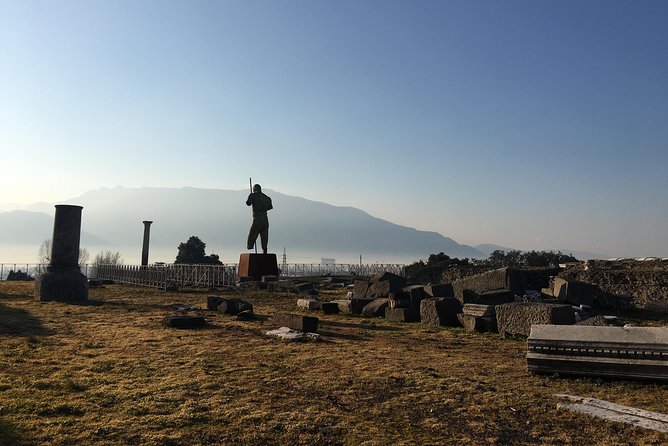
Yes, book it if you want Pompeii that actually makes sense. This is best for people who want more than a photo walk, and who care about learning from someone who has done real archaeological work at the site. The private format, small group size up to 8, and the afternoon approach to heat and crowd management make it a very efficient way to see the big highlights while understanding daily life behind the ruins.
Skip it or consider alternatives if you plan to spend half a day or more wandering freely. This is designed to fit into about 2 hours, and it is structured around key buildings like houses, shops, thermal baths, the theater, the lupanary, and the moving molds-related interpretation.
If you are aiming for the most “worth my time” Pompeii introduction, this is a strong choice.
FAQ
How long is the Pompeii tour with an archaeologist?
It runs for about 2 hours.
Is the entrance fee to Pompeii included?
No. The Biglietto d’ingresso is not included: 19€ for adults, 3€ for EU youth aged 18 to 24, and free for minors.
How many people are in a group?
It is priced per group up to 8 people.
Is the visit private?
Yes. This is a private tour/activity, and only your group participates.
What is included in the tour price?
The tour includes a private visit, 100% archaeologist guidance, and a local government guide.
Where do we meet for the tour?
You meet at Ristorante Suisse, Piazza Esedra, 10/13, 80045 Pompei NA, Italy.
What is the cancellation policy if plans change?
You can cancel for a full refund up to 24 hours in advance. If it is canceled due to poor weather, you will be offered a different date or a full refund.
Recently reviewed around Pompeii
- Mt. Vesuvius Wine Tasting and Lunch Experience from Pompeii★ 4.5 · 20 reviews
- Pompeii Small Group with an Archaeologist and Skip The Line★ 5.0 · 121 reviews
- Pompeii from Afternoon to Sunset★ 5.0 · 108 reviews
- Visit Pompeii with a local expert guide★ 5.0 · 10 reviews
- Private Guided Tour and VR Headsets in the Ancient Pompeii★ 5.0 · 3 reviews
- Traditional Neapolitan Dinner in Pompei – Villa Franca – Family Restourant★ 5.0 · 8 reviews
- Discover Pompeii on this Guided Walking Tour of the Buried City★ 4.0 · 9 reviews
- 2 Hours Private Walking Tour in Pompeii with an Archaeologist★ 5.0 · 15 reviews
Pompeii Tours, compared.
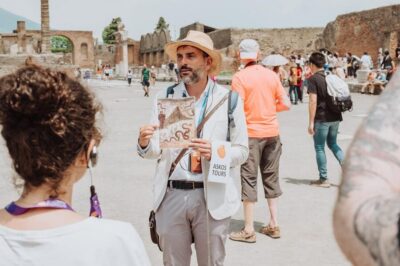
Entry Ticket and Guided Tour with an Archaeologist
Read our review →

Pompeii Small Group Tour with an Archaeologist
Read our review →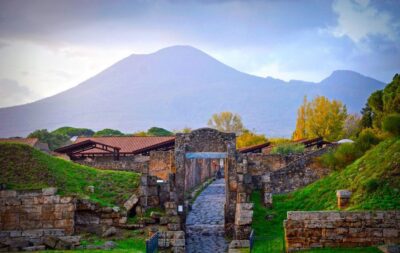
Skip-the-Line Entrance Ticket with Audio Guide
Read our review →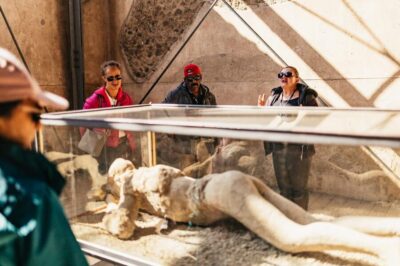
Pompeii and Mt. Vesuvius with Lunch and Wine Tasting
Read our review →
Archaeological Park Tour with Ticket on request
Read our review →