Reviewed · POMPEII TOURS
Pompeii with an archaeologist, small group!!!
Pompeii hits different when you learn it street by street with an archaeologist and a small group. This afternoon-style visit is designed to avoid the heat and crowds, and it ends with that late-day light that makes the ruins feel almost alive.
I particularly like two things about this tour: the archaeologist-led explanations that connect buildings to everyday Roman life, and the fact it stays small, up to 12 people, so questions do not get lost in a crowd. One guide name you may hear is Luca, described as both competent and friendly.
The main consideration is simple: it is about 2 hours. That is a great introduction, but if you want a slower, deeper walk through every corner, you may need more time in Pompeii. Also, lunch is not included, so plan food for after.
Key things I’d plan around
- Archaeologist guidance that links ruins to daily life, not just dates and stones
- Max 12 people for a calmer pace and better chances to ask questions
- Afternoon timing to reduce heat and crowd stress
- Pompeii Express entrance ticket included with your tour
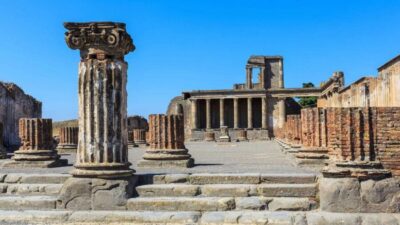
- You’ll see major building types: houses, shops, baths, theater, and the lupanary
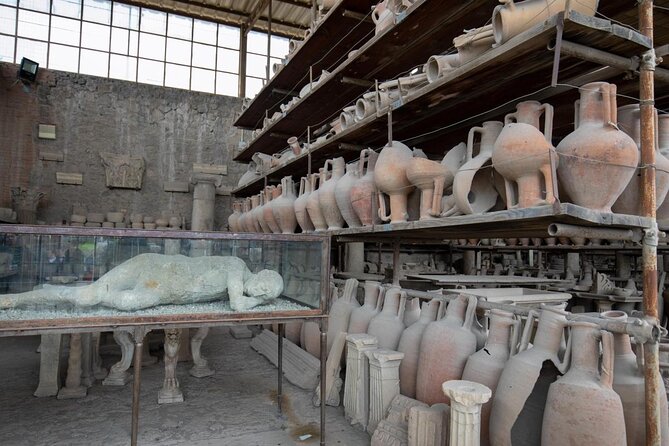
- Extra visual help from the tour’s references to molds and related displays
Pompeii, but with a guide who explains how people lived
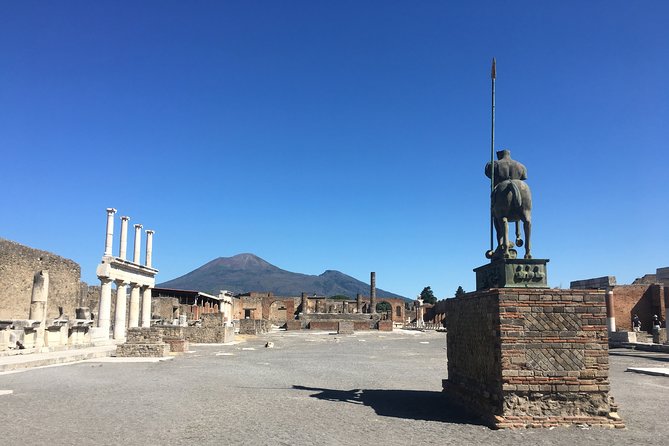
Pompeii covers about 66 hectares, and it was buried by Vesuvius in 79 AD. Even if you’ve seen photos, the scale can surprise you once you start walking inside the city grid. What makes this tour feel worthwhile is that you are not just looking at ruins. You are learning how they fit together, so the place becomes readable.
That is the real value of having an archaeologist. You get a guided lens for what you see, why it matters, and how the buildings connect to daily habits. Instead of memorizing facts, you start spotting patterns: where people worked, where they met friends, where they cooled off, and how domestic life looked in a city that was suddenly frozen in time.
This is also pitched as family-friendly, and I get why. Pompeii is easier to understand when someone helps you translate what you’re looking at. If you have kids, they often handle “short, focused stops” better than a long wandering visit. If you’re traveling solo or as a couple, the small-group setup keeps things social without getting chaotic.
More Pompeii tours to compare:
- Pompeii: Entry Ticket and Guided Tour with an Archaeologist
★ 4.8 · 19,459 reviews - Pompeii: Entry Ticket with Optional Audio Guide
★ 4.2 · 12,360 reviews - Pompeii: Small Group Tour with an Archaeologist
★ 4.8 · 12,264 reviews
The meeting point and how the tour starts
You meet at Ristorante Suisse, Piazza Esedra, 10/13, 80045 Pompei NA, Italy. The tour ends back at the same meeting point, so you do not have to puzzle out transportation from a distant drop-off.
The tour includes a mobile ticket, which matters more than it sounds. When you arrive at a busy site, phone access reduces fumbling and keeps the group moving. It is a small convenience, but it adds up on a place like Pompeii where timing and crowds can feel relentless.
The duration is about 2 hours. That means you should expect a purposeful route, with “high-value stops” rather than an everything-tour of the full archaeological area.
Understanding Pompeii’s scale in the first walking minutes
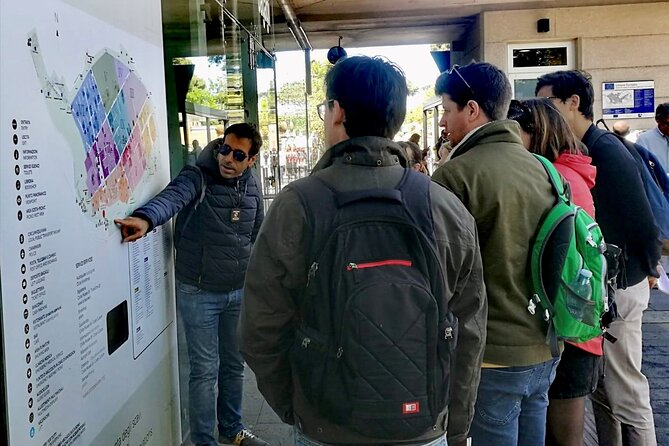
The city is big, and the terrain can be uneven. That is exactly why an archaeologist guide helps early on. You learn the logic of the setting: this is a Roman city that was abruptly sealed, and the structures preserve how people organized daily life.
When you grasp the size, you start walking with context. You stop thinking of Pompeii as one big “ruin field,” and you start thinking in sections and functions: living spaces, commercial streets, public spaces, and leisure spots.
I also like that the tour is built around the idea of daily habits. Pompeii can feel overwhelming if your mind keeps chasing one famous building after another. Here, the goal is different. You are guided to connect buildings to routines, so your brain has something to hold onto.
Typical Roman houses: decorations, function, and privacy
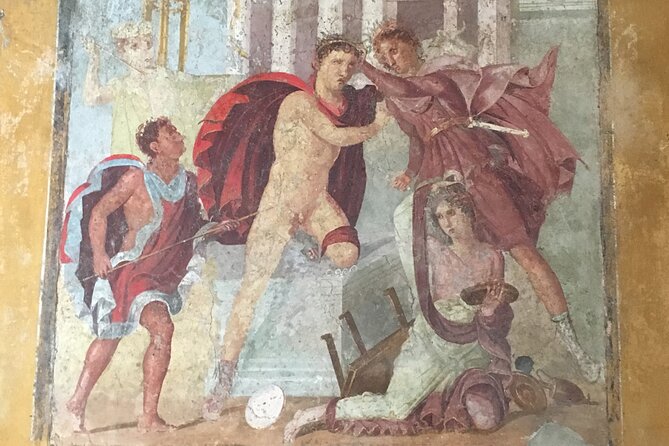
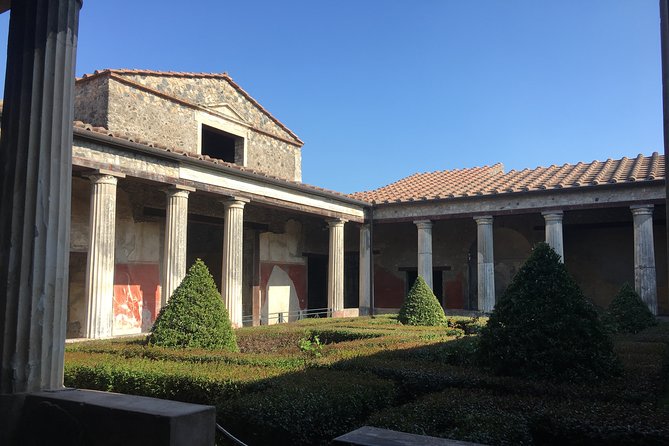
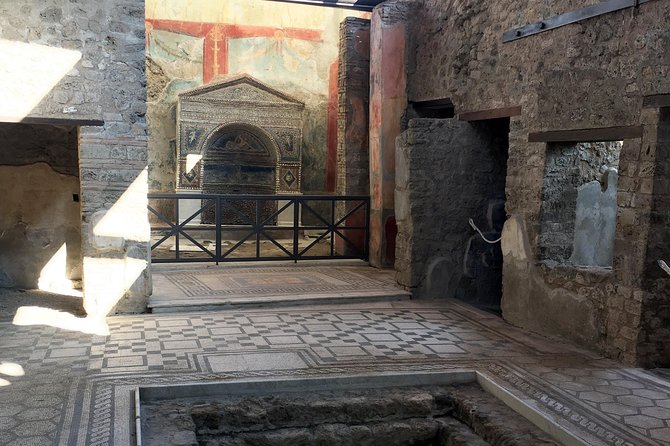
One of the tour’s highlights is the visit to the typical house with its decorations. Houses in Pompeii are more than pretty fragments. They show how Romans organized private life, controlled visibility, and used decoration to signal status and taste.
In a good guided visit, you do not just stare at walls. You learn how rooms would have been used, how decoration might have changed the feel of a space, and why certain design choices mattered for comfort and social life. That is where archaeologist explanations make a real difference. You can see details, but you also understand what they likely meant.
If you love photography, house interiors and entryways are often where you can frame textures and patterns without needing a “perfect” landmark shot. Just keep in mind that Pompeii is outdoors and lighting shifts quickly, especially later in the day.
Same stretch of coast, a completely different day out:
- Pompeii Small Group Tour with an Archaeologist
★ 5.0 · 6,593 reviews - Pompeii: Skip-the-Line Entrance Ticket with Audio Guide
★ 4.0 · 2,509 reviews - Naples: Pompeii and Mt. Vesuvius with Lunch and Wine Tasting
★ 4.5 · 2,454 reviews - Pompeii: Archaeological Park Tour with Ticket on request
★ 4.5 · 2,283 reviews
Shops and the everyday economy
The tour also includes shops, which is a smart choice because it takes you from home life into what people did to earn a living. A shop in Pompeii is not just a retail space. It is part of the street rhythm, linked to neighbors, foot traffic, and how the city moved.
This is one reason I think this tour is good for first-timers. People often expect big public sights first, but the everyday economy is what makes Pompeii feel like a real city. When you understand commerce, you can better imagine the moment before the eruption, when people were just going about their business.
A drawback to plan around: shops are smaller-scale stops than grand theaters. You need to pay attention to details the guide points out, and you may want to slow down for photos rather than rushing for the next “big” sight.
Thermal baths: public life with a practical function
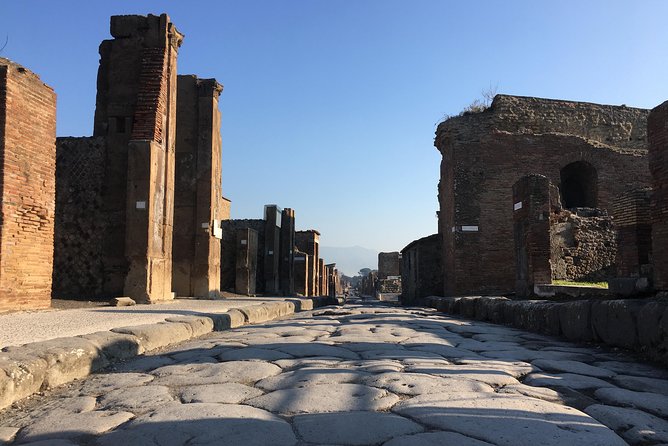
You’ll visit thermal baths, which is one of the strongest ways to understand Roman social life. Baths were not only about hygiene. They were gathering spaces, where people socialized, talked, and passed time.
In this guided format, baths help you understand the city’s rhythm. You can picture the flow of a busy day, from living and working to public routines. The archaeologist framing makes the structures easier to interpret, so you are not left wondering what everything was for.
If you’re traveling with older kids or teens, baths can be a good “interactive” category because it naturally sparks questions about how people lived, relaxed, and met each other. The key is to stay curious and let the guide connect the physical layout to human behavior.
Theater and the lupanary: leisure and the darker edges
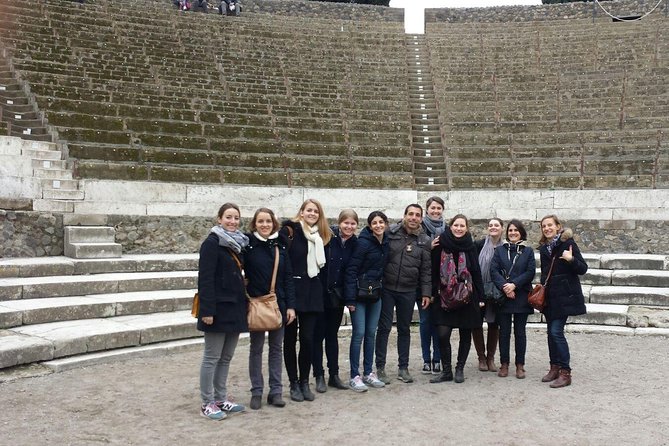
The itinerary includes the theater and the lupanary. Those two stops cover a wide emotional range, which is part of what makes Pompeii feel honest.
The theater represents public leisure, where the city gathered for performances. You see how people used shared spaces for entertainment, and you get a sense of the cultural life that ran alongside everyday chores and commerce.
The lupanary is different. It represents a space associated with sexual commerce. Seeing it with an archaeologist guide is important because you are more likely to get context than just shock value. I appreciate that this tour aims to cover daily life and habits, even the uncomfortable parts, rather than only sticking to the “pretty” highlights.
If you prefer a gentler tone, you should know that Pompeii is not all postcard scenes. This tour is designed around understanding the city as a whole, including its everyday reality.
The tour’s visual help: molds and what they teach your eye
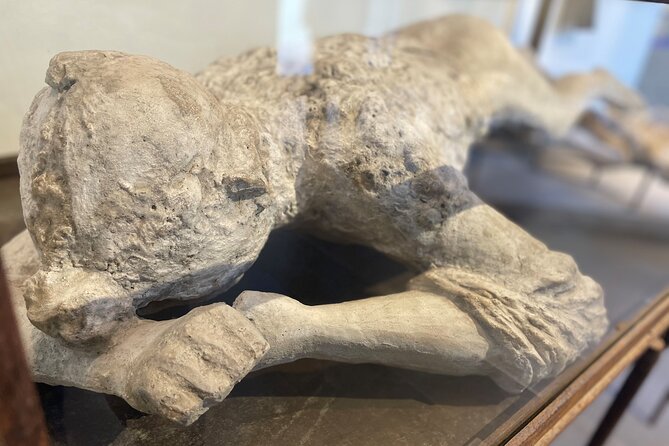
The description also references moving molds and related visual elements. Even if you are only taking in the general idea, these kinds of references can help you interpret what you are seeing in the ruins.
Pompeii can feel like a puzzle at first: broken walls, partial floors, missing roofs. Tools like molds and casts, or guided explanations about them, help you mentally restore what used to be there. That is the difference between “I saw ruins” and “I understood the place.”
For photographers, this is a big deal. When you understand what you are looking at, you can frame better. You’re not just chasing shapes, you’re capturing meaning, like the outline of a room, the relationship between spaces, or the way decoration might have been arranged.
Afternoon timing: heat and crowd control that actually matters
This tour is designed and calibrated to avoid the heat and crowds, with a focus on that end-of-day light that can make the experience feel magical. In practical terms, that means your comfort is part of the plan, not an afterthought.
Even if the route avoids the worst crowd surges, Pompeii is still a busy archaeological site. So I’d plan smart: bring water, wear shoes you can walk on for two hours, and keep your camera ready but not frantic. Late-day light is great, but it can also change quickly, so you’ll benefit from being steady rather than constantly repositioning.
The best part of the afternoon approach is that it can make the walking feel easier on your body and less stressful for your brain. When you’re not sweltering and fighting people, you can focus on the guide’s explanations, and that’s where the learning happens.
Pompeii express ticket and what you’re really paying for
The price is $66.09 per person, for about 2 hours. You’re also getting a Pompeii Express entrance ticket, a tour with an archaeologist, and a small group limited to 12.
So the value is not only the entrance. You’re paying for guided interpretation. At Pompeii, the difference between a self-walk and a guided route is huge because so much is context-heavy. Without someone to explain daily routines, building purposes, and social meaning, it can be easy to feel like you’re just moving past stone outlines.
Lunch is not included, so think of this as a half-day activity you pair with a meal afterward. Also, the tour runs only about 2 hours, so it is designed for efficient sightseeing, not all-day wandering.
Who this small-group archaeologist tour suits best
This is a strong fit if you want an introduction that feels grounded in real context. It is also listed as recommended for families, and I agree given the short duration, focused stops, and structured pacing.
You’ll likely enjoy it if:
- You love archaeology and want an expert’s explanations rather than a quick “see-and-go”
- You’re a photography enthusiast who wants major subjects in a manageable timeframe
- You’re short on time and want key areas like houses, shops, baths, and entertainment spaces
- You’d rather be in a small group where questions are possible
You should consider it less if you want an unhurried visit to every corner of Pompeii. This tour is a smart sampler, not a marathon.
Also, most travelers can participate, and service animals are allowed. If you have specific needs, it is worth checking before you go, but the tour is positioned as broadly accessible for travelers.
Should you book this Pompeii with an archaeologist?
I’d book it if you want a guided Pompeii that focuses on how Romans lived, not just the biggest headline structures. The small-group limit, archaeologist-led format, and afternoon pacing are the core reasons this works as a first Pompeii visit or a second visit where you want better understanding.
The choice hinges on one practical point: good weather matters. Since this is outdoors, the tour requires weather to operate as planned. The other point is time. Two hours is ideal for getting your bearings fast, but if you want to linger over every house and corner, plan extra independent time.
If you want Pompeii to feel readable and human, this is a very sensible way to do it.
FAQ
How long is the Pompeii tour?
The tour lasts about 2 hours.
What language is the tour offered in?
The tour is offered in English.
What is the maximum group size?
The group is limited to a maximum of 12 travelers.
Is an archaeologist included?
Yes. The tour includes a tour with an archaeologist.
Does the price include the entrance ticket?
Yes. The Pompeii Express Entrance Ticket is included.
Do I get a mobile ticket?
Yes. A mobile ticket is included.
Where is the meeting point?
Meet at Ristorante Suisse, Piazza Esedra, 10/13, 80045 Pompei NA, Italy.
Is lunch included?
No. Lunch is not included.
When will I receive confirmation after booking?
Confirmation is received within 48 hours of booking, subject to availability.
What is the cancellation policy?
Free cancellation is available, and you can cancel up to 24 hours in advance for a full refund.
Does the tour require good weather?
Yes. The experience requires good weather, and if it is canceled due to poor weather you will be offered a different date or a full refund.
Recently reviewed around Pompeii
- Mt. Vesuvius Wine Tasting and Lunch Experience from Pompeii★ 4.5 · 20 reviews
- Pompeii Small Group with an Archaeologist and Skip The Line★ 5.0 · 121 reviews
- Pompeii from Afternoon to Sunset★ 5.0 · 108 reviews
- Private Guided Tour and VR Headsets in the Ancient Pompeii★ 5.0 · 3 reviews
- Visit Pompeii with a local expert guide★ 5.0 · 10 reviews
- Traditional Neapolitan Dinner in Pompei – Villa Franca – Family Restourant★ 5.0 · 8 reviews
- Discover Pompeii on this Guided Walking Tour of the Buried City★ 4.0 · 9 reviews
- 2 Hours Private Walking Tour in Pompeii with an Archaeologist★ 5.0 · 15 reviews
Pompeii Tours, compared.
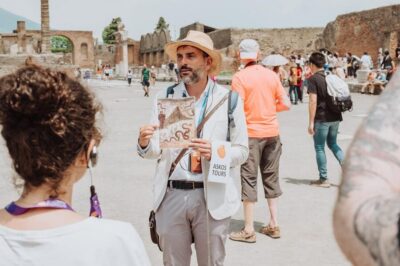
Entry Ticket and Guided Tour with an Archaeologist
Read our review →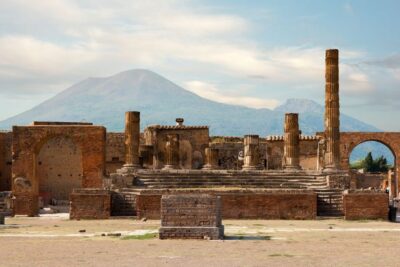
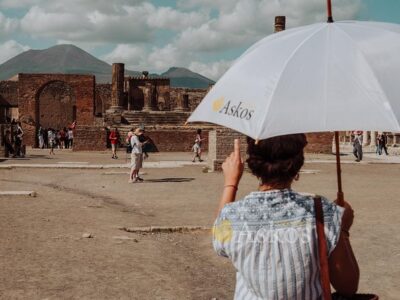
Pompeii Small Group Tour with an Archaeologist
Read our review →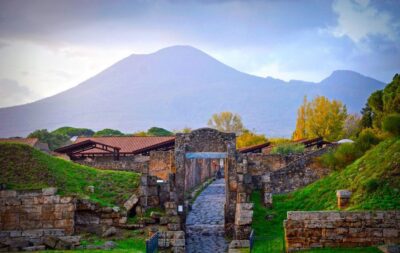
Skip-the-Line Entrance Ticket with Audio Guide
Read our review →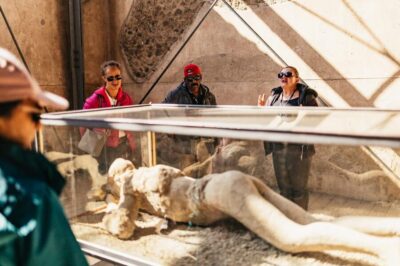
Pompeii and Mt. Vesuvius with Lunch and Wine Tasting
Read our review →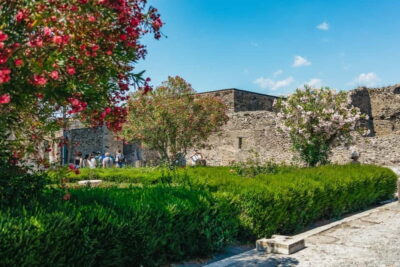
Archaeological Park Tour with Ticket on request
Read our review →