Reviewed · POMPEII TOURS
Pompeii: living with the volcano
Pompeii can feel like a museum. This tour keeps it human. You walk the Archaeological Park as if you are living the day before the 79 AD eruption, so the streets, homes, and public spaces click into place as real daily life, not just ruins. Pompeii and the volcano theme give the whole visit a clear emotional storyline.
My favorite part is the way Michele Arpa turns the site into a lived-in neighborhood, with details that make you look at the same stones like they are speaking. I also love the focus on variety, you move from the amphitheater to domestic rooms, then to a spa and the civil forum space. Michele Arpa and day-to-day details are the two big wins.
One thing to plan for: entrance tickets are not included, so you will pay that separately. And since the roads are in a particular state, it is not recommended for visitors with mobility difficulties, even though the tour is only about 2 hours.
Key Things I’d Prioritize on This Pompeii Tour
- A one-day-before-eruption perspective that helps you understand what you are seeing, instead of just scanning ruins
- Michele Arpa’s storytelling style that makes streets, homes, and public life feel personal
- Amphitheater time so gladiator culture connects to crowd spaces and architecture
- Domus interiors and everyday civic clues, including names tied to magistrates elections visible on the walls
- A spa and forum stop that explains how Romans relaxed and governed in the same city blocks
- Private group format, so you get a slower pace and more chances to ask questions
Turning Ruins into Real Life Before Vesuvius
Pompeii is famous for one big event. This tour starts there, then goes backward, to the ordinary rhythms that would have made that disaster feel impossible. The pitch is simple: you are not just walking among stones, you are following the logic of a city that still has errands to run, seats to fill, meals to eat, and news to read.
That framing matters. Without it, Pompeii can feel like random highlights, forum here, theater there, a few painted walls, done. With this approach, the park becomes a set of connected neighborhoods. I like that it pushes you to notice how people moved through streets, how public buildings shaped behavior, and how private homes also reflected status and taste.
The volcano theme also works because it is not just dramatic. It is practical. When you understand the timing and chaos of the eruption, you stop treating the preserved moments as “cool history” and start treating them as evidence of a society in motion, right up to the end.
More Pompeii tours to compare:
- Pompeii: Entry Ticket and Guided Tour with an Archaeologist
★ 4.8 · 19,459 reviews - Pompeii: Entry Ticket with Optional Audio Guide
★ 4.2 · 12,360 reviews - Pompeii: Small Group Tour with an Archaeologist
★ 4.8 · 12,264 reviews
Meet Your Guide at the Pompeii Archaeological Park (And What to Expect)
This is a private tour, meaning only your group participates. That is a big deal at Pompeii, because crowd flow can be chaotic. With a private format, you are not forced into a one-size-fits-all pace, and you can spend a little more time on the exact rooms and street corners that catch your eye.
You meet at the Archaeological Park of Pompeii in Pompei (the location is listed as 80045 Pompei, Metropolitan City of Naples). The tour ends back at the meeting point, so you do not have to solve logistics after the walk.
Timing is also part of the plan. The activity runs within set park hours, 9:30 AM to 11:30 AM on days listed in the open window. This is early enough to be comfortable, but still late enough that you are not racing the morning. For a 2-hour experience, arriving on time matters, because the guide will be balancing explanation with walking.
Language is English, which helps a lot if you want meaning, not just dates. Michele Arpa has been praised for speaking English well, and you can feel the difference when a guide can explain symbols, civic clues, and daily routines without shrinking them into a few quick facts.
One practical note: the tour requires moderate physical fitness. Pompeii involves walking and uneven surfaces, and the roads are specifically noted as not recommended for visitors with mobility difficulties. So you should go into it with realistic expectations, even if you are not doing anything extreme.
Streets, Shops, and Buildings You Can Read Like a Neighborhood
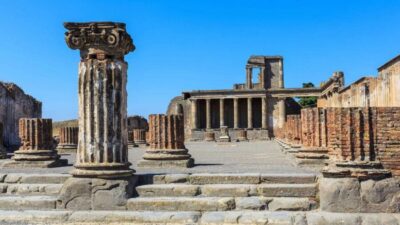
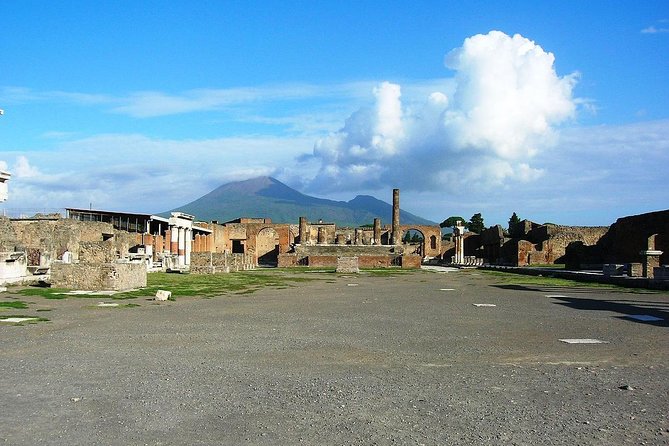
The core of the visit is the sense of strolling through Pompeii as if you are one day away from catastrophe. You start with the buildings, shops, and streets, and the tour is designed to help you connect what you see to how people would have lived.
I think this is where the guide’s skill shows. Pompeii is full of architectural elements that look obvious once explained, like how entrances work, how streets funnel movement, and how public and private space mix in the same walk. When you get that, you stop feeling lost and start feeling oriented.
Another bonus is that the tour is built to keep your attention moving. A guided path through the park is easier on the brain than roaming solo and guessing what matters. You still have time to look closely, but you are not burning energy deciding where to go next.
If you are the kind of traveler who likes to understand what daily life meant, this stop is the foundation. It is also a good place to ask questions, because your guide can point out patterns that you might miss if you are only chasing major landmarks.
The Amphitheater and Gladiator Culture, Without the Stunt Show

Pompeii’s amphitheater is the kind of place that feels cinematic. But the best way to enjoy it is to understand what it represented in a Roman city. This tour aims to bring the amphitheater to life by explaining the role of gladiator fights in entertainment and social identity.
You will likely feel the scale right away, since the guide highlights the immense amphitheater setting. Then the interpretation helps you connect it to the rest of the city. People are not living only for spectacle, but spectacle is woven into civic culture, and the architecture is part of the system.
A key detail in the tour description is the idea of a brutal atmosphere, not a watered-down pageant. Even if you do not literally experience the sensory drama described, the goal is to convey the intensity, crowd energy, and why this mattered to Pompeiians.
For you, that means you get more than a photo stop. You get context. You leave with a clearer sense of what people came for, how they would have reacted, and why the amphitheater is such a powerful piece of evidence of Roman life.
Same stretch of coast, a completely different day out:
- Pompeii Small Group Tour with an Archaeologist
★ 5.0 · 6,593 reviews - Pompeii: Skip-the-Line Entrance Ticket with Audio Guide
★ 4.0 · 2,509 reviews - Naples: Pompeii and Mt. Vesuvius with Lunch and Wine Tasting
★ 4.5 · 2,454 reviews - Pompeii: Archaeological Park Tour with Ticket on request
★ 4.5 · 2,283 reviews
Eating and Living: Takeaway Food and the Social Map of Pompeii
One of the most fun parts of a Pompeii tour is realizing that ancient cities were built for convenience. This experience includes an eating-focused moment, including a look at takeaway-style food from the 1st century BC.
Even with limited time, that kind of stop helps you think about everyday needs. You start asking new questions, like what people ate, where they would gather, and how commerce fit into a normal day. It is easy to focus only on big villas and forget that most people experienced the city through simple routines.
Then the tour shifts toward the opposite end of the social spectrum, with the option to experience a more luxurious domus setting. This matters because it is not just “rich people lived here.” It is also how wealth shaped layout, decoration, and the way space was used.
This contrast, street-level food and elite home life, is one of the most convincing ways to understand a society. You see a city that worked on multiple scales at the same time.
Election Clues on the Walls: Civic Life You Can Actually See
Pompeii has a reputation for paintings and architecture. But the tour adds another layer, the civic texture you can read directly on the walls. You hear about the names of candidates for magistrates elections, and you connect that to how politics operated locally.
This is one of those details that changes the whole feeling of the site. Suddenly the park is not only about disaster. It is also about how people organized themselves, argued, voted through social signals, and followed local leaders.
In practical terms, this is also great for your attention span. When you know that walls can contain messages and status information, you look more closely at what you are passing. Even if you cannot read everything, you catch the idea that public space communicated constantly.
Residences and Rooms That Explain Status and Taste
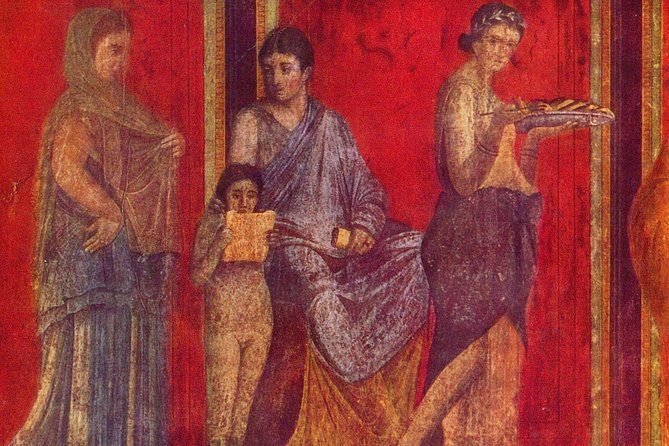
Moving from the public spaces to residences is where Pompeii becomes extra satisfying. The tour includes entering residences and looking at how rooms worked as part of daily living.
I like that the experience treats homes as functional places, not just dramatic sets. The guide’s job here is to show you what different spaces were for, how people moved, and how design signaled rank and comfort.
If you have ever visited a ruin and thought, ok, but what did people do in here, this is the exact answer that helps. The tour language focuses on life as it was lived, and the best guides are the ones who can make you picture routines from architectural evidence.
Michele Arpa has been praised for making Pompeii come alive in an intimate way, and the emphasis on residences and close explanations matches that. You are not just walking past rooms, you are getting a reason to care about what you see.
A Spa Moment and the Civil Forum: Relaxing and Governing in the Same City
The tour includes a relaxation stop at a spa, then it moves to the splendid square of the civil forum. That combination is brilliant because it shows two sides of city life that often blur in your mind.
A spa is not only about water and comfort. It is also about social time, conversation, and routine. When you stand in these spaces, you can understand why Romans treated bathing as part of public culture, not as private indulgence.
Then you transition to the civil forum space, where civic life and decision-making happened. Even if the guide does not overwhelm you with legal theory, the visual contrast is clear. You see how a city built places for both public debate and social bonding.
This is also a strong learning arc for your brain. You get the city’s practical rhythm, relax here, talk there, listen, govern, and repeat, all within a walkable area.
The Human Ending: Meeting Pompeii’s Preserved Moments
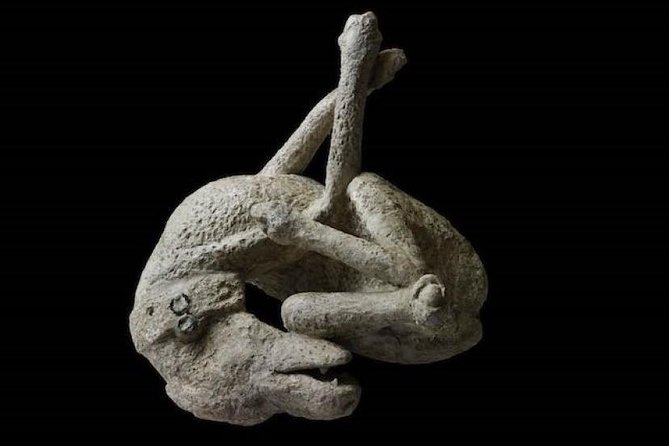
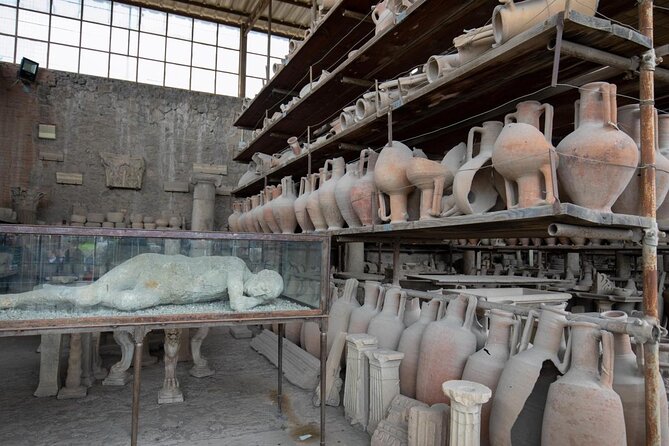
A guided Pompeii tour has to handle the ending responsibly. Here, the experience points you toward the Pompeians who lost their lives in the frantic hours, covered by volcanic ash, with their last moments preserved through archaeological work.
I appreciate the balance in this kind of stop. It is easy to skip over the human element and treat Pompeii like a playground for photographs. This framing pulls you back to what matters, lives cut short in real panic.
You do not need extra horror stories. You just need to understand what you are looking at and why archaeologists matter. Their job is to record, interpret, and protect evidence so a city does not turn into an empty stage.
Even in a short 2-hour walk, that human ending gives emotional weight. It makes the preceding streets, homes, food spots, and public buildings feel more urgent.
Price and Value: What $33.36 Really Covers
The listed price is $33.36 per person, and the guide service is included. Entrance tickets are not included, which you will need to budget for separately.
So is it good value? For me, yes, with an important condition. Private guided time in a high-demand site usually costs more than group tours. Here, you are paying for a focused 2-hour route with interpretation, and the structure sounds designed to keep you engaged rather than wandering aimlessly.
Also, admission tickets are a separate line item at many major sites. When you know that up front, the pricing feels more transparent, not like a surprise.
If you are traveling solo or as a couple, private can still be worth it if you care about meaning over checklists. If you are traveling with kids who want a quick highlight version, you might want to ask what pace the guide keeps, but the moderate physical fitness requirement suggests it is not meant to be a stroller-friendly crawl.
Who This Tour Best Fits (And Who Might Prefer Another Option)
This fits best if you like Roman life details, and especially if you enjoy the stories that connect architecture to daily routines. You will probably get the most out of it if you care about how people lived, ate, relaxed, and voted within the same city space.
It is also a good choice if you want English explanations and you like a guide who can adapt when certain parts of the park are limited. Michele Arpa has been praised for warning ahead and making the trip worth it when exhibition areas were restricted.
If you have mobility challenges, I would be cautious. The tour is not recommended due to the state of roads. If you have any uncertainty, it is worth discussing with the operator before you go, rather than assuming you can manage.
Booking Decision: Should You Pick Pompeii, Living With the Volcano?
If you want a Pompeii visit that feels like a story with places tied together by daily life, I’d book it. The best reason is the guide-led format and Michele Arpa’s reputation for turning the site into something you can actually understand. The focus on streets, public buildings, homes, and civic clues gives you multiple angles in just 2 hours.
If, instead, your style is to roam freely, you might prefer a self-guided day and spend as long as you like on the single area you care about most. But for most people, time is the enemy in Pompeii, and this tour is built to keep your time productive.
My final advice is simple: plan for entrance tickets separately, wear shoes for uneven surfaces, and arrive ready to walk. Then let the one-day-before-eruption storyline do its job, and Pompeii will feel less like ruins and more like a city with a pulse.
FAQ
How long is the Pompeii: Living with the Volcano tour?
The tour lasts about 2 hours.
Is this tour private or shared?
It is private, so only your group will participate.
What language is the guide?
The tour is offered in English.
Are entrance tickets to Pompeii included in the price?
No. Admission tickets are not included.
Where do we meet for the tour?
The meeting point is at the Archaeological Park of Pompeii, 80045 Pompei, Metropolitan City of Naples, Italy. The tour ends back at the meeting point.
What time does the tour run?
The listed opening hours are 9:30 AM to 11:30 AM (Monday through Sunday) for the date range shown.
Is this tour suitable for visitors with mobility difficulties?
It is not recommended for visitors with mobility difficulties due to the particular state of the roads. The tour requires a moderate physical fitness level.
Recently reviewed around Pompeii
- Mt. Vesuvius Wine Tasting and Lunch Experience from Pompeii★ 4.5 · 20 reviews
- Pompeii Small Group with an Archaeologist and Skip The Line★ 5.0 · 121 reviews
- Pompeii from Afternoon to Sunset★ 5.0 · 108 reviews
- Private Guided Tour and VR Headsets in the Ancient Pompeii★ 5.0 · 3 reviews
- Visit Pompeii with a local expert guide★ 5.0 · 10 reviews
- Traditional Neapolitan Dinner in Pompei – Villa Franca – Family Restourant★ 5.0 · 8 reviews
- Discover Pompeii on this Guided Walking Tour of the Buried City★ 4.0 · 9 reviews
- 2 Hours Private Walking Tour in Pompeii with an Archaeologist★ 5.0 · 15 reviews
Pompeii Tours, compared.
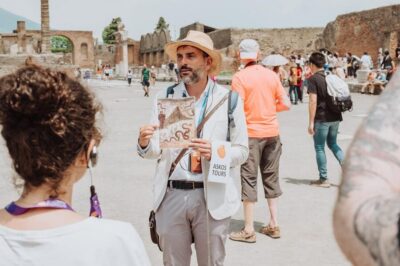
Entry Ticket and Guided Tour with an Archaeologist
Read our review →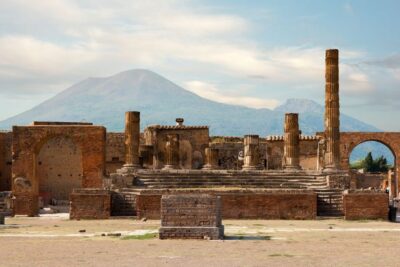
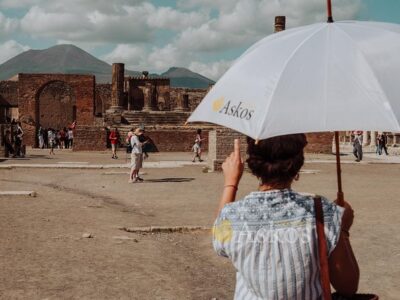
Pompeii Small Group Tour with an Archaeologist
Read our review →
Skip-the-Line Entrance Ticket with Audio Guide
Read our review →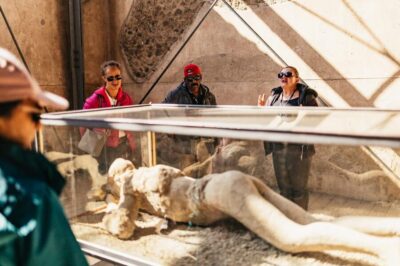
Pompeii and Mt. Vesuvius with Lunch and Wine Tasting
Read our review →
Archaeological Park Tour with Ticket on request
Read our review →