Reviewed · POMPEII TOURS
Pompeii Archaeological Area Entrance Ticket
Pompeii works because it is not a vague ruins experience. You walk real Roman streets, then you look up and realize people were literally caught mid-life when Mt. Vesuvius buried everything in ash in 79 AD. With a pre-booked entrance ticket and multiple entry times, you can get inside and start exploring fast with guaranteed skip-the-line access.
I also like that this is self-guided. You pick your route, then you can target the big names like the Forum, the Theatre, and the Lupanare (the two-story brothel with still-visible erotic frescoes), plus use the route map available inside the gate. One thing to plan for, though, is possible ticket-exchange confusion at some entrances, so build a little buffer if signage or voucher redemption feels unclear.
Key highlights to look for
- Timed entry with line-skipping: choose an entrance slot and head in independently
- Route map inside the gate: use it to pick a circuit instead of wandering randomly
- Must-see anchors: the Forum, Theatre, and Lupanare are easy targets on a first visit
- Real neighborhood variety: temples, markets, baths, and homes in one walk
- Three classic walk zones: Porta Marina, Piazza Esedra, and Piazza Anfiteatro
- Fragile site rules: keep your distance from excavation edges and don’t climb on walls
Pompeii in 2 to 3 hours, what you’re really buying
This ticket is for the Pompeii Archaeological Area, not a guided tour and not the museum. You book a preferred entrance time, then on the day you make your own way to the site, show your pre-booked ticket, and enter to explore independently.
The duration listed is about 2 to 3 hours, and that’s a truthful range if you focus on the core highlights. But Pompeii covers about 66 hectares (163 acres), so it is also totally realistic to lose track of time once you’re inside. I’d plan your goals before you arrive: if you want the Forum, Theatre, and Lupanare, plus a few neighborhood stops, aim for a tight route. If you’re a slow wanderer or you love interiors and small shop spaces, think more like half a day.
More Pompeii tours to compare:
- Pompeii: Entry Ticket and Guided Tour with an Archaeologist
★ 4.8 · 19,459 reviews - Pompeii: Entry Ticket with Optional Audio Guide
★ 4.2 · 12,360 reviews - Pompeii: Small Group Tour with an Archaeologist
★ 4.8 · 12,264 reviews
Entrance timing and the self-guided reality
You get multiple entrance times across the day, and the opening hours in the date window you’re given are 9:00 AM to 1:00 PM, Monday through Sunday. Practically, that means you should choose an entry slot that matches your energy level and heat tolerance. Even on a smooth day, you’re doing a lot of walking on stone surfaces, and the site is spread out.
Here’s the self-guided part in plain terms: there is no guide “meeting” you at a specific location. Instead, you go directly to the archaeological entrance, use your ticket to get in, and then follow your own route. If you want a map, you can collect a complimentary route map inside the gate and use it to decide what you’ll see.
The one logistics risk worth respecting
The operator promises guaranteed skip-the-line, but real-world experiences can still get messy. Some visitors reported that they had to line up to exchange vouchers at the ticket booth, and others struggled with finding where to redeem a ticket. That does not mean it will happen to you. It does mean you should:
- arrive a bit early for your entrance slot
- keep your booking confirmation accessible
- expect that signage at the site can be confusing, especially if you’re driving or using certain navigation directions
This is the difference between an easy morning and a stressful one.
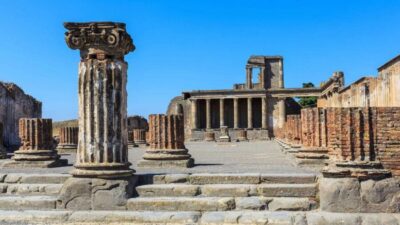
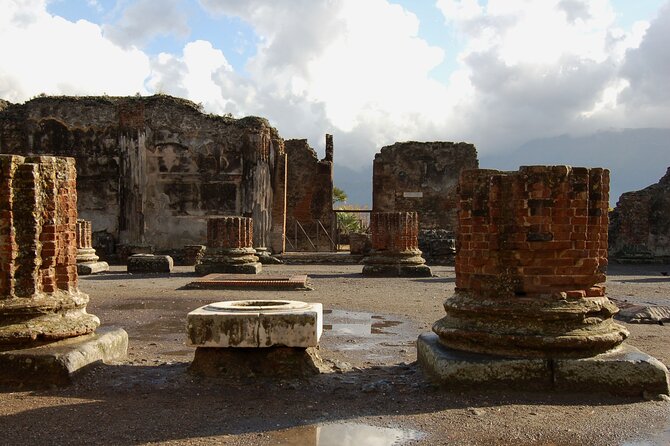
Porta Marina: walls, Apollo, basilica, and the Eumachia area
One of the best ways to “win” at Pompeii is to treat it like three neighborhood loops. A common first loop begins around Porta Marina, and it’s a strong way to orient yourself because it mixes city-scale sights (walls) with major public buildings.
From Porta Marina, you can expect stops like:
- Porta Marina and the city walls
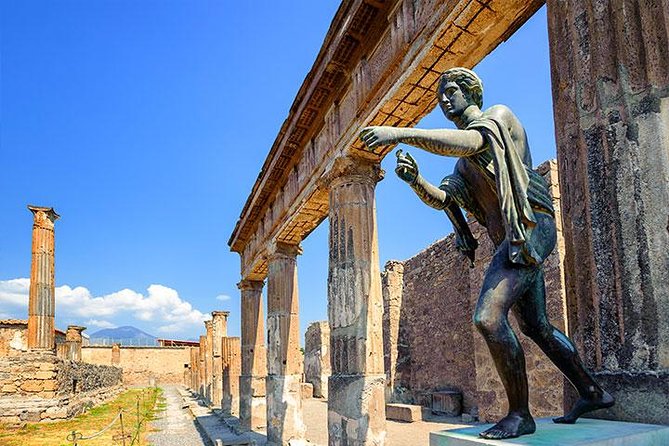
- Temple of Apollo
- Basilica
- Public Administration Buildings
- Building of Eumachia
Why this cluster works: you start with the sense of Pompeii as a functioning city. The walls and gate area give you scale. Then the Temple of Apollo and the Basilica pull you toward the religious and civic heartbeat. The public administration buildings and the Eumachia area help you connect what you’re seeing with how people managed daily life, not just where they lived.
If you only have a short time, this area is a good “first impressions” walk. You’ll get context fast, and you’ll understand how the Forum and other big public zones fit into the bigger city plan.
A few more Pompeii trips worth comparing
- Pompeii: Skip-the-Line Entrance Ticket with Audio Guide
★ 4.0 · 2,509 reviews - Pompeii: Archaeological Park Tour with Ticket on request
★ 4.5 · 2,283 reviews - Pompeii: Guided Walking Tour with Entrance Ticket
★ 4.3 · 1,423 reviews - Pompeii: Skip-the-line-Ticket and Guided Tour
★ 4.6 · 1,152 reviews
Piazza Esedra: baths, shops, houses, and a feel for daily routines
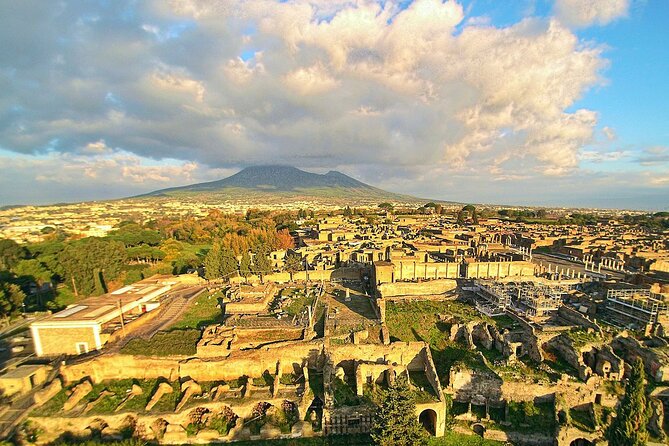
Next up is the Piazza Esedra zone. This loop is often where Pompeii starts to feel real in a “how people actually lived” way, because it blends public spaces with homes and working areas.
Look for:
- Forum Baths
- Temple of Fortuna Augusta
- House of Pansa
- House of the Tragic Poet
- Thermopolium (a hot-food spot for buying meals)
- House of the Faun
- House of Cecilio Giocondo
- House of Citharist
- Fullonica Stephanus (a cloth-launderer)
What I like about this route is the mix. Baths and temples show you ceremonial public life. Then the houses bring you inside elite spaces, where you can see how wealth expressed itself in architecture and layout. The Thermopolium is an especially practical stop because it’s a reminder that food and street commerce mattered too, not just grand processions.
By the time you hit Fullonica Stephanus, you get a sense of work and industry. A launderer’s setup helps you imagine the noise, labor, and routine inside a city that never stopped moving.
A key pacing tip
On this loop, you can easily spend too long in the houses if you love details. If your goal is the biggest classics, take quick passes through the interiors and save longer time for the stops that really match your interests, like the places where you can see standout fresco work.
Piazza Anfiteatro: amphitheater, temples, and quieter corners
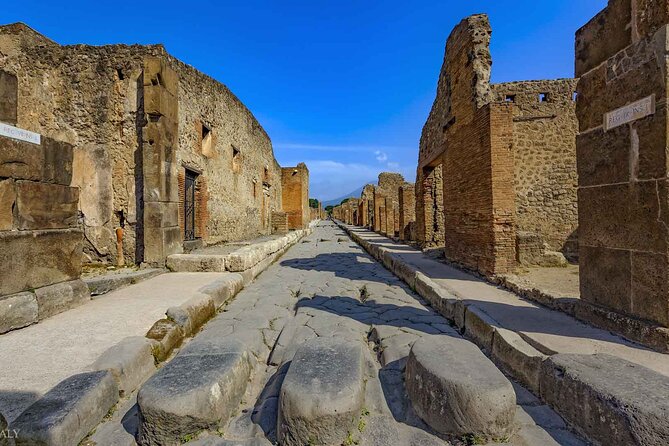
The Piazza Anfiteatro circuit is great when you want the spectacle and the big crowd-related spaces. It’s also often a practical choice if you prefer to keep your route anchored around major landmarks, because it gives you a sequence of recognizable stops.
From this area, you can visit:
- Necropolis of Porta Nocera
- Porta Nocera and walls
- Garden of the Fugitives
- House of the Garden of Hercules
- House of Octavius Quartio
- House of Venus in the shell
- Amphitheater
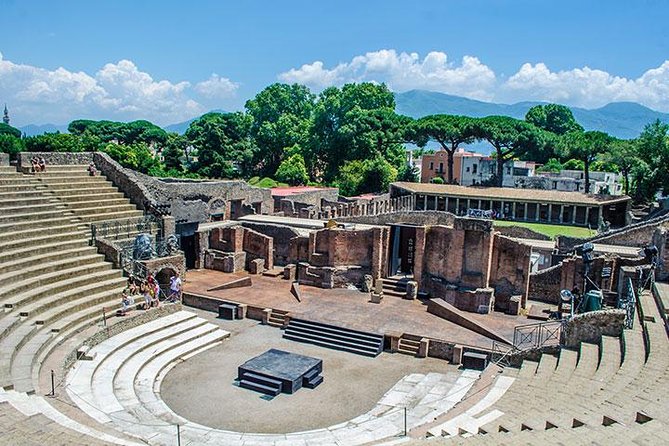
- Small Theater (Odeion)
- Great Theater
- Temple of Isis
- Triangular Forum
- Doric Temple
Then you circle back around with more services, including Fullonica Stephanus again.
This loop is a good match for people who love performance spaces. The amphitheater and theatres are the Pompeii “wow” factor moments. The necropolis and the garden areas add a more human, emotional layer because they connect the site’s tragedy to real geography.
Also note: there is a specific accessibility note for limited mobility. You’re advised to enter from Piazza Anfiteatro, and to limit the visit to the surroundings of the Amphitheater. If you’re traveling with someone who needs that kind of plan, this is the information you should build around.
The big highlights: Forum, Theatre, and the Lupanare
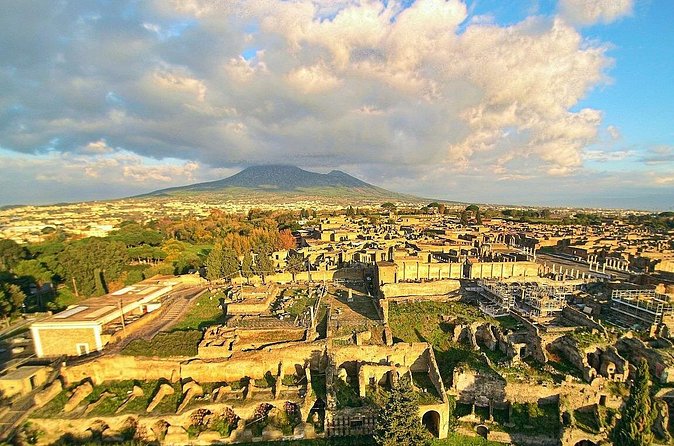
Even if you follow a loop, Pompeii has certain anchors that make planning worth it. These are the stops many people aim for first.
The Forum
The Forum is where the city’s public life clusters. It’s the kind of area that helps you understand Pompeii as a place where decisions, ceremonies, and daily interactions happened. If you want one “center” to orient yourself, start here.
The Theatre
The Theatre area gives you the civic and cultural side of Pompeii. It helps you connect street life to performances and gatherings. It’s also a good reset point in your day, because after a series of homes or shop-like spaces, stepping into a major public structure feels like a change of pace.
The Lupanare (brothel) and its frescoes
The Lupanare is the famous two-story brothel, and the most striking feature is that walls still show erotic frescoes. It’s one of those stops that feels different from temples and administrative buildings, because it reflects private commerce and social life. If this subject matter is uncomfortable for you or your group, you might want to plan your route around it rather than letting it land unexpectedly.
What to see beyond the headliners (and why it matters)
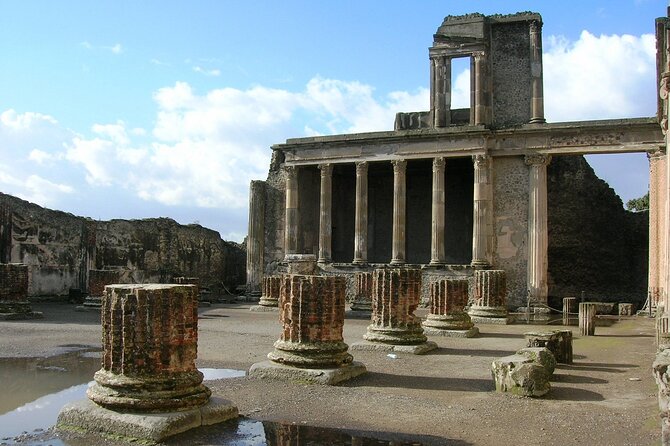
Pompeii is not just one highlight after another. The value of the site is in the in-between details that help you build a mental picture of a real Roman town.
Here are the types of sights you should actively look for as you walk:
- Streets and stone paving, which show movement patterns and city layout
- Houses and courtyards, which reveal how family life and social status were shaped
- Shops and work areas, like the launderer and the Thermopolium, which show commerce
- Public buildings, which help you understand civic order
- Cast figures, which communicate the human cost in a direct way
There’s also mention of the casts of victims’ bodies being visible in the experience. If you’re sensitive to emotional history, go in with your expectations set. If you can handle it, it makes the scale of the disaster hit harder than any explanation.
Practical tips that make your visit smoother
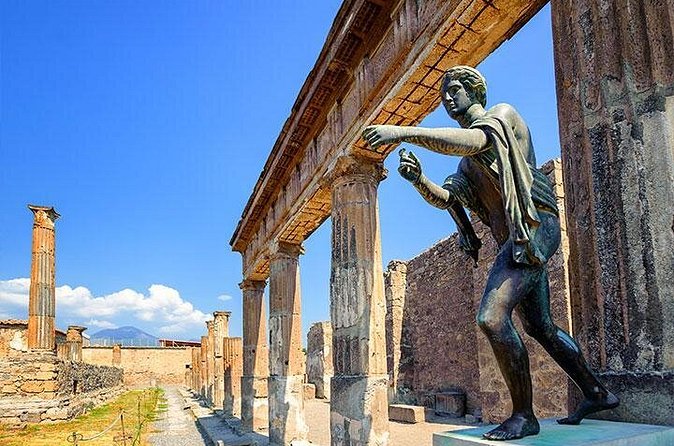
Pompeii is a fragile site, and the rules exist for both safety and preservation. I’d treat them as part of your plan, not as annoying paperwork.
Wear and carry smart
You should expect to leave bulky items at the wardrobe, including bags, backpacks, and umbrellas. Wear flat soles shoes. And walk carefully, because you’ll be near excavation edges often, and you should not stop on the edges or climb on walls.
Use the map and pick a route early
Inside the gate, you can get a complimentary site map with recommended routes. Use it right away. It’s the simplest way to avoid wandering in circles in a place that can feel maze-like.
Watch your photos and filming setup
Private photography and filming are authorized for personal use. If you want to use a tripod or flash, or if your filming is commercial, you need to contact the Office of the Superintendent for approval. Keep it simple and you’ll have no issues.
A note on stray dogs
There’s a possible presence of stray dogs. The guidance is to stay away from any and be careful. It’s not something to panic about, but it is something to notice as you plan your pace.
Heat and timing
One review called out the heat as a real factor and praised the experience anyway. That matches what you should expect at Pompeii. Your best tool is pacing: don’t cram every stop. Decide what you’ll prioritize and then stick to the plan.
Price and value check for $54.44
At $54.44 per person, this ticket is not a budget add-on. So you want to know what you’re paying for.
You’re paying for:
- entrance access to Pompeii
- a smoother start via guaranteed skip-the-line access
- the convenience of multiple entry times
- the independence of a self-paced visit (no guided tour included)
But you should also know where the frustration can come from. Some experiences included needing to exchange vouchers and getting pushed toward other locations. Others found on-site options that were cheaper than booking through the operator. That doesn’t automatically mean you overpaid, but it does mean the value depends on how smoothly your entry goes.
My take on value: this is worth it if you can confidently get your ticket redeemed without drama and you’re excited to move through the ruins with your own interests in mind. If you’re prone to stress around ticketing or you’ll be arriving late in the day, buying access on site might feel less risky. If you book, plan extra time for entry so you don’t lose your precious hours inside the ruins.
Who this works best for (and who should consider another format)
This ticket is best for you if:
- you like self-paced exploring
- you can handle a lot of walking on uneven stone
- you want to hit specific Pompeii icons like the Forum, Theatre, and Lupanare
- you enjoy planning a circuit and returning to key spaces as you go
It may be less ideal if:
- you want a lot of historical narration (a guided tour is not included)
- you get flustered by signage and ticket redemption steps
- you need a highly structured route with staff on hand the whole time
If your group includes someone with limited mobility, the guidance is clear: enter from Piazza Anfiteatro and limit the visit to the Amphitheater surroundings.
Also, the experience is capped at a maximum of 15 travelers on the operator side. That’s not the same thing as a small guided group, but it suggests you’re not in a giant organized crowd.
Should you book this Pompeii entrance ticket?
Yes, I’d book it if you want independence, you’re okay mapping your own route, and you’re entering within a time window that gives you enough hours to do more than a rushed walk-by. The chance to use your pre-booked ticket to reduce waiting is the main payoff, and Pompeii rewards the people who stick to a focused route.
Before you confirm, double-check you understand how your ticket will be available to you on the day. If you expect confusing signage or you’re traveling with limited flexibility, keep a little buffer in your schedule so you don’t lose time inside the ruins.
If you want, tell me your travel month and your top 3 priorities in Pompeii (for example Forum, houses, amphitheater, Lupanare), and I’ll suggest a simple route that fits the 2 to 3 hour window.
FAQ
What is included in this Pompeii Archaeological Area entrance ticket?
Your ticket includes admission to the Pompeii archaeological site and guaranteed skip-the-line access. You can explore the ruins independently at your own pace.
Do I need a guided tour to visit?
No. This experience does not include a guided tour. You enter with your pre-booked ticket and explore on your own.
Where is the meeting point?
There is no hotel pickup or drop-off, and on the day you make your own way to the archaeological site. You show your pre-booked ticket to enter.
What time can I enter Pompeii?
The provided opening hours are 9:00 AM to 1:00 PM, Monday through Sunday, for the date range listed (10/27/2025 to 01/26/2027). You book a preferred entrance time within that window.
Is this ticket valid for the Pompeii museum too?
No. The voucher should not be used to gain access to the museum.
What should I know about tickets if my plans change?
The experience is non-refundable and cannot be changed for any reason.
Recently reviewed around Pompeii
- Mt. Vesuvius Wine Tasting and Lunch Experience from Pompeii★ 4.5 · 20 reviews
- Pompeii Small Group with an Archaeologist and Skip The Line★ 5.0 · 121 reviews
- Pompeii from Afternoon to Sunset★ 5.0 · 108 reviews
- Private Guided Tour and VR Headsets in the Ancient Pompeii★ 5.0 · 3 reviews
- Visit Pompeii with a local expert guide★ 5.0 · 10 reviews
- Traditional Neapolitan Dinner in Pompei – Villa Franca – Family Restourant★ 5.0 · 8 reviews
- Discover Pompeii on this Guided Walking Tour of the Buried City★ 4.0 · 9 reviews
- 2 Hours Private Walking Tour in Pompeii with an Archaeologist★ 5.0 · 15 reviews
Pompeii Tours, compared.

Entry Ticket and Guided Tour with an Archaeologist
Read our review →

Pompeii Small Group Tour with an Archaeologist
Read our review →
Skip-the-Line Entrance Ticket with Audio Guide
Read our review →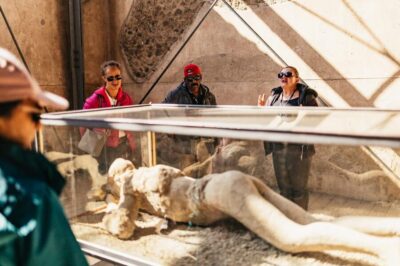
Pompeii and Mt. Vesuvius with Lunch and Wine Tasting
Read our review →
Archaeological Park Tour with Ticket on request
Read our review →