
Reviewed · POMPEII TOURS
Pompeii 2-hour Private Tour with an Archaeologist-Ticket included
Pompeii can feel like a museum you walk through fast. This version is different because you get a private pacing with an archaeologist in charge, not just a checklist. I like the archaeologist-led insights that turn stone corners into real daily life, and I also like that the Pompeii admission is handled for you. One consideration, though, is that it’s only about 2 hours, so you’ll hit key areas rather than every street.
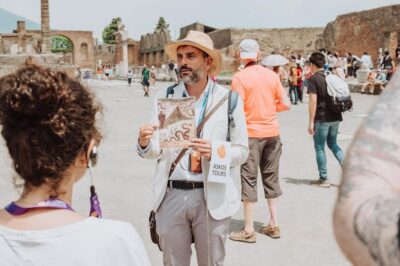
You’ll meet at the main entrance called Porta Marina Superiore. The guide holds an Askos Tours sign, and you’ll start with the ticket moment before moving into the Forum zone, where Pompeii’s layout becomes the story. The ground can be uneven and at times steep, so good shoes matter more than good intentions.
This tour runs in all weather, and it stays in English. It’s a smart fit if you want clarity and context without the big-group rush, especially if you like asking questions as you go.
Key things that make this Pompeii tour worth your time
- Archaeologist guide quality: some guides on the program include Ph.D. archaeologists who have worked on excavations and current research.
- Private pace: you stay together as a group and don’t fight the flow of a larger tour.
- Ticket included at the start: you lose less time figuring out entry and more time looking.
- Forum-first route: you learn the main square, basilica portico, and street grid that make the rest of the site easier to read.
- Domestic plus public life: houses like the House of Menander and House of the Faun sit next to baths, a brothel, and theaters.
- Short, focused stops: each stop is timed, so you see a lot without feeling like you’re stuck in one room.
Why a private, archaeologist-led Pompeii walk changes everything
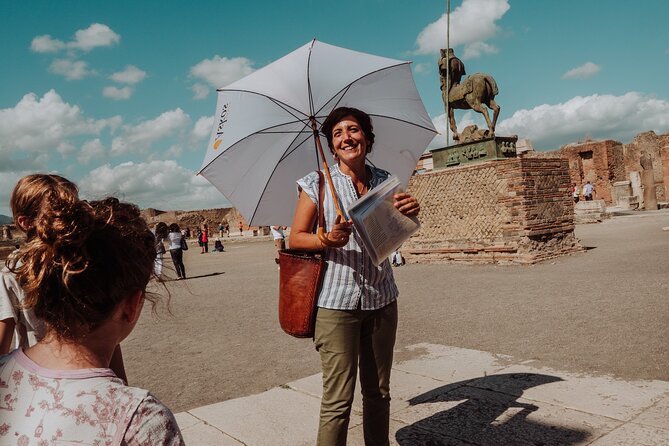
Pompeii is huge, and it’s easy to leave with photos but not much meaning. The best part of a private tour is that your guide can tailor what you notice. If your group wants art details, you’ll spend more time on that. If you want the eruption story explained clearly, you’ll get it in the places where it matters.
The archaeologist angle matters too. You’re not just hearing dates. You’re learning what each building type was used for, and why Pompeii looks the way it does on the ground. In past tours, guides such as Amedeo, Giovanni, Alessandra, and Silvia have been praised for turning the site into something you can picture, not just something you can read about.
Yes, it’s still Pompeii, and you still walk. But the difference is control. You can move at a pace that fits your group, stop for questions, and connect the dots.
More Pompeii tours to compare:
- Pompeii: Entry Ticket and Guided Tour with an Archaeologist
★ 4.8 · 19,459 reviews - Pompeii: Entry Ticket with Optional Audio Guide
★ 4.2 · 12,360 reviews - Pompeii: Small Group Tour with an Archaeologist
★ 4.8 · 12,264 reviews
Meeting at Porta Marina Superiore, ending at Piazza Esedra
The tour is set up so you enter Pompeii at Porta Marina Superiore, the main entrance. You meet at Via Villa dei Misteri, 2, then your guide brings you to the entrance point and holds the Askos Tours sign so you can spot them quickly.
At the end, the tour finishes at Piazza Esedra. That matters because Pompeii is not one tight loop. Having a clear end point helps you plan your next step, whether that’s heading back toward town or finding public transport.
A practical note: hotel pickup and drop-off are not included, and transportation to and from the ruins is also not provided. You’ll want to build your own plan for getting there, using public transportation that’s nearby and the written directions you receive at booking.
Stop-by-stop: what you’ll actually see in about 2 hours
This route is designed to hit Pompeii’s most talk-worthy pieces without dragging. The time per stop is usually short, so your guide’s job is to make each location count.
Porta Marina Superiore and the initial ticket moment
You start at Porta Marina Superiore, and the admission ticket is included. This first step is worth it because it helps you begin with momentum instead of delays. It also gives your guide a chance to frame what you’re about to see, which makes the next stops easier to follow.
If you’ve visited ruins before, you know how much better it goes when someone helps you understand the map in human terms. That’s the role of the opening minutes.
A few more Pompeii trips worth comparing
- Pompeii: Skip-the-Line Entrance Ticket with Audio Guide
★ 4.0 · 2,509 reviews - Pompeii: Archaeological Park Tour with Ticket on request
★ 4.5 · 2,283 reviews - Pompeii: Guided Walking Tour with Entrance Ticket
★ 4.3 · 1,423 reviews - Pompeii: Skip-the-line-Ticket and Guided Tour
★ 4.6 · 1,152 reviews
The Basilica: the portico where commerce and shelter met
Next comes the Basilica, described as an open portico where merchants and activities could happen under shelter. This is one of those “small” stops that can become big in understanding. A basilica like this was a public space tied to business, not a private home. So when you stand there, you’re seeing Pompeii’s social and economic pulse.
The drawback here is that it’s open and can be exposed to sun or rain depending on conditions. Since the tour runs all weather, dress for the day, not for the forecast you wish you had.
Foro de Pompeya: the main square you can read like a map
Then you reach the Forum square, the Foro de Pompeya. This is Pompeii’s center for civic life, and once you understand the square, the rest of the site clicks into place. The guide’s focus is usually on layout and how the buildings relate to daily movement through town.
Even if you only spend about 10 minutes, you’ll likely understand what this space meant, and why people gathered here.
Walking the main street: the route of everyday life
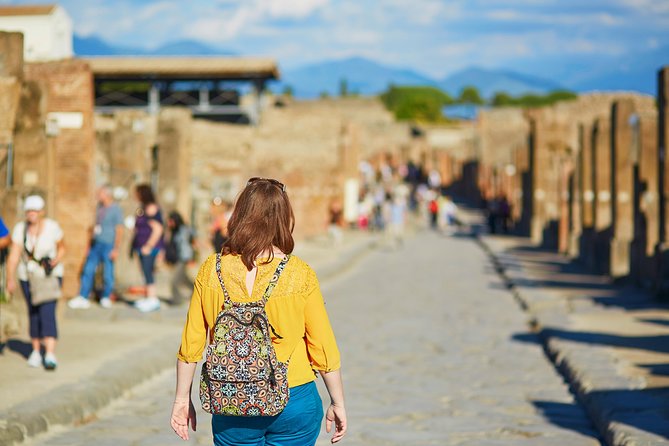
There’s also time to walk through the main street of Pompeii. That short walk is not just a transfer point. It’s where you feel the city scale, and you start connecting houses, public buildings, and crossroads as a whole.
If you’re the type who loves architecture and how streets guide behavior, this segment is a good mental reset. It breaks up the heavier stops with a more sensory view.
Granaries of the Forum: marble details and casts that hit hard
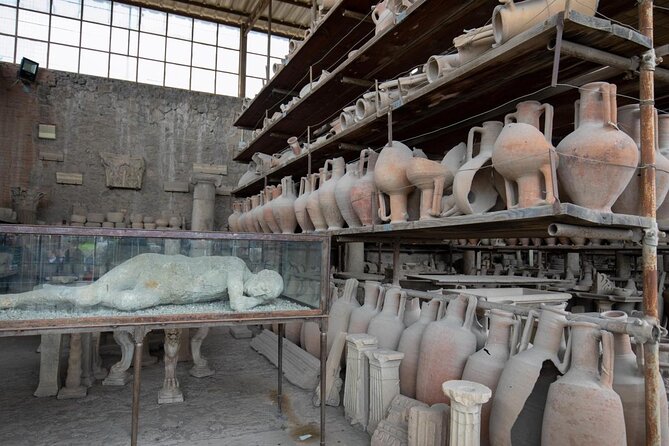
The Granaries of the Forum is where you’ll see marble tables and baths for fountains, plus casts of victims from the eruption. You might also encounter casts of a dog and a tree, which adds an unsettling reminder that the catastrophe included animals and the living landscape.
This stop is powerful because the physical objects are close and specific. It’s not abstract. The design elements you’re shown help you picture how space served daily functions, and then the casts shift your perspective to what was lost.
One caution: this is emotionally intense for some people. If you’re traveling with kids, it helps that the guides on this program have been praised for keeping families engaged and respectful without making it feel like a lecture.
House of Menander: wealth you can see in decoration and layout
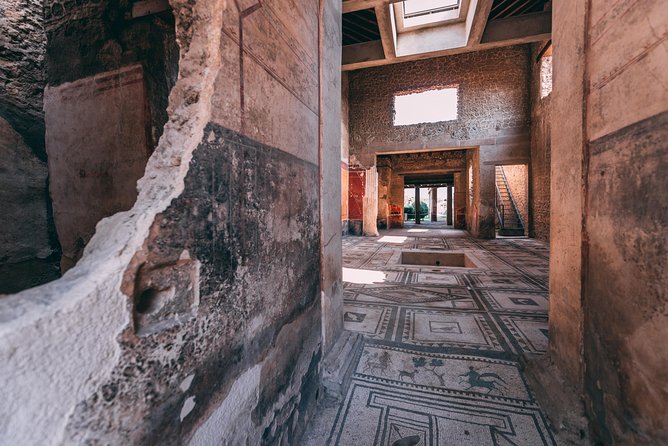
Next is the House of Menander. It’s known as one of Pompeii’s richest homes, with standout architecture, decoration, and contents. Even in a brief visit, the guide can help you see what makes it “rich” in practical terms: the kinds of spaces, surfaces, and details that signaled status.
This is a good stop for anyone who wants Pompeii to feel less like ruins and more like real neighborhoods where people lived, hosted guests, and spent money on beauty.
Stabian Baths (Terme Stabiane): the oldest thermal complex in the city
You’ll then visit the Stabian Baths, located between major crossroads and lanes. These baths are described as the oldest thermal complex in the city. That gives the place extra weight. Baths weren’t a luxury spa in the modern sense. They were a social and daily-life hub.
If you’ve ever wished a guide would explain why Roman bathing mattered, this stop does that work well, because the layout makes routines easier to imagine.
The practical drawback is again the walking, plus the possibility of slick surfaces if it’s wet. Stick with comfortable shoes and plan for pauses.
Lupanar: the famous brothel and the social side of town
The Lupanar is the most famous brothel in Pompeii. It’s also one of the easiest places to misunderstand if you only look at it through a scandal lens. A good archaeologist guide helps you see it as part of the city’s economy and street life, not just a headline.
This is a “be ready for it” stop. If your group is sensitive about topics like this, you may want to tell your guide what level of detail feels comfortable. The private format makes that possible.
House of the Faun: size, scale, and what wealthy homes demanded
Then comes the House of the Faun. It’s described as one of the largest and most impressive private residences in Pompeii. That size matters. When a home is that big, you start seeing how much staff and planning were required, and how families moved through rooms that served multiple purposes.
The guide’s job is to point out what you can actually read today, because ruins can look like random walls if you do not know what you’re looking at.
Quick look at Teatro Piccolo, then Teatro Grande
You’ll also get a look at the Teatro Piccolo, then the tour ends with the Teatro Grande, described as Pompeii’s most important theater.
Theater is where Roman public culture becomes visible in a single space. Even a short time here can help you understand how performances fit into civic life, since people gathered, watched, and shared a common experience in the same built environment.
If you love Roman cities as performance machines, the theaters are a satisfying payoff at the end.
What you’re really buying at $214.75 per person
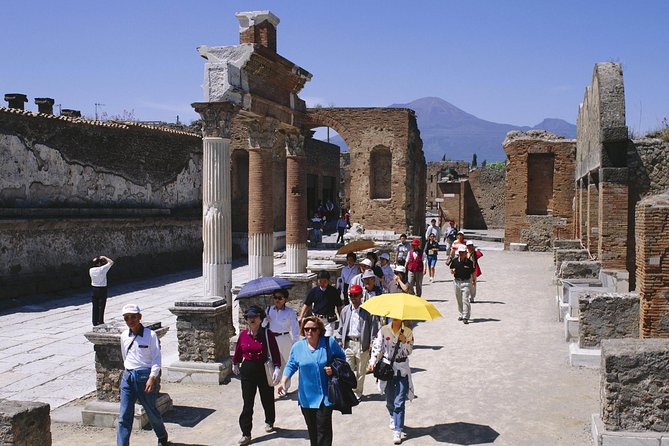
At $214.75 per person for a roughly 2-hour private walk, you’re paying for three things at once: a professional archaeological guide, private time, and Pompeii admission included.
Here’s how I judge value in a tour like this:
- If you’re the kind of person who gets more from context than from wandering, the guide time is the real product.
- Private pacing is not just comfort. It’s less time getting lost in crowds and more time asking questions where it counts.
- Admission being included saves you hassle and helps the tour start cleanly.
Could you DIY Pompeii cheaper? Sure. But DIY usually means you trade money for your own research time. This tour helps you get the big connections fast, without you needing to read a guidebook before breakfast.
Also, the tour notes group discounts and mobile ticket delivery. Those small logistics can matter when you’re juggling tickets, weather, and walking.
Pace, comfort, and who this fits best
This tour is ideal if you:
- Are visiting Pompeii for the first time and want the “greatest hits” with meaning.
- Prefer a private group where your questions do not compete with a dozen other voices.
- Want a guided interpretation of both public and domestic life, from basilica and Forum to baths and homes.
It’s also a strong choice for families, including kids, because several guides have been praised for keeping younger travelers engaged with stories and explanations. For older legs too, the private format gives the guide room to slow down when the ground gets rough or steep.
It may be less ideal if you:
- Want a long, unstructured stroll that covers every corner without time pressure.
- Are traveling with mobility constraints that make uneven ruin surfaces difficult. The tour does recommend moderate physical fitness, and comfortable shoes are not optional advice.
Tips to make the most of your 2-hour window
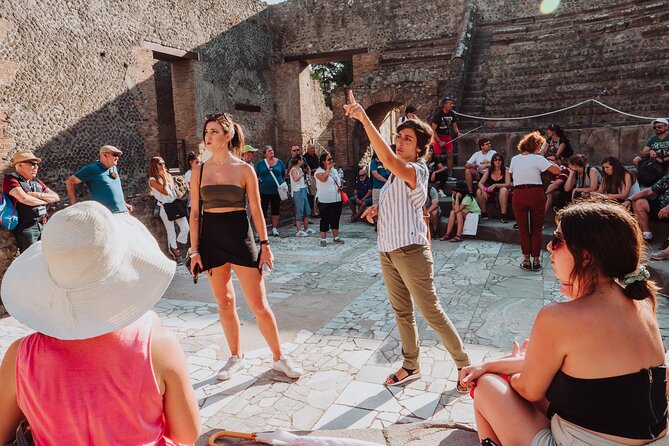
With timed stops, your success depends on how you prepare for quick transitions.
Wear comfortable shoes you trust on uneven stone. Bring sun protection if it’s clear, and a light layer if conditions feel cool. Since it runs all weather, plan like you’ll actually need it.
When you arrive, take a moment to get oriented and then ask your first question early. Good guides can use that to tailor their explanations for your group’s interests, and it keeps you from feeling like you’re only seeing what the schedule demands.
If your group cares about photos, ask your guide to pause when needed. In past experiences with this tour style, guides have been patient about photo time without rushing people onward.
Should you book this private Pompeii tour?
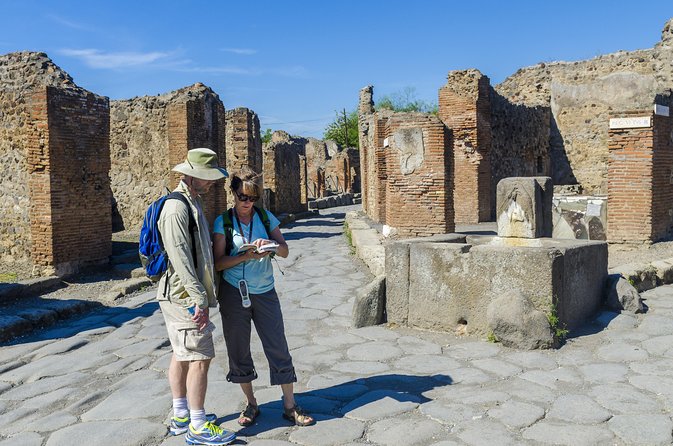
If you want Pompeii to feel understandable in one visit, I think this is a smart booking. The private size, the included admission, and the archaeologist-led stop plan help you connect the city layout to real life. It’s especially worth it if you like asking questions, want context for what you see at the Basilica and Forum, and also want the domestic and public mix, including baths, the Lupanar, and the theaters.
Book it if your group values meaning over endless roaming. You might skip it if you’re aiming for a longer, self-paced day or if your mobility is limited enough that a moderate-fitness walking route could be stressful.
If you do book, go in with one mindset: don’t try to see everything. Let the guide help you see what matters, one timed stop at a time.
FAQ
How long is the Pompeii 2-hour private tour?
The tour duration is approximately 2 hours.
Is the Pompeii admission ticket included?
Yes. Admission fees to Pompeii are included, and the ticket moment is part of the first stop at the archaeological park.
What language is the tour offered in?
The tour is offered in English.
Is this tour truly private?
Yes. It is a private tour/activity, and only your group participates.
Where do we meet the guide and where does the tour end?
You start at Via Villa dei Misteri, 2, 80045 Pompei NA, Italy, with the guide meeting you at the main entrance of the archaeological site (Porta Marina Superiore). The tour ends at Piazza Esedra, 80045 Pompei NA, Italy.
Do we get hotel pickup or transportation to the ruins?
No. Hotel pickup and drop-off are not included, and transportation to and from the ruins is not included.
Does the tour run in bad weather?
Yes, it operates in all weather conditions. Dress appropriately and plan for comfortable walking shoes.
Recently reviewed around Pompeii
- Sorrento: Pompeii and Vesuvius Day Trip with Entry and Lunch★ 4.4 · 11 reviews
- From Sorrento: Pompeii with an Archaeological Guide & Ticket★ 4.6 · 19 reviews
- Sorrento: Pompeii & Herculaneum Day Trip Entry and Lunch★ 4.6 · 27 reviews
- Pompeii: Skip-the-Line Guided Archaeological Discovery Tour★ 4.2 · 13 reviews
- 2-Hour Private Walking Tour of Pompeii★ 4.7 · 22 reviews
- From Positano: Pompeii Ruins Small Group Guided Tour★ 4.8 · 82 reviews
- Pompeii Positano Amalfi Day Trip from Rome by Car, No Bus!★ 5.0 · 5 reviews
- Pompeii VIP 3h Tour: Skip-the-line with your Archaeologist★ 4.9 · 13 reviews
Pompeii Tours, compared.
Entry Ticket and Guided Tour with an Archaeologist
Read our review →

Pompeii Small Group Tour with an Archaeologist
Read our review →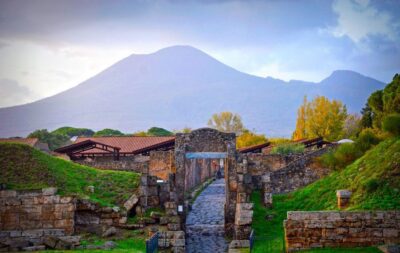
Skip-the-Line Entrance Ticket with Audio Guide
Read our review →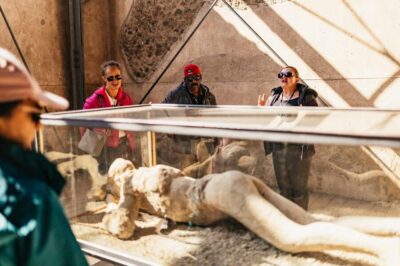
Pompeii and Mt. Vesuvius with Lunch and Wine Tasting
Read our review →
Archaeological Park Tour with Ticket on request
Read our review →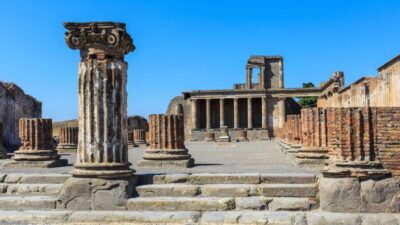
Browse the lists this tour appears in