
Reviewed · POMPEII TOURS
2-Hour Private Walking Tour of Pompeii
Pompeii is interesting because it feels like the city paused mid-day, with street life, shops, and homes frozen by the eruption of 79 AD. A private guide makes it much more than a sweep-through of ruins. You get a human pace, not a herd pace.
I love the skip-the-line access, plus the fact that you can still pack in key parts of town in just 2 hours. One possible drawback: you are walking on uneven ancient surfaces, and the tour is listed as not suitable for wheelchair users or people with mobility impairments.
Key highlights to look for
- Private guide, small group size (max 10) for a calmer, more personal pace
- Skip-the-line Pompeii Express tickets that cover all areas within the city walls
- Basalt road details, including spots that once helped reflect torch light
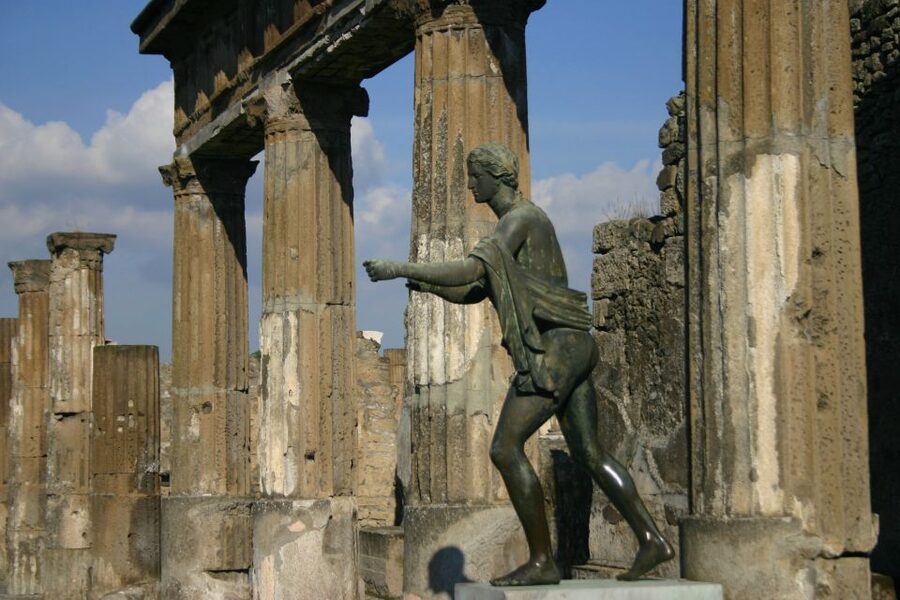
- Forum landmarks like the Temple of Apollo, the Capitolium, the Temple of the Emperor, and the Basilica
- Real everyday stops like bakeries and one of the city theaters
- Red Light District frescoes and Pompeii’s famous human casts for an emotional hit
Two Hours in Pompeii: What a Private Walk Can Actually Cover
Pompeii is big, and it can bully your time if you go it alone. This 2-hour format is smart because it forces focus. You do not try to conquer the whole site. You pick the most telling pieces of a Roman town and connect them.
With a private setup, you also get a smoother flow through the ruins. You walk at a pace that matches your group, and the guide can tailor the stops to your interests and physical ability. The tour aims to include at least one example from different building types, so you get a town feel instead of a temple-only visit.
The emotional side is real too. Pompeii is famous for suffering, but the best tours also show the normal routines around that tragedy: food, baths, markets, entertainment, and street life. In this 2-hour window, you can actually see how people lived, not just how they died.
More Pompeii tours to compare:
- Pompeii: Entry Ticket with Optional Audio Guide
★ 4.2 · 12,360 reviews - Pompeii: Archaeological Park Tour with Ticket on request
★ 4.5 · 2,283 reviews - Pompeii Ruins Private Tour with Optional Skip-the-Line Entry
★ 4.9 · 732 reviews
Meeting at Café Hortus Pompeii and Staying Inside the City Walls
You start at Café Hortus Pompeii, in front of the entrance at Via Villa dei Misteri 2, inside the Pompeii Archaeological Park. The tour ends back at the same meeting point, which helps keep logistics simple when you are fitting Pompeii into a busy day around Naples, Sorrento, or the Amalfi Coast.
One quiet advantage of this structure is that it keeps you from “losing time” after you enter the site. Pompeii is easy to underestimate. Once you begin walking, you are not just looking at stones, you are moving through a whole urban grid.
This tour also uses tickets that allow you to visit all areas within the city walls. That matters because it means your guide can choose where to spend your time without trapping you in one corner of the park. If you are the kind of person who wants to see the Forum and also check a bakery and a theater, this ticket setup supports that.
Pompeii Express Skip-the-Line Tickets, No Guessing
Skip-the-line matters in Pompeii because queues can eat hours. Here, the entry is handled with Pompeii Express skip-the-line tickets. The big value is not just speed. It is confidence. You know you can get into the main parts of the park and start walking while other people are still waiting.
The ticket also covers access to all areas within the city walls. That is important for a 2-hour tour, because the best experience is a mix of civic, commercial, and entertainment stops. It is hard to get that mix if your entry access is limited or if you are forced into one route.
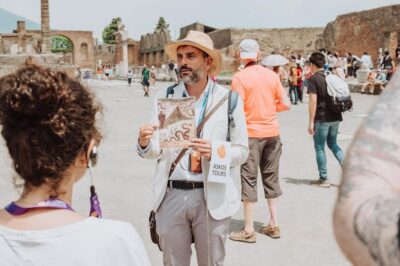
Another plus: the group is kept small, limited to 10 participants. Even with a small crowd, a private guide helps you feel like you are traveling with one brain. The guide points out details you would likely miss if you were scanning the ruins on your own.
Basalt Street Origins: Walking Like a Roman
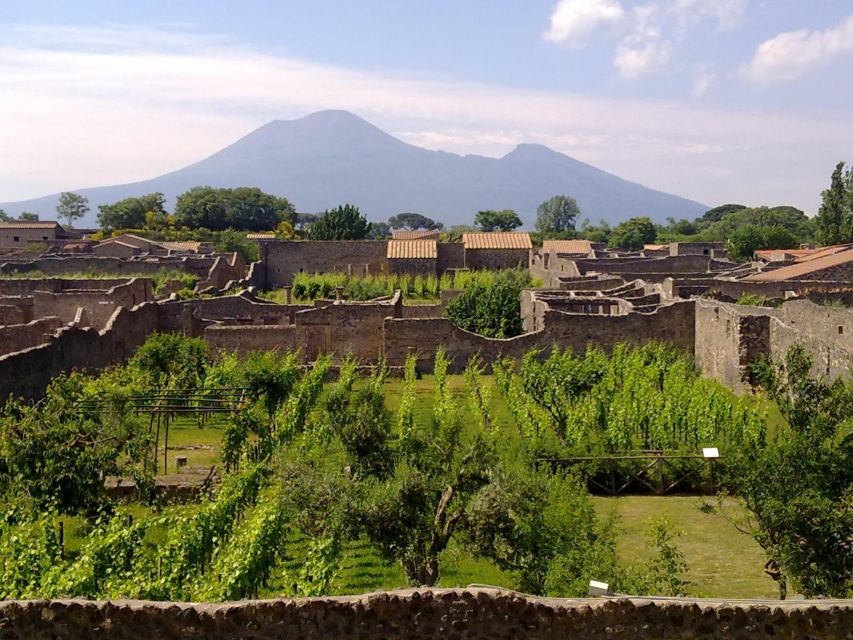
One of my favorite parts of this tour is the walk along the original road made of volcanic basalt rock. It is not just scenery. You are literally walking on the kind of hard-wearing surface Romans used in daily life.
Your guide also points out details that make the street feel more real. You see the original basalt blocks and the little white travertine spots that were used to reflect torch light. That gives you a surprising mental picture. At night, this road was not a dark trench. Those pale insets helped light up the way, like an early version of reflective markers.
When rain came, people had to deal with wet ground. You will see basalt blocks that pedestrians used to avoid getting splashed when it rained. That is the kind of practical detail you only get when someone slows you down and explains what you are looking at.
In just two hours, this street segment helps you shift from visitor mode to “I can imagine people here” mode. That is what makes Pompeii feel less like a museum and more like a place.
More walking tours in Pompeii Archaeological Site:
- Pompeii 3-Hour Walking Tour
★ 5.0 · 8 reviews - Pompeii: Guided Walking Tour with Entrance Ticket
★ 4.3 · 1,423 reviews - Walking Food Tour in Sorrento w/ Limoncello Factory Lemon Grove
★ 4.5 · 821 reviews - Sorrento: Guided Walking Tour & Limoncello Tasting
★ 5.0 · 472 reviews
Forum Sights: Apollo, Capitolium, Emperor, Basilica, and the Macellum
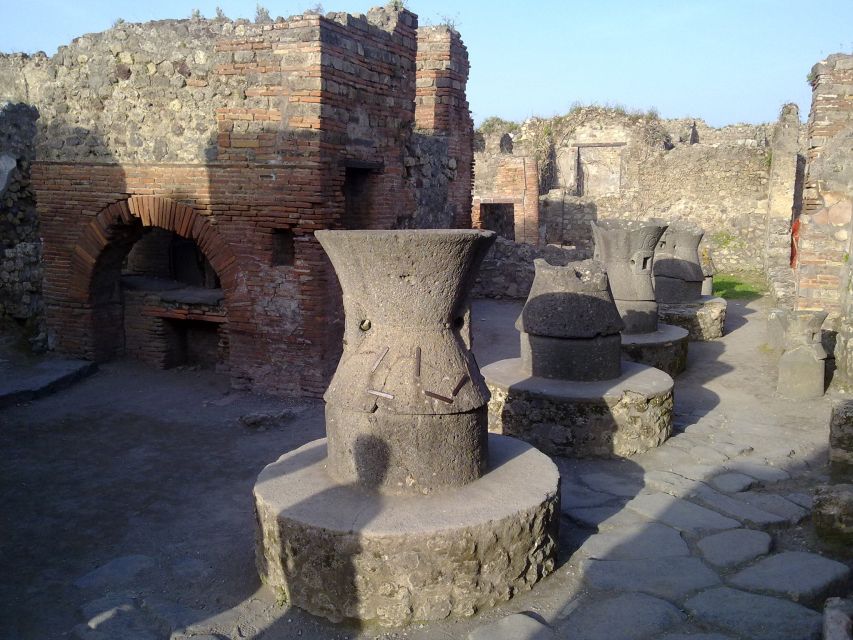
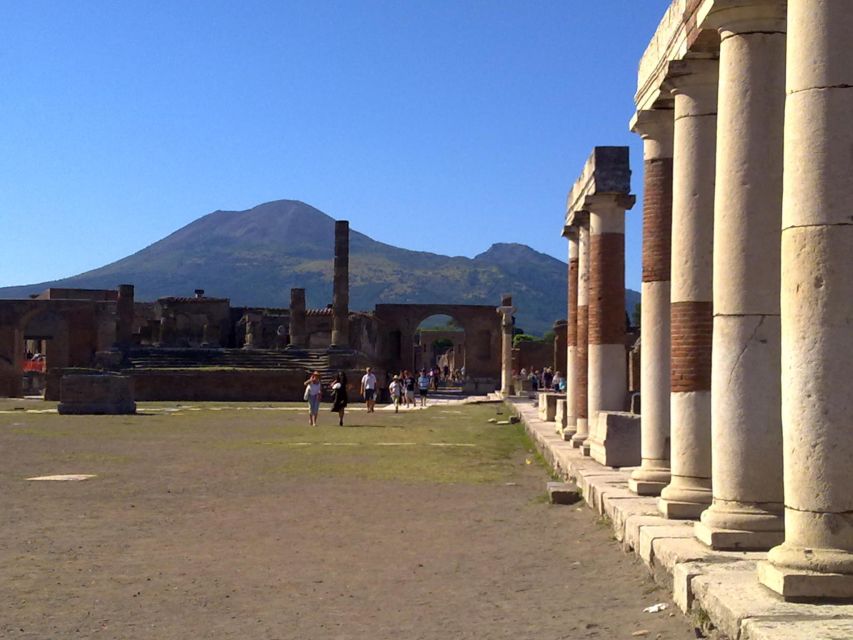
The Forum is the city center for religion, trade, administration, and politics. In Pompeii, it is also where you can understand the social engine of the town. This tour aims to show you several anchors around that civic core, not just one big landmark.
You get temple views that set the tone for Roman public life. Expect to see the Temple of Apollo and the Capitolium, along with other major structures such as the Temple of the Emperor and the Basilica. These buildings are more than dramatic piles of stone. They show what Romans gathered to honor, discuss, and manage.
The Basilica is especially useful for understanding how power and public business worked. The space gives you context for everyday civic flow, like where people conducted formal matters.
You also visit the Macellum market area. That is where you connect the public buildings to the practical world of buying and selling. Roman life was not only temples and speeches. Food markets were daily routines.
If you like “reading a city by its functions,” this is a strong stop. It helps you connect temples, administration, and commerce so you understand Pompeii as a working town.
Everyday Life Stops: Baths, Villas, Taverns, Shops, and Frozen Moments
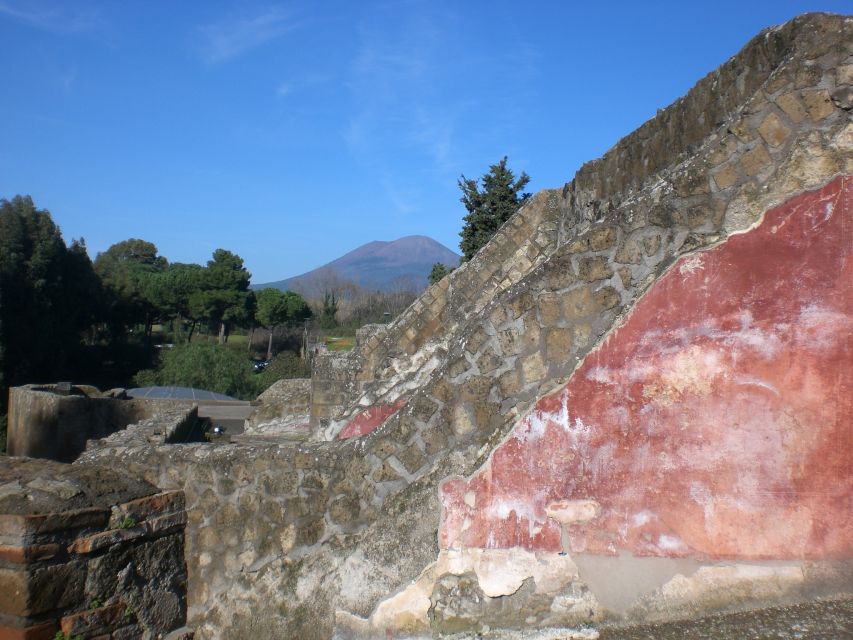
Pompeii is famous for big monuments, but it is the everyday buildings that make the city feel human. This tour includes a range of types, with stops aimed at public and private life. You can expect to see parts of the city that represent how people lived: baths, villas, taverns, and shops, plus key public spaces like theaters.
Why this matters: Roman entertainment and food were not “extras.” They were part of social identity. Even in a tragic event, those routines existed right up to the end. The buildings help you picture that rhythm.
The guide also keeps an eye on the group’s energy and physical needs. The plan is flexible. The idea is to hit the strongest examples of each building type without turning the walk into a punishment.
A practical note: even the “easy” segments on Pompeii ground can feel uneven and slippery in spots. You will want comfortable shoes with good grip. If you think you are only going to do a light stroll, Pompeii will correct that assumption quickly.
Human Casts and Bakeries: Why the Tragedy Feels Personal
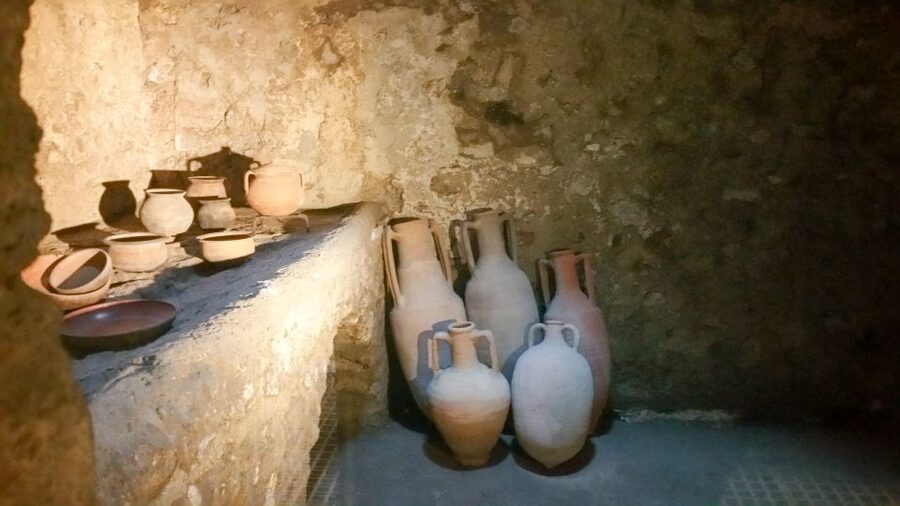
Two stops can hit you hard in the best way: Pompeii’s human casts and its bakeries.
You will see displays of human casts of Pompeii residents, caught by the volcano in the exact pose they died. This is one of those moments where you feel the weight of what happened, not through dramatic storytelling, but through stillness. The casts make the tragedy concrete. You stop thinking in centuries and start thinking in minutes and moments.
Then the tour turns to food, which is often where the emotional contrast becomes especially sharp. You go to one of Pompeii’s bakeries, where carbonized loaves of bread were found during excavations. This is the Roman version of fast food in the sense that bread was mass-market, routine fuel, not a special treat for one family.
Standing in and around the bakery area gives you a more complete Pompeii picture. You are not only facing death. You are seeing a town that baked daily, sold daily, and depended on food systems.
If you want a tour that balances the heavy with the ordinary, these stops are the pivot points.
Red Light District Frescoes and Picking a Theater
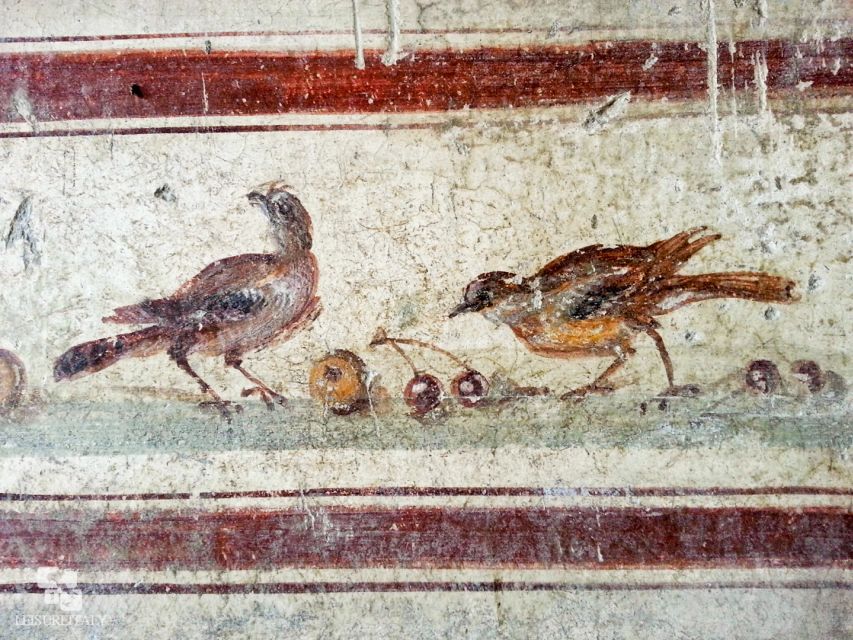
Not every Pompeii tour feels willing to show you the full range of Roman life. This one includes the former Red Light District to see Roman frescoes of erotic images.
It can be awkward at first, if you are not expecting it. But it is also educational. It reminds you that Roman wall art was part of public and private expression. A tour that skips this would give you a flatter picture of what people thought was acceptable, funny, or bold.
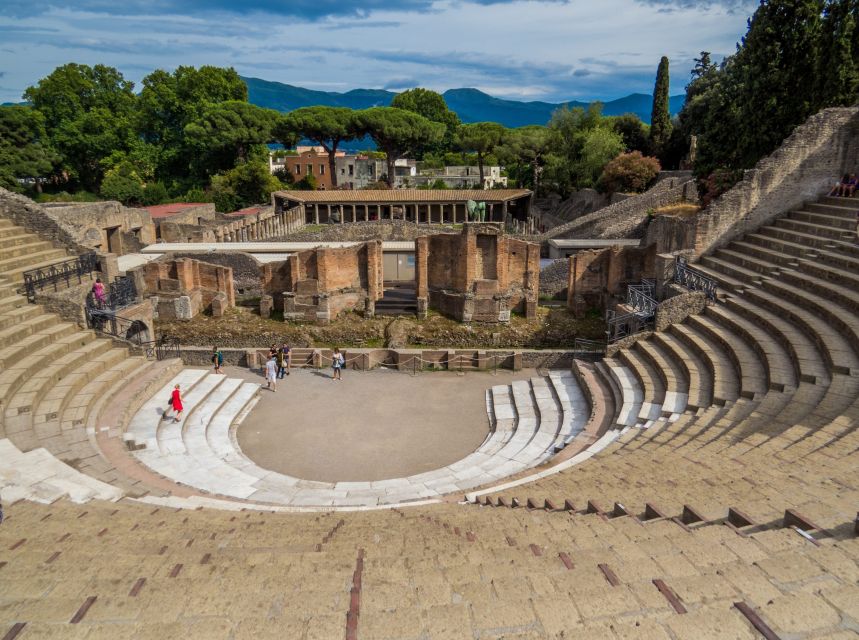
After that, you visit one of Pompeii’s three theaters. You do not try to do all three in 2 hours. Instead, your guide takes you to one theater depending on the day and flow.
You will see two main types of performance spaces. One is an outdoor arena used for public performances. There is also an indoor theater for mime and poetry, plus an outdoor theater where tragedies and comedies were staged.
This is a smart way to experience Pompeii theater culture. Even in ruins, you can see how the Romans cared about entertainment and storytelling. And because a guide is with you, you are not just looking at seats and stages. You get the why behind what you are seeing.
Price, Group Size, and Value for Money
At $175.22 per person for a 2-hour private walk, this is not a budget deal. You are paying for three things that add up in Pompeii: a private guide, skip-the-line entry, and a small group capped at 10.
In a big site like Pompeii, time is the currency. A private guide helps you convert time into meaning by pointing out specific details and keeping you on track. Skip-the-line helps you start earlier and lose less time to waiting.
So is it good value? If you want the Forum anchors, bakeries, an emotional stop like human casts, plus a theater, and you want it done with a guide who can adapt the pace, the price starts making sense. You are basically buying focus and efficiency. If you just want a scenic stroll and you are okay wandering with a map, you might not need to pay for this level of guidance.
Also consider the group size. Up to 10 participants with a guide can still feel small compared to giant group tours. That often means less waiting around for others and more time listening to the person leading you through the ruins.
Should You Book This 2-Hour Private Walking Tour of Pompeii?
Book it if you want Pompeii in “best-of” form, with a guide who helps you connect streets to civic life to everyday routines. This is especially worth it if you care about details like the basalt road, the reflective travertine spots, and practical Roman choices like stepping around wet ground. It is also a great fit if you want both the Forum buildings and everyday food stops like the bakeries.
Skip it if you need a wheelchair-accessible option. The tour is listed as not suitable for wheelchair users and people with mobility impairments. Even when a guide can adjust pacing, the physical reality of Pompeii is tough.
One more timing thought: on the first Sunday of each month, entrance is free of charge. Still, because tickets cannot be reserved ahead of time, entry is not guaranteed. If your dates are firm, the skip-the-line arrangement is a safer bet.
FAQ
How long is the private walking tour of Pompeii?
The tour lasts 2 hours. You can check availability to see starting times.
Where is the meeting point, and where does the tour end?
Meet your guide at Café Hortus Pompeii, in front of the entrance at Via Villa dei Misteri 2, Pompeii Archaeological Park. The activity ends back at the meeting point.
What does the Pompeii Express skip-the-line ticket include?
The Pompeii Express skip-the-line tickets allow you to visit all areas within the city walls.
Is this tour private?
It is a private walking tour with a live guide, and it is limited to a small group of up to 10 participants.
What languages are available for the guide?
The live tour guide is available in Spanish, English, French, and Italian.
Is the tour suitable for wheelchair users or people with mobility impairments?
No. It is not suitable for wheelchair users or for people with mobility impairments.
Do I need to provide names for the tickets, and is free cancellation available?
Yes, you must provide the full names of all participants because they are required for the tickets. Free cancellation is available up to 24 hours in advance for a full refund.
Recently reviewed around Pompeii Archaeological Site
- Pompeii: Skip-the-Line Guided Archaeological Discovery Tour★ 4.2 · 13 reviews
- Pompeii: Tour for Children★ 4.7 · 106 reviews
- Pompeii: Skip-the-Line Tour for Kids and Families★ 4.9 · 72 reviews
- Pompeii: Skip-the-Line Ticket and Virtual Museum★ 4.5 · 66 reviews
- Pompeii 3-Hour Walking Tour★ 5.0 · 8 reviews
- Pompeii 2-Hour Private Tour★ 4.9 · 121 reviews
- Pompei: Pompeii and Vesuvius Combo with Transfer and Tickets★ 3.9 · 130 reviews
- Mount Vesuvius Wine Tasting and Lunch from Pompeii★ 4.3 · 43 reviews
Pompeii Tours, compared.
Entry Ticket and Guided Tour with an Archaeologist
Read our review →

Pompeii Small Group Tour with an Archaeologist
Read our review →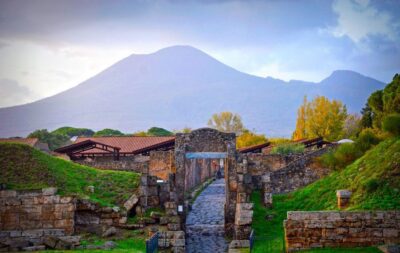
Skip-the-Line Entrance Ticket with Audio Guide
Read our review →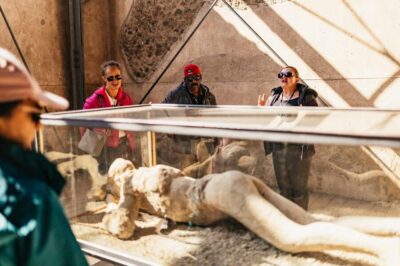
Pompeii and Mt. Vesuvius with Lunch and Wine Tasting
Read our review →
Archaeological Park Tour with Ticket on request
Read our review →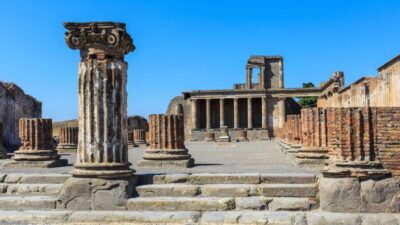
Browse the lists this tour appears in