
Reviewed · POMPEII TOURS
Pompeii: Tour for Children
Pompeii is the kind of place that can make adults go quiet, but it can also lose younger kids fast. This family-focused Pompeii tour keeps the attention on what matters most, with child-tailored commentary and a guide who knows how to keep the walk moving. I especially like that you get skip-the-line help so you are not burning kid energy standing in queues. One thing to plan for is the sheer heat and walking pace, since you’re exploring outdoor ruins for roughly 2 to 3 hours.
Guides like Anita, Daniela, Rosella, Giada, and Emanuela show up as the real difference-makers. They use fun trivia, games, and even Roman-name ideas to make daily life click for kids, while still giving adults real context. A possible drawback: there is no mention of a built-in long break, so on hotter days you may want to plan for shade time and water as you go.
Key Reasons Families Love This Pompeii Tour
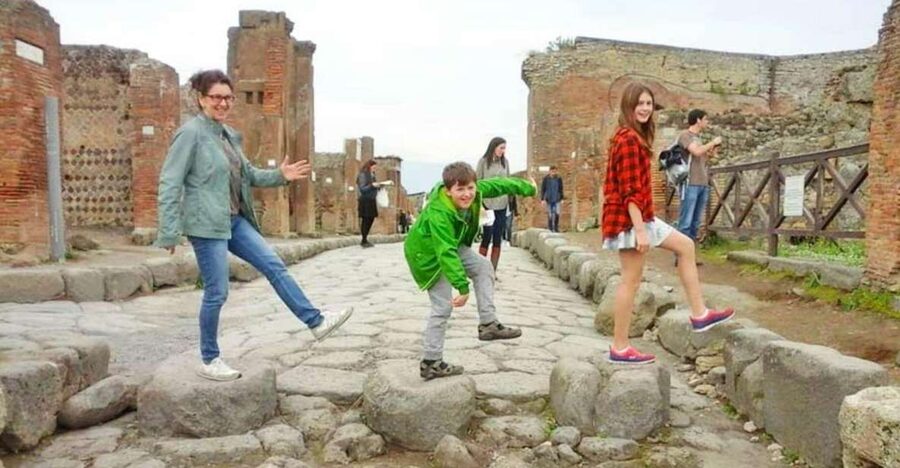
- Kid-focused storytelling that still teaches real Roman life
- Skip-the-line EXPRESS option to cut down on waiting time
- Private group format that helps the guide set the pace for mixed ages
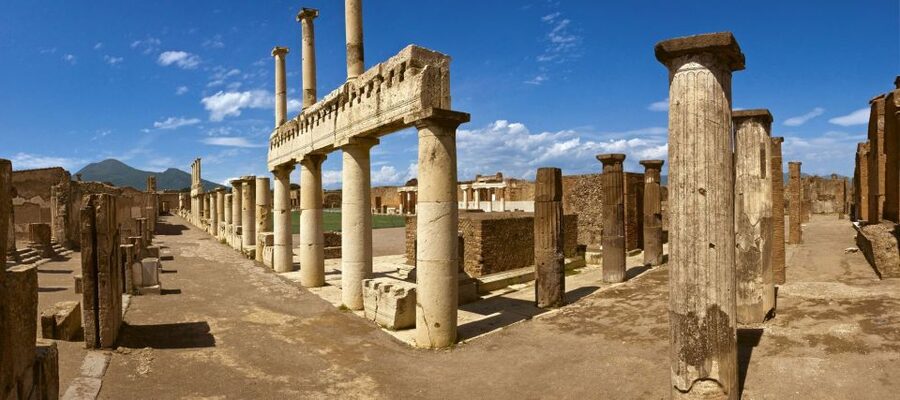
- Forum route with standout stops like the baths, Termopolium Capuano, and the House of the Tragic Poet
- Engagement tools like questions, Roman names, and sometimes visual aids such as before-and-after images on an iPad
- Guide flexibility in hot weather, including finding shade and adjusting the tempo when kids tire
Pompeii For Kids Works Because the Guide Turns Ruins Into People
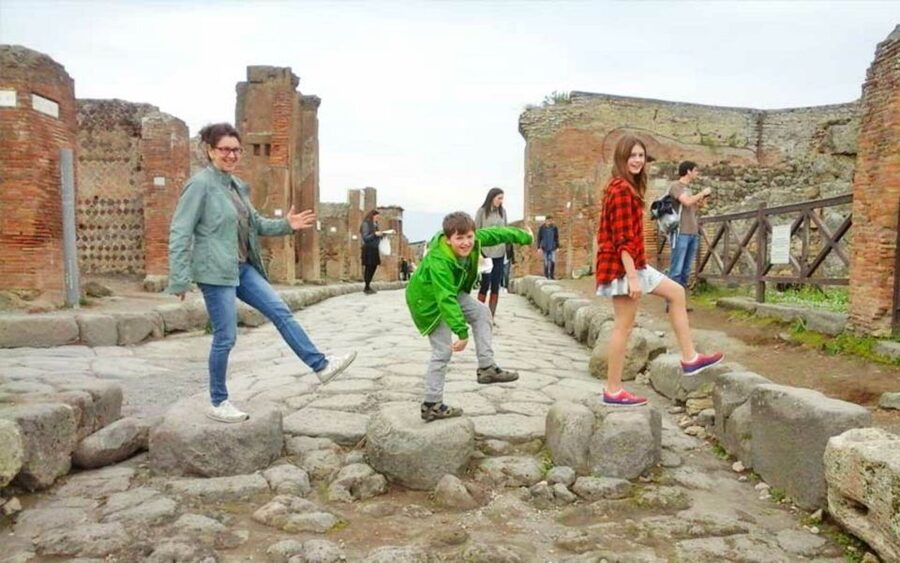
Pompeii is one of those rare historic sites where the buildings look like they are still mid-story. And yet, for kids, a city of stone can feel like a pile of rocks unless someone gives it a heartbeat. This tour is designed around that problem: a guide explains the world of Pompeii in a way that feels like a game, not a lecture.
The best part is that the tour is built for families, not just general sightseeing. I like that you’re not expected to memorize dates and names. Instead, you’re guided through recognizable spaces, like the forum, baths, and everyday street-level businesses, and your kids get prompts and questions along the way.
The second big reason it works is that the group is private. That matters with children, because the guide can adapt when a 4-year-old needs a reset, or when a 10-year-old starts to slow down from the heat. In this tour’s world, the pacing is not fixed to the comfort of adults who can walk for hours without stopping.
More Pompeii tours to compare:
- Pompeii: Entry Ticket with Optional Audio Guide
★ 4.2 · 12,360 reviews - Pompeii: Archaeological Park Tour with Ticket on request
★ 4.5 · 2,283 reviews - Pompeii Ruins Private Tour with Optional Skip-the-Line Entry
★ 4.9 · 732 reviews
Where You Meet, How Timing Feels, and What You Should Expect Next
You make your own way to the meeting point at the entrance to Pompeii’s archaeological site. Tours run at 09:00, 12:00, or 14:00, depending on the option you choose. After you meet your guide, you head into the site for a guided walking experience of about 2 to 3 hours.
This timing is practical for families. Two hours is often just long enough for kids to feel like they accomplished something, and short enough that you are not stuck in the most draining stretches. Three hours can be a stretch for the youngest, but the tour’s family setup gives you a better chance that the guide will keep it moving.
You also get clear boundaries for what the tour delivers. It’s a walk through the ancient Roman city, not a bus tour and not an all-day marathon. At the end, the tour returns you back to the meeting point, and your guide can help with nearby restaurant recommendations or getting back to your hotel.
Skip-the-Line Is the Real Comfort Feature for Families
In big-ticket sites like Pompeii, the wait can be brutal for children. This tour includes skip-the-line access, and an EXPRESS ticket may be offered as a selectable extra. Either way, the point is the same: you are trying to spend your time seeing Pompeii, not standing outside it.
I like how this shifts the experience from logistics to storytelling. When you enter faster, the guide can get kids focused sooner, and you’re less likely to start the tour in a cranky mood.
That said, it’s worth knowing about special days. On the first Sunday of each month, entrance is free, but tickets can’t be reserved ahead of time, so entry is not guaranteed. If you’re traveling on that day, build in flexibility.
Your Walk Through Pompeii’s Big Three: Forum, Baths, and Everyday Streets
The tour centers on the spaces that help you understand how Pompeii worked day to day. And your guide points out specific named stops, so you are not just wandering with a generic route.
Same stretch of coast, a completely different day out:
- Pompeii: Exclusive Tour with Archaeologist and Entry Tickets
★ 4.9 · 634 reviews - Pompeii: Group Tour with an Archeologist Guide
★ 4.4 · 490 reviews - Pompeii: Skip-the-Line Tickets and Tour with Archaeologist
★ 4.9 · 467 reviews - Pompeii: Skip-the-Line Guided Tour with Expert Archaeologist
★ 4.8 · 196 reviews
The Forum: Where Roman Life Looks Up and Moves On
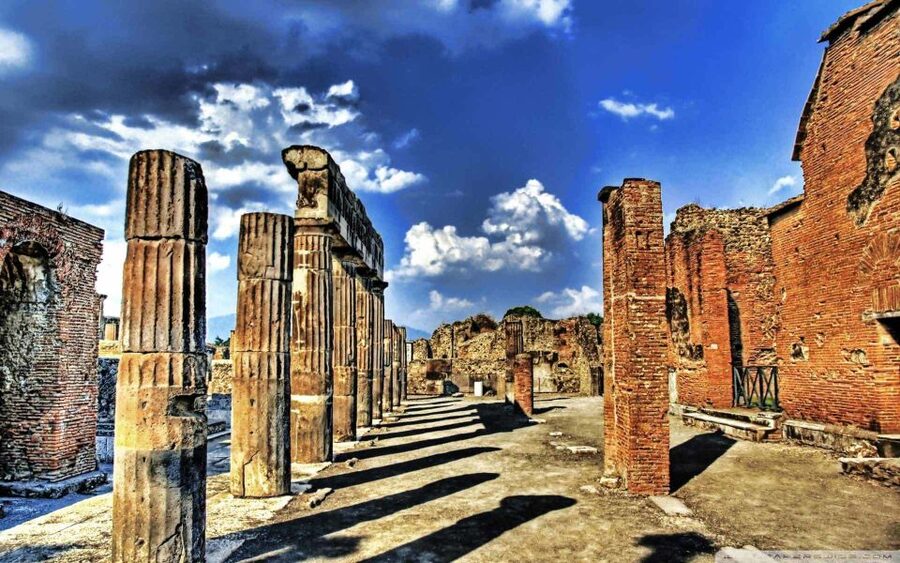
The forum is the social and civic heart of the city, and this is where the tour’s storytelling can really take off. Guides frame it as a place where people met, discussed life, and felt the rhythm of the city.
This is also where the guided approach shows its value for kids. Instead of asking them to stare at columns, the guide talks about what Roman life felt like in that space. The forum becomes a stage, not a lecture hall.
The Roman Baths: A Hit for Kids Who Like Real-Life Details
The tour includes a stop for the Roman baths. Even if you have never visited a Roman bath before, it’s the kind of place where the guide can explain everyday behaviors in a visual way. Kids tend to understand routines better than theories, and baths naturally lead to topics like bathing culture and daily habits.
The best-case scenario is a guide who can describe the space in plain terms and keep a steady pace. This tour’s reviews lean strongly toward that kind of pacing, including finding shade and maintaining engagement.
Termopolium Capuano: A Roman Snack Stop You Can Imagine
Next up is Termopolium Capuano, which is essentially a Roman street food or refreshment counter. This is one of the smartest stops for younger kids, because it invites imagination. You are not just looking at ruins, you’re talking about what people ate, drank, and bought.
For kids, that everyday angle makes Pompeii feel closer. For adults, it adds texture beyond the big tragedies.
The House of the Tragic Poet: Human Scale Meets Ancient Tragedy
The tour also includes the House of the Tragic Poet. This kind of house gives you a view into domestic life, helping you understand that Pompeii was not only public monuments. It had families, art, and private routines.
The house stop can land differently depending on your kids. Older kids often enjoy the idea of a famous home and the story behind its name. Younger kids may prefer the guide’s interactive moments, like questions and games, that keep them connected while still seeing the important features.
The 79 A.D. Vesuvius Story: How the Tour Makes Disaster Make Sense
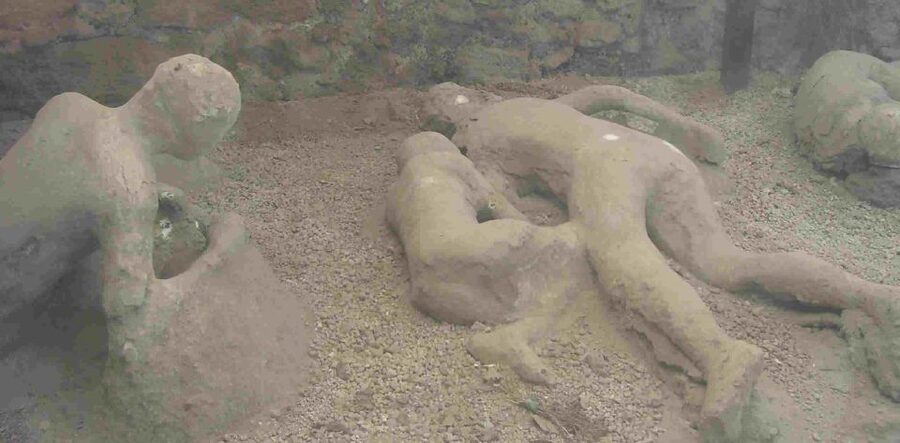
Pompeii’s famous story is tied to the nearby Mount Vesuvius eruption in 79 A.D. Your guide explains how the city was buried by that eruption, and you learn why these ruins survived when so much else vanished.
This is the part of Pompeii that can feel abstract for children if it’s explained only through dates. The guide’s job is to translate disaster into a sequence you can picture. That includes connecting why the ruins look so preserved and what that preservation means for understanding daily life.
I like that this tour frames the eruption story as a turning point in a living city, not as a one-line tragedy. Kids can handle the big idea when it is tied to what they are seeing in front of them.
Also, you get a broader time anchor than just 79 A.D. The site includes ruins that date back to as early as the 7th century B.C. That long timeline helps adults too, because Pompeii is not just a moment in history.
How Guides Keep Kids Engaged Without Losing the Plot
If you choose this tour, your guide matters. The reviews highlight a clear pattern: the best guides connect fast and keep going with a friendly, interactive style.
Here’s what that often looks like in practice, based on the guide stories you provided:
- Instant connection with young kids, including guides who successfully work with children around 4 years old.
- Roman-name ideas that make kids feel like part of the city. This may sound small, but it gives children a role in the story.
- Questions and fact-checking moments so kids stay attentive without being talked at.
- Games to turn waiting and attention spans into something fun.
- Shade-finding and pacing changes during hot visits, including guides recognizing when younger kids were tired after about 1.5 hours.
Some families also loved visual aids. One standout detail was a guide using iPad pictures showing before-and-after depictions of buildings. That kind of tool helps kids understand what ruins once looked like, and it helps adults make sense faster.
Guides like Daniela, Rosella, Anita, and Giada are singled out in the information you shared for exactly these strengths. Emanuela is noted for keeping kids engaged the whole time, while other guides are praised for helping families see what matters and not getting lost.
Duration and Pacing: A Sweet Spot for Mixed Ages
This tour is designed for 2 to 3 hours, and that range is important. When you’re walking through outdoor ruins, the “right” length is the one that prevents meltdown time.
In hot conditions, pacing becomes a skill. One family noted their youngest got tired after 1.5 hours, and the guide adjusted. Another family asked for a short break mid-tour and pointed out how useful that would be when it is extremely hot.
So here’s the practical takeaway: if you have very young kids, plan to treat this as a focused morning or afternoon activity, not an everything-day plan. Build in time afterward for snacks and a slower pace. And yes, consider bringing water and something small to eat, even if the tour does not explicitly promise a sit-down break.
What to Bring, What Not to Bring, and Simple Rules That Keep It Smooth
To avoid last-minute problems, keep this checklist in mind:
Bring:
- Passport or ID card (the tour notes that you may need documents for kids to prove their age at the ticket office)
- Comfortable shoes
Not allowed:
- Luggage or large bags
- Unaccompanied minors (children must be accompanied by their parents at all times)
If your group includes multiple children, the age proof detail is worth taking seriously. It can save you time at the entrance if you arrive prepared.
Also, the “no large bags” rule matters. If you pack light, you’ll move faster through the site and feel less rushed during the tour.
Price and Value: Paying Per Group, Not Per Spark of Kid Attention
The price is listed as $294.54 per group up to 8. That pricing structure is usually the big win for families with kids plus one or two grandparents or older siblings.
Instead of thinking about the cost as a per-person fee, think about it as paying for a guide who can tailor the pacing and storytelling for a small group. When the guide is good with kids, that value shows up fast. You are not just paying to access Pompeii, you’re paying to convert a complicated place into a story your child can actually follow.
One more value angle: the skip-the-line approach reduces the time you spend managing kids at the entrance. That makes the tour feel more like an experience and less like an administrative task.
If you are traveling with 2 to 6 people, it can feel like a smart family decision. If you are traveling solo or as a couple, it may be less cost-effective than a cheaper shared tour, but the private group setup can still be worth it if you want a guide who can focus on your children’s pace.
Who This Tour Fits Best
This Pompeii: Tour for Children works best if:
- You have kids who need interactive explanations, not just facts
- Your group includes mixed ages, like one child plus teens or adults
- You want a guided route that hits key stops such as the forum, Roman baths, Termopolium Capuano, and the House of the Tragic Poet
- You prefer a private group where the guide can adjust when attention drops
It also makes sense if you want Pompeii to feel doable. Pompeii can be overwhelming without structure, and this tour gives you a plan that keeps everyone moving.
Should You Book Pompeii: Tour for Children?
If your main goal is to help kids enjoy Pompeii, I think this is a strong booking. The standout reason is the human one: guides in this format are repeatedly praised for connecting quickly, keeping a good pace, and using kid-friendly tools like games, questions, and Roman-name moments. Add in skip-the-line help, and you have a recipe for more sightseeing and fewer headaches.
Book it if:
- You want family-tailored commentary
- You’re traveling with young kids or mixed ages
- You want a structured Pompeii route around the forum, baths, and recognizable named stops
Consider alternatives if:
- You know your children love long walks in heat with minimal interaction
- You prefer a fully self-guided visit where you control every stop and pause
FAQ
What time do tours start?
Tours are offered at 09:00, 12:00, and 14:00, depending on the option you book.
How long is the Pompeii for Children tour?
The duration is 2 to 3 hours. The exact length depends on the starting time option available.
Is this tour private?
Yes. This is a private group tour suitable for families.
How much does it cost?
It is $294.54 per group for up to 8 people.
Does the tour include skip-the-line entry?
It includes skip-the-line access, and an EXPRESS ticket is listed as an extra option if selected.
Where do we meet?
You meet at the entrance to Pompeii’s archaeological site. The meeting point may vary depending on the option booked.
What should we bring?
Bring a passport or ID card, and comfortable shoes.
Are large bags allowed?
No. Luggage or large bags are not allowed.
Can children attend without their parents?
No. Unaccompanied minors are not allowed, and children must be accompanied by their parents at all times.
Is entry free on the first Sunday of the month?
On the first Sunday of each month, entrance is free, but tickets cannot be reserved ahead of time, so entry is not guaranteed.
Recently reviewed around Pompeii Archaeological Site
- Pompeii: Skip-the-Line Guided Archaeological Discovery Tour★ 4.2 · 13 reviews
- 2-Hour Private Walking Tour of Pompeii★ 4.7 · 22 reviews
- Pompeii: Skip-the-Line Tour for Kids and Families★ 4.9 · 72 reviews
- Pompeii: Skip-the-Line Ticket and Virtual Museum★ 4.5 · 66 reviews
- Pompeii 3-Hour Walking Tour★ 5.0 · 8 reviews
- Pompeii 2-Hour Private Tour★ 4.9 · 121 reviews
- Pompei: Pompeii and Vesuvius Combo with Transfer and Tickets★ 3.9 · 130 reviews
- Mount Vesuvius Wine Tasting and Lunch from Pompeii★ 4.3 · 43 reviews
Pompeii Tours, compared.

Entry Ticket and Guided Tour with an Archaeologist
Read our review →

Pompeii Small Group Tour with an Archaeologist
Read our review →
Skip-the-Line Entrance Ticket with Audio Guide
Read our review →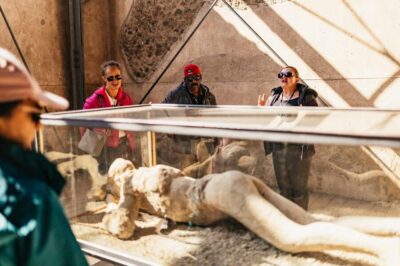
Pompeii and Mt. Vesuvius with Lunch and Wine Tasting
Read our review →
Archaeological Park Tour with Ticket on request
Read our review →
Browse the lists this tour appears in