
Reviewed · POMPEII TOURS
Pompeii 3-Hour Walking Tour
Pompeii is one of those rare places where the past feels painfully close. This private 3-hour walking tour is a smart way to experience the key sites without feeling like you are wandering in the ruins guessing what matters.
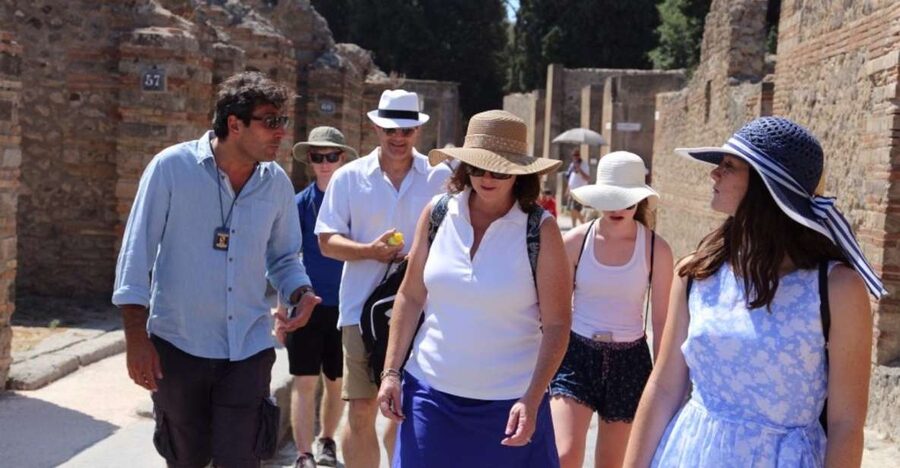
What I like most is the focus on the big storytelling stops, like the Forum area and the Lupanar (brothel), plus the chance to understand why Pompeii was rediscovered in the 18th century. The other strong point is the guide, often an archaeologist, and a name you may hear is Vincenzo, praised for being both entertaining and friendly.
One consideration: you are paying for a private setup (it is priced per group up to 1), so it is not the cheapest way to do Pompeii. If you want the lowest cost, you may need to compare other formats.
Key highlights that make this Pompeii tour worth your time
- Archaeologist-led private format so questions come fast and the route makes sense
- Forum, baths, and Lupanar to see Roman life in public, private, and yes, the parts people still talk about
- Plaster casts of humans and animals to bring the 79 AD eruption into sharp human focus
- Major landmarks in just 3 hours, including Porta Marina, temples, theaters, and the amphitheater
- Skip the ticket line and get moving sooner, which matters in a big site like Pompeii
Why Pompeii hits harder with a private archaeologist guide
A good Pompeii visit is not just about seeing columns and walls. It is about building a mental picture of how people lived, worked, argued, ate, prayed, and relaxed in a city that ended in a few brutal hours.
This tour is designed for that kind of understanding. You get a live guide with expertise, and the experience is taught as a timeline, starting from Roman daily life and ending with the eruption of Vesuvius in 79 AD that buried the town under ash and molten material. That is a lot of weight for three hours, but a private route helps you stay anchored instead of getting lost in a sea of stone.
I also appreciate that the guide connects the dots from monument to human behavior. You see the Forum and the Basilica, then you understand what “public space” meant to Romans. Later, you hit the baths and theaters, and suddenly leisure has context. Then you come to the Lupanar, and the city is no longer an archaeological display, it is a place with complicated real people.
Finally, this is a private group (up to 1), so you are not competing for attention. If you like explanations at your speed, this format fits.
More Pompeii tours to compare:
- Pompeii: Entry Ticket with Optional Audio Guide
★ 4.2 · 12,360 reviews - Pompeii: Archaeological Park Tour with Ticket on request
★ 4.5 · 2,283 reviews - Pompeii Ruins Private Tour with Optional Skip-the-Line Entry
★ 4.9 · 732 reviews
From Via Villa dei Misteri to Porta Marina, get oriented fast
The tour starts at one of two meeting points on Via Villa dei Misteri, either number 2 or number 3. From there, you enter the Pompeii archaeological area with a guide instead of playing navigation games.
The first major arrival spot is Porta Marina (Marina Gate), a great choice because it helps you understand the city layout early. When you see gates and main entries up front, later sites feel less random. You can connect the walk to how people moved through Pompeii.
This “orientation first” approach matters because Pompeii is not compact like a museum. The streets stretch, and details are everywhere. A guide helps you focus on the highlights that connect into one coherent story.
Also, the tour is wheelchair accessible, which is a big plus if you need that option. If you are using a mobility aid, it is still worth wearing shoes with good grip and planning for uneven ground, since Pompeii has that real archaeological-site texture underfoot.
Villa of the Mysteries, where images teach you daily life
One of the stops that tends to stick in your mind is the Villa of the Mysteries. Even if you only know Pompeii as “the city preserved by disaster,” this is where the place stops being only tragic. It becomes human and artistic.
This villa is famous for how Roman domestic spaces were used, decorated, and symbolically loaded. On a guided walk, you are not just looking at walls. You are learning what kinds of rooms existed, what the setting suggests, and how the story of Pompeii includes religion, rituals, and social identity.
From here, the eruption theme starts to feel less abstract. The guide connects the built environment to what happened when Vesuvius erupted in 79 AD. You are not waiting until the end to learn the catastrophe. You are learning it as the route continues, so everything feels linked.
In practical terms, this is also a good mid-early stop. It helps you build curiosity before you move into the Forum and civic buildings where the site becomes more public and formal.
Temples and the religious spine of Pompeii, Temple of Apollo plus more

Pompeii was religious as well as practical. Temples and sacred spaces shaped how people saw power, luck, and the daily rhythm of life.
You will visit the Temple of Apollo, and you will also encounter the wider religious cluster described in the route, including temples associated with Jupiter and Venus. The guide’s job here is to translate stone into meaning. You learn why temples were not only worship sites, but also part of how the city displayed status and community identity.
This is a good section for anyone who thinks ruins are just architecture. Temples help you understand that Roman life had a spiritual structure, not just an engineering one. And since you are in a city that froze in time, you can connect what you see to the moment right before it stopped.
If you like photos, this part is very photogenic too. Even so, I recommend slowing down and letting the guide explain first. You will take better pictures when you know what each structure is and what it likely meant to the people who used it.
More walking tours in Pompeii Archaeological Site:
- 2-Hour Private Walking Tour of Pompeii
★ 4.7 · 22 reviews - Pompeii: Guided Walking Tour with Entrance Ticket
★ 4.3 · 1,423 reviews - Walking Food Tour in Sorrento w/ Limoncello Factory Lemon Grove
★ 4.5 · 821 reviews - Sorrento: Guided Walking Tour & Limoncello Tasting
★ 5.0 · 472 reviews
Forum and Basilica, where Roman public life gets real
If you remember only one part of Pompeii, make it the Forum (Foro Civile di Pompei) and the Basilica. This is where the city shows its “public face.”
The Forum is where civic events, business, and community movement happen. On this tour, you also get related Forum landmarks as you move through the area, including spots like the Triangolar Forum, plus commercial and everyday stops such as a bakery and Termopolium Capuano. A termopolium is basically an early Roman snack and drink spot, and it helps you picture what people actually did day to day.
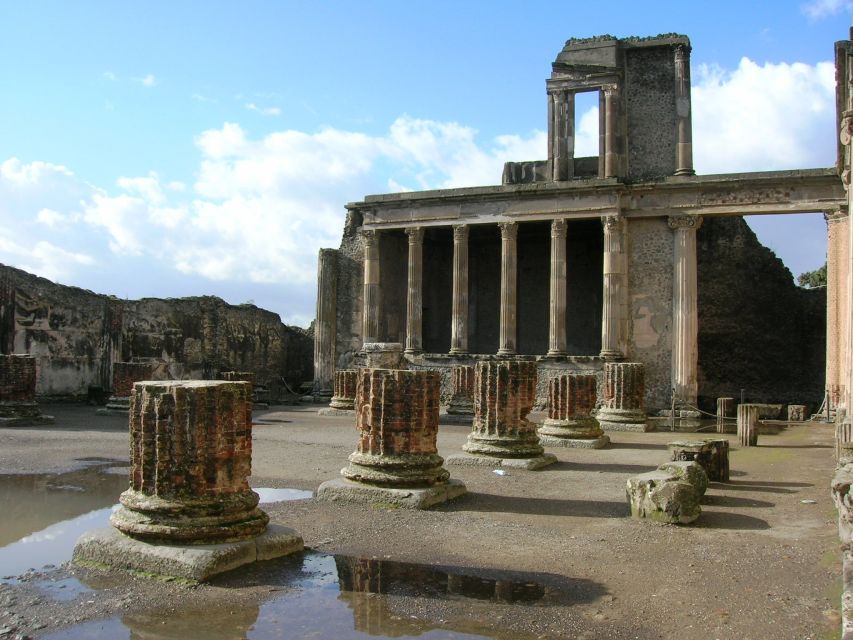
Then the Basilica comes in, a court-house style building that explains how law and administration played out in real space. This is one of those stops where the ruins stop being quiet. The guide talks through what the building functioned as, who used it, and how public Roman life worked.
Here is what makes this section valuable for your brain: it turns Pompeii from a list of ruins into a living map. Once you understand the Forum and its neighboring functions, the rest of the site starts to make sense. Even the more dramatic sites, like the theater and amphitheater, start feeling like parts of the same social machine.
If you are sensitive to crowds, the private setup helps. You can spend a little more time here without getting swept away by a big group flow.
Baths, theaters, and the social rhythm of Roman life
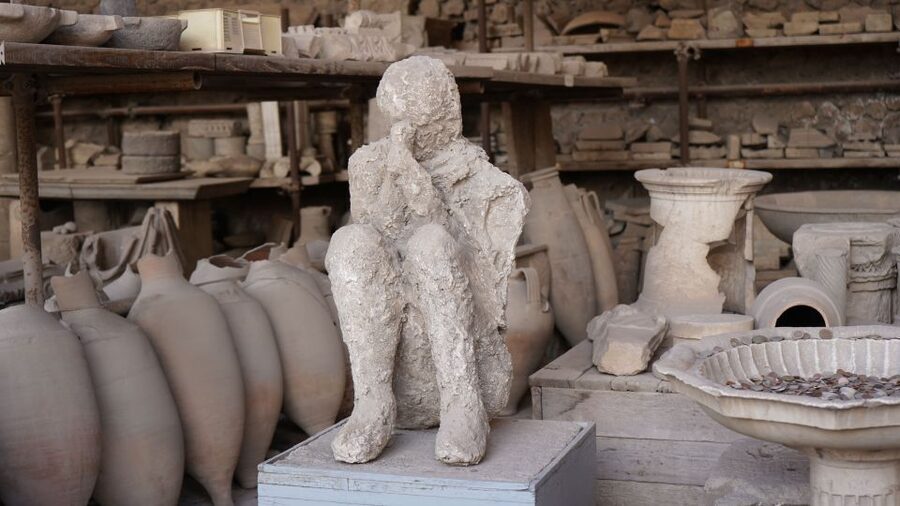
Romans did not only work. They gathered. They talked. They cleaned up. They made plans. They watched performances.
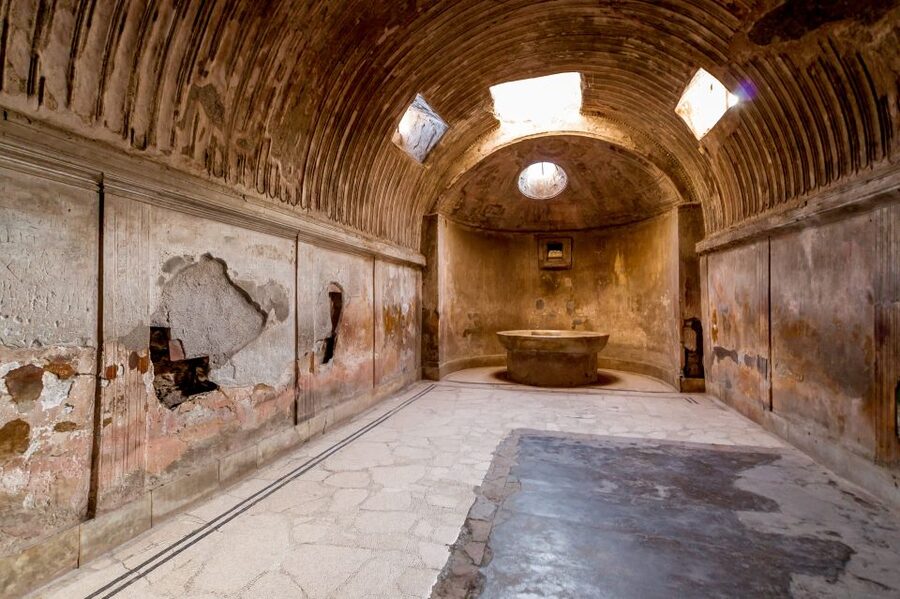
You visit Forum Baths (and related bath areas like Sarno Baths). Baths are one of the best ways to understand daily life because they are practical and social at the same time. You can see how these spaces were designed for routines, not just show.
Then the tour moves into entertainment venues, including Teatro Grande (the Large Theatre) and the smaller Odeion (small theatre). These stops help you understand the city’s cultural habits. You see why performances were not rare events, but part of social life.
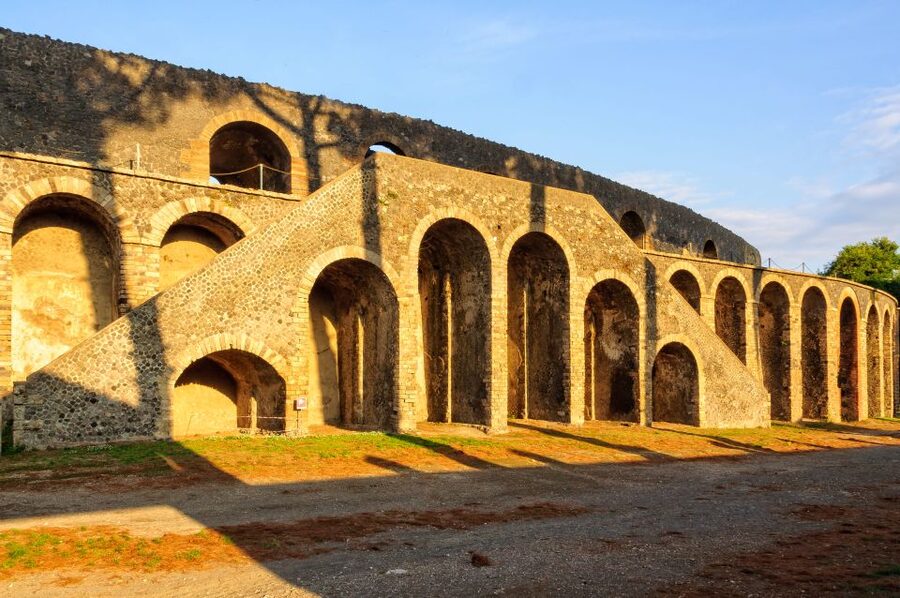
Later, you also head to the amphitheater, which shifts the vibe from theatre drama to public spectacles. By the time you get here, you have already learned how the Forum and baths fit the same idea: public life and entertainment were woven into the city’s calendar.
This section is a great fit if you enjoy that “how did people spend their time” angle. It is not only about power and disaster. It is about routine, community, and the places where people passed hours together.
Homes and the Lupanar, seeing daily life and the messy human side
Pompeii’s homes are where you learn the difference between “public Roman life” and “private Roman life.” And you do not just see one.
You will visit the House of Menander, the House of the Faun, the House of Tragic Poet, and the House of the Vettii. Each one adds a different layer, and the guide helps you notice changes in layout and how rooms were used. You start to understand that Roman domestic life could be simple or status-heavy, depending on who lived there.
Then comes one of the most talked-about stops: the Lupanar (brothel). This is not included to shock you. It is included because it is part of the city’s real economy and social dynamics. When a guide explains the layout and how the space functioned, the Lupanar stops being an abstract scandal and becomes another window into what Pompeii was.
There is also a strong emphasis on what people did outside the “big monuments.” You see details like everyday commercial structures mentioned in the route, including the Termopolium Capuano area and other small-use spaces that help fill in the gaps between famous buildings.
If you prefer your archaeology light on moralizing and heavy on context, this section is where the private format pays off. You can ask direct questions and get direct answers.
Plaster casts and temples: how the eruption becomes personal
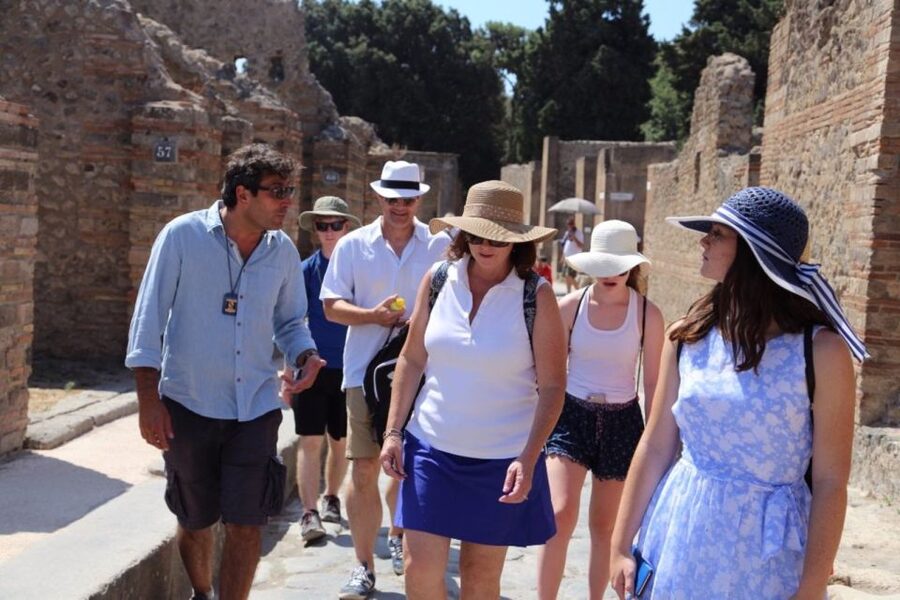
No Pompeii tour feels complete without the plaster casts of humans and animals at the time of death. This tour includes them as a key moment, and it is where your perspective shifts.
The guide’s explanation turns catastrophe into something you can understand as a sequence. You learn how the eruption buried the city, and how the preserved forms offer clues about what people faced. It is not just “sad facts.” It is evidence that helps you imagine the final hours.
This moment also connects back to what you learned earlier, including the themes of Roman daily life you saw in the Forum, baths, and homes. When you have already toured the spaces people lived in, the plaster casts hit harder because you can picture the distance between everyday routines and sudden death.
Along the way, you also see major religious landmarks, including the Temple of Apollo and references to Temple of Jupiter and Temple of Venus in the route. Temples and human remains might sound like separate categories, but a good guide ties them together through one city and one moment in time.
Even with all the emotion, this section stays practical. It teaches you how archaeologists interpret evidence and how UNESCO describes Pompeii and Herculaneum as a complete and vivid picture of society and daily life at a specific moment in the past.
Pace, comfort, and value for a 3-hour Pompeii walk
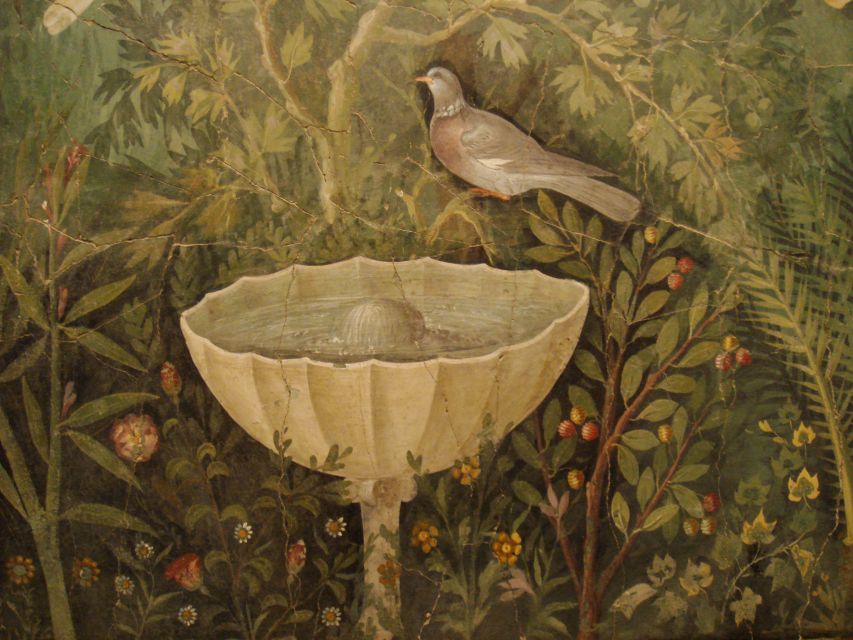
This is a 3-hour tour, so you need to treat it like an efficient, guided “greatest hits” plus context experience. The route is packed with major sites, but the private format helps you pace yourself. If you like steady stops and short explanations, it tends to work well.
You will also want to plan for the basics:
- Bring passport or ID card for entry.
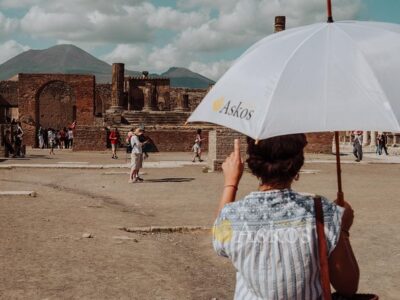
- Umbrellas are not allowed, and backpacks are not allowed.
- Pets are not allowed, but assistance dogs are allowed.
- The tour runs in any weather condition. If rain shows up, you are advised to bring a small umbrella and/or raincoat.
Skip the ticket line is a small line-saver that adds up. In Pompeii, minutes matter. They help you spend time where it counts, not in bottlenecks.
Now the price. It is listed at $508.15 per group up to 1, which is not a bargain in the usual sense. But you are paying for two things that are hard to separate: private guidance and Pompeii admission fees. You are also paying for a tighter route, including major stops and the guide explanation that helps you connect everything.
If you are traveling solo and you want Pompeii explained like a story, this can feel like strong value because you buy back your time and attention. If you are cost-sensitive, you might look for shared tours. If you are comfort-sensitive, this private approach is the easier way to manage your pace in a large archaeological site.
Language options are broad. The guide may be in Spanish, German, Russian, Chinese, English, Italian, Japanese, or Portuguese. If your language matters for understanding the details, this is worth checking when you reserve.
Should you book this Pompeii 3-hour private tour?
Book it if you want Pompeii to feel organized, taught, and humane, not like a self-guided scavenger hunt. The route hits the Forum, baths, major homes, the Lupanar, and the plaster casts, so you leave with more than photos. You leave with a mental map of how Romans lived and what the eruption took away.
Skip it if you are trying to keep costs extremely low, or if you love wandering without structure. This tour is built for guided understanding, not for freestyle exploration.
If you are on the fence, think about this: Pompeii rewards people who know what to notice. A private archaeologist-led walk is one of the quickest ways to learn what matters in a place this big, this old, and this unforgettable.
FAQ
How long is the Pompeii 3-hour walking tour?
The tour duration is 3 hours.
Is this a private tour?
Yes. It is a private group tour, listed as up to 1.
Where do we meet for the tour?
The meeting point may vary depending on the option booked. It can be either Via Villa dei Misteri, 2 or Via Villa dei Misteri, 3. The tour ends back at the meeting point.
What languages are available for the guide?
The live tour guide is available in Spanish, German, Russian, Chinese, English, Italian, Japanese, and Portuguese.
What is included and what is not included?
Included: private guidance and Pompeii admission fees. Not included: meals and transportation.
What do I need to bring, and what items are not allowed?
Bring a passport or ID card. Pets are not allowed (assistance dogs allowed). Umbrellas and backpacks are not allowed.
Is the tour wheelchair accessible?
Yes, the tour is wheelchair accessible.
Does the tour run in bad weather, and how flexible is cancellation?
The tour takes place in any weather condition, and a small umbrella and/or raincoat is recommended in case of rain. Free cancellation is available up to 24 hours in advance for a full refund.
Recently reviewed around Pompeii Archaeological Site
- Pompeii: Skip-the-Line Guided Archaeological Discovery Tour★ 4.2 · 13 reviews
- 2-Hour Private Walking Tour of Pompeii★ 4.7 · 22 reviews
- Pompeii: Tour for Children★ 4.7 · 106 reviews
- Pompeii: Skip-the-Line Tour for Kids and Families★ 4.9 · 72 reviews
- Pompeii: Skip-the-Line Ticket and Virtual Museum★ 4.5 · 66 reviews
- Pompeii 2-Hour Private Tour★ 4.9 · 121 reviews
- Pompei: Pompeii and Vesuvius Combo with Transfer and Tickets★ 3.9 · 130 reviews
- Mount Vesuvius Wine Tasting and Lunch from Pompeii★ 4.3 · 43 reviews
Pompeii Tours, compared.
Entry Ticket and Guided Tour with an Archaeologist
Read our review →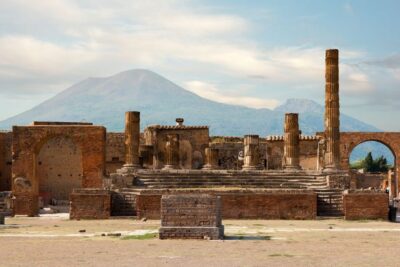
Pompeii Small Group Tour with an Archaeologist
Read our review →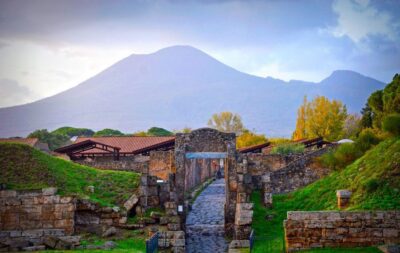
Skip-the-Line Entrance Ticket with Audio Guide
Read our review →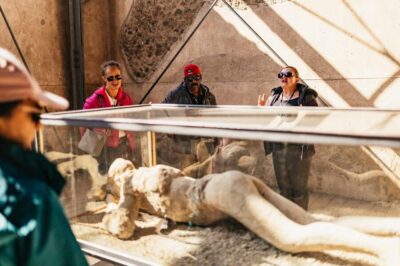
Pompeii and Mt. Vesuvius with Lunch and Wine Tasting
Read our review →
Archaeological Park Tour with Ticket on request
Read our review →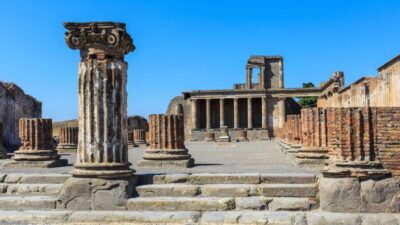
Browse the lists this tour appears in