
Reviewed · POMPEII TOURS
From Naples: Pompeii Skip-the-Line Guided Tour
Pompeii is one of those places that feels both ordinary and impossible at the same time, and this Naples day trip is designed to help you see it without losing hours in line. I especially like the early departure, because arriving before the biggest crush makes the ruins feel more readable. I also like the skip-the-line priority access, so you get moving fast with a licensed local guide and not just wandering around waiting.
The trade-off is simple: you cover a lot in limited time, and Pompeii is still very much an outdoor, uneven walking site. You will do a steady route, and the group setup can mean you are split into smaller parties, with guides like Luigi and Lucia setting the pace and keeping you together. Bring good shoes, plan for sun, and you will get a day that feels like a guided tour of real daily life, not a blur.
Key things to know before you go
- Early departure from Naples helps you hit Pompeii when it feels calmer
- Priority entry means less time trapped at the gates and more time on the streets
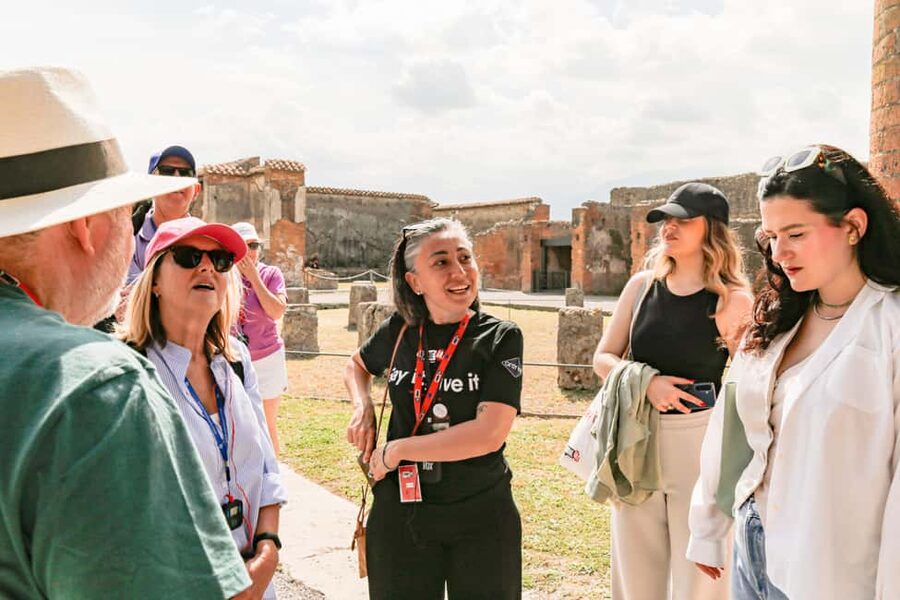
- Licensed local guide commentary turns stones into stories, with past guides like Luigi and Lucia praised for clear explanations
- A focused highlight route hits major zones like the Forum, Via dell’Abbondanza, and the Theater area
- Signature stops include the House of the Faun and its Alexander Mosaic, plus the haunting plaster casts
- Air-conditioned round-trip transport makes the logistics easier, especially in hot weather
Early Naples Departure, and Why It Changes Everything
If you only know Pompeii as a pile of ruins, this tour format is the fix. Going out early from Naples means you are not starting your walk at peak crowd time, so you can actually follow the story instead of fighting shoulder-to-shoulder traffic.
The day is built around a clear rhythm. You ride out by bus, then you get your guided walking window inside Pompeii. That timing matters because Pompeii is huge and sun can be relentless, even when the route is well planned. When you arrive early, you get more comfort, more photos that do not look like a human stampede, and less stress about staying on schedule.
You also get a guide who brings the site to life. In reviews, guides such as Luigi and Lucia get singled out for explaining what you are seeing in a way that helps you picture the ancient city. That is the real value here: not just seeing famous buildings, but understanding how the space worked, from politics and worship to shopping and leisure.
One more thing I like: the route starts at one of the original gates, Porta Marina. That sets the mental stage right away, instead of beginning in the middle and trying to reconstruct the city as you go.
More Pompeii tours to compare:
- Sorrento: Skip-the-Line Pompeii Express Tour by Train
★ 4.8 · 2,038 reviews - Priority Access Pompeii & Mt. Vesuvius Full day from Sorrento
★ 4.5 · 1,376 reviews - Pompeii Express Guided Tour by Train from Sorrento
★ 4.5 · 770 reviews
Meeting Point and Getting There Without Worry
You meet your guide outside the main entrance of Starhotel Terminus, at Piazza Giuseppe Garibaldi nr. 91 in Naples. From there, the tour uses round-trip bus transport in an air-conditioned vehicle, with about 30 minutes each way.
This is not just a comfort perk. In summer, heat adds friction to everything, and a quick, cool ride helps you arrive with energy for the walking. One practical detail from reviews: pick a meeting point where you feel confident you can find your group. Some people reported not being picked up at their exact hotel, even though they expected it, so do not treat the Starhotel Terminus point as a vague suggestion.
Also, arrive a bit early. Reviews include notes about coordinated arrivals working best when people are already at the meeting area ahead of time. If you get there early, you reduce the chance of confusion and you start the day calmer.
Skip-the-Line Priority Access: What You Really Save
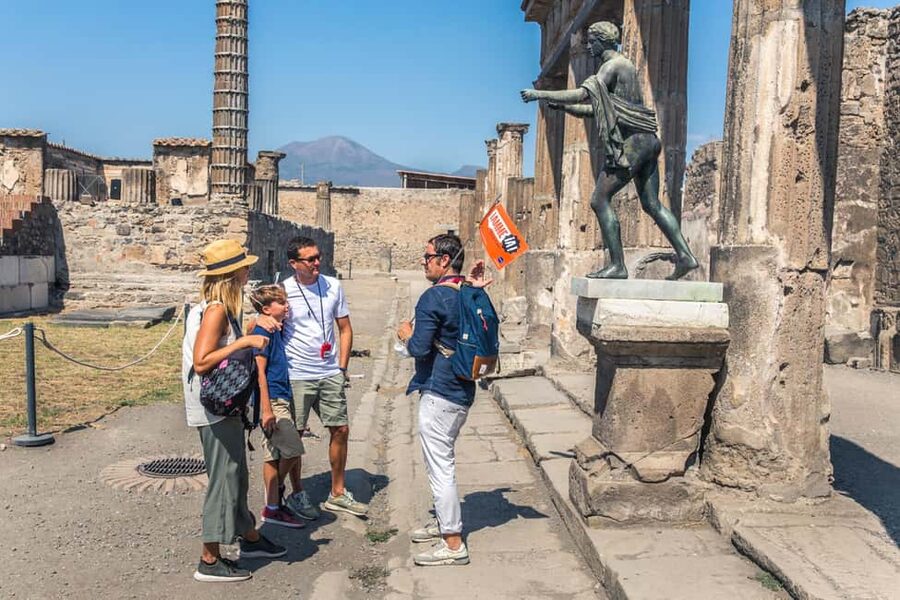
Priority access sounds like marketing, but on a site like Pompeii it saves you something specific: time and focus.
Instead of queueing, you get into Pompeii through a separate entrance and move into the guided route right away. That matters because Pompeii is an open-air museum. Every minute you spend waiting at the gate is a minute you lose under the sun, or a minute you have to cut from a stop later.
For larger groups, you may also receive audio headsets (the tour notes audio for groups of 8+). In plain terms, this helps you hear the guide without constantly turning your head or sprinting to stay close. One caution from reviews: if crowds block the signal, you might lose clarity for a bit, so it is still smart to keep an eye on where your guide is in relation to you.
The best part of priority access is psychological. You walk in already tuned to what you are about to see, especially when you start at Porta Marina and the guide immediately frames the city layout.
The Guided Walk: From Porta Marina to the City’s Main Life
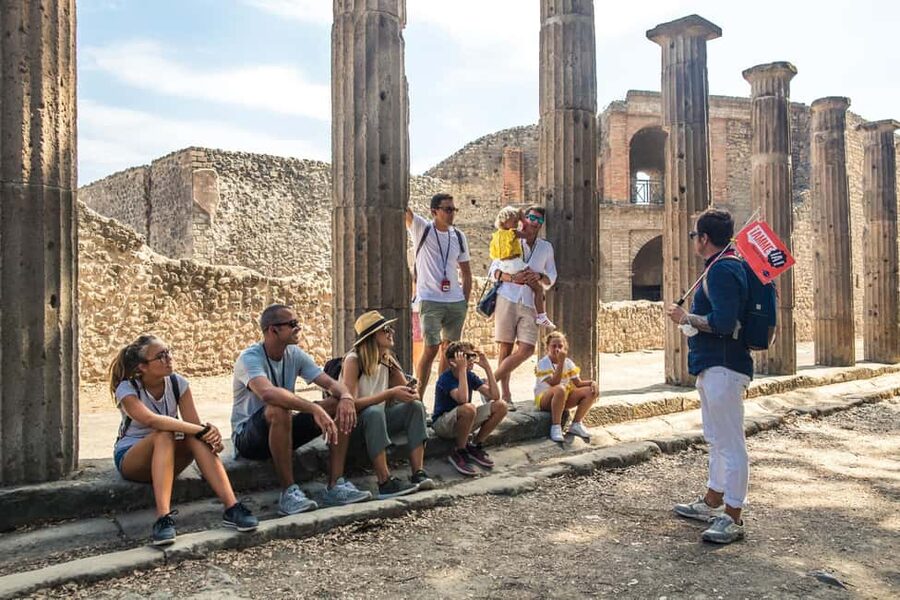
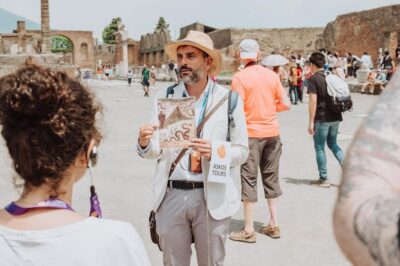
The guided portion is about 2.5 hours of walking with a licensed local guide. The total tour is around 4 hours, so this is a brisk, highlight-focused route rather than a slow drift through every corner.
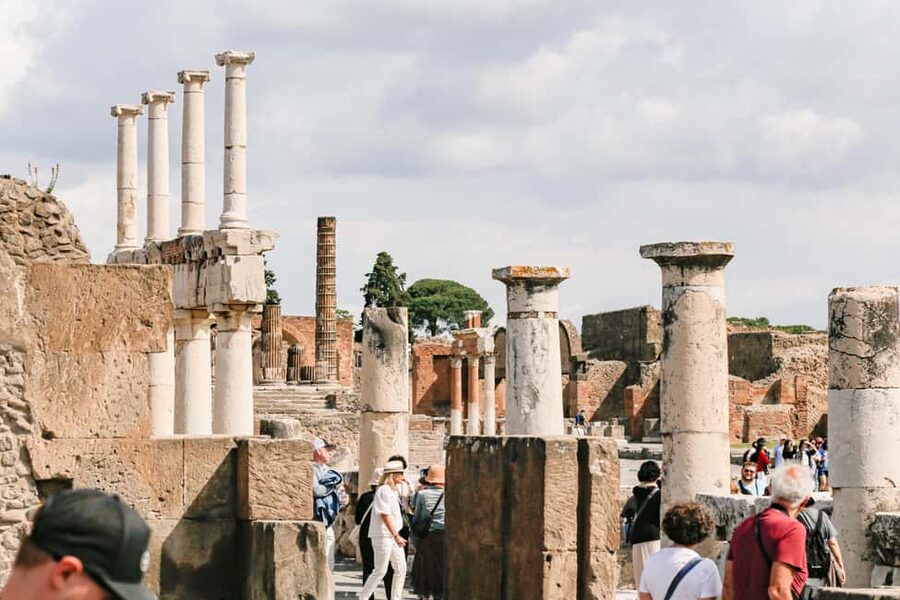
You begin at Porta Marina, one of Pompeii’s original gates. After that, the tour moves into key areas that explain how the city functioned. The next stops focus on the Civil Forum, including the political, religious, and commercial center of the city, with major public buildings such as the Basilica area.
From there, you head along Via dell’Abbondanza, Pompeii’s main street. This is the kind of street where you can almost feel the daily rhythm: homes, shops, and deep chariot grooves carved into stone. If you have ever wondered what “urban life” means in an ancient city, this street is where it becomes visual.
One nice touch is the mix of photo stops and guided segments. The tour structure keeps momentum, while still giving you chances to look up, take pictures, and regroup. The route also connects practical themes: governance and religion near the forum, commerce and movement along the main street, and entertainment in the Theater area.
A few more Sorrento trips worth comparing
- Skip-the-Line Pompeii Guided Tour from Sorrento
★ 4.5 · 722 reviews - Pompeii Ruins Half-Day Tour from Sorrento with Guide
★ 4.0 · 714 reviews - From Sorrento: Pompeii and Vesuvius Guided Tour with Lunch
★ 4.8 · 683 reviews - From Sorrento: Path of the Gods Guided Hike with Transfers
★ 4.8 · 530 reviews
Civil Forum, Jupiter Area, and the Theater District
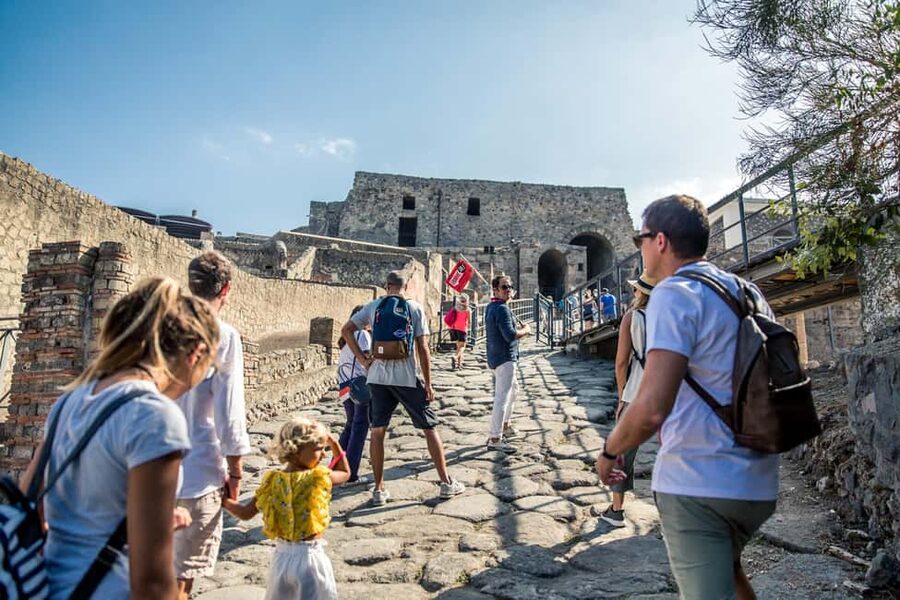
This tour leans into Pompeii’s big social zones, not just its most famous mosaics.
In the Forum area, you will see how law, worship, and business overlapped. The Temple of Jupiter comes up next, and you typically get time for photo moments before the guided explanation. Even if you have seen photos of columns online, being on-site helps you understand scale and sightlines, because you feel how public spaces were designed for crowds.
Then you move to the Theater District. The focus here is the Large Theater, an open-air venue where people gathered for comedies, dramas, and musical performances. This stop is valuable because it shows Pompeii was not only about work and religion. People socialized, watched performances, and used public spaces for community life.
If you are the type who likes to understand how a city worked day to day, you will probably enjoy how each location builds on the last. It is not random wandering, and the guide’s job is to help you connect the dots quickly.
Baths, Brothel Frescoes, and Street Food Shops
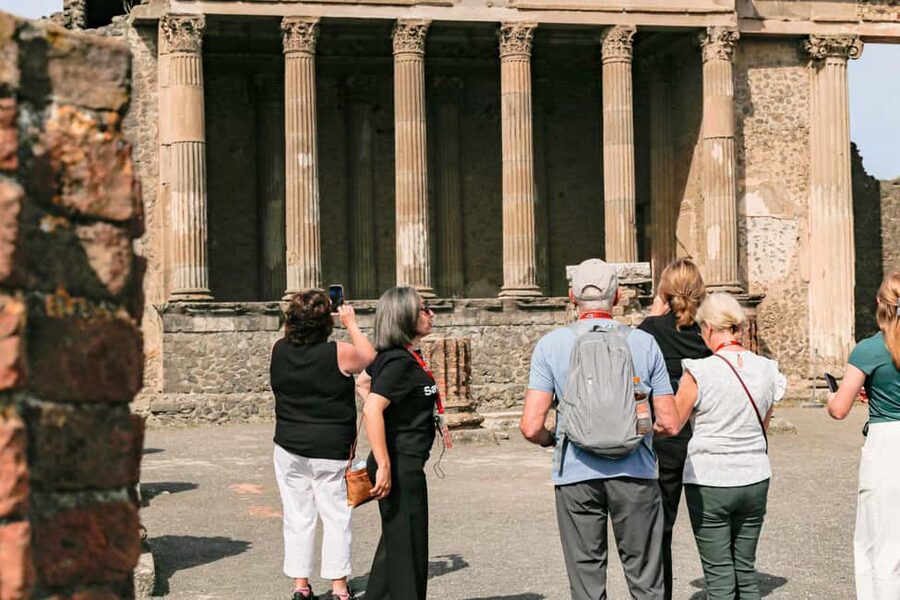
A truly memorable Pompeii tour has more than temples and big villas. This one includes places tied to everyday routines, and that makes the city feel human.
You will visit the Terme Stabiane, a preserved bath complex. Baths in Roman life were about more than hygiene. They were a social meeting point, a place to relax, and a daily ritual. Standing in these spaces helps you picture how people structured time and conversation.
Next comes the Lupanare, Pompeii’s ancient brothel. This stop is often what people remember because it is so specific and so stark. You get details about compact stone rooms and vivid frescoes, which helps you understand that sexuality, commerce, and public life all existed in the same city blocks.
Then you move to the food culture. The route includes a Thermopolium, an ancient street food shop, and a Pistrinum, a bakery area. You will see millstones and ovens, plus counter setups used to serve hot meals on the go. This is one of those moments where Pompeii stops feeling like an archaeological site and starts feeling like a functioning town.
If you enjoy food history, you will likely find these stops more memorable than another temple photo. If you prefer just the headline sights, these can still be worthwhile, because they show the texture of daily life.
House of the Faun, the Alexander Mosaic, and the Human Plaster Casts

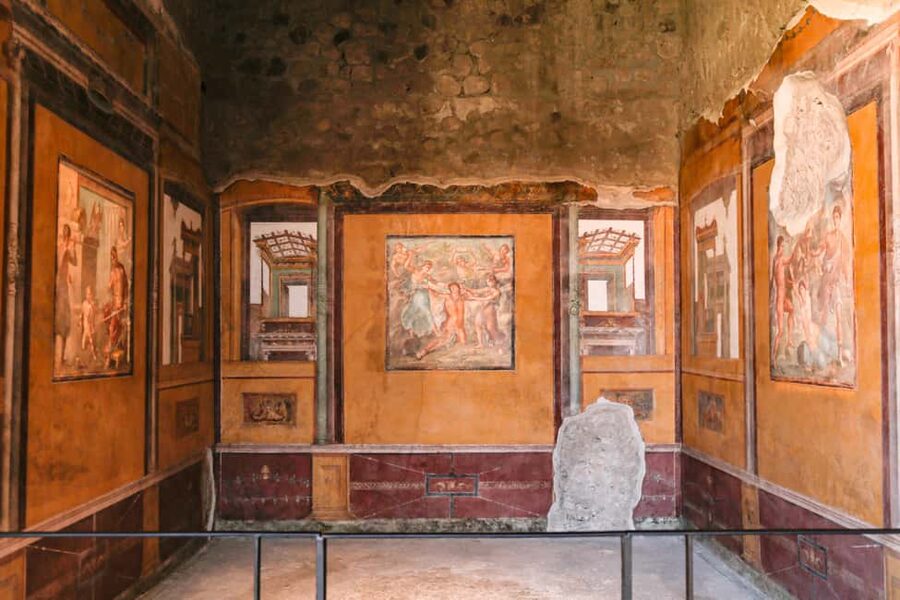
The tour’s visual high point for many people is the House of the Faun, a grand Roman villa famous for mosaics. The star is the Alexander Mosaic, and this is where you see luxury, art, and storytelling in one place.
I like this stop because it offers contrast. Earlier you have more public spaces and street-level life. Now you get an example of wealth and status, with art used to signal power and taste. A well-timed guide can help you understand why a mosaic like this mattered beyond decoration.
One of the most intense stops is the plaster casts of Pompeii’s victims, showing men, women, and children frozen in their final moments. This part changes your perspective fast. It is not just about artifacts. It is about the human consequence of sudden disaster, and it hits even when you think you are emotionally prepared.
If you are sensitive to heavy scenes, pace yourself here. You do not need to rush through it, and you do not need to turn it into a photo moment. Let it land.
Time Management on a Big Site: Heat, Walking, and Group Splits
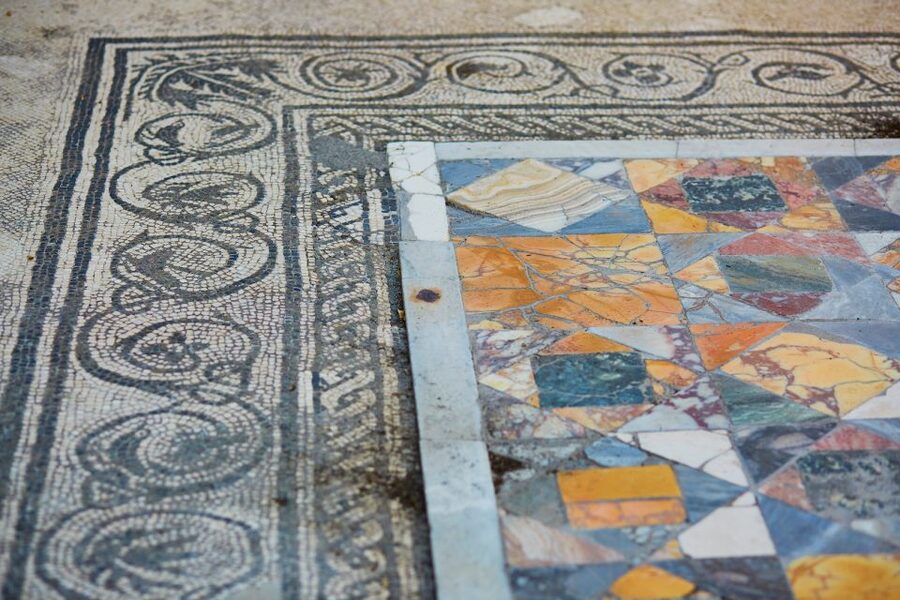
Two big facts shape your experience: Pompeii is huge, and your guided time is limited. So the route is intentionally selective. That is not a problem as long as you go in expecting highlights, not everything.
In warm weather, shade is limited in many areas. Reviews also mention that the tour length can feel just right for a morning, especially when you still want energy for lunch after. You do get a structured route with photo stops and guided narration, so you are less likely to drift into dead time.
One more practical note from reviews: the pickup and early coordination can vary by group timing. People who arrived early at the meeting point generally had smoother starts. If you are traveling with a tight schedule, build in some buffer.
If you want an extra comfort move, bring water. Even though food and beverages are not included, reviews recommend carrying a water bottle you can refill using fountains inside Pompeii. Also consider a small amount of cash for public washrooms, just in case, since those can be pay-to-use.
Price and Value: Is It Worth $71 for About 4 Hours?
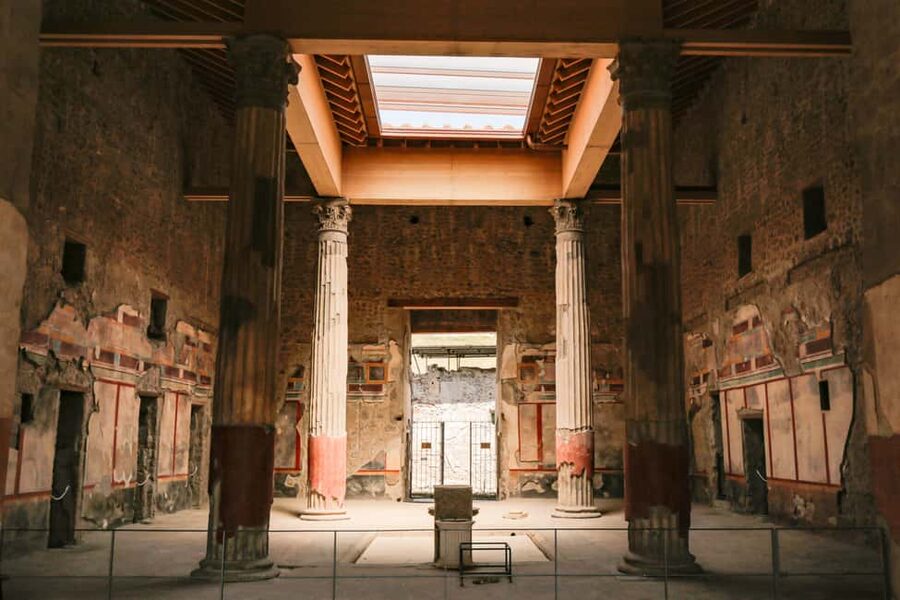
At $71 per person for a roughly 4-hour day with priority skip-the-line access, expert local guide narration, and round-trip air-conditioned transport, the value is mostly in the saved hassle and the guided focus.
If you tried to do Pompeii on your own, you would still face:
- time lost to entry lines,
- the challenge of picking a route through a very large site,
- and the need to figure out what you are looking at once you are inside.
Here, you pay for the shortcut, both logistically and interpretively. The guide’s role is not to list facts, but to help you visualize how each space worked. That is why reviews repeatedly praise guides like Luigi and Lucia for turning piles of stones into a story you can follow.
You should also consider what you want most. If you want a fast, high-yield Pompeii experience that gets you out of Naples with minimal stress, this fits well. If you want to roam slowly, linger in side streets, and do zero timing pressure, you might find this too structured.
Finally, check what is included with your specific ticket if you are hoping to add-on anything beyond Pompeii. Some reviews mention a Mount Vesuvius add-on option, so it is smart to confirm details before you go.
Who This Pompeii Tour Best Suits
This is a strong fit if you:
- like guided explanations that help you connect the dots quickly,
- want to maximize a short Naples stay,
- and prefer a route built around Pompeii’s biggest themes: forum life, entertainment, baths, food, and elite homes.
It is probably less ideal if you:
- want a long, free-form day with lots of rest time,
- cannot do uneven outdoor walking,
- or have heart-related concerns, since the tour notes it is not suitable for heart problems.
If you are traveling solo or as a couple, the group format can still feel personal thanks to live guide commentary. If you are with kids, teenagers, or seniors who can handle steady walking, the guide can help keep things moving and understandable, but you should still be realistic about the pace.
Should You Book This Skip-the-Line Pompeii Tour?
Yes, if your priority is seeing Pompeii well without wasting time. The early start and priority access are exactly what you want at a place like this, and the guided route hits the stops that most people hope to understand: the forum area, main street, theater zone, baths, bread and street food, the House of the Faun, and the plaster casts.
I would book it with two expectations in mind. First, you are signing up for a highlight walk, not an all-day roam. Second, you should come prepared for sun and steady walking, bring water, and wear comfortable shoes.
If you want a guided day that makes Pompeii feel like a real city rather than a checklist, this one is a solid choice.
FAQ
How long is the tour and how much time is spent on the Pompeii guided portion?
The tour runs about 4 hours total, with roughly 2.5 hours of guided walking inside Pompeii.
Where do I meet the guide in Naples?
You meet your guide outside the main entrance of Starhotel Terminus, at Piazza Giuseppe Garibaldi nr. 91 in Naples.
Does the tour include priority skip-the-line access?
Yes. The tour includes priority access to enter Pompeii through a separate entrance.
Is food included in the price?
No. Food and beverages are not included.
What languages are offered during the tour?
The tour offers English, French, Spanish, and German. If the minimum number of French or Spanish speakers is not met, the tour runs in English, with French or Spanish commentary provided only during the guided visit of the Pompeii archaeological site.
Is the tour suitable for mobility impairments or heart problems?
No. The tour is not suitable for people with mobility impairments or people with heart problems.
Recently reviewed around Sorrento
- Private Sunset boat tour★ 5.0 · 3 reviews
- Sorrento Cooking Class: Taste the Tradition feel the Love★ 5.0 · 15 reviews
- Sorrento: Walking Tour in Lemon Garden w/ Food Tasting★ 4.8 · 72 reviews
- Sorrento: walks and food★ 5.0 · 3 reviews
- Sorrento: Wine Tasting Overlooking the Sea in a Lemon Grove★ 5.0 · 6 reviews
- Sorrento: walking in the Grand Tour with stunning landscapes★ 5.0 · 5 reviews
- Guided Walking Tour of Sorrento with Limoncello Tasting★ 4.8 · 4 reviews
- Sorrento: Vesuvius Day Trip with Entry and Lunch★ 3.5 · 6 reviews
Pompeii Tours, compared.
Entry Ticket and Guided Tour with an Archaeologist
Read our review →

Pompeii Small Group Tour with an Archaeologist
Read our review →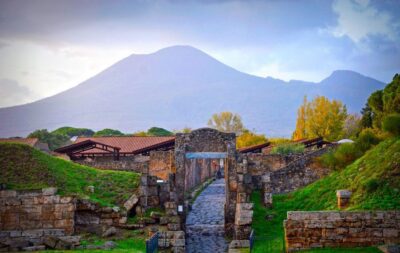
Skip-the-Line Entrance Ticket with Audio Guide
Read our review →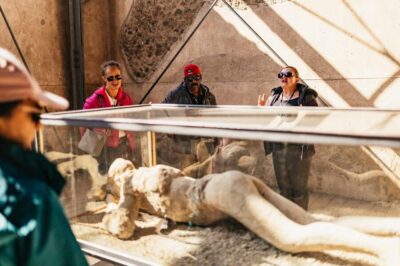
Pompeii and Mt. Vesuvius with Lunch and Wine Tasting
Read our review →
Archaeological Park Tour with Ticket on request
Read our review →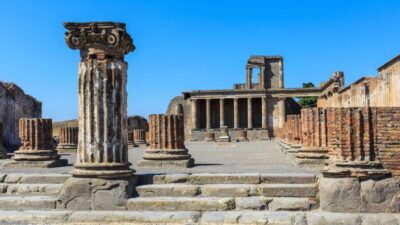
Browse the lists this tour appears in